

Why ‘Nerd AI’ matters for investors, founders, and operators
It seems like everyone is talking about Artificial Intelligence (AI) these days. From simple apps to big company strategies, AI is changing everything. You might be wondering, "When did AI become popular?" While its roots go back many years, the current boom really started in the last few years, and it’s full steam ahead in 2026. This fast growth means there is a huge amount of news and updates every single day.
For people who invest, start companies, or run them, this can be a problem. It’s like trying to find a tiny, shiny pearl in a vast ocean of information.

You need to find the truly important, niche topics that actually move the needle. We call this "nerd AI" – the deep dives, the specialized projects, and the smart ideas that often get lost in all the general noise.
Think about it: AI-focused startups have seen their funding jump a lot recently. Total funding grew by an amazing 218% from 2021 to 2025, even while other tech funding shrank The Global Startup Ecosystem Report 2026. In the first quarter of 2026 alone, AI companies took 57% of all new capital Q1 2026 Startup Funding Report: AI Takes 57% of All Capital. This shows how much money and excitement are in the AI world. But to truly benefit, you need to understand the specifics, like the difference between agentic AI vs generative AI and how it all applies.
This guide is here to help you cut through that noise. We will show you how to find, check, and keep track of these important "nerd AI" projects and the smart groups working on them. Whether you are looking for new AI applications, the best AI prompts, or just want to understand the market better, we have you covered.
To stay on top of all the important AI news and trends, you need a reliable source. The AI Newsletter Worth Reading can give you clear, daily updates.
How to define ‘niche’ in AI: categories and examples
Now that we know what "nerd AI" is all about, let’s talk about how to spot it. Finding these special areas means we need to understand what makes an AI project "niche." It’s not just about being small; it’s about being very specific and often deep in its focus.
Here are some ways to think about different kinds of "nerd AI":
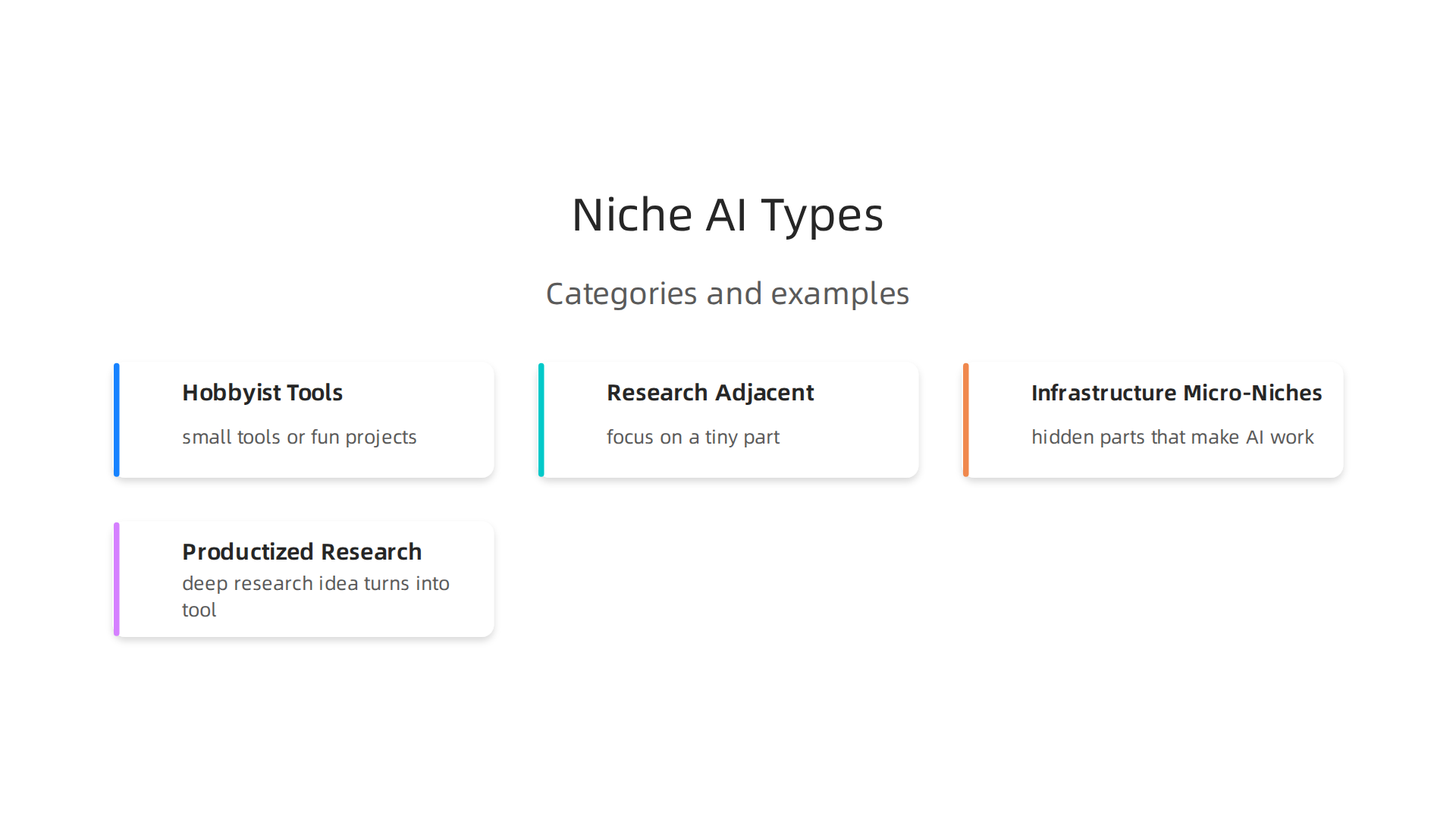
- Hobbyist Tools: These are often small tools or fun projects made by people for personal use or for a small group. They might be about helping with creative tasks, like generating art or simple stories. Think of little apps that help with everyday problems, perhaps using new AI applications in clever ways.
- Research-Adjacent Subfields: These are areas very close to top-level AI research, but they focus on a tiny part of it. For example, instead of looking at all of generative AI, they might study only how AI can learn from very little data. It’s like looking at one small leaf on a giant tree of knowledge.
- Infrastructure Micro-Niches: This is about the hidden parts that make AI work. It could be new ways to store AI data, special computer chips for AI, or better methods for making AI models run faster. These are the tools behind the scenes that most people don’t see, but they are very important. For example, open-source AI infrastructure projects are constantly growing and changing in 2026, showing lots of focused activity in these micro-niches 19 Open-Source AI Infrastructure Trends 2026.
- Productized Research: Sometimes, a deep research idea turns into a helpful tool or service. It’s when smart scientific discoveries are made easy for people or businesses to use. This could be a new way to create best AI prompts that actually work better, or a system that helps companies understand their customers using very advanced AI.
Knowing these clear categories helps you pick out the truly important "nerd AI" signals. If you’re an investor, it helps you find new ideas that could grow big. If you’re a founder, it helps you see where you can build something truly new. And if you’re an operator, it helps you understand the tools that can give your company an edge. It’s all about making smart decisions in the fast-moving AI world.
To dive deeper into the companies making waves in these areas, you can learn how to Identify, Evaluate, and Track Top AI Companies in 2026. This kind of detailed understanding is what sets the most successful people apart in the AI space.
Now that we’ve talked about what "nerd AI" is, let’s learn how to spot truly good projects in these specific areas. It’s like finding hidden treasures. We look for different clues, both numbers and observations, that tell us if a niche AI project is high-quality and worth paying attention to.

Quantitative Signals: Numbers That Speak
These are clues you can measure or count. They give us a clear idea of how active and serious a project is.
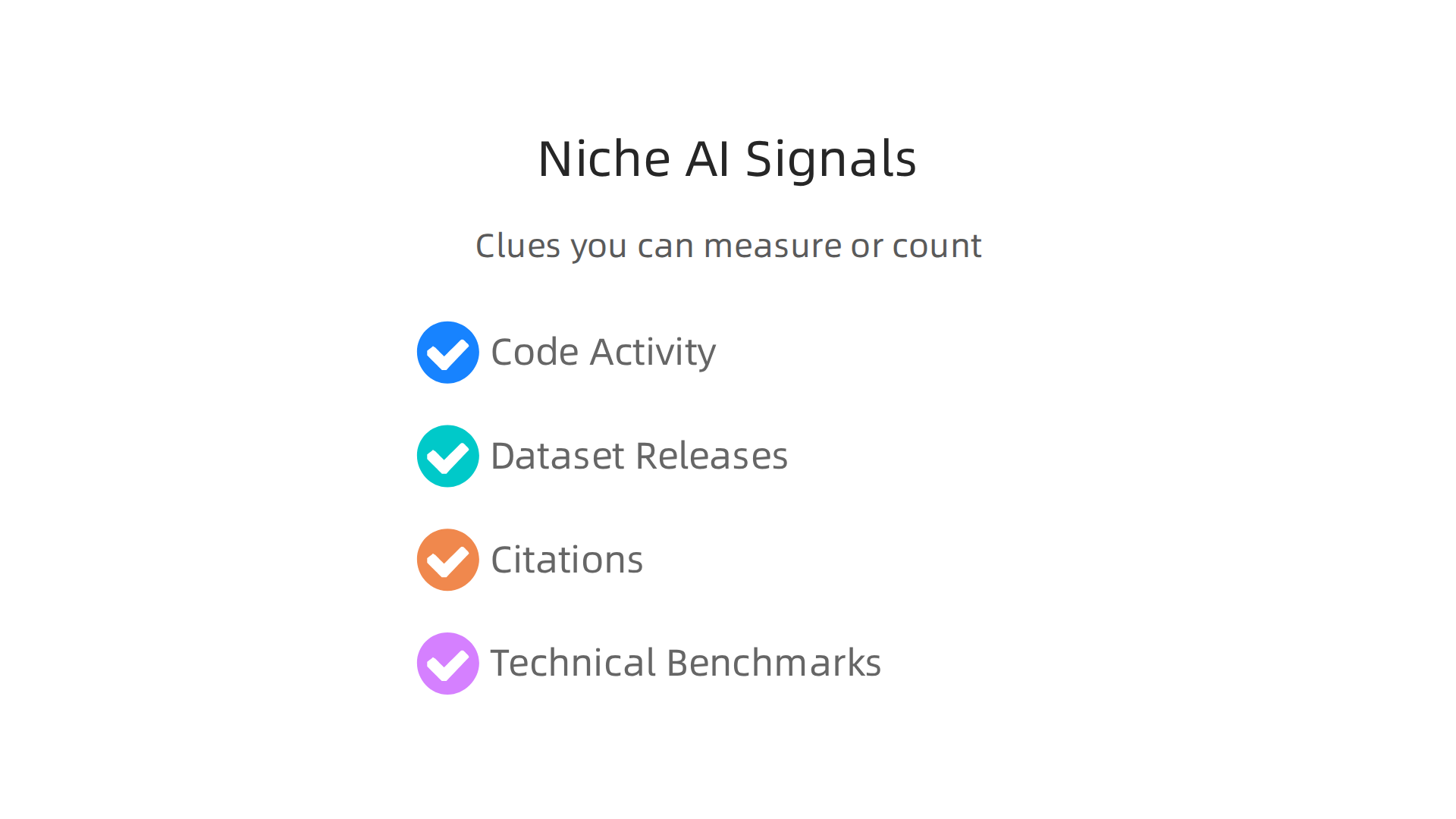
- Code Activity: If people are working on "nerd AI" projects, you’ll often see their code online, like on GitHub. Look for how often the code is updated, how many people are helping, and if others are using it. Lots of activity usually means a lively project.
- Dataset Releases: Many special AI projects need their own unique sets of data to learn from. When a team shares their datasets, it shows they are doing real work and letting others check their findings. This helps the whole AI community move forward.
- Citations: In the world of research, if someone’s work is good, other researchers will talk about it and refer to it in their own papers. This is called citing. More citations mean the work is seen as important and useful by experts.
- Technical Benchmarks: This is a fancy way of saying "tests." Researchers create special tests to see how well an AI system performs compared to others. For example, in 2026, researchers are still developing new ways to test advanced AI systems, especially those that combine different types of intelligence like Neuro-Symbolic AI, which is often benchmarked using tools like SRBench++ to evaluate how well these systems reason and learn across many datasets SRBench++ : principled benchmarking of symbolic. A good "nerd AI" project will often show strong results on these benchmarks, or even create new ones for problems no one has solved before.
Qualitative Signals: Observations and Community Trust
These signals are less about numbers and more about how people interact with the project and what others say about it.
- Community Moderation: A strong niche AI project often has a helpful and active community around it. People ask questions, share ideas, and help each other. Good projects will have leaders who guide these conversations and keep things positive.
- Reproducible Demos: If an AI project claims to do something cool, it should be able to show it working. A "reproducible demo" means anyone can try out the AI and get the same results. This proves the AI isn’t just talk; it really works.
- Cross-Community Endorsements: When experts from different parts of the AI world praise a certain project, that’s a huge sign of quality. It means the "nerd AI" work is making an impact beyond its small corner. This can be seen as an important factor when you are trying to understand how to master specialized AI software for 2026 investment and business growth.
By looking at both quantitative and qualitative signals, you can get a full picture of how strong and important a niche AI project truly is. This helps you figure out which projects are just hype and which ones are building something truly valuable.
To stay on top of all the latest breakthroughs and important trends in AI, especially in these specialized niche areas, there’s an excellent resource.
The best way to keep up with the fast-changing world of AI is to get daily updates and clear analysis directly in your inbox. Check out The AI Newsletter Worth Reading.
To really understand if a niche AI project is great and not just talk, we need to dig deeper than the first look. This means quickly checking some key things to see if the technology behind it is truly strong and trustworthy. Think of it as a fast technical checkup.
Checklist for Rapid Technical Triage
When you want to quickly see how good a "nerd AI" project is, here are some main points to check:
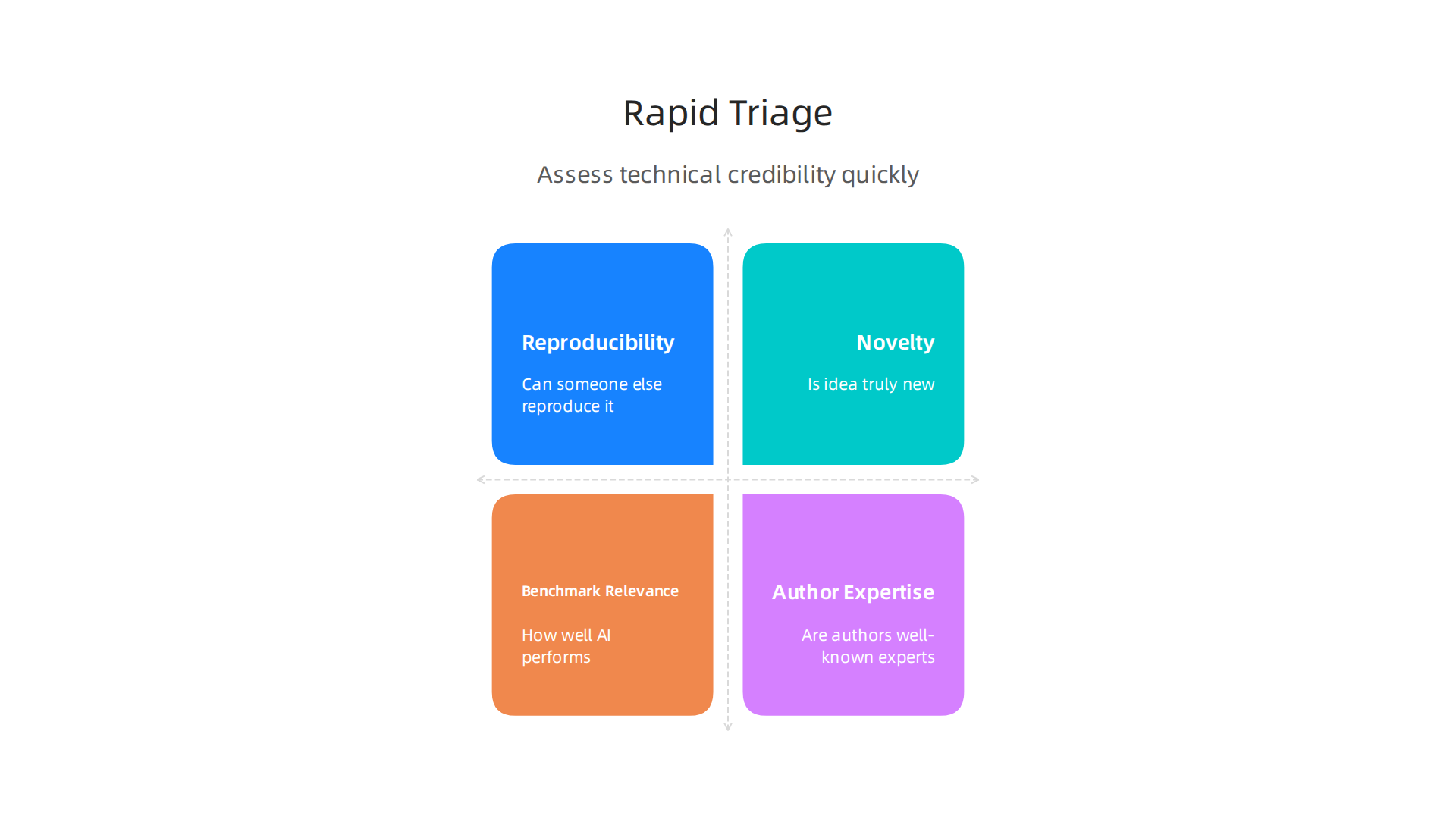
- Reproducibility: Can someone else easily make the AI work and get the same results as the creators? This is super important. If you can’t repeat the results, it’s hard to trust the project. Good projects will often share their code and clear steps so others can try it too.
- Novelty: Is the idea truly new? Does it solve a problem in a fresh way, or is it just doing what other AI systems already do? We’re looking for new "ai applications" that push the boundaries.
- Benchmark Relevance: How well does the AI perform on specific tests? Not just any tests, but ones that really matter for what the AI is supposed to do. For example, if a "nerd AI" project works with Neuro-Symbolic AI, which combines different ways AI learns and reasons, it might be tested using special benchmarks like the KANDY Benchmark for Neuro-Symbolic Learning. These special tests help show if the AI is genuinely good at its job. When looking at new "ai applications" and emerging fields, new benchmarks are often created just to properly measure progress, such as those that aim to advance symbolic integration in large language models.
- Author Expertise: Who made this project? Are they well-known experts in the field? Do they have a strong background in academic research? Knowing the people behind the project can tell you a lot about its quality and potential. You can learn more about the role of research by looking into academic artificial intelligence.
How to Read Key Documents for Quick Insights
You don’t always have to read every single word to get the important signals. Here’s what to look for in common project documents:
- README File: This is usually the first thing you see in a code project. It should clearly explain what the project does, why it’s useful, and how to get it running. Look for simple language and a clear purpose.
- Model Card: If the project is about a specific AI model, it might have a "model card." This document is like a nutrition label for the AI. It tells you what the model is, what it’s good at, what its limits are, and if it has any biases. This is key for understanding how to properly use the AI.
- Preprint: These are early versions of research papers that haven’t been formally reviewed yet. Many cutting-edge "nerd AI" projects start as preprints. You can find detailed technical information here. For example, in 2026, many papers on specialized AI, like Neuro-Symbolic Artificial Intelligence, are first shared as preprints. Look at the abstract, introduction, and conclusion for the main ideas, and skim the results section to see how well the AI performed.
By quickly checking these points and knowing what to look for in these documents, you can become much better at figuring out which AI projects are truly impressive and which ones might not be worth your time. This helps you to identify evaluate and track top AI companies effectively.
After learning how to tell a strong AI project from a weak one, the next step is knowing where to find these amazing tools. Niche AI projects, sometimes called "nerd AI," don’t always appear in big news headlines. They often grow in special places where experts and hobbyists gather.
Mapping Community Hubs for Niche AI
Think of these places as hidden gardens where new "ai applications" bloom.

- Online Forums and Chat Groups: Many innovative AI projects start as ideas shared on online forums or specialized chat groups like those on Reddit or Discord. Communities focused on topics like machine learning, natural language processing, or even specific AI models often have lively discussions. This is where you might find early talk about "llm vs generative ai" and see users sharing their "best ai prompts" for new tools.
- Specialized Code Repositories: For projects involving code, places like GitHub are goldmines. Here, developers share their work openly. You can find many open-source "nerd AI" tools that solve very specific problems. These often come with clear instructions and examples, making it easier for others to try them out and build upon them.
- Workshops and Conferences: While some conferences are huge, many smaller workshops focus on very specific areas of AI. These events are great for seeing cutting-edge research and new "ai applications" firsthand. They help connect people who are passionate about the same niche topics.
When did AI become popular? Its widespread adoption today is fueled partly by these communities, allowing many smaller, focused AI tools to grow alongside the big ones. As one writer put it, many "indie AIs" are emerging from these grassroots efforts, serving specific needs without the drawbacks of larger systems Maybe it’s time for lots of little indie AIs to take over – Anil Dash.
How Distribution Shapes Adoption
Even the best "nerd AI" project needs to reach the right people to be useful. This is where good distribution comes in.
- Demos and Tutorials: A well-made demo or a clear tutorial can quickly show off what a niche AI tool can do. People are more likely to try something new if they can see it working and understand how to use it right away. Tutorial threads on social media or dedicated blogs can quickly spread the word.
- Modular Tools: Imagine building with LEGOs. Modular AI tools are like that. They are small, self-contained pieces of AI that can be easily plugged into other projects. This makes it simple for developers to add new AI features without having to build everything from scratch.
- Ease of Use: As AI becomes more common, the tools that are easiest to use often get adopted the fastest. Even complex "nerd AI" can gain traction if its interface is friendly or if it integrates smoothly with existing systems. In 2026, many professionals are using AI tools several times a week, showing how important easy adoption is Future of Professionals 2026: As AI adoption grows, so do the ….
Understanding where these specialized AI software solutions emerge and how they spread is key to staying ahead. To learn more about identifying powerful tools, check out our guide on how to Master Specialized AI Software for 2026.
Keeping up with all the new AI projects can feel like a lot. That’s why having a reliable source for daily updates is so helpful.
Get clear daily AI updates from The AI Newsletter Worth Reading.
Finding great AI tools is one thing, but keeping track of which ones are truly gaining speed is another. It can feel like a lot, especially with so many new "ai applications" coming out daily. This is where smart tracking comes in handy. You need a simple way to watch for rising "nerd AI" projects without getting lost in all the noise.
Design a Simple Dashboard for AI Momentum
To spot new "nerd AI" early, you don’t need a super complex setup. A minimal dashboard can show you the most important things, often called Key Performance Indicators or KPIs. Think about what truly shows a project is gaining momentum. For AI projects, especially those shared openly, key things to watch include:
- Community Growth: How many people are joining forums, chat groups, or following the project? Big jumps in followers can signal new interest.
- Code Activity: For technical "ai applications," this means looking at how many new contributions are made or how fast the code is changing. Platforms like GitHub are key. In fact, AI-related projects on GitHub have seen a massive 178% jump year-over-year, reaching over 4.3 million repositories by early 2026 What 100 Trending GitHub Projects Tell Us About Where AI Is ….
- User Engagement: Are people actively using the tool, asking questions, or sharing their "best ai prompts"? This shows real-world adoption.
- Mentions and Buzz: How often is the project talked about online, in blogs, or specialized news?
Keeping an eye on these simple points helps you see which AI ideas are truly catching on. For deeper insights into how to track and evaluate these companies, you might want to learn how to Identify Evaluate and Track Top AI Companies In 2026.
Tools and Data to Spot Rising Projects
You don’t have to check everything manually. There are ways to automate some of this tracking to get the clearest picture of what’s next in AI.
- GitHub Monitoring Tools: Websites like GitStar or OSSInsight track GitHub trends, showing projects with the fastest growth in "stars" or new activity. These tools can tell you which open-source AI projects are getting popular, even helping differentiate between "llm vs generative ai" trends. You can see which new AI features or models are sparking the most interest among developers. These tools can highlight projects with high "star velocity," meaning they’re growing fast, not just having many total followers Top 10 Open-Source AI Projects Trending on GitHub 2026.
- Social Listening Platforms: These tools help you track mentions of specific AI projects or keywords across social media and specialized forums. They can alert you when a "nerd AI" topic starts getting more attention.
- Curated News Feeds: Subscribing to focused AI newsletters or blogs that filter out the noise and highlight niche discoveries can be a powerful, lightweight monitoring method. These sources often do the hard work of finding the most promising new "ai applications" for you.
By setting up these simple tracking methods, you can stay ahead of the curve and spot the next big thing in AI before it becomes mainstream.
After spotting which AI projects are getting popular, the next step is to look at their business side. This means understanding how these niche AI teams plan to make money and who they are working with. These business clues can tell you a lot about an AI project’s true potential.
Business Signals: Monetization, Partnerships, and Go-to-Market Patterns
Even the most exciting new "nerd AI" tools need a plan to become real businesses. Many small AI teams are trying out different ways to turn their clever "ai applications" into something that earns money. Understanding these experiments helps you see if an AI project can last a long time.
Common ways these teams try to make money include:
- APIs (Application Programming Interfaces): This is like giving other computer programs a special door to use the AI’s functions. Companies pay to use this door. This approach lets many different businesses benefit from the AI without having to build it themselves.
- Vertical Integrations: This means making the AI work perfectly for one specific industry, like healthcare or farming. Instead of a general tool, it becomes a specialized solution. For example, some AI businesses offer specific business models for how their generative AI tools can be used in different industries, often with flexible pricing arrangements AI Business Models 2026: Emerging Trends, Monetization ….
- Tooling Subscriptions: Many AI services offer their tools as a monthly or yearly payment plan. This lets users access the AI features, like tools for making "best ai prompts" or running complex calculations, for a regular fee. In 2026, subscription remains a popular way for AI apps to make money, sometimes combined with other methods AI App Monetization Case Studies 2026 — 8 Teardowns – Thrad. Some companies are also shifting to pricing based on how much you use the AI, leading to faster growth in how much money they make A how-to guide to monetizing GenAI and AI agents – Simon-Kucher.
When an AI team is clear about how they’ll make money, it’s a good sign. It shows they’re thinking about more than just the cool tech.
Why Partnerships Matter for AI Growth
Looking at who an AI company partners with is also a big deal. When other companies start working with a new AI, it means they see real value and trust in it. These early partnerships are strong signals for investors and future users.
- Pilot Projects: These are like test runs where two companies work together on a small scale to see how the AI can help. If a big company is doing a pilot with a small "nerd AI" startup, it can mean the AI is very promising.
- Integrations: This is when one company builds another company’s AI tools directly into its own systems or products. For example, a security company like Eviden integrated its Key Management System with Salesforce to make data safer and speed up AI use Fortinet — Partnership: The Leadership Read. Another example is Cognizant partnering with Benchling to use Benchling’s AI platform for research and development in the life sciences sector NEC — Partnership: The Leadership Read. Such collaborations show that the AI is strong enough to be relied upon by others.
These kinds of partnerships can really change how investors or other companies view an AI project. They show that the AI is not just a neat idea, but a useful tool that can be part of bigger plans. Staying on top of these business moves helps you understand the full picture of an AI’s journey.
To make informed decisions about AI companies, it’s helpful to understand the different kinds of AI and how they fit into the bigger market. You can explore how to Mastering AI Company Types Your 2026 Guide to the AI Market for more insights.
Want to keep up with the latest in AI, from technical breakthroughs to smart business strategies?
The AI Newsletter Worth Reading will give you clear daily AI updates from The Deep View Newsletter.
Building on what we learned about how AI projects make money and who they team up with, it’s time to put that knowledge into action.

This next part gives you clear steps to follow, whether you’re an investor, a founder, or a researcher looking at new "nerd AI" tools.
What to Do: Scout, Validate, and Pilot New AI Projects
Knowing how to spot the right signals means you can make smarter choices. Here’s a simple plan:
-
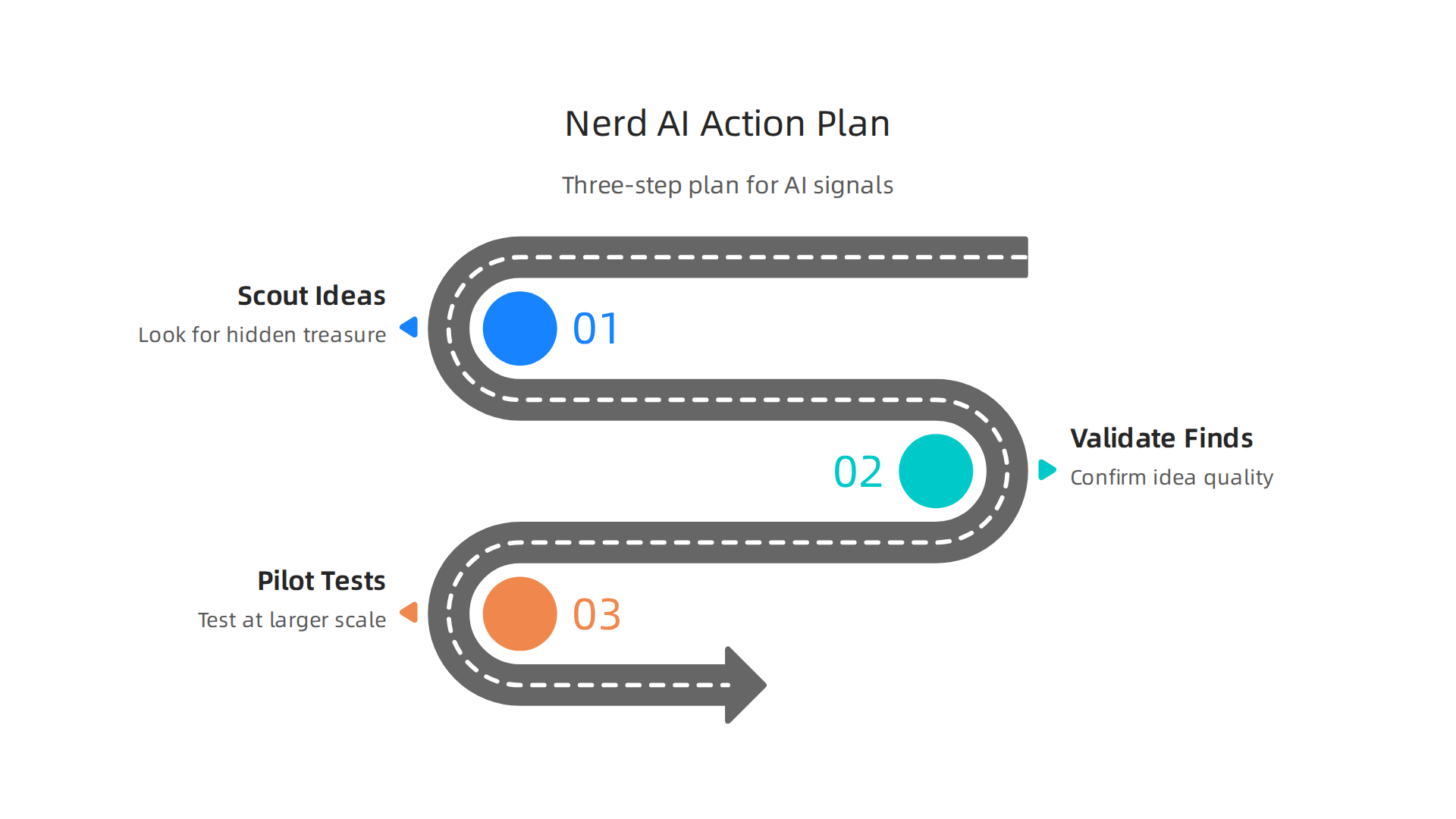
Scout for New Ideas: This is like looking for hidden treasure. You want to find new "nerd AI" projects that are just starting to show promise.
- If you are an investor: Look for small teams solving big problems. Check for early signs that people are interested in their "ai applications." A good place to start might be reviewing reports like the 2026 Startup Niche Intelligence Report.
- If you are a founder: Think about problems people have right now that "nerd AI" could solve. Look for gaps where current AI tools aren’t quite right.
- If you are a researcher: Explore new ways to make AI work, perhaps looking at how different models like "llm vs generative ai" can create new possibilities.
-
Validate Your Finds: After scouting, you need to check if these ideas are truly good. This means testing them out in small ways.
- If you are an investor: See if the AI has real users or early sales. Look at customer feedback to see if the "ai applications" truly help them.
- If you are a founder: Talk to potential customers. Build a very simple version of your AI and see if people want to use it. Pay attention to what kinds of "best ai prompts" people are looking for. To learn more about checking out AI companies, you can read about how to Identify, Evaluate, and Track Top AI Companies in 2026.
- If you are a researcher: Run experiments to prove your AI works as well as you think it does.
-
Pilot for Bigger Success: If your validation goes well, it’s time to try the AI in a bigger, more real setting.
- If you are an investor: Watch how pilot projects go. Does the AI grow and bring in more money? How is its monetization strategy working in 2026? Reports like the State of AI Monetization 2026 can give you a clearer picture.
- If you are a founder: Work closely with a few early customers. Learn what works and what needs fixing when your AI is used every day.
- If you are a researcher: Help companies put your AI into action. See how it performs outside of the lab and find new challenges to solve.
Watch Out for Red Flags
When looking at "nerd AI" projects, some things should make you pause. Be careful if a project has:
- Lots of talk but no real users or sales.
- No clear plan for how it will make money.
- A team that doesn’t seem to know their target customers.
- No strong partners willing to work with them.
By following these steps and watching for these warnings, you can make better choices about the exciting world of "nerd AI." To understand more about getting money for AI ideas, check out the AI Funding Playbook: Master 2026 Investment Strategies.
Summary
This article explains why focusing on