
Why ‘Meta AI News Today’ Matters — and How to Read It
Keeping up with "Meta AI news today" is more important than ever in 2026.

Why? Because Meta Platforms, a huge company, is making big moves in artificial intelligence. These changes impact almost everyone, from the way we use social media to how businesses work. If you’re an investor, a founder starting your own company, a market analyst, or someone who works in the tech world, understanding Meta’s latest AI steps is key.
Think about it: AI is no longer just a futuristic idea. It’s truly becoming a part of AI in everyday life, changing how we interact with technology every single day. Companies like Meta are pushing the boundaries, releasing new AI models such as Muse Spark 1.2, which they even made open source for others to use freely in August 2026 Meta makes Muse Spark 1.2 AI model open source. These developments are reshaping industries and creating new opportunities.
But here’s the challenge: there’s so much "meta ai news today" out there! It’s easy to feel lost in all the articles, updates, and announcements. Our goal with this article is to give you a clear, simple way to track Meta’s AI journey. We will look at important things like:
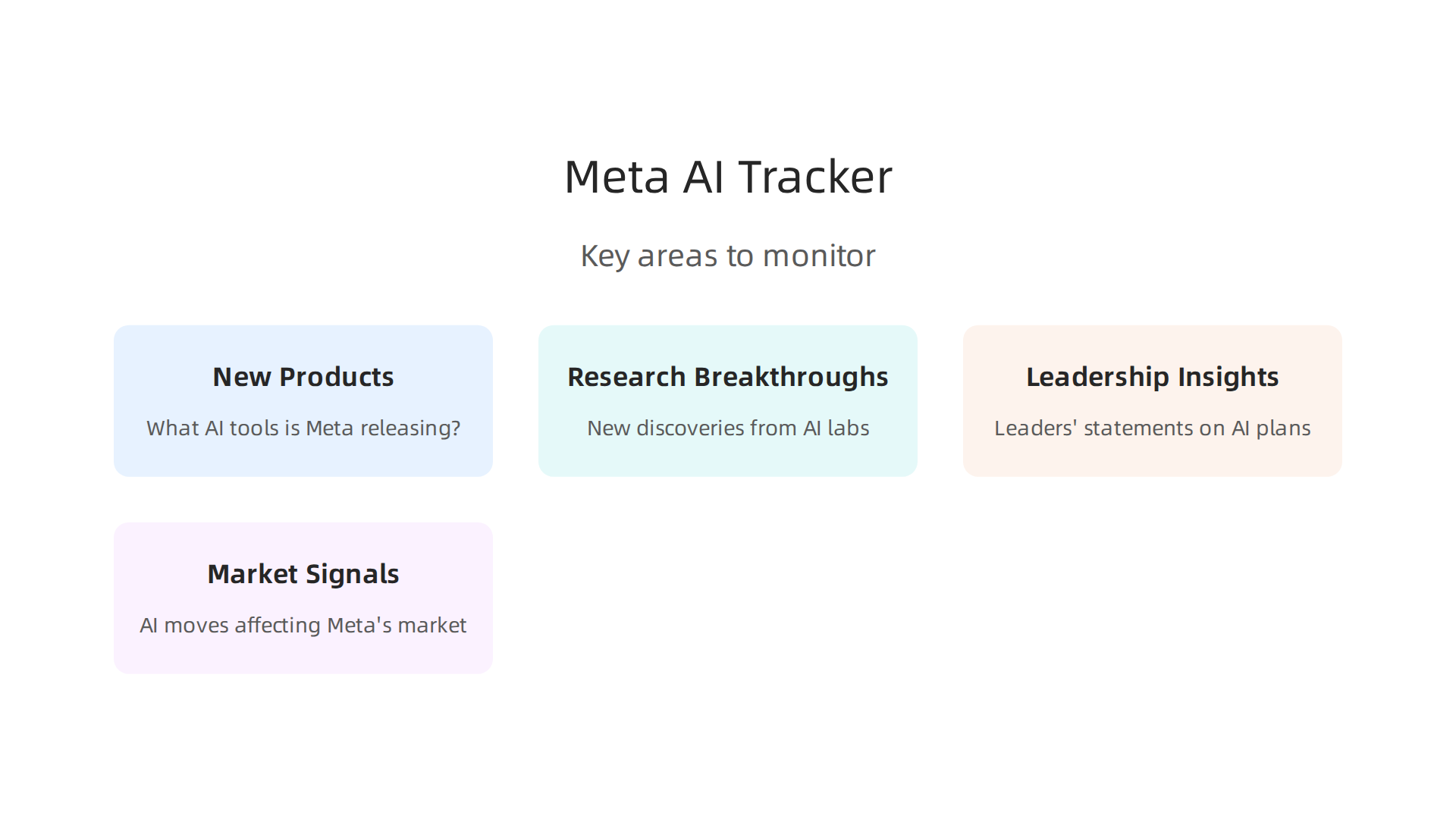
- New Products: What new AI tools or features is Meta releasing?
- Research Breakthroughs: What new discoveries are Meta’s smart people making in AI labs? You can often find these insights on the AI at Meta Blog.
- Leadership Insights: What are the top leaders, like Mark Zuckerberg, saying about Meta’s AI plans and future goals?
- Market Signals: How are these AI moves affecting Meta’s place in the wider tech world, especially when compared to rivals and even the original OpenAI founders?
By keeping track of these key areas, you’ll have a much better idea of where Meta is heading with its artificial intelligence efforts. This will help you make smarter decisions, whether you’re looking to invest, innovate, or simply stay informed about the companies shaping our future. For a deeper dive into the broader AI landscape, consider checking out The 2026 comprehensive AI guide for investors, founders, and analysts.
Don’t miss out on important updates. Get clear daily AI updates from The AI Newsletter Worth Reading.
Keeping track of "meta ai news today" can feel like drinking from a firehose. With so many updates, it’s key to know what to look for and what matters most. Here’s how to sort through the noise and spot the announcements that really count.
What Kinds of Meta AI News to Watch
Meta shares news in a few main ways. Knowing these helps you understand what’s new and important:
- New Products and Features: These are updates about what users can actually use. For example, Meta has been rolling out new AI systems to help keep content safe on its platforms, cutting down on the need for outside help Meta rolls out new AI content enforcement systems. They also launched their Muse Spark AI model, which powers apps like Instagram and WhatsApp, and their smart Ray-Ban glasses got new AI features earlier in 2026 CES 2026: Meta Ray-Ban Display Teleprompter, Neural …. These kinds of announcements show how AI is changing our daily digital lives.
- Research Releases and Open Source Projects: Meta’s labs are always busy. They often share new discoveries, like how AI models are helping with assistive robotics, on their AI at Meta Blog. Sometimes, they make their powerful AI models, like Muse Spark 1.2, open source. This means other developers can use them freely, which is a big deal for the wider AI community Meta makes Muse Spark 1.2 AI model open source. These moves can speed up AI development for everyone.
- Partnerships and Big Investments: Meta often works with other companies, like using NVIDIA’s powerful GPUs to build its large AI models, including the Llama series Market Scope. These partnerships show who Meta is teaming up with to push AI forward. They also spend a lot on AI, with planned capital expenses between $115 billion and $135 billion in 2026 Meta AI Statistics 2026: Users, Capex, and Adoption Data.
- Earnings and Business Impact: How AI affects Meta’s money is a big deal for investors. In Q1 2026, Meta saw its revenue jump by 33%, partly because AI tools helped double advertiser adoption Meta Q1 2026: $56.3B revenue as AI tools double advertiser adoption. Mark Zuckerberg also often talks about Meta’s AI vision in earnings calls, discussing new apps being built with AI help Meta says AI is making it easier to build new apps.
A Quick Checklist for Triage
When you see a new "meta ai news today" headline, here’s a quick way to decide if it’s worth a deep dive:
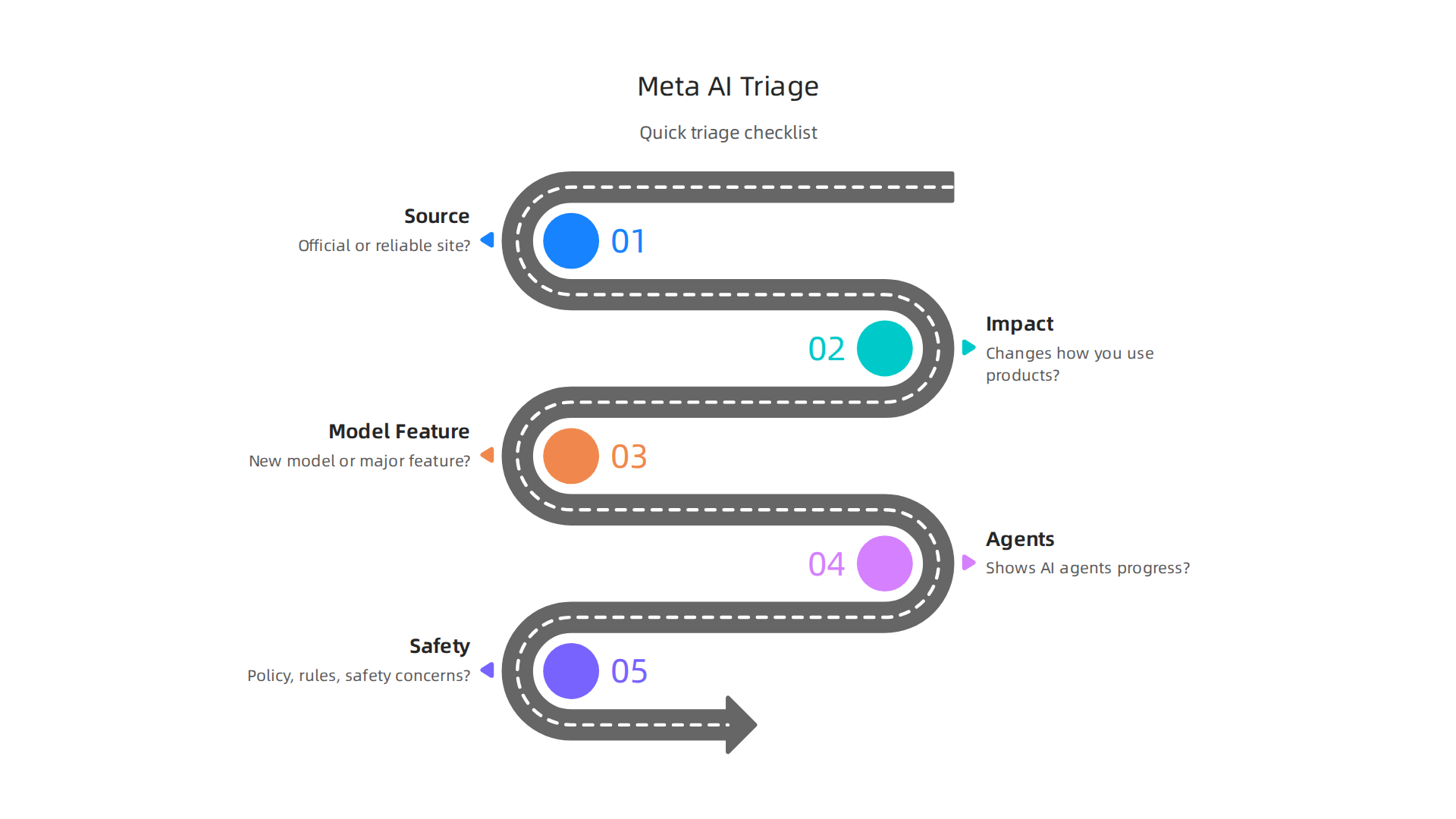
- Check the Source: Is it from Meta’s official Meta Newsroom or a reliable tech news site? This helps make sure the information is correct.
- Does it Affect You?: If you’re a user, does it change how you use Facebook, Instagram, or other Meta products? If you’re a business, does it offer new tools or change how you reach customers?
- Is it a New Model or a Feature?: New AI models (like Muse Spark) can be game-changers, while new features might be smaller updates. Both are important, but models often have bigger long-term effects. You can learn more about how to evaluate and implement AI tools for smarter decisions.
- Does it Talk About AI Agents?: AI agents are smart programs that can do tasks on their own. News about these can show how Meta is pushing the boundaries of artificial intelligence. If you’re looking for the latest in this area, you might find news about advancements in the state of AI agents in 2026.
- What About Rules and Safety?: Governments worldwide are making new rules for AI. Meta is even signing agreements like the EU AI Act Code of Practice to be transparent about AI-generated content Meta is Signing the EU AI Act Code of Practice on …. News about AI rules, safety, or fighting scams using AI (which Meta is doing Meta Launches New Anti-Scam Tools, Deploys AI Technology …) is very important for how AI will be used in the future.
By using this checklist, you can quickly decide which Meta AI news is most important for you to follow. This helps you stay informed without getting overwhelmed. Knowing how to identify evaluate and track top AI companies in 2026 is a key skill in today’s fast-moving tech world.
Staying on top of "meta ai news today" means more than just looking at new products. It also means watching the people in charge. When a big company like Meta changes its leaders or how its teams are set up, it often signals a new direction for its work, especially in AI.

How Leadership Changes Show New AI Plans
In 2026, Meta has been making big changes to its leadership and teams. These moves tell us a lot about where their AI efforts are headed:
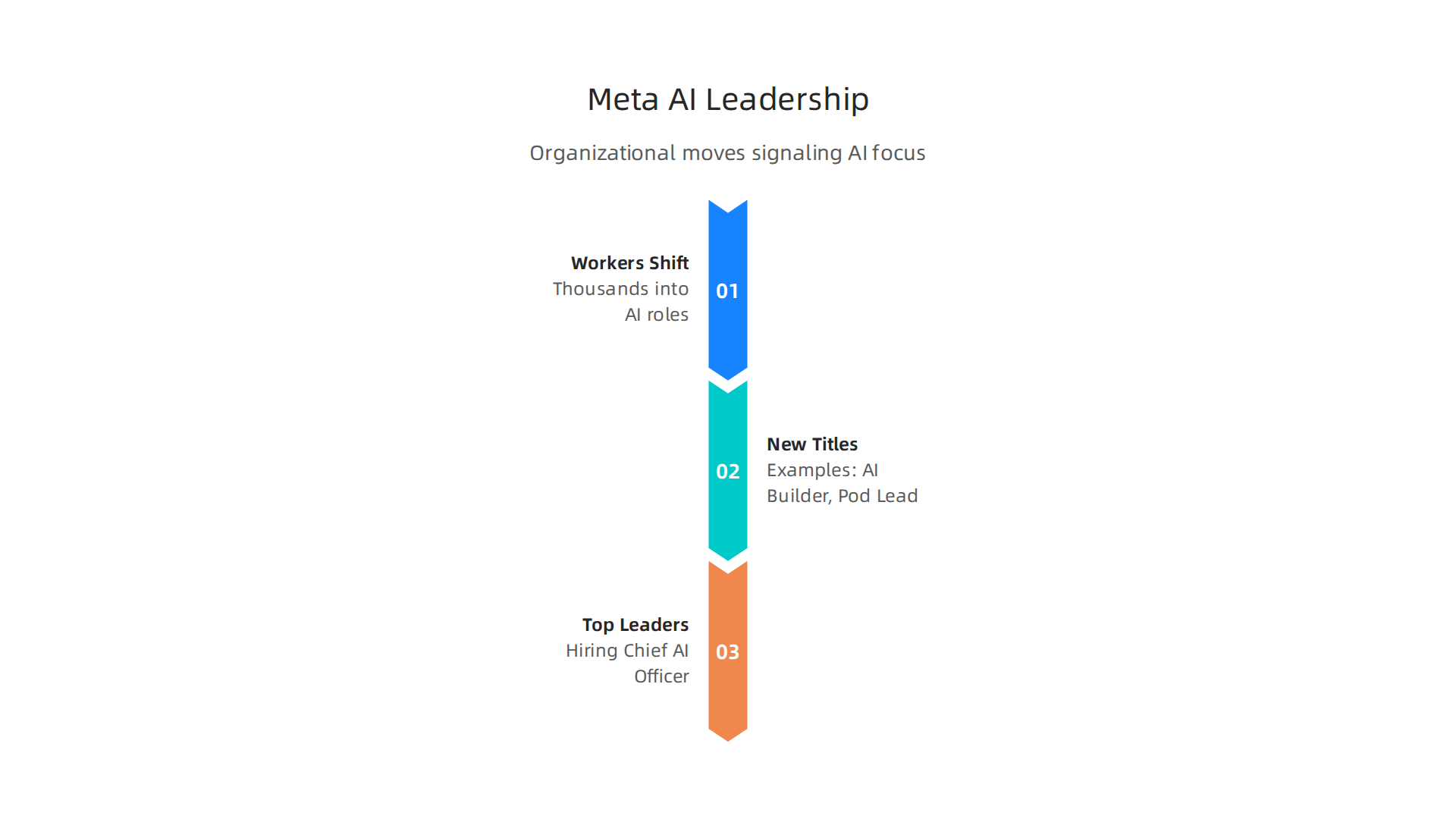
- Shifting Workers to AI: Meta has moved thousands of employees into roles focused on artificial intelligence. This happened during a time when the company also cut some managerial jobs, showing a big push towards an "AI-first" company structure. For example, in May 2026, Meta announced plans to shift 7,000 employees into new AI-related tasks while also cutting some manager roles Meta lays out details of May 20 restructuring in internal document. Another report confirmed thousands of workers moving into these AI roles Meta shifts 7000 workers into AI roles as layoffs, manager cuts loom.
- New Job Titles and Team Styles: The company is also changing what people’s jobs are called. Instead of traditional manager titles, you might see roles like "AI Builder" or "Pod Lead." These new titles show that Meta wants people who are hands-on with AI work, making teams flatter and more focused Goodbye, middle managers. Hello, ‘player-coaches’ and ‘org leads.’. This kind of change is all about getting more done in AI.
- Adding Top AI Leaders: Meta has brought in key people to lead its AI work. In 2025, they hired Alexandr Wang, the former CEO of Scale AI, as their first Chief AI Officer. This shows a clear path to bring all AI teams together under one main goal, aiming to redefine how Meta works using AI Zuckerberg says 2026 will redefine how Meta works as AI ….
These leadership changes are important because they show Meta’s strong focus on AI. They want to make sure AI agents and other AI tools become a bigger part of our daily digital lives. These moves can give us clues about future products and research. For anyone looking to understand how big companies are navigating this tech world, watching leadership is key to understanding AI Driven Leadership for 2026: Transformation and Growth.
To truly understand what these shifts mean, always ask:
- Who is new or leaving? Changes at the top can mean a new strategy.
- What are the new team names or structures? This can show what areas are getting more attention, like AI agents.
- How does this impact the general user experience? Eventually, these changes will affect how we experience AI in Everyday Life is Reshaping Work and Daily Routines in 2026.
Keeping up with all the big changes in AI is important for everyone. For clear daily AI updates that cut through the noise, consider subscribing to The AI Newsletter Worth Reading.
When you want to truly understand what’s next for Meta’s AI, looking at the products they put out is just as important as watching who’s in charge. Product releases, developer guides, and changes to their software tools tell us a lot about Meta’s real plans for artificial intelligence. These are strong signals about what they want to build and how they plan to get it into our daily lives.
How Product Launches Reveal Meta’s AI Path
Looking at what Meta actually builds and releases helps us predict where their AI is going.
- New AI Models and Features: When Meta announces a new AI model, like Muse Spark or Muse Glimmer, pay close attention. For example, in 2026, Meta launched Muse Spark, calling it smarter and faster than before Meta releases first new AI model since shaking up team. They also soon followed up by making Muse Spark 1.2 open source, challenging models from companies like those founded by
openai foundersMeta makes Muse Spark 1.2 AI model open source. These releases show their push for advanced AI that can be used by many people. They also show their clear plan to bring AI into many of their apps, like Instagram and WhatsApp Meta just provided its clearest look yet at its AI plan. - Developer Tools and Open-Source Moves: Meta also shares its AI technology with developers. In 2026, they have put a strong focus on open-source AI, releasing models like Muse Glimmer with open weights Introducing Muse Glimmer: An Open Agentic Model That Runs on …. This means that outside developers can use and improve Meta’s AI. This helps speed up how fast AI changes and grows. You can find more details about their research and public releases on the AI at Meta Blog. This strategy helps build a wider community around Meta’s AI tools and gives us a big clue about their goal: they want their AI to be a common base for new digital tools. To understand more about this approach, you can explore the benefits of Open Source AI Software Delivers Cost Savings and Full Control in 2026.
- New Platform Integrations: Watch for how Meta brings AI into its existing products and even new hardware. For example, Meta Ray-Ban glasses got new AI features in 2026, letting users send messages by writing with their finger in the air CES 2026: Meta Ray-Ban Display Teleprompter, Neural …. They’ve also rolled out more advanced AI systems to help keep content safe on their platforms Meta rolls out new AI content enforcement systems while reducing reliance on third-party vendors. These moves show Meta’s goal to make AI a seamless part of our digital tools. This is key to understanding the latest
meta ai news todayand howai in everyday lifeis growing. The company believes AI makes it easier to create new apps, so we can expect many more AI-powered apps to come Meta says AI is making it easier to build new apps.
By watching these product choices, you can better see Meta’s strategy. This tells us what kind of ai agent news to expect and how Meta plans to shape the future of AI technology. For a deeper dive into how AI is changing our world, consider learning about Artificial Intelligence in 2026: How Multimodal and Agentic AI Are Driving the Future.
While product launches show Meta’s current AI moves, looking at their research papers and technical releases gives us a peek into what’s coming next. These papers often talk about ideas still in the lab. Understanding them helps investors and product leaders see future trends and how Meta plans to shape the world of artificial intelligence.
Research Releases and Technical Papers: How to Assess Their Practical Value
It’s important to know the difference between a small step forward in AI research and a truly big breakthrough. This helps you figure out what might become a real product or a strong competitive edge for Meta.
-
Looking for Breakthrough Research: When you see a new research paper from Meta AI, don’t just read the title. Look for these signs that it might be a big deal:
- New Ways of Thinking: Does the paper propose a completely new way to solve an AI problem, rather than just making an old method a little better?
- Big Jumps in Performance: Does it show a huge improvement in how well an AI works at a task? For example, is it much faster or much more accurate than before?
- Proof of Work: Good research should also be easy to check. This is called reproducibility. Meta itself has highlighted the importance of Reproducible Engineering Evidence for MetaAI Recursive systems, suggesting they value being able to show their work. You can find many of their research papers and publications on the Meta AI Research page.
- Open Science: Meta often shares its research openly. They have released thousands of open-source tools and models, believing in transparency and working with others Open Source AI. This open approach can speed up how quickly new ideas turn into real-world applications.
-
Translating Research into Future Products: For investors and product creators, the real trick is to imagine how a research paper could turn into something people use.
- Potential for Products: Ask yourself: Could this research lead to a new feature in Instagram, Facebook, or even a future VR headset? For instance, research on "agentic models" often hints at smarter AI assistants that can do complex tasks, which is key for future
ai agent news. You can learn more about how different types of AI work by exploring Agentic AI vs Generative AI. - Competitive Advantage: Does the research offer something that competitors don’t have? If Meta develops a unique AI ability, it could give them a lead in the market. This is crucial for staying ahead in the constantly evolving landscape of
meta ai news today. - Long-term Vision: Sometimes, research points to very long-term goals. For example, papers about complex systems like "Recursive Open Meta-Agent Framework" show Meta’s deep dive into creating advanced AI that can manage multiple tasks over a long time ROMA: Recursive Open Meta-Agent Framework for Long-Horizon Multi-Agent Systems. These are the building blocks for how
ai in everyday lifewill become even more common.
- Potential for Products: Ask yourself: Could this research lead to a new feature in Instagram, Facebook, or even a future VR headset? For instance, research on "agentic models" often hints at smarter AI assistants that can do complex tasks, which is key for future
By looking closely at these research releases, you gain a powerful understanding of Meta’s future direction. This helps you better Identify Evaluate and Track Top AI Companies in 2026 and their upcoming innovations.
Want to keep up with all the big changes in AI? Get clear daily AI updates.
The AI Newsletter Worth Reading
Mini-Guide: Evaluating a Meta Research Paper Quickly
After understanding how Meta’s research points to future products, the next step is to quickly check if a new paper is truly important. You don’t need to be an AI scientist to do this. Here’s a quick checklist you can use in just 5 to 10 minutes to help you stay on top of meta ai news today.
-
Quick Checklist for a Research Paper:
- Can You Check Their Work? (Reproducibility): Does the paper give enough details for others to try out the same ideas and get similar results? This is super important in science. Many experts even call for more Call for Reproducibility Papers to make sure research can be trusted. If Meta itself published something titled Unreproducible Research is Reproducible, it shows they know this is a big deal.
- How Does it Compare? (Baselines): Does the paper show how well their new AI works compared to older, known ways of doing the same task? If it doesn’t, it’s hard to tell if it’s really an improvement.
- How Big Is It? (Scale): Is the AI tested on a small, easy problem, or a large, real-world one? Bigger, more complex tests usually mean bigger potential impact for
ai in everyday life. - How Do They Measure Success? (Evaluation Metrics): What numbers do they use to say their AI is good? Are these numbers clear and fair? You can learn more about these measures in Artificial Intelligence and Machine Learning Fundamentals.
-
Spotting Important Follow-Up Signals:
- Code Release: Did Meta share the computer code for their new AI? When a company like Meta releases the code, like they did with Introducing Muse Glimmer: An Open Agentic Model That Runs on Single GPU, it means others can use it and build on it. This speeds up progress. Many companies embrace Open Source AI Software.
- Other People Talking: Are other smart people or companies starting to use or talk about this research? If many researchers cite the paper or try to make the AI work, it’s a good sign it has real impact, especially for cutting-edge
ai agent news.
Market and Competitive Impact: Reading Signals That Matter to Investors
After you understand if a Meta research paper is important, the next step is to think like an investor.

This means looking at how Meta’s new AI ideas could change its business and the wider market. It’s how you make sense of meta ai news today from a money-making point of view.
Who Does it Help? (Customer Segments)
First, think about who gains from Meta’s AI. Does it make things better for the billions of people using Facebook, Instagram, or WhatsApp every day? When AI helps users find things faster or chat more easily, that’s a big plus. By early 2026, Meta’s AI assistant was used by 1.2 billion people, showing how much ai in everyday life has grown across its apps Meta AI Statistics 2026: Users, Revenue & Llama Data. A lot of these chats happen on WhatsApp and Instagram, meaning AI is now a key part of how people use these apps.
AI also helps businesses that advertise on Meta’s platforms. When Meta’s AI tools help companies find more customers, it means more money for Meta. For example, in the first three months of 2026, Meta’s income went up a lot, partly because their AI tools helped twice as many advertisers Meta Q1 2026: $56.3B revenue as AI tools double advertiser adoption. These tools are already helping businesses have millions of chats each week Meta’s Business AI Hits 10 Million Weekly Conversations in April 2026. Watching these numbers helps you see the real value being created.
How Does it Change the Game? (Competitive Reactions and Partners)
Next, watch what other companies do. If Meta makes a big AI leap, do its rivals, like Google or even companies started by openai founders, try to copy it quickly? This shows how important Meta’s move really is. Also, does Meta work with other businesses? When Meta teams up with partners, its AI can reach even more people. For example, Meta’s special partnership ads, where content creators make ads, now bring in $10 billion a year. This shows how well teamwork can pay off Meta Partnership Ads Hit $10 Billion As Creators Outperform Brand ….
Signals for Investors
For investors, it is important to watch certain numbers that show how well Meta’s AI is doing. Meta itself tracks things like how many people use its AI features each month and how much money comes from AI-powered ads Key Metrics to Monitor: Meta’s Investment Framework 2026-2027. They aim for over 2 billion monthly active users by the end of 2026. This means Meta is putting its AI into things people use daily, which helps its business grow Meta Plans Two Major AI Releases for 2026, Eyes Consumer and ….
Also, look at how much Meta uses AI inside its own company. Meta has a very high rate of using AI in its work, much higher than many others. This shows they are serious about using AI everywhere to make things better Meta’s 92.2% AI Adoption: Productivity & Quality Metrics. For more helpful tips, you can read our 2026 Comprehensive AI Guide for Investors, Founders, and Analysts.
Staying updated on all these fast changes can be hard.
Get clear daily AI updates from The Deep View Newsletter.
Staying updated on all these fast changes can be hard. So, for investors, it is key to watch specific signals beyond just user numbers. These signals help you understand what Meta is doing with AI and how it might impact their future. This is how you read meta ai news today with an investor’s mindset.
Investor Signals and Funding Implications — What VCs Should Track
For venture capitalists and other investors, a deeper look into Meta’s actions offers clues about where the company is headed and how its AI efforts might pay off.
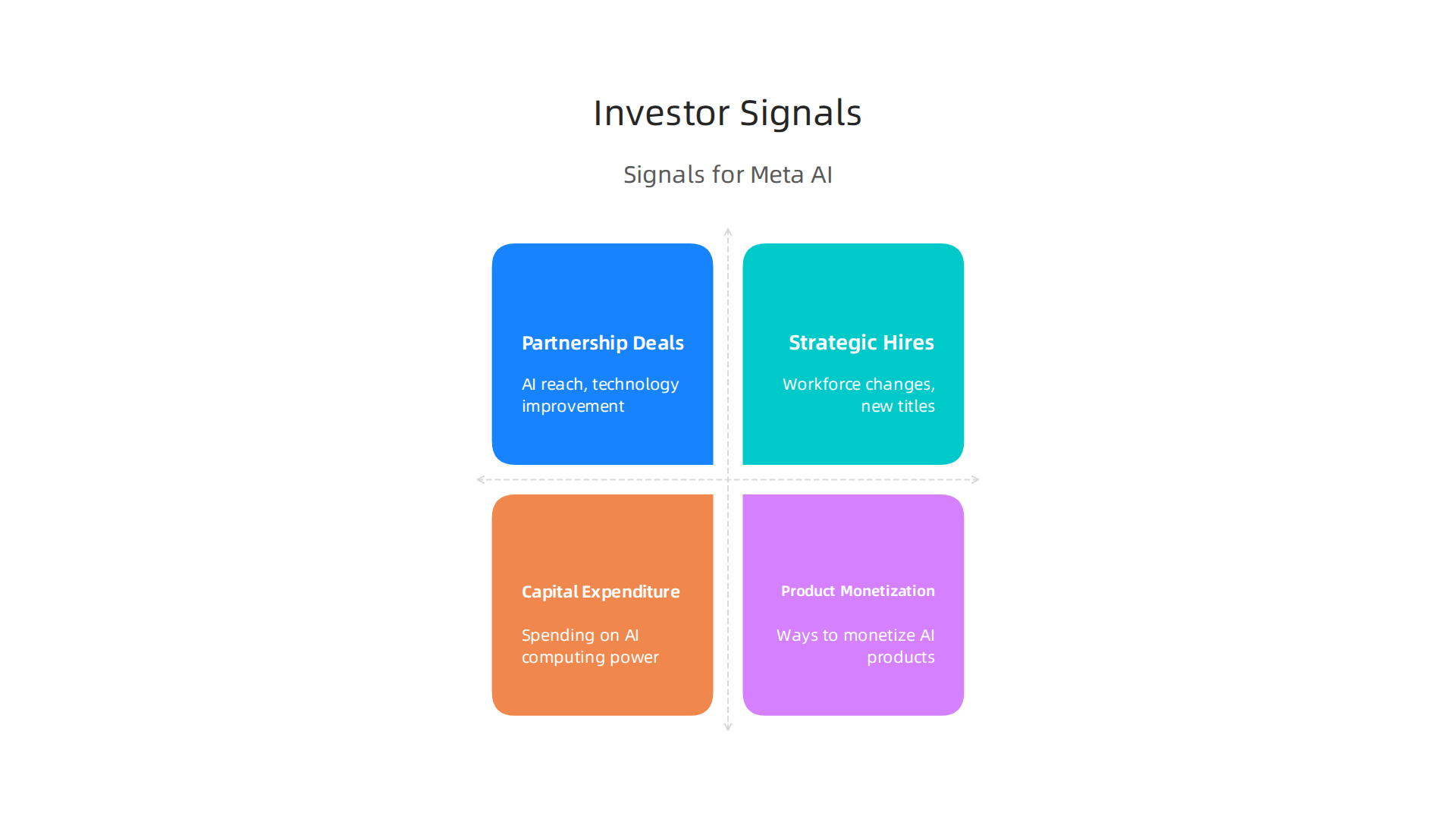
Partnership Deals
Watch for who Meta partners with. Strong partnerships can help Meta’s AI reach new markets or improve its technology faster. While its own partnership ads are already very successful, new collaborations could show growth in areas like business AI, helping more companies use ai in everyday life within Meta’s apps.
Strategic Hires and Workforce Changes
Changes in Meta’s staff tell a big story. In 2026, Meta made many changes to its workforce to put more focus on AI. For instance, the company moved thousands of employees into new roles centered on artificial intelligence and even cut about 8,000 jobs to support this shift Meta is cutting 8000 jobs to pay for AI. They also created new job titles like "AI builder" to show their commitment to becoming an "AI-native" company Goodbye, middle managers. Hello, ‘player-coaches’ and ‘org leads.’. Such big internal changes, including hiring top AI talent and restructuring teams, show a serious long-term plan for AI. Investors should look at these moves to gauge the strength of Meta’s AI strategy.
Capital Expenditure (Capex) Announcements
How much money Meta plans to spend on AI is a huge signal. This is called capital expenditure, or capex. Meta has been spending billions on building the computing power needed for its AI, like data centers and special chips. For 2026, Meta expected to spend between $115 billion and $135 billion on these things Meta AI Statistics 2026: Users, Capex, and Adoption Data. High spending here means they are serious about building powerful AI systems, which could lead to more advancements in areas like ai agent news.
Product Monetization Moves
Beyond ads, how will Meta make money directly from its AI products? Look for new ways they are turning AI into revenue. While AI helps ad income grow, Meta also makes money from its other AI efforts, leading to strong average revenue per user (ARPU) from its AI features Meta AI ARPU. This could mean new AI tools people pay for, or special features for businesses. Tracking these monetization methods helps investors see the full financial picture.
Incorporating Signals into Deal Diligence and Portfolio Monitoring
For venture capitalists, understanding these signals is crucial. When looking at potential investments in AI startups, you can compare their plans to what a big player like Meta is doing. Does the startup’s technology fit into Meta’s larger AI ecosystem? Does it solve a problem that Meta’s current AI doesn’t address? For your existing investments, monitoring Meta’s strategic shifts can help you advise your portfolio companies on market trends and potential competition.
Learning about how different types of investors approach AI can give you an edge. Check out our guide on AI startup investors to understand their unique roles. Also, a good strategy for investing in AI is key. Learn more about developing your own AI Funding Playbook.
Hiring, Talent Flows, and What They Reveal About Priorities
Beyond just the big announcements, the people Meta hires and where its existing talent moves can tell you a lot about its real goals for AI.

Think of it like watching which way the stream flows. If most people are moving towards AI projects, then that’s where the company is truly putting its energy. This is a crucial part of understanding meta ai news today from a deeper perspective.
In 2026, Meta made huge changes to its workforce. The company moved thousands of employees into new roles that focused on artificial intelligence. Some reports say as many as 7,000 employees were reassigned to AI initiatives, while many manager roles were cut to support a flatter, more AI-focused structure Meta shifts 7000 employees into AI roles as layoffs, manager cuts loom. They even created new job titles like "AI builder" to show their deep commitment to becoming an "AI-native" company, aiming for a step change in engineering efforts Meta is rebranding employee titles and roles as ….
These internal changes, along with hiring new top AI talent, show a serious long-term plan for AI. Investors should pay attention to these moves to see how strong Meta’s AI strategy truly is. For instance, if you look at job listings, you’ll see a clear focus. Meta is actively recruiting for specialized AI roles and infrastructure positions, which tells us where they are investing the most What Meta’s Leadership Reshuffle Signals for…. In fact, in 2026, Meta had more open AI-related job postings than some other major tech labs combined, highlighting their drive to build powerful new systems, including for ai agent news and more ways to bring ai in everyday life.
If you’re interested in joining this fast-growing field, understanding these hiring trends can be really helpful. Learn more about How to Land an AI Startup Job in 2026. Keeping up with all these changes can be tough, but staying informed helps you see the bigger picture.
For clear daily AI updates, consider subscribing to The AI Newsletter Worth Reading.
Regulatory and Policy Context – Why It Changes the Frame
While Meta is busy shifting employees and hiring new talent for its AI goals, there’s another very important thing to watch: government rules. Just like how new hires change a company’s direction, new laws and policies can really change how AI companies like Meta can operate. These rules often alter the risks and plans for new AI projects. Keeping an eye on these changes helps us truly understand meta ai news today and what it means for the company’s future.
For example, 2026 is a big year for AI laws around the world. In the United States, there isn’t one big federal law for AI yet, but states are making their own rules. California, for instance, started a new rule on January 1, 2026, called the Generative AI Training Data Transparency Act. This act asks makers of generative AI to be very clear about how they train their AI models and what they are designed to do AI Watch: Global regulatory tracker – United States.
Across the ocean, the European Union’s big AI Act is also taking full effect on August 2, 2026. This means all AI systems used in the EU will need to follow strict rules, even if the companies that made them are based somewhere else 2026 Global AI Regulations Guide: EU AI Act Countdown. These rules will require companies to complete checks to make sure their AI is safe and fair. You can learn more about the potential problems and dangers that come with these new technologies in our guide on why is AI bad: uncovering the real harms and risks of artificial intelligence.
So, how do you keep track of these changes and what they mean for companies like Meta? Here’s a quick checklist to think about:
- New Laws and Rules: Are there new laws coming out about how AI can be used or built?
- Data Use: Are there rules about what kind of data AI can collect and how it can use it? This is super important for
ai in everyday lifetools. - Safety and Fairness: Do rules make sure AI systems are fair and don’t harm people?
- Transparency: Do companies have to tell users when they are talking to an AI or how an AI made a decision? This applies to new
ai agent newsand personal AI helpers.
Understanding these regulatory updates is key for anyone trying to figure out the full picture of the AI world in 2026. These rules can change how quickly new AI products come out, where they can be used, and even how much money companies need to spend to make sure their AI follows the law. Staying informed helps investors, founders, and even job seekers see the bigger risks and opportunities.
Summary
This article explains why keeping up with