

Introduction: Why ‘AI for everyone’ matters in 2026
It’s 2026, and talk about Artificial Intelligence, or AI, is everywhere. From the news to social media, it feels like everyone is using AI or talking about its future. This can make it hard to keep up. You might feel lost in all the big words and new ideas. People often face a lot of information, and it’s tough to know what is true or useful. This feeling of having too much information and not enough clear answers is a big challenge right now. We need reliable help to understand AI.

That’s why the idea of "AI for everyone" is so important. It means making the power and knowledge of AI easy for anyone to understand and use. You don’t need to be a tech expert to grasp how AI works or how it might change your life or business. In fact, many guides are created just for beginners to help them understand AI in simple terms Artificial Intelligence for Beginners: The Ultimate Guide.

This guide is here to cut through the noise. We want to give you clear, easy-to-understand information about AI.
This guide will explain the basic ideas behind AI and machine learning. You will learn how to look at different AI companies and figure out which ones are truly making an impact. We will also give you simple steps to take, whether you are an investor, a business leader, or someone just curious about this exciting field. Our goal is to make sure you have the knowledge to join the conversation and make smart choices about the world of AI. It’s about opening up the limitless AI possibilities to you. Staying up to date on these kinds of developments is part of understanding the top 10 technology trends shaping our world in 2026.
Ready to get daily insights and stay ahead in the fast-paced AI world?
The AI Newsletter Worth Reading
AI fundamentals explained simply
Now that we know why understanding AI is key, let’s break down some core ideas. Think of AI, which stands for Artificial Intelligence, as a computer system that can learn and make choices, a bit like how people do. At its heart, AI often relies on something called machine learning. This is where computers learn from examples without being told every single rule SIMPLEST Explanation of How Artificial Intelligence Works? No Jargon | What is AI? How AI works?. It’s like teaching a child by showing them many pictures of cats until they can spot a cat on their own.
Here are some simple terms to help you understand how AI works:
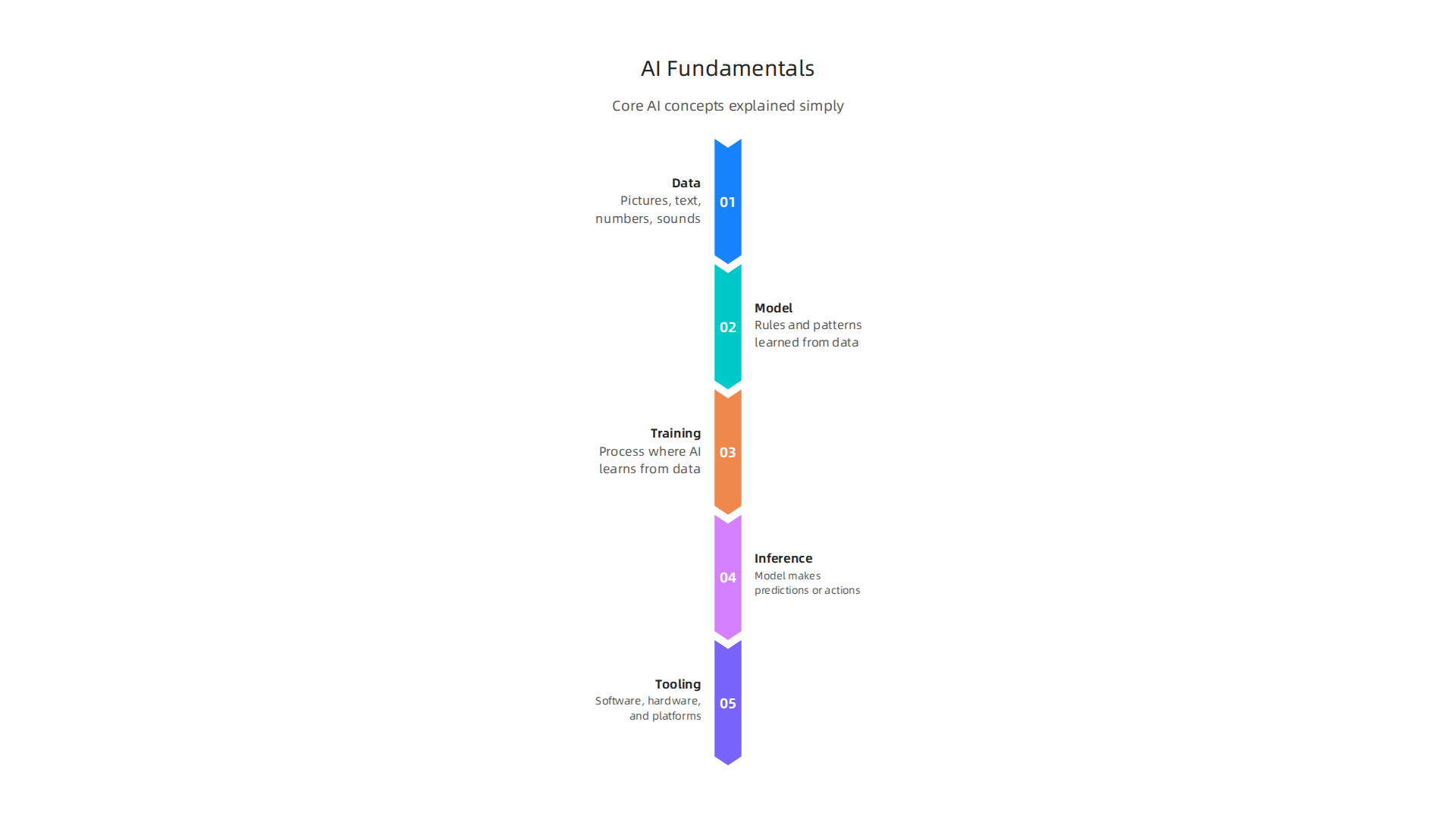
- Data: Imagine this as all the ingredients you need for cooking. For AI, data is information like pictures, words, numbers, or sounds. The more good data an AI has, the better it can learn.
- Model: This is like the recipe itself. It’s the set of rules and patterns the AI learns from the data. This "recipe" tells the AI how to combine its "ingredients" to get a certain outcome.
- Training: This is the cooking process. The AI uses the data (ingredients) to learn the model (recipe). It tries many times, getting better with each try, until it can make good predictions or decisions. This is where AI and machine learning truly come together.
- Inference: This is when you actually eat the dish you cooked. For AI, it means using the trained model (the learned recipe) to make new predictions or actions based on new data it hasn’t seen before.
- Tooling: These are all the kitchen appliances and gadgets you use to prepare your meal. For AI, tooling refers to the software, hardware, and platforms that help build, train, and run AI models.
Narrow AI vs. General AI: What’s the Big Difference?
It’s also helpful to know that not all AI is the same. We mainly talk about two types:
- Narrow AI: This is what we have today. It’s AI built to do one specific job really well. Think of an AI that only plays chess, an AI that suggests movies you might like, or an AI that can translate languages. It’s very smart at its single task, but it cannot do anything else. This is sometimes called "weak AI."
- General AI: This is what many dream about for the future. It’s AI that can do any intellectual task a human can do. It would be able to learn, understand, and apply knowledge across many different areas, just like a person. This is sometimes called "strong AI."
The difference matters because today, all the AI you use or hear about, like self-driving cars or smart assistants, is narrow AI. We are not yet at the stage of general AI, though researchers are always working towards making more powerful systems. Understanding these basics helps you see the real power and the current limits of AI.

It shows you the true limitless AI possibilities for the future. You can dive deeper into these core concepts with our guide to Artificial Intelligence and Machine Learning Fundamentals.
The talk about limitless AI possibilities is exciting, but how do these smart systems actually become successful businesses? Turns out, companies make money from AI in a few main ways. This means that AI for everyone can be more than just a dream; it’s a growing market.
Here are some common ways AI companies earn money:
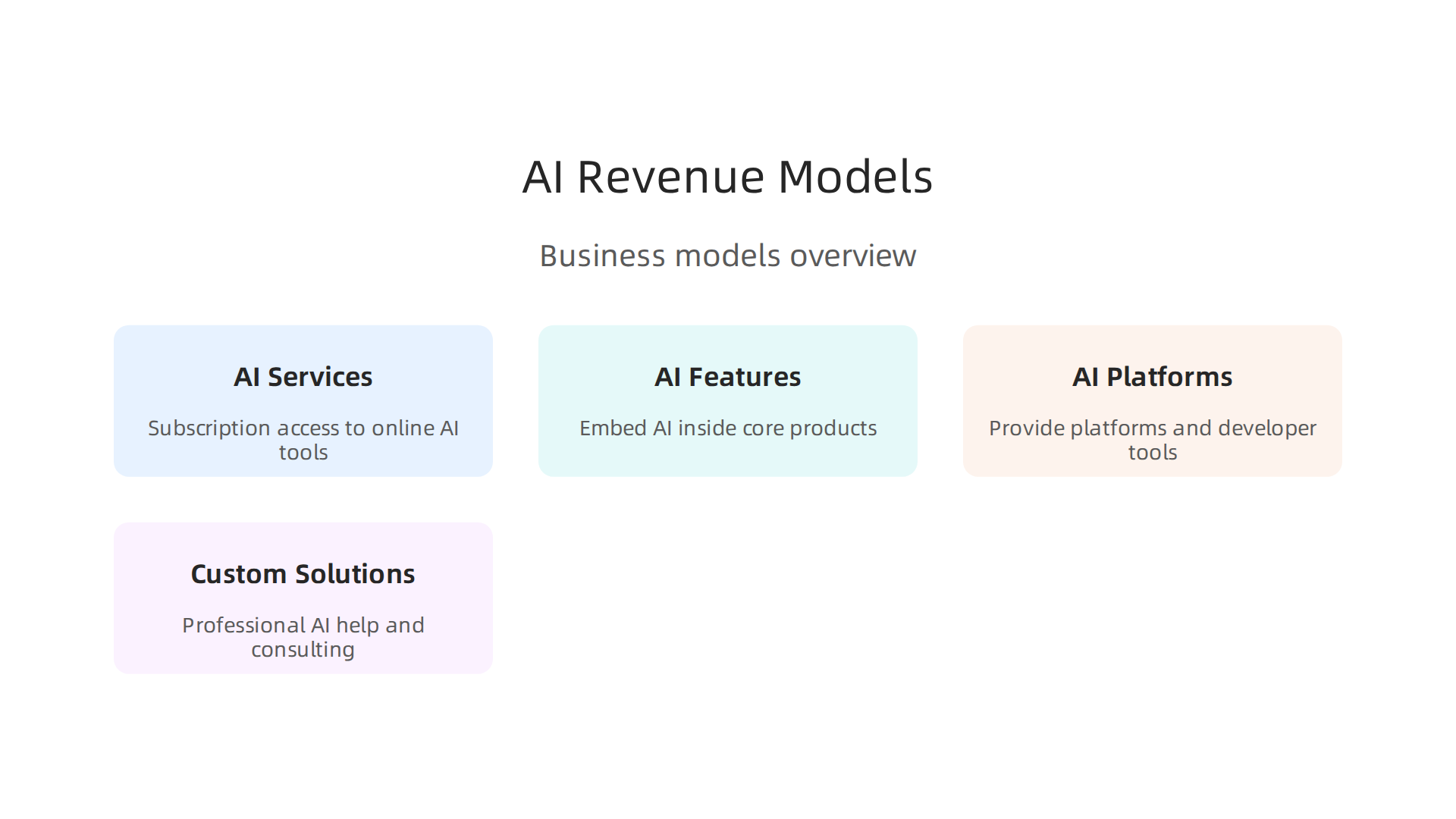
- Selling AI as a service (SaaS/API): Many AI companies offer their smart tools over the internet. You pay a fee to use their AI, often monthly or based on how much you use it. Think of an AI that helps you write emails or designs images. You access it through an app or website, or a special link called an API.
- AI features inside other products: Sometimes, AI isn’t the whole product, but a clever part of it. For example, a phone camera might use AI to make your pictures look better, or a shopping website might use AI to suggest things you might like. The company makes money from the main product, with AI making it more valuable.
- AI platforms and marketplaces: Some companies build big online spaces where other businesses can come to use many different AI tools or even build their own. It’s like a special store just for AI services.
- Professional AI help: Larger companies often need custom AI solutions built just for them. AI companies provide experts to design, build, and set up these special AI systems. They get paid for their time and expertise, which is called professional services.
Funding the Future of AI
To build these amazing AI products, companies need money. This is where funding comes in. In 2026, the AI industry is seeing a huge amount of investment. The global AI industry is now worth around $621 billion and is expected to grow a lot, possibly reaching $4.8 trillion by 2034 Global AI Industry Case Study 2026.
Investors, like venture capitalists, put money into AI companies because they believe in their ideas and think they will grow big. This investment helps companies hire smart people, develop new AI and machine learning technologies, and bring their products to more customers. In fact, global corporate AI investment more than doubled in 2025, with private investors driving most of that growth Economy | The 2026 AI Index Report | Stanford HAI.

In the first three months of 2026 alone, private AI companies raised $226 billion, which was more than all of 2025’s total funding State of AI Q1’26 Report.
When looking at AI companies, investors check a few key things:
- Product Maturity: Is the AI product ready for customers? Does it actually work well?
- Market Fit: Do enough people or businesses actually need this AI solution? Is there a big market for it?
- Team: Are the people behind the company smart and capable?
Understanding these funding stages and what investors look for can help you identify which AI companies are likely to be among the top 10 technology trends for growth. If you are interested in how these investments are managed, you can learn more about a Venture Capital: Decode Its Meaning, Funding Stages, and Investor Expectations.
This high level of investment shows that many people believe in the power of AI to change the world. To keep up with all the fast changes in the AI world, staying informed is key.
Get clear daily AI updates from The AI Newsletter Worth Reading.
After looking at how AI companies make money and get funding, the next big question is: how do you know which ones are truly good? With so much talk about limitless AI and how AI for everyone will change everything, it’s smart to know how to check if an AI company is really strong. This is called "AI due diligence," and it helps you look past the hype.

How to Evaluate AI Companies: Metrics, Signals, and Red Flags
When you want to understand an AI company, you need to look at a few key things.
These help you see how well their AI works and if the company is built to last.
What to Look For: Good Signals
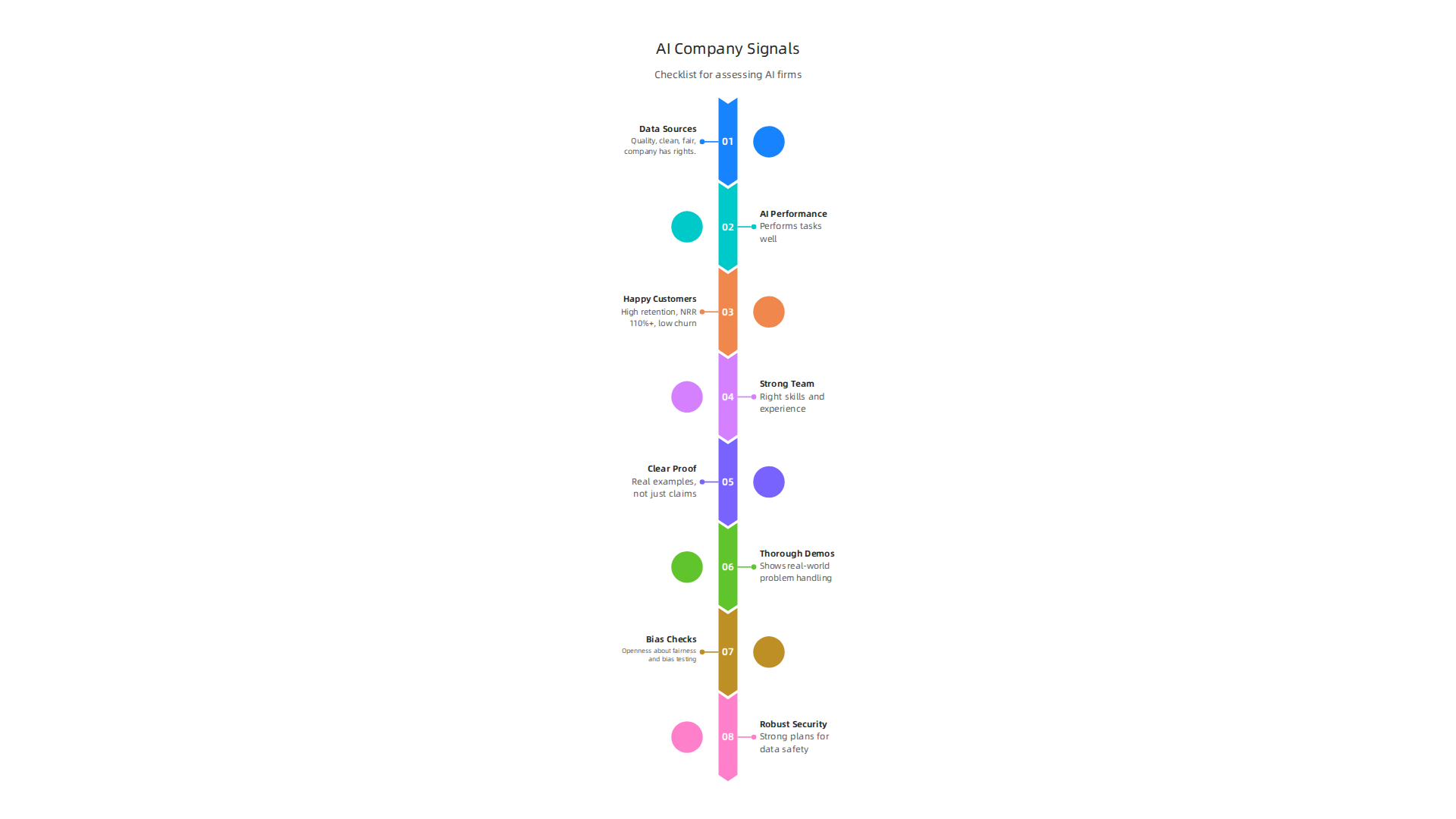
- Data Sources: AI and machine learning systems learn from data. So, the first thing to check is where their data comes from. Is it good quality? Is it clean and fair? Does the company have the right to use it? Bad data means bad AI. Experts suggest checking the source, size, and how the data is labeled for training the AI model AI & ML Startup Due Diligence Checklist for Investors (2026).
- How Well the AI Works: This is about "model performance." Does the AI actually do what it’s supposed to do, and does it do it well? Does it give correct answers most of the time? Does it work fast enough? For example, if an AI helps doctors, it needs to be very accurate. You should also think about explainable AI demystifies black box systems because it helps us understand why an AI made a certain decision.
- Happy Customers: Are customers sticking with the company and even spending more money over time? Good customer retention is a strong sign. A helpful measure is "Net Revenue Retention" (NRR). If it’s 110% or higher, it means customers are happy and growing with the product. If it’s below 100%, customers are leaving faster than new ones are joining AI Agents Will Run Due Diligence by 2027. Also, low "monthly churn" (meaning few customers leave each month, ideally below 1.5%) shows a healthy business.
- Strong Team: The people who build the AI are super important. Do they have the right skills and experience? A company with smart, capable engineers and scientists is usually a good sign. When doing AI Due Diligence in 2026, looking at the team’s background is a must.
What to Watch Out For: Red Flags
Sometimes, AI companies make claims that sound too good to be true. Here are some things that should make you pause:
- Big Claims, Little Proof: If a company says its AI can do amazing things but can’t show you exactly how or why, be careful. Ask for real examples and clear data.
- Fuzzy Demos: In product demos, watch if the AI works perfectly every time, or if the demo avoids showing how the AI handles mistakes. Sometimes demos are too controlled and don’t show real-world problems.
- Not Enough Data Checks: Is the company open about how it tests its AI for fairness and bias? An AI can learn bad habits from biased data. Checking for bias is important to avoid future problems PE Tech Due Diligence in 2026: The AI-Readiness.
- Poor Security and Privacy: AI often handles lots of personal or sensitive information. Make sure the company has strong plans to keep this data safe and private. This is a crucial part of an AI Due Diligence Checklist 2026: Avoid AI Failures.
Doing these basic checks, sometimes called an AI SaaS Due Diligence Checklist, can help you make smarter choices, whether you’re thinking about investing, partnering, or just learning about the top 10 technology trends.
To stay on top of the quickly changing world of AI and make sure you’re always informed, consider getting regular updates.
Get clear daily AI updates from The AI Newsletter Worth Reading.
Understanding an AI company means looking not just at its results, but also at the tools and systems it uses to build those results. Think of it like a house: you can check if a house is well-built by looking at its foundation, walls, and roof. For AI, these parts are called its "infrastructure" and the "developer ecosystem." This is how AI is really made possible for everyone.
AI Infrastructure, Tools, and the Developer Ecosystem
Making good AI that works for everyone isn’t a simple task. It relies on many different parts working together, like layers in a cake.

These layers are what make up the AI "stack," and each one is super important for how product teams create and run AI.
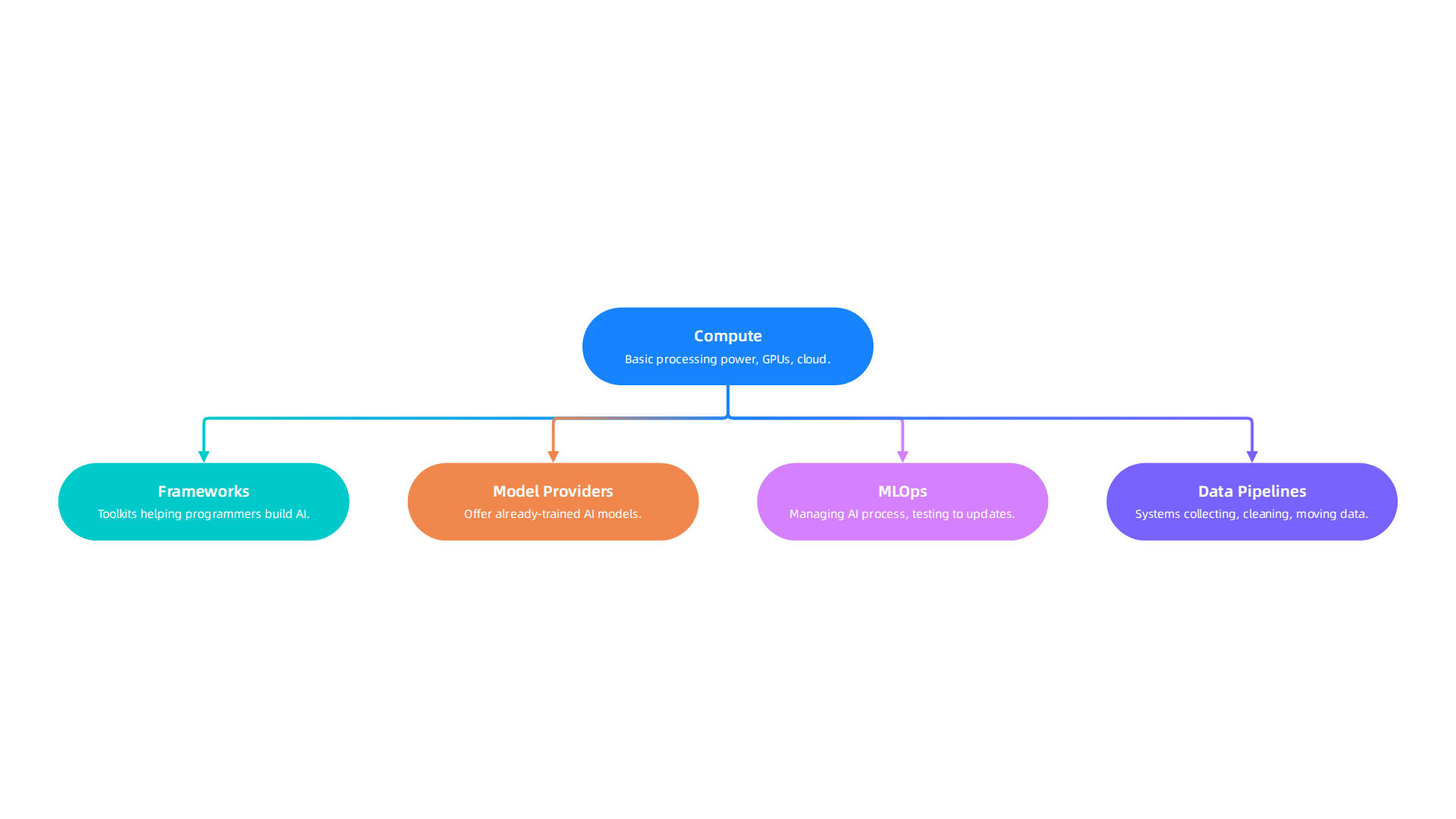
The Layered AI Stack
- Compute: This is the basic power needed. It includes special computer chips, like GPUs, and cloud services that provide the raw processing strength. These are the engines that run complex AI programs. In 2026, companies often use advanced cloud systems to get this power, and there’s a big push for new hardware that uses less energy, as highlighted in insights on AI Infrastructure Funding Trends 2026: Where Capital Flows.
- Frameworks: These are like special toolkits that help programmers build AI. They provide ready-made parts and rules so developers don’t have to start from scratch. These tools make building AI much easier and faster, helping bring AI for everyone closer to reality. In 2026, there are many top AI developer tools to use that simplify the process.
- Model Providers: These are companies that create and offer already-trained AI models. Instead of building an AI model from zero, product teams can use these pre-made ones and fine-tune them for their specific needs. This speeds up development a lot.
- MLOps (Machine Learning Operations): This is about managing the whole AI process, from testing to putting the AI into real-world use and keeping it updated. It ensures that AI and machine learning systems work smoothly and reliably, like a well-oiled factory line. The AI stack in 2026 relies heavily on these tools to keep things running efficiently.
- Data Pipelines: AI needs data to learn. Data pipelines are the systems that collect, clean, and move data to the AI models. Good data means good AI.
Each of these layers matters to product teams because they all affect how quickly and well an AI product can be built, how much it costs, and how powerful it can be.
Ecosystem Choices: Open-Source vs. Proprietary
When building AI, companies face a big decision: use open-source tools or proprietary ones?
- Open-source tools are free to use and can be changed by anyone. This means many people can work on them, making them very flexible and often cost less. For some, open-source AI software delivers cost savings and full control in 2026.
- Proprietary tools are owned by one company. They might offer better support or special features, but they can be more expensive and might "lock" a company into using only their products. This can make it hard to switch later.
This choice affects a company’s strategy and the risks buyers take. For example, using proprietary tools might lead to "ecosystem lock-in," where it becomes very difficult to move to another provider even if a better or cheaper option comes along. Understanding these trade-offs is key for anyone involved in the top 10 technology trends in AI.
To keep up with all the rapid changes and new ideas in AI infrastructure and tools, staying informed daily is essential.
Get clear daily AI updates from The AI Newsletter Worth Reading.
While understanding the technical parts of AI is important, it’s equally crucial to think about how AI affects people and society. This means looking at ethics, rules, and making sure AI is used in a good way. For AI to truly be "ai for everyone," it must be fair, safe, and respect privacy.
Ethics, regulation, and responsible adoption: what non-experts should know
When we talk about artificial intelligence, especially with new advances in "ai and machine learning," we must consider its real-world impact. This isn’t just for tech experts; it’s something everyone should understand, because AI is becoming a big part of our daily lives.
Practical Impact Areas to Watch
- Bias: AI learns from data. If the data has unfair patterns, the AI can learn and repeat those biases. This means an AI might treat certain groups of people unfairly, which can lead to big problems. Understanding these issues is key to uncovering the real harms and risks of artificial intelligence.
- Privacy: AI systems often need a lot of personal information to work well. Protecting this data from being misused or stolen is a huge concern. We need to know how our information is being used and kept safe.
- Safety: Imagine AI controlling cars or medical devices. If it makes a mistake, the results could be very bad. Ensuring AI systems are safe and reliable is a top priority for developers and users alike.
- Compliance: This means making sure AI follows laws and rules. As AI grows, governments around the world are creating new laws to guide its use. Companies that build and use AI must follow these rules to avoid problems.
Simple Questions to Ask Vendors and Partners
If you’re buying or using AI tools, it’s smart to ask some basic questions:
- How was this AI trained? What kind of data did it use?
- What steps do you take to make sure the AI is fair and doesn’t show bias?
- How do you protect my data and the data of my customers?
- What happens if the AI makes a mistake? How can we fix it?
- How does your AI follow current laws and rules in 2026?
Asking these questions helps ensure that the AI you choose aligns with responsible practices. It’s part of how you can evaluate and implement AI tools smartly for your own needs.
How Rules and Standards Shape AI
In 2026, governments and industry groups are working hard to create rules for AI. These rules are very important because they help shape how AI products are made and used.
- Regulatory Developments: Laws are being written at home and in other countries to cover things like AI safety, data privacy, and how AI decisions are made. These laws make companies think about risks from the very start of building an AI product.
- Industry Standards: Beyond government laws, many companies are creating their own best practices. These standards help ensure that AI is built in a way that is trustworthy and understandable. The push for explainable AI for business trust and regulatory compliance is a big part of these efforts.
All these rules and standards are vital for making sure that the promise of "limitless ai" also comes with limitless responsibility. They help guide the "top 10 technology trends" in AI toward a future that is good and fair for everyone.
Now, let’s look at how AI is actually being used in the real world. This helps us see the good things AI can do and how it helps make life better for everyone. In 2026, AI is not just a dream; it’s a tool making big changes in many areas.
Real-world applications and short case snapshots
AI and machine learning are being put to work everywhere. These smart tools help different industries get better at what they do. The key is to see not just what AI can do, but how much it helps. We call this "measurable outcomes."
AI Making a Difference in Key Industries
Artificial intelligence is showing real value in many important sectors:
- Healthcare: AI helps doctors find problems earlier, like spotting diseases from X-rays or other scans. It can also help create new medicines faster. This means better care for patients and more efficient hospitals.
- Finance: In banks and other money businesses, AI helps spot fraud and manage risks better. It can look at lots of data to see strange patterns, keeping your money safer. AI also assists with customer service, answering common questions quickly.
- Enterprise Automation: Many businesses use AI to make everyday tasks easier. This could be answering customer emails, sorting through documents, or helping software developers write code faster. For instance, some companies are seeing big savings in time and money by using generative AI for tasks like content creation and customer service automation. In fact, many enterprises are seeing measurable returns on their AI investments in 2026 across various use cases, from reducing costs to improving speed and customer experience AI Use Cases That Deliver Real ROI for Businesses in 2026. To learn more about how AI is transforming different fields, check out these artificial intelligence applications in 2026 from healthcare to finance and beyond.
These examples show that AI isn’t just a fancy idea; it’s a practical tool delivering real benefits.
Understanding Pilot Results Versus Full Use
When you hear about AI success stories, it’s good to know the difference between early tests (pilots) and when AI is used widely (scaled deployments).
- Early Pilot Results: A pilot is like a small test. It shows if an AI idea has promise. Results from a pilot can be very exciting because they highlight what’s possible. However, a pilot usually works with a small amount of data or a limited number of users. It might not show all the challenges that come with making AI work for everyone on a larger scale.
- Scaled Deployments: This is when an AI system is fully put into use across a whole company or for many customers. These results are more real. They show how the AI handles bigger workloads, different kinds of data, and more users. When assessing if an AI tool is truly good, it’s important to look for successful scaled deployments. These are the ones that truly prove the AI’s value and how much it can help. Many companies in 2026 are showing clear and measurable returns on investment from their AI projects after moving past pilot stages AI ROI in 2026: Case Studies From Businesses That Invested.
It is crucial to look for solid proof that AI can keep delivering good results over time. This helps us ensure that AI for everyone is not just a dream, but a reliable part of our future.
Staying informed about how AI is evolving and impacting industries is crucial for making smart decisions.
Get clear daily AI updates from The AI Newsletter Worth Reading.
Staying informed about how AI is evolving and impacting industries is crucial for making smart decisions. Now, let’s talk about how you can become a part of this exciting world. Whether you want to put your money into AI, start your own AI company, work with AI, or get a job in the field, there are many ways to join in. AI for everyone means understanding where you fit and what steps you can take.
How to get involved: careers, partnerships, and next steps for different audiences
Artificial intelligence is changing the way we work and live. It offers many new chances for people from all walks of life. Here’s how different groups can jump into the world of AI and machine learning in 2026.
For Investors: Finding Smart AI Opportunities
If you’re an investor, you’re always looking for the next big thing. AI is definitely one of the top 10 technology trends right now. To invest wisely, you need to know which AI companies are truly making a difference and showing good returns. This means looking past early tests and focusing on companies that have put AI into full use with clear results AI ROI: What Enterprise AI Actually Delivers (2026). It’s also important to understand the bigger picture of the AI market.
You can learn more about how to make smart choices by reading a guide for investors, founders, and analysts. Look for companies that show how their AI tools cut costs, make things faster, or bring in more money. This is what we call measurable ROI, or "return on investment." Knowing how to master investing in AI startups is key to finding real success in this fast-moving area.
For Founders: Building and Growing Your AI Company
If you’re an entrepreneur, AI opens up a world of possibilities. You can start a company that uses AI to solve old problems in new ways. To succeed, you need a clear idea of what problem your AI can fix and how it will help customers. Think about creating AI tools that truly deliver value, like those shown to provide strong returns in fields like customer service and software development 11 Generative AI Use Cases Delivering Real ROI in 2026.
Learning about AI-driven leadership for 2026 transformation and growth can help you guide your team and make your company strong. You should also focus on finding good partners and understanding how to get funding for your AI ideas.
For Operators: Using AI in Your Daily Work
For those who run businesses or manage teams, AI can be a powerful helper. It’s not about replacing people, but about making tasks easier and faster. This can mean using AI to handle customer questions, sort through emails, or help with marketing. For instance, AI automation can help businesses see real benefits in areas like customer support and software development AI Automation ROI Benchmark Report 2026.
Taking the time to learn about different AI tools and how to evaluate them is very important. This helps you pick the right AI for your business needs and make sure it works well.
For Job Seekers: Finding Your Place in AI
The AI industry is growing fast, and there are many jobs available. You don’t always need to be a computer scientist to work in AI. There are roles for project managers, designers, writers, and sales people who understand AI. Start by learning the basics of artificial intelligence and machine learning fundamentals.
To help yourself stand out, focus on how AI can solve real-world problems. Understanding how to land an AI startup job in 2026 can give you an edge in the job market. Showing that you can think about how AI benefits businesses will make you a strong candidate.
For Non-Technical Professionals: Contributing to AI
Even if you don’t write code, you can still play a big part in AI. Non-technical professionals are needed to help design AI systems, make sure they are fair, and explain how they work to others. Your understanding of people, business, or ethics is very valuable. You can help guide how AI is used, making sure it serves everyone fairly and effectively. This ensures that AI for everyone is truly a positive force in the world.
To make a real impact, spend time learning about how AI works, what it can and cannot do, and how it affects society. Your perspective helps make sure AI tools are helpful and responsible. This kind of thoughtful engagement is crucial as AI continues to shape our future.
Summary
This article explains why making AI accessible to everyone matters in 2026 and walks readers through the practical basics of artificial intelligence, from data and models to training and inference. It covers the difference between narrow and general AI, how AI companies monetize products, and where funding comes from so readers can spot serious startups. The guide offers a clear checklist for evaluating AI businesses—good signals, red flags, and what investors or partners should ask—and explains the layered AI stack including compute, frameworks, MLOps, and data pipelines. It also compares open-source and proprietary choices, highlights ethical and regulatory concerns like bias and privacy, and shows concrete applications across healthcare, finance, and enterprise automation. Finally, the article gives actionable steps for different audiences—investors, founders, operators, job seekers, and non-technical professionals—so readers can join the AI economy with practical confidence.