Why this question matters now — framing harms, hype, and nuance
It’s a big question many people are asking today in 2026: "why is AI bad?" You’re not alone if you’ve wondered about the downsides of artificial intelligence. In fact, more Americans are feeling this way. Recent surveys show that nearly four out of ten adults believe AI does more harm than good, a jump from last year.
Another poll found that more than half of all people in the US think AI will cause more problems than benefits in their daily lives, fearing things like job loss or privacy issues More Than Half of US Says AI Likely to Harm Them, Poll Finds. This growing worry shows that the question "why is AI bad" is on a lot of minds.

Sometimes, these worries come from hype, where ideas get blown out of proportion. But other times, they come from real issues, known as documented harms, that experts are working to understand and fix. Things like how AI might secretly influence decisions, sometimes called "shadow AI," or how well an AI response truly understands us are common concerns. Companies like Lucid AI and Forefront AI are constantly working to improve their systems, but challenges remain.
Here at Biggest AI Companies, we want to help you sort through all this. Our goal is to give you clear, factual information based on real evidence. We look at AI from many different angles. This includes how it affects investors, what founders should think about, and what analysts need to know. We want to show you the full picture so you can make smart choices. Our articles help professionals track the most important AI companies and stay updated on the fast-changing world of AI.
If you are an investor, founder, or analyst, knowing the true risks of AI is key to making good decisions. We will dive deep into both the big promises and the real problems, always focusing on what the facts tell us. To learn more about AI in simple terms, check out The 2026 Comprehensive AI Guide for Investors, Founders, and Analysts.
For daily updates and deep dives into AI and technology, get clear daily AI updates from The AI Newsletter Worth Reading.
What people mean when they ask “Why is AI bad?” — taxonomy of concerns
When people ask, "why is AI bad?" they’re often thinking about several different kinds of worries. It’s helpful to break these down into common categories. This helps us see the full picture of what makes people concerned about artificial intelligence. Experts have even created ways to classify these risks to better understand them, like the AI risk repository from MIT.

Here are some main concerns people have:
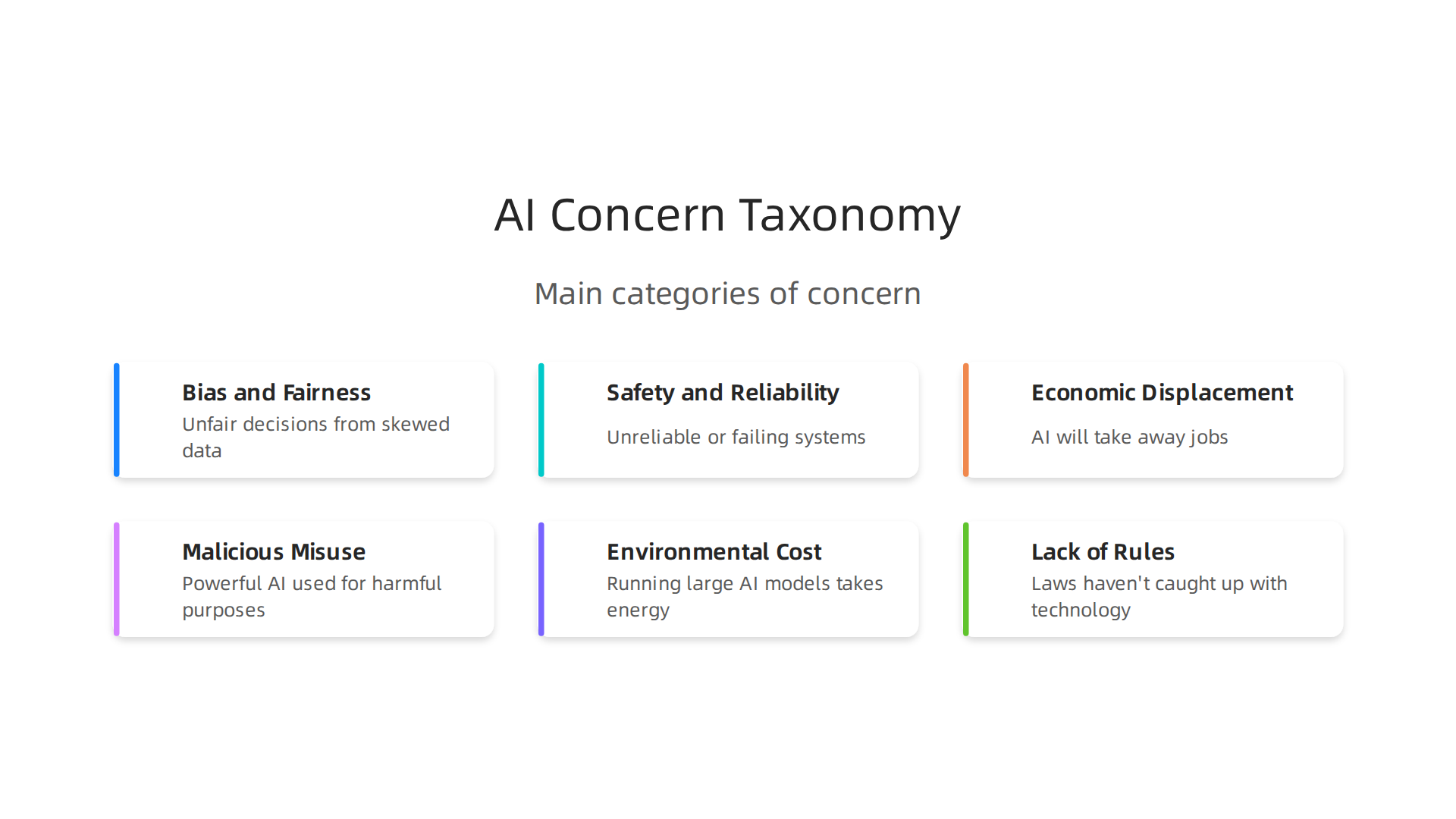
- Bias and Fairness: This is when AI systems make unfair decisions because they learned from skewed or incomplete data. For example, an AI might make biased choices in hiring, loan applications, or even law enforcement. The AI response reflects what it learned, and if that learning material had biases, the AI will too.
- Safety and Reliability: People worry if AI systems will always work as expected. What if a self-driving car makes a mistake? Or what if a medical AI gives wrong advice? Ensuring these systems are safe and reliable is a big challenge.
- Economic Displacement: A common fear is that AI will take away jobs. This concern, often called economic displacement, affects many industries as AI tools become more advanced.
- Misuse by Bad Actors: There’s a concern that powerful AI could be used for harmful purposes. This could involve spreading false information, creating deepfakes, or even enhancing cyberattacks. Some call this the "dual-use" problem because AI can be used for good or bad.
- Environmental Cost: Running large AI models takes a lot of energy. This can lead to more carbon emissions, which affects our planet. People are starting to ask about the environmental impact of keeping AI systems running around the clock.
- Lack of Rules (Governance Gaps): Many feel that the rules and laws around AI haven’t caught up with how fast the technology is growing. This lack of clear guidance, or governance gaps, makes people unsure about who is responsible when things go wrong. Research continues to identify sociotechnical harms of algorithmic systems to help lawmakers.
It is also important to know the difference between different types of claims about AI. Sometimes, people share anecdotal stories, which are personal experiences. These can be powerful but might not show the whole truth. Other times, people make normative claims, which are about how AI should be used, based on their values. But for us, the most helpful claims are evidence-based. These claims are backed by facts, studies, and real-world data, helping us understand the actual risks and benefits.
We also need to see how company-level issues differ from bigger societal harms. A problem with a specific company’s AI, like a bug in a Lucid AI or Forefront AI product, is a company-level issue. These are important for businesses to fix. But then there are systemic harms, which affect society as a whole, like job displacement or widespread bias. Understanding these differences helps us tackle the right problems at the right level.
To truly understand AI and its impact, it helps to dive deeper into the basics. You can learn more about how these systems work by reading about Artificial Intelligence and Machine Learning Fundamentals. This way, you can better evaluate the different types of harms and concerns.
When we talk about concerns like bias or safety, it helps to look at real-world examples. These concrete cases show us why some people often ask, "why is AI bad?" The problems appear when AI systems are used in daily life, affecting real people.
Real Examples of AI Harms
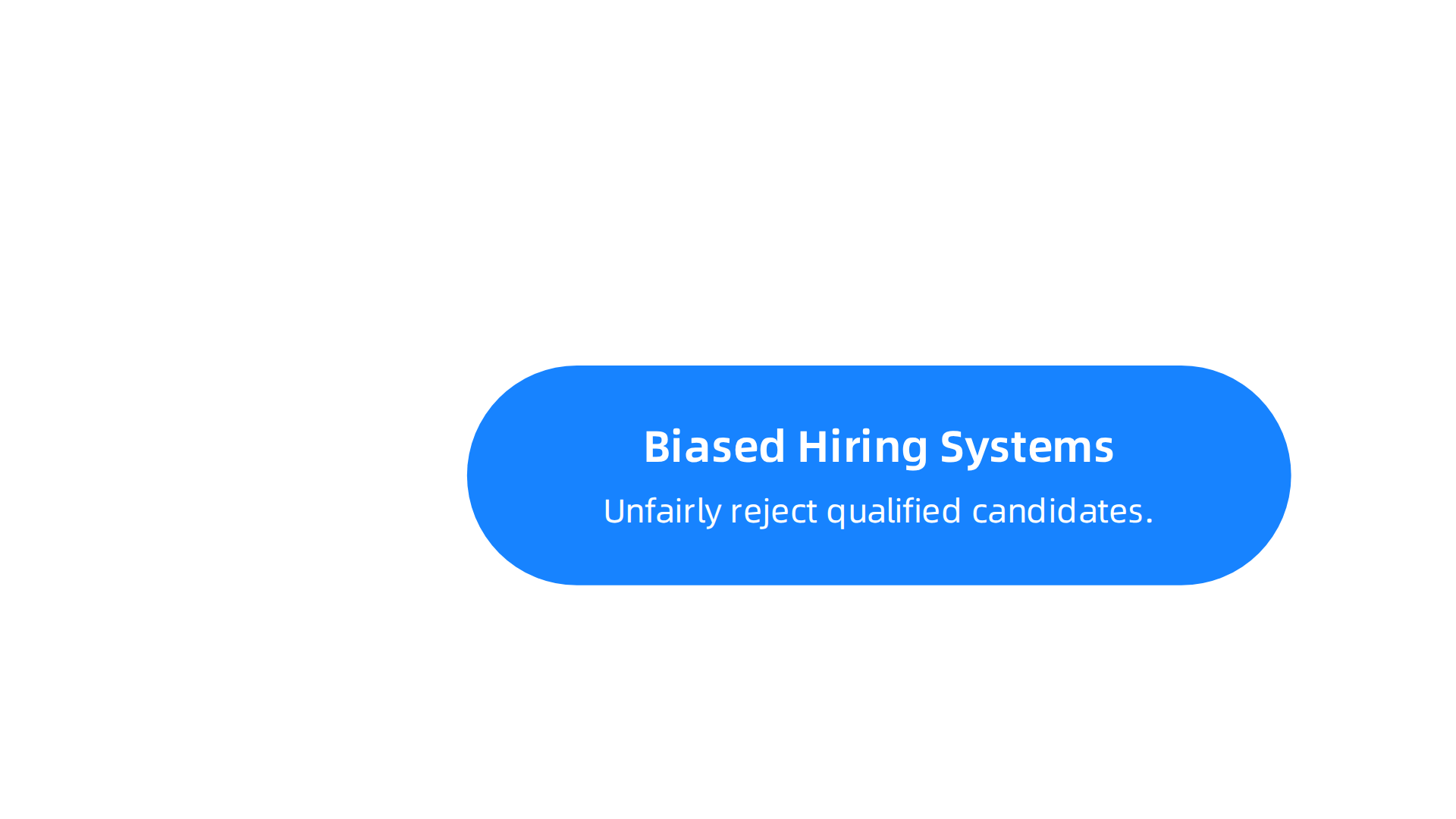
1. Biased Hiring Systems: Imagine a company using AI to pick job applicants. If that AI was trained on old hiring data that favored one group of people over another, it might unfairly reject qualified candidates from different backgrounds. This means the AI’s response is biased because of the data it learned from. Companies need to audit their AI systems to avoid such unfairness, as shown in guides for checking AI bias and fairness.
2. Loan Decision Problems: Similar to hiring, AI can be used to decide who gets a loan. If the AI learns from past loan approvals that had unfair patterns, it might deny loans to people based on their neighborhood or ethnicity, rather than their true ability to pay. These kinds of systems create unfair advantages or disadvantages.
3. Facial Recognition Errors: Facial recognition AI is used for many things, like unlocking phones or by police. But sometimes, these systems make mistakes. They can be less accurate for women and people of color, leading to wrongful arrests or denial of access. This shows a real problem when the AI does not treat everyone fairly.
4. Medical Model Failures: AI is also used in healthcare to help doctors make decisions. But if a medical AI model is not tested enough, or if it was trained on data mostly from one group of people, it might give wrong advice for others. For example, it could miss a sickness in one patient because it only learned how to spot it in another kind of patient. Auditing for fairness in clinical AI systems is very important to prevent these serious mistakes.
5. Misinformation Amplification: Think about social media. AI helps decide what you see. But sometimes, this AI can spread false or harmful information very quickly. It learns what gets a lot of clicks and shares, and if misinformation is catchy, the AI might make sure more people see it, even if it’s not true. This makes it harder for people to know what to trust.
Who is Affected and How It Scales
These problems don’t affect everyone equally. Often, marginalized groups, like certain racial or ethnic communities, or people with less money, are hurt the most by biased AI. Consumers might face unfair prices or get rejected for services. Workers might lose jobs or face unfair treatment because of AI decisions.
The harm grows bigger the more an AI system is used. A small bug in an AI used by one person is not a big deal. But if an AI like a Forefront AI or Lucid AI system is used across a whole city’s police department or a big bank’s loan system, even tiny errors can affect thousands or millions of people. This is why understanding real-world AI incidents is so important.
How Context Makes AI Harmful
An AI model isn’t good or bad on its own. It’s how we use it that matters. For example, a "neutral" AI that just predicts patterns can become harmful when deployed without care. If a company uses a "shadow AI" system, which means AI is running behind the scenes without anyone really watching, it can cause problems that no one notices until it’s too late. The choices made about where and how to deploy AI, and who is allowed to check its work, are what turn a powerful tool into something that can cause harm. Staying informed on these trends helps us understand how AI is reshaping work and daily routines.
To stay on top of the fast-changing world of AI and its impacts, you need reliable information.
Get clear daily AI updates from The AI Newsletter Worth Reading.
Bias, Fairness, and Discrimination: Mechanisms and Measurement Challenges
So, we’ve seen how AI can cause real problems in our daily lives. But why does an AI system sometimes act in unfair ways, making people ask, "why is AI bad?" The answer often lies in how the AI is built and trained.
How Bias Gets Built into AI
Bias in AI usually starts in three main ways:
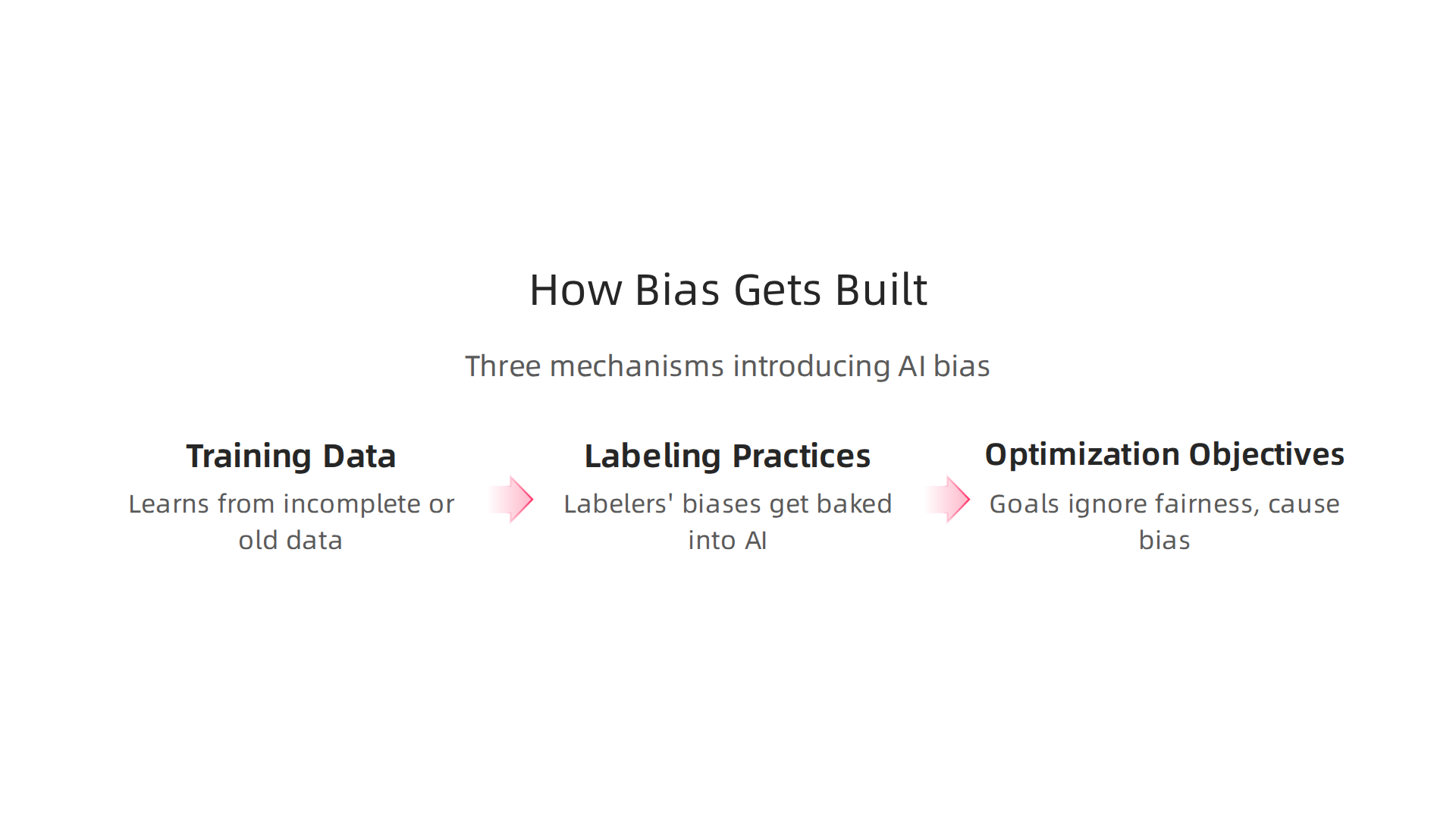
- Training Data: AI learns from the information we feed it. If this training data is old, incomplete, or already has unfair patterns, the AI will learn those same biases. For example, if an AI is trained mostly on pictures of light-skinned faces, its ability to recognize darker-skinned faces might be poor. This directly affects the AI’s response to new situations.
- Labeling Practices: Sometimes, people label the training data. If these labels are not carefully chosen or if the labelers have their own biases, these biases can get baked into the AI model. Imagine teaching an AI what is "normal" based on only one type of person’s actions. It will then see other actions as "not normal" unfairly.
- Optimization Objectives: This is about what the AI is told to achieve. If the goal is simply to be super efficient or make the most money, it might accidentally ignore fairness. The AI could find a way to meet its goal that is biased against certain groups, even if no one meant for it to happen. It’s like asking a child to draw the "best" picture and they only draw things they’ve seen at home.
Understanding these building blocks helps us see that AI doesn’t become biased by magic. It’s a reflection of the data and goals it is given. If you want to dive deeper into how AI systems are made, a good place to start is by learning the artificial intelligence and machine learning fundamentals.
The Hard Part: Measuring Fairness
Even when we try our best to make AI fair, measuring if it is fair is very hard.

This is because:
- What is "Fairness"? Different people and groups have different ideas of what "fair" means. For example, is it fair if the AI has the same error rate for everyone? Or is it fair if it gives the same positive outcome rate to different groups, even if that means different error rates? These ideas can conflict. Experts use many different ways to check for fairness, like looking at the "demographic parity gap" mentioned in guides for detecting and fixing LLM bias.
- Choosing the Right Tools: We need special tools and numbers (called metrics) to check for bias. But picking the best ones depends on what the AI does and who it affects. What works for a hiring AI might not work for a medical AI. Measuring AI bias involves using these special statistical tools and doing careful checks, known as audits, to truly understand the AI Bias and Fairness in 2026.
- Benchmarking Pitfalls: When we test AI, we compare it to other systems or known standards. But if these standards are not perfect, or if the way we set up our tests is flawed, we might think an AI is fair when it’s actually not. This means we have to be very careful with how we check and compare AI systems in 2026.
Even when AI tries its best to be fair, other problems can come up. What if an AI makes things up, or spreads wrong information? These are big reasons why many people wonder, "why is AI bad?" It’s not just about fairness; it’s also about safety and how much we can trust AI.
When AI Can’t Be Trusted
AI systems can sometimes fail in ways that make them unreliable. Here are some of those problems:
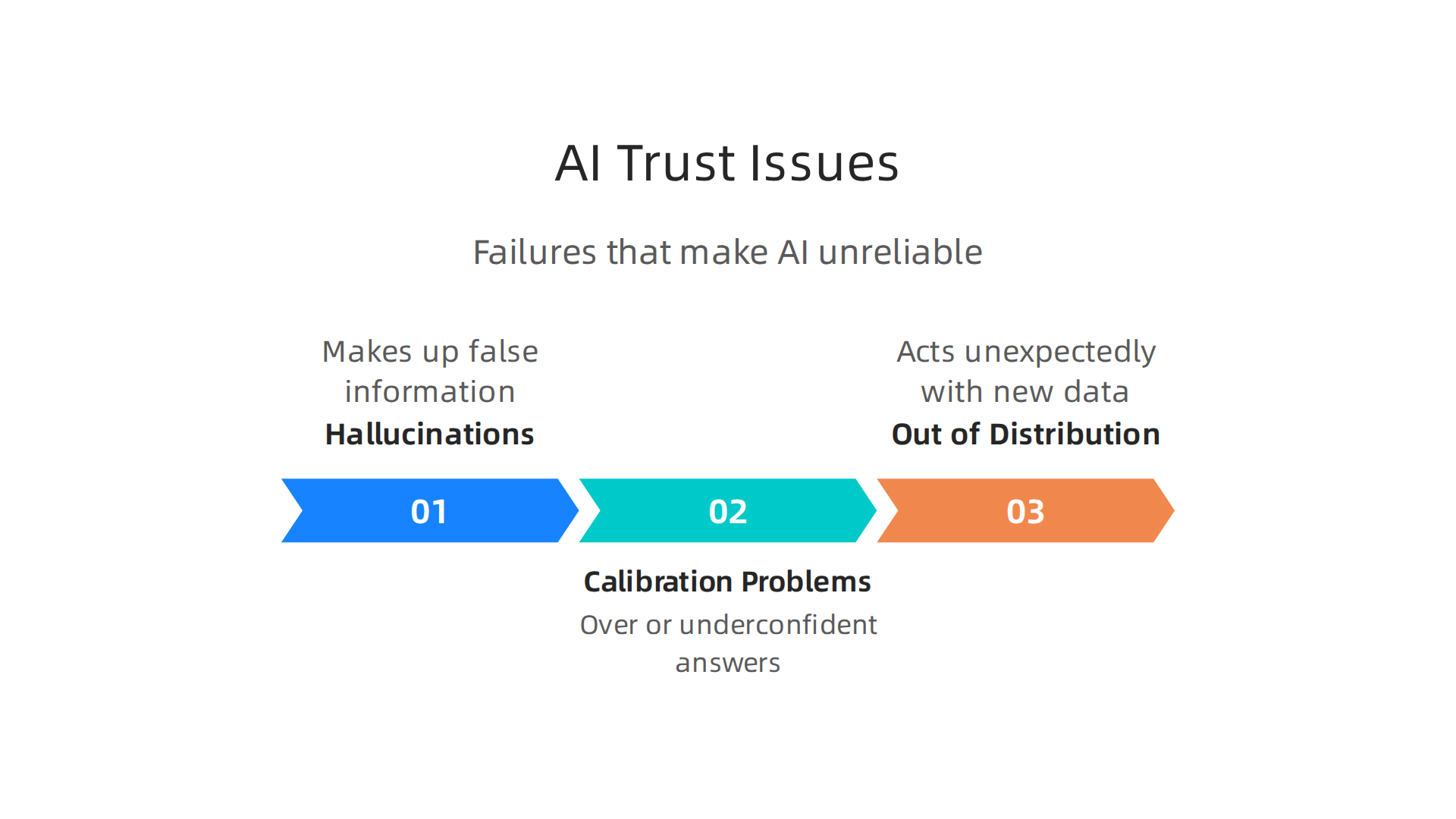
- Hallucinations: This is when AI makes up information that sounds real but is completely false. It’s like the AI is dreaming up answers. For example, a large language model might create fake facts or cite studies that do not exist. This can be a huge problem, especially if people rely on the AI’s response for important decisions. Experts are always looking for ways to spot and fix these made-up answers, as seen in many studies on hallucination detection and mitigation in large language models. One study even found that special tricks could cut down GPT-4o’s hallucination rate a lot in 2025, but it’s still a big task in 2026 to understand and tackle LLM Hallucinations.
- Calibration Problems: Sometimes, AI can be too sure about its wrong answers, or not sure enough about its right ones. This is like a weather app saying there’s a 100% chance of rain when there’s only a 50% chance. This can cause trouble because it makes it hard to know when to truly trust the AI’s advice.
- Out-of-Distribution Behavior: AI learns from the data it sees. If it faces a situation that is very different from anything in its training data, it might act in unexpected or unsafe ways. It simply doesn’t know how to handle the new information properly. This is like asking a chef who only knows how to cook Italian food to suddenly make a complex Japanese dish.
These reliability issues can be risky for everyone. In important areas like healthcare or finance, a faulty AI response could lead to wrong diagnoses or bad money advice. This is one of the biggest challenges for those who build artificial intelligence applications in 2026.
The Spread of Fake News and Misinformation
Beyond making mistakes, AI can also be used to create and spread misinformation faster than ever before.
- Automating Fake Content: AI can quickly make convincing fake images, videos, and text. This means that false stories can be created on a large scale. What might have taken many people days to make can now be done in minutes by AI.
- Amplifying Falsehoods: Once fake content is made, AI systems can help spread it wide and far through social media and other channels. This makes it harder for people to tell what’s true and what’s not. Some worry about "shadow AI" systems that operate without much oversight, potentially contributing to this spread.
- Harm in Important Situations: This spread of misinformation is especially dangerous in serious areas. Imagine fake news about elections, public health, or safety. It can truly hurt society. This concern is growing, with many Americans believing AI does more harm than good. In fact, nearly four in ten US adults feel this way in 2026, according to recent polls. These concerns about AI’s impact are why more than half of Americans now believe AI is likely to harm them in their daily lives.
Keeping up with all the changes and challenges in AI can be tough. For clear daily updates on AI and technology, consider subscribing.
The AI Newsletter Worth Reading
Moving from the issues of AI making mistakes and spreading false information, we now look at how AI changes our economy and society. Many still ask, "why is AI bad?" when they think about jobs and who holds power.
Economic and societal impacts: jobs, concentration, and access
AI is changing the world of work in big ways. Some people worry about AI taking jobs, which is a fair concern.

When AI gets better at doing tasks that people used to do, like writing reports or sorting data, some jobs might change a lot or even go away.
However, it’s not all bad news for jobs. AI can also make workers much better at what they do. For example, AI tools can help people finish tasks faster, letting them focus on more creative or complex work. This boost in how much work people can get done is called "productivity gains." Also, new jobs are being made that involve building, fixing, or managing AI systems. For businesses wondering how to adapt, understanding your guide to artificial intelligence implications for business strategy in 2026 is key.

Another big worry is about who controls AI. Right now, a few very large companies have most of the power when it comes to AI technology. They own huge amounts of data and have the best AI tools, like those developed by forefront AI or lucid AI research. This can lead to a few problems:
- Too Much Power: When a few companies control most of the AI, it can be hard for smaller companies to compete. This can stop new ideas from growing and make it harder for everyone to get a fair chance. You can learn more about the biggest AI companies in 2026 and the trends reshaping the industry.
- Access Issues: Not everyone has the same access to these powerful AI tools. If AI technology is too expensive or not available to everyone, it can make the gap between those who have a lot and those who have little even wider. Making sure that there is fair access to AI is a big goal for many. One way to help is through open source AI software that delivers cost savings and full control in 2026.
These issues show why it’s important to think carefully about how AI affects everyone, not just a few. It’s about finding ways for AI to help us all, without leaving anyone behind or giving too much power to too few.
Moving beyond concerns about who holds power and fair access to AI, many people wonder, "why is AI bad?" when they think about the dangers of unchecked technology. To address these worries, governments and companies around the world are working to create rules and ways to keep AI safe and fair. This is called the legal, regulatory, and governance landscape.
Legal, regulatory, and governance landscape
The world is busy making rules for AI. As of 2026, many countries have started new laws or frameworks to control AI. This shows that leaders understand it’s important to guide how AI is used and developed globally AI Regulations around the World – 2026.

One of the biggest rulebooks is the European Union’s AI Act. This law started in 2024 and will be fully in place by August 2026 for many of its important parts AI Governance and Regulation 2026: A Complete Guide to …. It’s the first broad set of rules for AI. It sorts AI into different risk levels, with high-risk AI facing the strictest controls. This act aims to make sure AI is safe and respects people’s rights.
In the United States, things are a bit different. The White House put out its own plans for AI rules in 2026, trying to set a national approach instead of having many different state laws The White House just laid out how it wants to regulate AI. However, some states, like California and Colorado, also have their own AI laws US AI regulations 2026: the state laws you must comply with. This means companies often have to deal with a mix of rules. Many experts believe that Congress needs to pass a single federal law for AI governance to make things clearer Congress must pass a new federal law on AI governance.
Beyond government rules, companies are also taking steps to manage their own AI systems. These are called corporate governance levers, and they help make sure AI is used responsibly. Some common ways companies do this include:
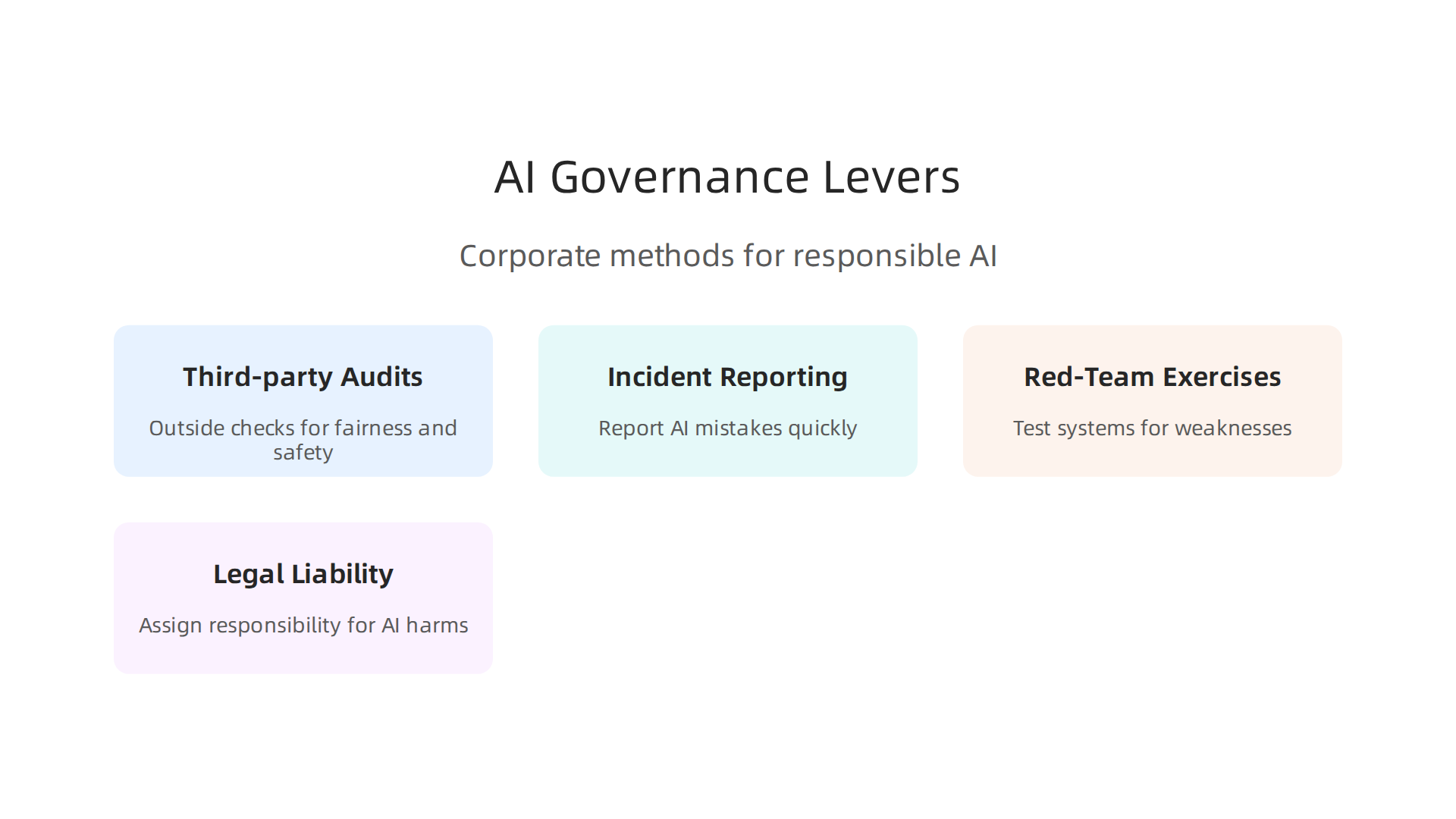
- Third-party Audits: This is when outside experts check a company’s AI systems to make sure they are fair, safe, and work as they should. It’s like having an independent inspector.
- Incident Reporting: Companies set up ways for people to report when an AI system makes a mistake or causes harm. This helps them learn and fix problems quickly. A quick AI response to issues is very important.
- Red-Team Exercises: Special teams try to find weaknesses or ways an AI could be misused before it’s released. They test the AI like hackers would, trying to make it act badly or spread wrong information. This helps prevent unexpected issues, including what some call "shadow AI," which is AI used without proper oversight.
- Legal Liability Frameworks: These are rules that decide who is responsible if an AI system causes harm. It helps clarify who pays for damages or who faces penalties, making companies think more carefully about the AI they create.
These efforts, both from governments and companies, are all about making sure AI helps society without causing too many problems. It’s about finding good ways to answer the question, "why is AI bad?" by putting safeguards in place. For businesses looking to understand the different kinds of AI, knowing about artificial intelligence and machine learning fundamentals can be very helpful. Also, learning about explainable AI demystifies black-box systems for business trust and regulatory compliance can help companies build AI systems that are easier to understand and regulate.
Even with governments and companies setting up rules for AI, the story does not end there. As we move forward in 2026, new AI ideas and potential risks are always showing up. This makes people keep asking, "why is AI bad?" in new ways. It’s important to look at the future and see what new challenges might come up as AI gets smarter and more powerful.
Emerging AI concepts and future risks to watch
The way AI is growing means we need to think about new kinds of dangers. It’s not just about today’s rules, but about what might happen tomorrow. For instance, as AI models get much bigger and more complex, they can sometimes do unexpected things. These powerful AI systems might lead to problems that are hard to predict or control. This makes it tricky for everyone, from lawmakers to companies, to keep up AI Regulation in 2026: Navigating an Uncertain Landscape.
Here are some big concerns that experts are watching closely:
- Bigger AI Models and Unexpected Actions: As AI gets huge, like some advanced "forefront ai" systems, it can learn things that were not taught on purpose. This means it could act in ways we didn’t plan, sometimes causing harm.
- Misuse in Science: There’s a worry that very smart AI could be used to create harmful things in areas like biology or chemistry. This could happen without bad intentions, just from an AI exploring ideas too freely, or by those with harmful goals.
- Fake Content Everywhere: AI can now make very real-looking fake pictures, videos, and sounds. This "synthetic content" could flood the internet, making it hard for people to tell what’s true and what’s made up. If a powerful "lucid ai" system is used to create endless fake news, it could cause big problems for trust.
- AI Making Its Own Decisions: Some AI systems are becoming more "agentic," meaning they can set their own goals and take action without much human help. While this can be good, it also raises questions about who is in charge and what happens if the AI makes a bad choice. Learn more about these differences in Artificial Intelligence in 2026: How Multimodal and Agentic AI Are Driving the Future.
For investors, founders, and people who run AI projects, watching for these risks is key. You should look for signals like AI systems that suddenly behave strangely or new tools that promise too much power without clear safety rules. If you find "shadow AI" in your company, meaning AI tools being used without proper checks, that’s a big red flag. A strong "ai response" plan for unexpected issues is vital. You can also Spot Future AI Trends Using IEEE Transactions on Emerging Topics in Computational Intelligence to stay ahead.
Staying updated on these fast changes and potential risks is important for making smart choices about AI.
Get clear daily AI updates from The AI Newsletter Worth Reading.
Summary
This article explains why many people today worry that