

Why Private Equity in AI Matters Now (and What This Guide Delivers)
In 2026, a massive shift is happening in the world of money. Private equity firms are putting a lot of capital into Artificial Intelligence (AI) companies. This isn’t just a small trend; it’s changing how businesses grow and how smart investors find new chances to make money.
Reports from early 2026 show that private equity and asset management groups plan to spend an average of $148 million on AI over the next year alone. This is nearly a 1.5 times increase from just a few months ago in late 2025, which shows how fast things are moving along Asset Management & Private Equity Q1 2026 – KPMG International.
Actually, AI deals grabbed about 80 cents of every dollar invested by venture capital in the first part of 2026. This huge flow of money proves that AI is becoming the main focus for private investments THE CAPITAL SHIFT, Where Private Equity Is Betting the Future of AI.
This big interest means that firms like audax private equity are very active in the AI space. If you’re an investor trying to find the next big thing, a founder looking for money, or an executive wanting to partner with innovative AI companies, understanding this trend is crucial.

Knowing how private equity works in AI can help you make better choices.
What This Guide Will Show You
This guide is made for anyone who wants to understand how private equity shapes the AI world. We’ll give you a clear plan to help you:
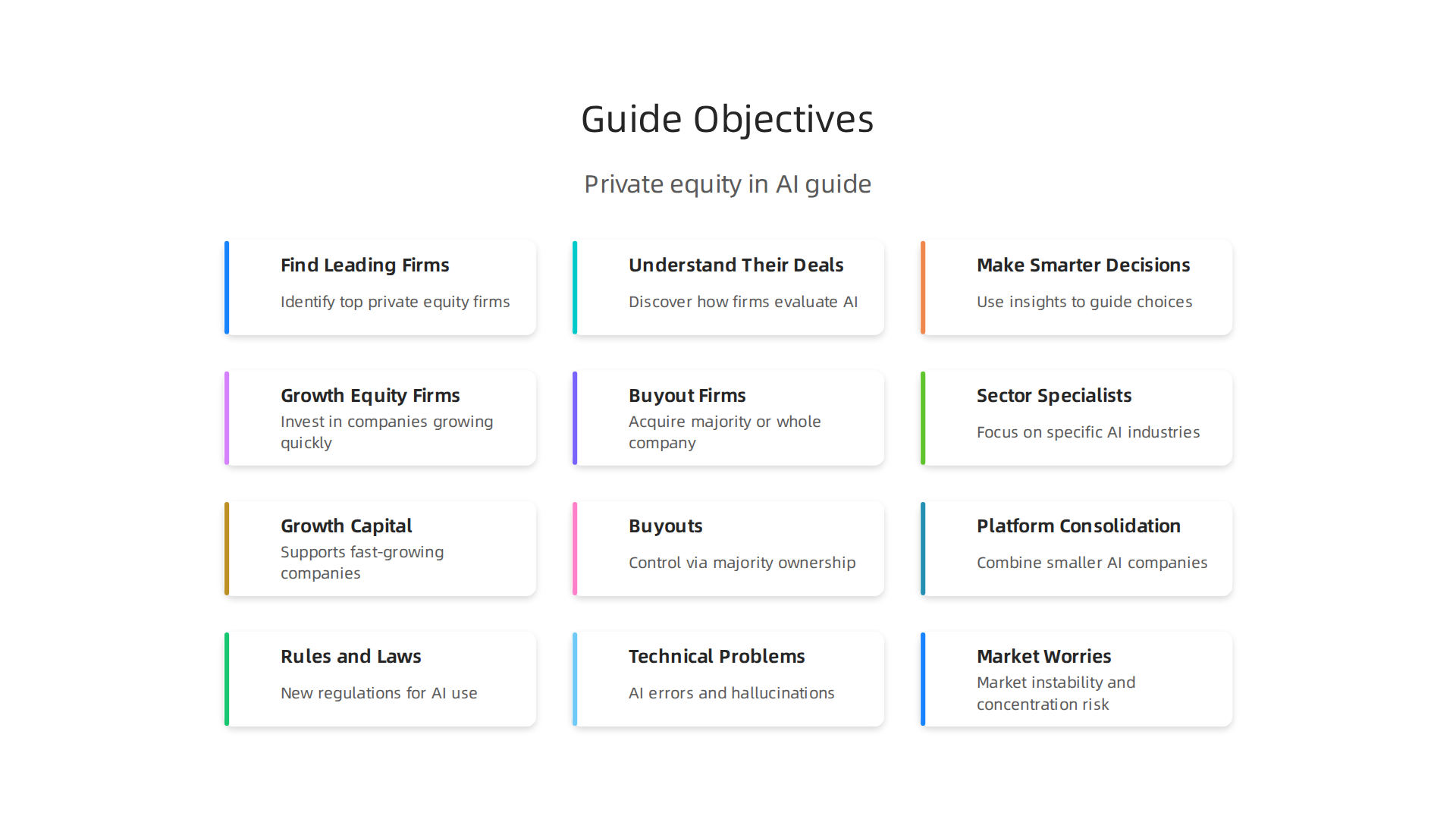
- Find Leading Firms: Learn to identify the top private equity firms, like
valor equity partnersandalpha capital, that are investing heavily in AI. - Understand Their Deals: Discover how these firms look at AI companies and what makes them decide to invest. This includes looking at how different types of funding, from private equity to
venture capital onefirms, play a role in the bigger picture. - Make Smarter Decisions: Use these insights to guide your own choices, whether you’re thinking about investing in AI, seeking funding for your AI startup, or looking for strategic partnerships.
We want to help you cut through all the noise. By the end of this guide, you will have a solid framework for how to look at the AI investment world with confidence. To learn more about how investment firms operate, check out our guide on how to Understand an investment firm profile.
The AI world changes very quickly. Keeping up with the latest news and analysis is important for anyone in this space.
Get clear daily AI updates from The AI Newsletter Worth Reading.
Overview: The Private Equity Landscape for AI (What Investors and Founders Must Know)
The fast pace of the AI world means that understanding who funds what is super important. When we talk about private money going into AI, two main types come to mind: private equity (PE) and venture capital (VC).

While both invest private money, they often do it in different ways and at different stages of a company’s life.
How Private Equity Differs from Other Funding
-
Venture Capital (VC): Think of venture capital firms, like
venture capital onecompanies, as investors for new, exciting startups. They usually put money into very young companies with big growth potential, even if these companies aren’t making much money yet. They’re looking for the next big idea to take off. For example, in the first quarter of 2026, AI startups grabbed a huge chunk, about $242 billion, which was roughly 80% of all global venture capital that quarter Top 100 AI Startup Funding & Investment Statistics [2026]. This shows how much VC money goes to early-stage AI innovation. If you want to dive deeper, you can learn more about what venture capital means and how it works in our guide on Venture Capital Decode Its Meaning. -
Private Equity (PE): Private equity is a bit different. PE firms, such as
audax private equity, tend to invest in more mature companies. They might buy a big part of an existing AI company, or even the whole thing. Their goal is often to make the company run better, grow its sales, and then sell it for a lot more money later on. They provide the capital, or money, that companies need to grow larger, especially in the world of AI computing, even if venture capital firms lead in the sheer number of deals VC may dominate AI computing deals, but PE supplies the capital. -
Corporate R&D Funding: This is when a big company uses its own money to develop new AI products or research new technologies. It’s not "private investment" in the same way, as it comes from within the company itself, rather than from outside investors looking for a return.
Types of Private Equity Players in AI
The private equity world has different kinds of players, each with a special way of investing in AI:
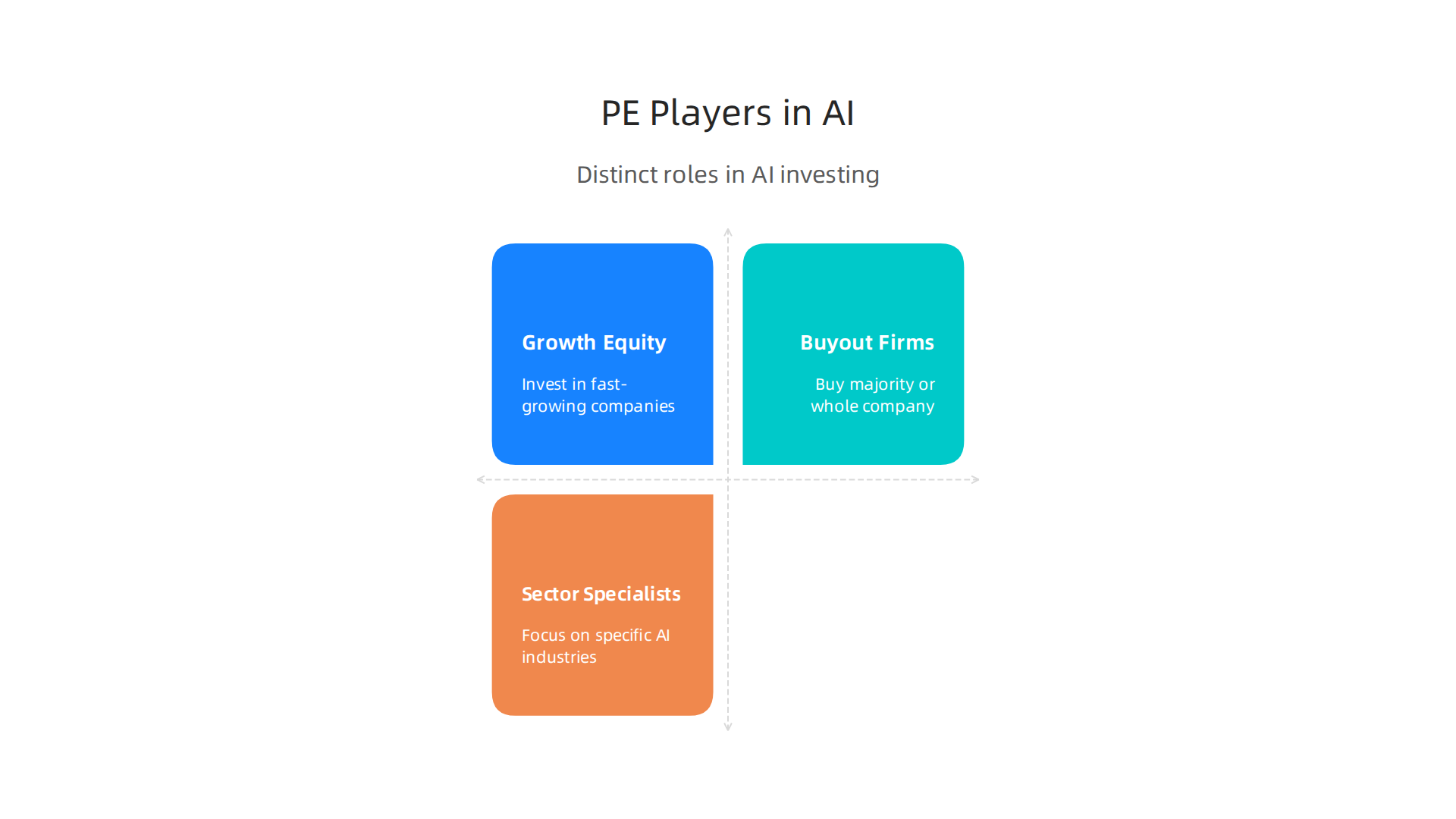
- Growth Equity Firms: These firms invest in companies that are already growing quickly and have a proven business idea. They provide money to help these companies expand even faster, without taking full ownership. Firms like
valor equity partnersmight fit into this category, helping promising AI companies reach their next level. - Buyout Firms: These are the firms that typically buy a majority or all of a company. They often look for AI companies that could be doing better or that they can combine with other companies to create a stronger business.
Audax private equityis a well-known example of a buyout firm that makes these kinds of strategic moves. - Sector Specialists: Some private equity firms focus on specific parts of the AI industry. They might only invest in AI healthcare companies, or AI companies that work on finance technology. This deep focus helps them understand the special needs and challenges of those areas. A firm like
alpha capitalmight, for instance, specialize in a certain niche of AI, giving them a strong edge.
Knowing these differences helps investors and founders understand where to look for money and what kind of support they can expect. It’s all about finding the right partner for the right stage of growth. You can learn more about the different types of investors, including angels, VCs, and institutional funds, by reading our guide on AI Startup Investors.
Who’s Who: Leading Private Equity Firms Investing in AI (How to Read Their Portfolios)
After learning about the different types of private equity (PE) firms, it’s helpful to know which ones are making big moves in the AI world. For founders looking for money or investors wanting to understand the market, knowing the top players and how they pick companies is very important.

How to Spot Leading PE Firms in AI
Finding the leading PE firms in AI isn’t just about who spends the most money. It’s about looking at a few key things:
- Deal Activity: How many deals are they doing? More deals often mean they are very active and knowledgeable in the AI space.
- Sector Focus: Do they invest in a specific area of AI, like healthcare AI or AI for finance? Firms that focus deeply on one area often have more expertise.
- AI Integration: A strong sign is when a PE firm uses AI within its own operations or helps its portfolio companies use AI to grow faster. This shows they truly believe in and understand AI’s power.
- Long-term Strategy: Are they just buying and selling quickly, or are they working to build lasting value in the AI companies they invest in?
To truly understand an investment firm, it helps to look at their track record and what kinds of companies they support. If you want to dive deeper into how to size up potential partners, you can read our guide on how to Understand an Investment Firm Profile.
Profiles of Key Private Equity Players in AI
Let’s look at some examples of private equity firms making waves in the AI industry in 2026.
Audax Private Equity
Audax private equity is a big name in the PE world, especially known for its "Buy & Build" strategy. This means they often buy a company and then help it grow by adding on smaller companies.

- Sector Focus: Audax invests in a range of areas, including healthcare, financial services, business services, technology, and industrial companies. This wide view allows them to find AI opportunities across many different industries.
- AI Strategy:
Audax private equityisn’t just investing in AI companies; they are also using AI themselves. They embed data and AI into how they work to make better decisions and help their companies grow, as they explained in early 2026 Audax AI Value Creation. As of July 2026, Audax Private Equity has an active portfolio of 116 companies Audax Private Equity – 2026 Investor Profile, Portfolio, Team & Exits. - Notable Deals: In January 2026,
Audax private equitymade a strategic investment in Keystone, a global technology and advisory platform Keystone Announces Strategic Investment and Partnership with Audax Private Equity. This kind of move shows their commitment to the technology sector.
Valor Equity Partners
Valor equity partners is another important firm, often recognized in the growth equity space. They tend to invest in companies that are already showing fast growth and have a clear path forward.
- Focus:
Valor equity partnersis relevant to machine learning companies, investing across enterprise software, data infrastructure, and automation, which often includes AI Machine Learning (ML) Private Equity Firms. They aim to help promising tech companies become even bigger.
Other Active Firms
Beyond Audax and Valor, other firms are very active in the AI private equity space. Firms like Insight Partners and Thoma Bravo have also been noted as some of the most active private equity investors in Artificial Intelligence and Machine Learning The most active private equity investors in Artificial Intelligence and Machine Learning. These firms usually focus on enterprise software and technology companies, which are often at the forefront of AI adoption.
Reading a Private Equity Firm’s Portfolio
When you look at a private equity firm’s portfolio, you’re trying to understand their strategy and what they value. Here’s what to check:
- Industry Mix: Do they have a mix of companies, or are they highly specialized? A diverse portfolio might mean they are open to many AI applications, while a specialized one shows deep expertise in a certain niche.
- Growth Stage: Are the companies in their portfolio mostly startups, or are they more mature businesses? This tells you if the PE firm prefers to help young ideas take off or to make big companies even stronger.
- AI Focus: How many of their companies are directly involved in AI? Do they use AI to make their non-AI companies better? This shows their true commitment to the AI revolution.
Staying informed about these leading firms and their investment strategies is key for anyone involved in the fast-changing AI industry. Get clear daily AI updates from The AI Newsletter Worth Reading.
Private equity firms don’t just put money into AI companies. They also use special plans to help these companies grow bigger and better. Understanding these plans is key for anyone watching the AI market in 2026.
Common Playbooks for AI Companies
Private equity firms use different ways to invest in and build up AI companies. Here are some of the main ones:
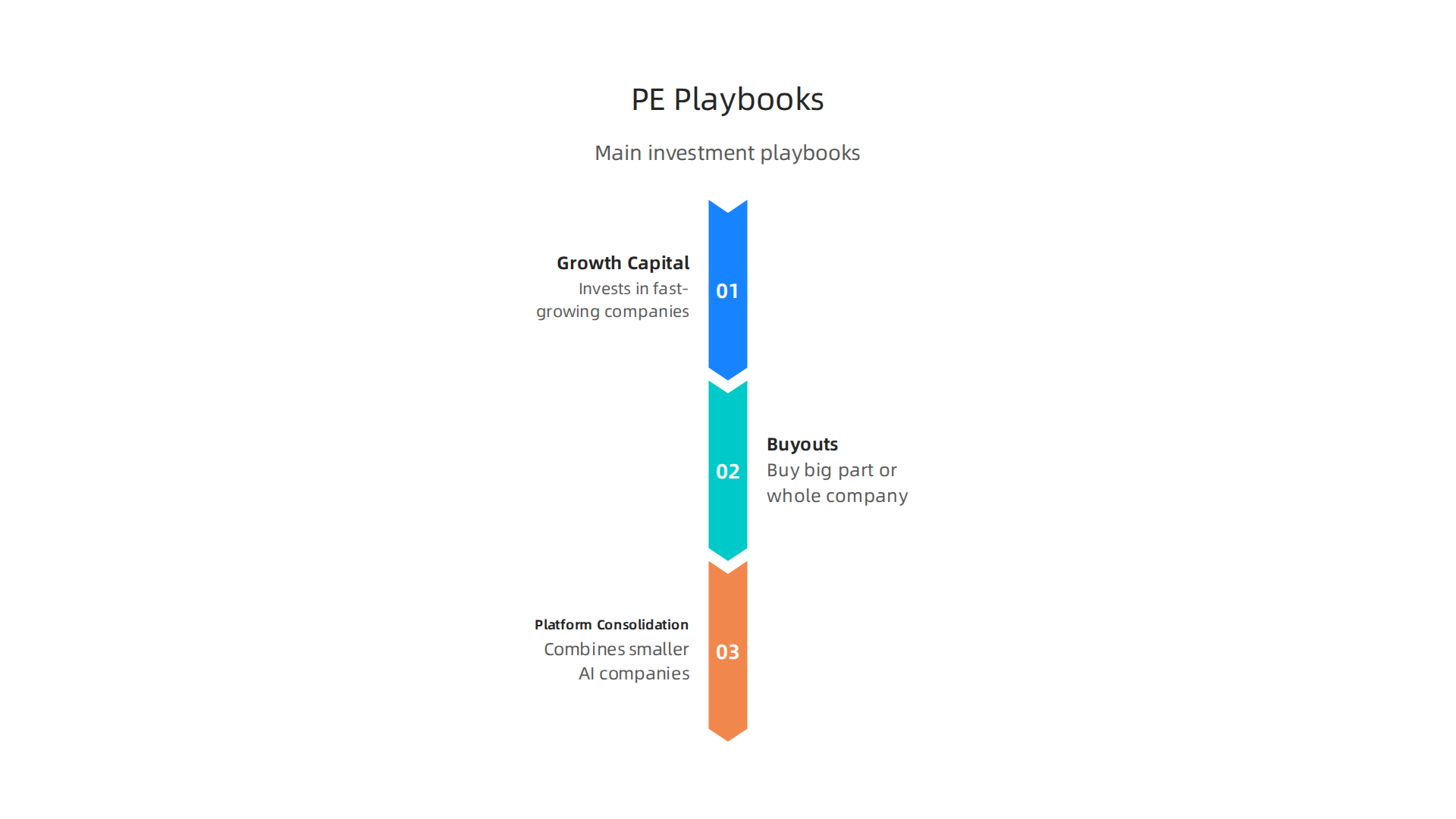
- Growth Capital: This is when a private equity firm invests money into a company that is already growing fast. The money helps the company expand its products, reach more customers, or enter new markets. These firms look for AI companies that have proven their ideas work and just need more fuel to go further.
- Buyouts: Sometimes, a private equity firm will buy a big part of an AI company, or even the whole thing. They do this to take control and make big changes. Their goal is to make the company much more valuable before selling it later. Firms like Audax Private Equity often use a "Buy & Build" method, where they buy a company and then add smaller companies to it to make it stronger.
- Platform Consolidation and Roll-ups: This means a firm buys one main AI company (the "platform") and then buys many smaller, similar AI companies. They combine these smaller companies under the bigger one. This helps them offer more services or products and get a bigger share of the market. This strategy is popular in many industries, including AI.
- Venture Capital One and other firms are also looking at how AI can transform businesses, sometimes focusing on specific solutions like those outlined in a 2026 Private Equity AI Radar report.
These different ways of investing show that private equity is not just about giving money. It’s about having a clear plan for how that money will help the AI company succeed. For more about different funding approaches, you can read our guide on AI Funding Playbook: Master 2026 Investment Strategies.
How PE Firms Scale AI Companies
Beyond just putting in money, private equity firms also bring a lot of hands-on help to make AI companies grow. They add value by improving how the company works, how it builds products, and how it sells them.
- Improving Products and Technology: PE firms often help AI companies make their products better and more useful. They might help develop new features, make the software faster, or ensure the technology is up-to-date. This involves looking closely at the company’s data and AI abilities to see where it can improve its potential, as explained in reports on How AI Is reshaping the Private Equity operating model.
- Building Strong Teams: Having the right people is crucial for an AI company. Private equity firms can help recruit talented engineers, data scientists, and leaders. They also help train existing teams to make sure everyone understands and uses AI effectively. Building strong teams helps a company truly scale its operations.
- Smart Selling and Marketing: Getting an AI product to the right customers is vital. PE firms help companies create better sales plans and marketing campaigns. They might help the company find new customers or expand into new areas. This focus on "go-to-market" helps increase income and value. Experts suggest there are 10 AI Use Cases for Private Equity in 2026 that drive real impact.
- Using AI for Themselves: Many private equity firms are also using AI in their own business to make better decisions and manage their portfolio companies more efficiently. This helps them offer more practical advice to the AI companies they invest in, truly transforming how they create value in their investments. Reports like the Private Equity Value Creation in the Age of AI show how operational tools can scale across different companies.
By using these strategies, private equity firms like Valor Equity Partners and others aim to turn promising AI companies into market leaders, showing that their role goes far beyond just providing funds.
After learning how private equity firms help AI companies grow, let’s look at how they choose which ones to invest in. This process is called "due diligence." It’s like doing homework before buying something important. Private equity firms, like Audax Private Equity, look very closely at an AI company to make sure it’s a good bet.
Due diligence: What private equity firms look for in AI investments
When private equity firms want to put money into an AI company, they don’t just guess. They have a careful checklist. This helps them understand the company’s true value and any possible problems.
Checking the AI’s Brains and Secrets
First, they look at the technical side of the AI company. This is like checking the "brains" of the operation.
- How good is the AI? They ask if the AI models work well and if they are smart enough for what they need to do. Is the AI better than others out there? They also check if the AI uses good, clean data, because bad data can make even the smartest AI fail.
- Is their idea safe? Firms also check for "intellectual property" or IP. This means making sure the company’s special ideas, code, and inventions are protected by patents or other legal ways. This keeps others from easily copying their unique AI solutions. Firms like Valor Equity Partners want to make sure the company has something truly special that can’t be stolen.
Looking at Customers and Rules
Next, private equity firms look at who the AI company sells to and if it follows all the necessary rules. This is super important for AI businesses today.
- Who are the customers? They check if the company sells to many different customers or just a few big ones. If too much money comes from only one or two customers, that’s a "concentration risk." If those big customers leave, the company could be in trouble. This is a key thing to watch as private equity pours billions into AI, which can sometimes lead to concentration risk.

- Is it playing fair? AI has many new rules about how it uses data and how it treats people. Firms want to make sure the AI company follows all these ethical and legal rules. If an AI acts unfairly or uses personal data wrongly, it can cause big problems and cost a lot of money in fines or bad press. Alpha Capital and Venture Capital One are among those who carefully consider these factors.
These careful steps help private equity firms decide if an AI company is strong enough to grow and be successful in the long run. Understanding these points is crucial for anyone trying to understand an investment firm profile in the AI space.
To stay on top of all the critical developments and insights that drive these investment decisions, consider subscribing to our trusted source.
The AI Newsletter Worth Reading
Get clear daily AI updates from The Deep View Newsletter. The AI Newsletter Worth Reading
After learning how private equity firms choose which AI companies to invest in, let’s look at some real examples. These stories show how private equity firms like Audax Private Equity have helped AI companies grow a lot. This is called "building value."
Illustrative case studies: How PE firms have built value in AI companies
Private equity (PE) firms don’t just give money and wait. They get involved and work with the AI companies they invest in to make them bigger and better. They have special plans to help these companies succeed.
Helping Keystone Grow with Audax Private Equity
Let’s look at a recent example from Audax Private Equity. In January 2026, Audax Private Equity made a big investment in a company called Keystone. Keystone is a company that helps other businesses with technology and advice.
- Why Audax invested: Audax Private Equity saw that Keystone had a strong technology platform and a good team. They believed Keystone could grow much more, especially by using AI. Audax wanted to help Keystone reach more customers and offer more services.
- What Audax did: After investing, Audax Private Equity worked closely with Keystone. They helped the company expand into new areas and offer more kinds of advice. They also helped Keystone start a new software company from ideas it already had. Audax Private Equity also focuses on putting data and AI right into how their companies work to make better choices and grow faster. You can learn more about how they do this by watching Audax AI Value Creation. This is part of their "Buy & Build" way of doing business, where they buy a company and then add more smaller companies to it to make it larger.
- The results: Because of this teamwork, Keystone kept growing. This investment was a big step for Keystone and shows how private equity can help a company get bigger and stronger. You can read more about how Audax Private Equity Acquires Majority Stake in Keystone.
Lessons learned from PE investments in AI
These case studies teach us important things about how private equity helps AI companies.
-
What worked well:
- Strong technology: The AI company must have really good technology that works well and is unique.
- Clear need: The AI product or service needs to solve a real problem for many customers.
- Good leaders: Having smart people leading the company is key. Private equity firms help these leaders make big plans.
- Smart "Buy & Build": Adding other smaller companies can make the main company much stronger.
- Using AI for growth: PE firms often help their companies use AI themselves to make better decisions and run smoother, as highlighted in the Global M&A trends in private capital: 2026 mid-year outlook.
-
Common problems to avoid:
- Bad data: If the AI uses bad information, it can make wrong choices.
- Not changing fast enough: The AI world changes quickly, so companies must keep up.
- Poor fitting additions: If a PE firm buys a company that doesn’t fit well with the main business, it can cause problems.
-
Signs of long-term success:
- Special technology: Companies with unique AI that others can’t easily copy are often more successful.
- Many customers: Selling to a lot of different customers makes a company more stable.
- Good ethics: Making sure the AI is fair and uses data correctly helps avoid big problems down the road.
Understanding these examples and lessons is very helpful for anyone looking to invest in or join an AI company. It shows how smart strategies can lead to big success in the fast-moving world of AI. If you want to dive deeper into investment strategies, check out our AI funding playbook.
While understanding what makes AI investments successful for private equity firms is important, it is also key to know about the challenges and new directions happening right now in 2026. The world of AI changes fast, and with big money flowing in, new risks and trends pop up all the time.
Risks and emerging trends shaping PE activity in AI
Investing in AI is exciting, but it also comes with its own set of worries. Private equity firms need to be smart about these risks to make sure their investments pay off.
Important risks for private equity in AI
- Rules and laws: New rules are coming out to make sure AI is used safely and fairly. For example, the EU AI Act will make some AI systems, especially in money services, meet strict rules by August 2026. This means firms must be careful about how their AI companies use technology to avoid problems AI in Private Equity 2026: Use Cases and Data.
- Technical problems: Even the smartest AI can make mistakes. Sometimes, AI can "hallucinate," meaning it makes up information that isn’t real. This is a risk for companies that rely on AI for important tasks. Making sure the AI is built well and its data is clean is super important.
- Market worries: The overall market can be bumpy. Things like changing interest rates and world events can make it harder for deals to happen or for companies to grow as expected. Also, with so much money going into AI, there’s a risk that too much investment focuses on just a few companies, which is called "concentration risk" Concentration risk rises as private equity pours billions into AI. This can make the market less stable. Experts see an uneven path for private equity dealmaking in early 2026, with deal values sometimes falling Private Equity Outlook 2026: Durable Recovery Begins.
New trends to watch
The private equity world is always moving forward. Here are some of the new ways firms are working with AI:
- Bringing companies together: We’re seeing more and more smaller AI companies joining bigger ones. This helps the larger companies grow and offer more services. This trend means that private equity firms are looking to build stronger, more complete businesses.
- Focusing on specific areas: Instead of investing in all kinds of AI, some firms are choosing to focus on AI that helps certain industries, like healthcare or finance. This "verticalization" helps them become experts in one field.
- Checking data carefully: Private equity firms are now spending more time making sure AI companies handle their data correctly and ethically. This "increased due diligence on data governance" is about understanding how well a company uses its data and AI capabilities to create value How AI Is reshaping the Private Equity operating model.
Staying informed about these risks and trends helps private equity firms, like Audax Private Equity and others, make better choices and build stronger AI companies. To keep up with all the fast changes in AI and its markets, you need trusted information.
Get clear daily AI updates from The AI Newsletter Worth Reading.
If you want to learn more about the bigger picture of AI, check out our The 2026 Comprehensive AI Guide.
How to use this intelligence: Selecting the right PE partner or target in AI
Now that you know about the risks and new trends, let’s talk about how to use this knowledge. Whether you’re a founder looking for money or an investor looking for a good company, picking the right partner in the fast-moving AI world is key.
For founders: Picking the best private equity partner
If you run an AI company and want private equity investment, you need to find a firm that truly understands AI and can help you grow. Here’s what to look for:
- Check their track record: See what other AI companies they’ve invested in. Have those companies done well? For example, Audax Private Equity has a history of investing in and growing many companies, including making strategic investments in areas like global technology and advisory services. They look at sectors such as healthcare and technology, focusing on where AI can make a real difference. In fact, as of July 2026, Audax Private Equity had an active portfolio of 116 companies, with many acquisitions under its belt.
- Their AI game plan: How do they plan to help your specific AI business? Do they just give money, or do they offer real help with things like making your products better or finding more customers? Firms like Audax Private Equity are known for using data and AI themselves to make better decisions and help their companies grow faster. You can learn more about how to understand a firm’s background by reading our guide on how to understand an investment firm profile.
- The people factor: Do the folks you’ll be working with truly get AI? A good partner will have experts who understand the special challenges and chances in AI.
- Culture fit: Do your company’s values match theirs? A good relationship means everyone is on the same page.
For investors: Finding the right AI company to back
If you’re an investor, like those at valor equity partners or alpha capital, looking to invest in AI, you need to be smart about choosing companies. The AI market is booming. Global venture capital investment reached a record $330.9 billion in the first three months of 2026, with AI businesses getting a big piece of that pie. Here’s what to keep in mind:
- Strong technology and data: Look for companies with truly special AI tech and a smart way of using data. This means their AI should solve real problems.
- Great leadership: A company is only as good as its leaders. Look for strong, smart teams that can guide the company through tough times.
- Clear path to making money: How will the AI company earn money? Is their plan solid?
- Careful deal-making: When you get to the "term sheet" (the document outlining the deal), pay close attention to things like who has control, how future money might come in, and how the company will be supported to grow. These details are very important for a good partnership. Investing in AI startups requires careful planning, and our guide can help you master investing in AI startups.
By thinking through these points, both founders and investors can make smarter choices. This helps build stronger AI companies and leads to more successful partnerships in 2026 and beyond.

Summary
This guide explains why private equity (PE) is pouring capital into AI in 2026 and shows how that capital changes company growth, dealmaking, and market strategy. It compares PE with venture capital, maps the main PE player types (growth equity, buyouts, sector specialists), and explains how to identify leading firms and read their portfolios. The article breaks down common PE playbooks—growth capital, buyouts, platform roll-ups—and describes how firms add value through product improvement, hiring, go-to-market work, and internal AI adoption. It also walks through PE due diligence for AI—technical quality, IP, customer concentration, and regulatory compliance—then illustrates those points with real case examples like Audax and Keystone. Finally, it highlights emerging risks and trends (regulation, data governance, concentration risk) and gives practical steps for founders and investors to select the right PE partner or target in the fast-changing AI market.