

Venturing into the world of venture capital (VC) and private equity (PE) can feel like stepping onto a fast-moving train. But in 2026, these fields are more exciting and important than ever, especially if you care about new technology like AI.

Careers in venture capital and private equity let you play a big part in shaping the future. You get to help smart companies grow, advise leaders, and invest in big ideas.
Think about it: the first quarter of 2026 saw a huge jump in venture capital funding, mostly because of very large deals in AI and machine learning startups. This means there’s a lot of money flowing into these new areas, creating many venture capital careers for people who want to be involved. Reports show that global VC investment went way up in early 2026, driven by record-setting AI deals around the world, making it a very active time for those seeking jobs with venture capital.
This guide is for many types of people. Maybe you are an investor looking for the next big thing. Perhaps you are a founder trying to understand how to get money for your AI startup. Or maybe you’re an analyst, an executive, an operator, or a job seeker hoping to land a job venture capital role or even a private equity operating partner jobs position. We will show you how to find these important roles, what skills you need, and how to make a real impact.
By the time you finish reading, you will better understand how to navigate these exciting career paths. You’ll learn what it takes to join the ranks of those investing in, advising, and operating the AI and tech companies that are changing our world. For a deeper look at the market, explore The 2026 Comprehensive AI Guide for Investors, Founders, and Analysts.
Stay informed about these fast-moving changes in AI and technology.
The AI Newsletter Worth Reading
When we talk about investing in private companies, two big players come to mind: venture capital (VC) and private equity (PE). While both aim to grow businesses and make money, they do it in very different ways.

Understanding these differences is key if you are looking for venture capital careers or private equity operating partner jobs.
Venture Capital: Investing in New Ideas
Venture capital firms are like talent scouts for the business world. They find very new, small companies, often called startups, that have big ideas but not much money yet. These startups usually work in exciting areas like AI and new technology. VC firms give them money to get started and grow.
- Focus: New companies with big growth potential, especially in tech.
- Stage of Investment: Early on, when companies are just starting or still quite small.
- Risk and Reward: It’s a high-risk game. Many startups don’t make it, but the few that do can become huge successes. This means big rewards for the VC firm and its investors.
- Time Frame: VC firms often invest for a long time, usually 5 to 10 years or even more, waiting for the company to really take off.
- Team and Work: Teams are often smaller and work very closely with the founders of the startups. People in
job venture capitalroles help with everything from hiring to strategy. It’s not uncommon for VC firms to hire when they close a new fund or when someone leaves the team, rather than on a set schedule How VC Firms Actually Hire in 2026.
Private Equity: Growing Established Companies
Private equity firms work with companies that are more established. These companies are usually older, already make money, and have a steady business. PE firms buy a large part of these companies, or sometimes even the whole company, to make them better and more profitable.
- Focus: More mature companies that need help to become more efficient or grow in new ways.
- Stage of Investment: Later stages, after a company has proven itself.
- Goal: PE firms look for ways to improve the company’s operations, cut costs, or expand its market. They might bring in new leaders or change how the business works.
- Time Frame: The investment period is shorter than VC, typically 3 to 7 years, before they sell the company for a profit.
- Team and Work: PE firms tend to have larger teams. Roles like
private equity operating partner jobsorbusiness development private equity jobsmean you’d be heavily involved in making the company run better. Compensation reports in 2026 show detailed benchmarks for these operating roles across different fund sizes 2026 PE Portfolio Operations Compensation Report.
These differences mean the day-to-day work and the skills needed for jobs with venture capital are quite different from those in private equity. If you want to learn more about how these firms operate, it helps to understand an investment firm profile.
Moving from understanding what venture capital and private equity firms do, let’s look at the people who make these firms run. Both VC and PE have different job roles, but some are similar in name, even if the daily tasks change. Knowing these roles helps you map out your venture capital careers or aim for specific private equity operating partner jobs.
The Investment Team Ladder
Most investment firms have a clear path for their main investment teams, often called a "ladder."
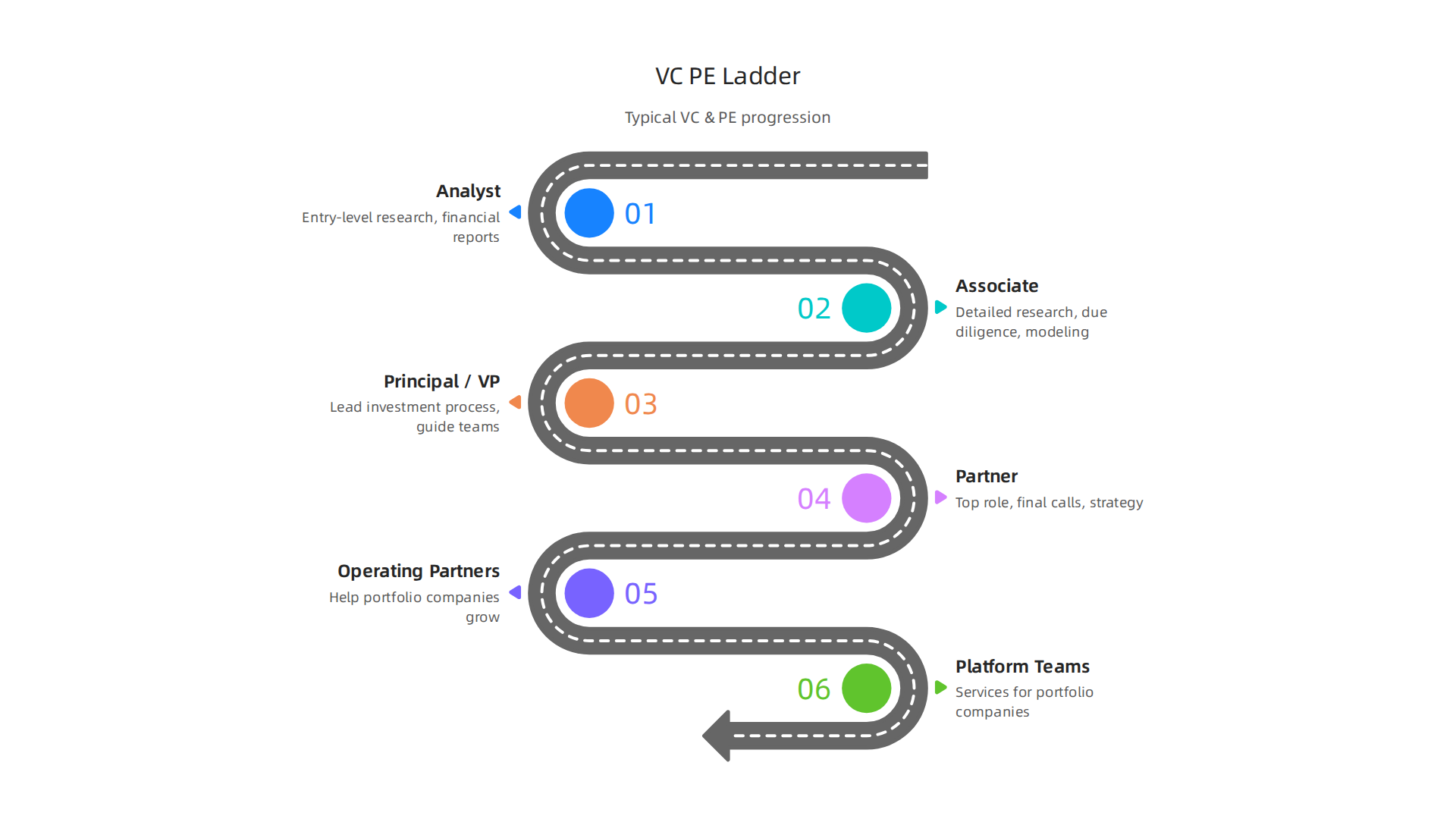
- Analyst: This is usually an entry-level job. Analysts do a lot of research. They help find new companies to invest in, look at market trends, and prepare basic financial reports. For
job venture capitalroles, analysts might spend time researching new technologies and startups. In PE, they might focus more on existing companies’ financial health. People often enter these roles after college with experience in banking or consulting. - Associate: After a few years as an Analyst, you might become an Associate. Associates take on more responsibility. In VC, an Associate helps with detailed research on potential investments, called "due diligence." This means checking out a company’s business plan, market, and finances before an investment is made VC Associate: In-Depth Guide. They also help with financial modeling, which is like building a money map for a company’s future Venture Capital Associate Job Description. Many associates have 2 to 5 years of experience from fields like banking or product management VC Associate Career Guide 2026 | JobRise Blog.
- Principal or Vice President (VP): These roles are for more experienced pros. Principals or VPs often lead parts of the investment process. They work directly with company founders or management teams and play a big part in making investment choices. They also help guide the Analysts and Associates.
- Partner: This is a top role in an investment firm. Partners make the final calls on investments and work to raise money for the firm’s funds. They also manage the team and set the firm’s overall strategy. Achieving partner status is a key goal in many
venture capital careers.
Beyond the Investment Team: Operating and Platform Roles
Not everyone at a VC or PE firm works directly on making investments. There are also important roles that help the companies they invest in.
- Operating Partners: These are common in private equity. Operating partners usually have a lot of experience running companies. Their job is to work closely with the management teams of the companies the PE firm owns. They help make these businesses more efficient, grow faster, and become more profitable. If you’re looking for
private equity operating partner jobs, you’ll likely use your hands-on business experience. - Platform Teams: Both VC and PE firms can have platform teams. These teams offer services to all the companies in the firm’s portfolio, like help with hiring, marketing, or technology. For example, a
business development private equity jobsrole on a platform team might help portfolio companies find new customers or markets.
How Firm Size Changes Roles
The jobs also look different depending on the size of the firm.
- Small (Boutique) Firms: In smaller firms, people often wear many hats. An Associate might do tasks that a Principal would do in a bigger firm. You might get a chance to be involved in more parts of the deal process. This can be great for learning a lot quickly.
- Large (Institutional) Firms: Bigger firms usually have more structured roles and larger teams. People tend to specialize more. For example, some Associates might focus only on market research, while others do only financial modeling. These firms often have clearer paths for
jobs with venture capitaland private equity, but it can also mean a narrower focus in your day-to-day work.
No matter the size, staying informed about the market is key. Get clear daily AI updates from The AI Newsletter Worth Reading.
Understanding these different roles is a good first step if you are thinking about joining the world of venture capital or private equity. For a deeper dive into the world of funding for new ideas, learn more about what it means to decode venture capital.
Now that we’ve explored the different job roles in venture capital and private equity, let’s talk about what it takes to actually get those jobs. Think of it like building a toolbox.

You need certain skills, education, and experiences to succeed in these exciting venture capital careers.
Skills, Education, and Experience That Matter
Working in venture capital or private equity means you need a mix of different abilities. Some skills are a must-have for almost any role, while others will help you really stand out.
The Must-Have Skills
Most investment jobs, especially on the main investment team, look for a few key things.
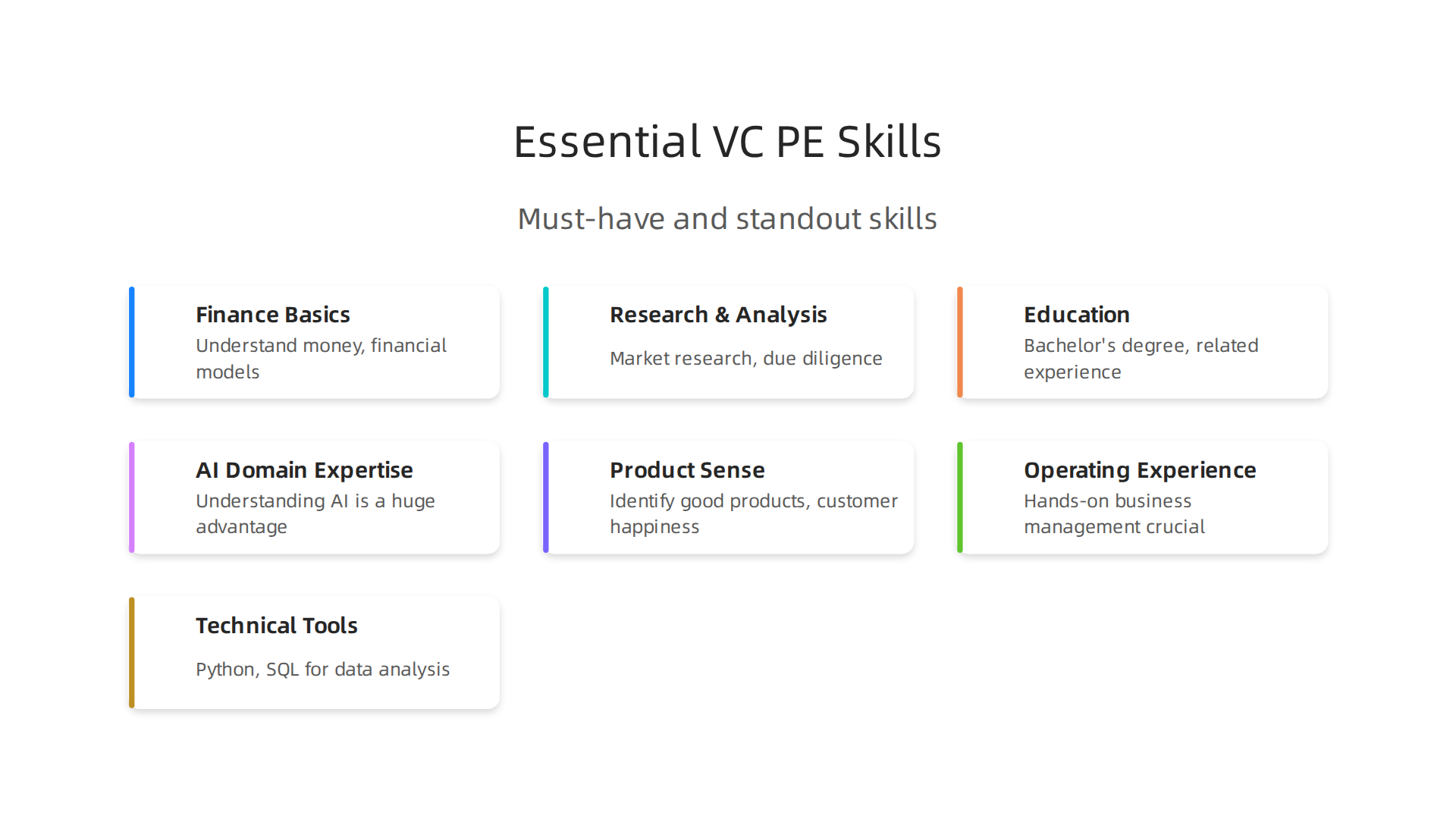
- Strong Finance Basics: You need to understand how money works in companies. This means being good at math, reading financial reports, and building financial models. These models are like predicting how a company’s money will flow in the future.
- Research and Analysis: A big part of the job is looking at lots of information. This includes market research, checking out new companies, and doing what’s called "due diligence." Due diligence means digging deep into a company to make sure it’s a good investment Venture Capital Skills: What VC Firms Actually Look For.
- Education: Most people entering these
jobs with venture capitalstart with a bachelor’s degree in a field like business, finance, or computer science. Some roles, like a Venture Capital Associate, might ask for at least two years of related work experience, often from investment banking, consulting, or a startup Entry Requirements.
Skills That Make You Stand Out in 2026
Beyond the basics, certain skills can really set you apart, especially in today’s fast-moving market.
- AI Domain Expertise: With artificial intelligence shaping so many industries, knowing a lot about AI is a huge advantage. Understanding different AI domains and platforms in 2026 can help you spot the next big thing. This kind of specialized knowledge is key when looking at new tech startups.
- Product Sense: Can you tell a good product from a bad one? Do you understand what makes customers happy and what helps a product grow? This "product sense" is very valuable for spotting companies that can truly succeed.
- Operating Experience: For
private equity operating partner jobs, hands-on experience running a business is crucial. These partners help companies grow and become more profitable. So, if you’ve managed teams, launched products, or fixed business problems, that experience is highly valued. - Technical Tools: Being able to use tools like Python or SQL for data analysis can help you find promising startups faster and check their growth potential Venture Capital Associate / Tech Investor Career Guide.
Building Your Skills Plan
Your plan for building skills should depend on the specific job venture capital or private equity role you want.
- For an Analyst: Focus on mastering financial modeling, market research, and clear communication. Get good at gathering and presenting information.
- For an Investor (Associate, Principal, Partner): Build on those basic skills. Work on spotting trends, leading due diligence, and building a network. Developing deep knowledge in a specific industry, like AI or health tech, will make you a more valuable decision-maker. If you are interested in
venture capital careersin AI, learning how to land an AI startup job in 2026 can be a great starting point. - For an Operating Partner: Your path is all about leadership and problem-solving in real businesses. Gain experience in management, operations, and strategic growth.
No matter the role, a blend of core financial know-how and unique, forward-looking skills is what will help you thrive in the competitive world of venture capital and private equity in 2026.
Now that you know what skills help you get into venture capital careers and private equity, let’s talk about what you can expect to earn and how you can grow in these exciting jobs with venture capital. Understanding compensation and career paths is a big part of planning your future.
Compensation, carry, and progression: what to expect at each level
Working in venture capital (VC) or private equity (PE) can be very rewarding, both in terms of money and career growth. But it’s not just a simple paycheck. Compensation in these fields has a few main parts: base salary, bonus, and something special called "carried interest" or "carry."
The Paycheck Breakdown
Here’s how people usually get paid in these types of investment job venture capital roles:
- Base Salary: This is your regular, fixed pay that you get each year. It’s usually a good starting point and depends a lot on your role and where you work. For example, a junior analyst will have a different base salary than a senior partner.
- Bonus: This is extra money you get based on how well you and your firm do. If the firm makes good investments and hits its goals, bonuses can be a nice boost. This usually comes once a year.
- Carried Interest (Carry): This is where things get really interesting in VC and PE. Carry is a share of the profits that the investment fund makes. Imagine the fund invests in a company, and that company grows a lot and sells for a huge profit. A part of that profit goes to the people who manage the fund, and that’s the "carry." It’s like having a piece of the success of the companies you help grow. Because carry only pays out if investments do very well, it’s a huge motivator and can make a big difference in overall earnings for senior professionals.
- Benefits: Like most jobs, you’ll also get things like health insurance, retirement plans, and other company perks.
The amount of money you can expect can change a lot. It depends on the kind of firm (is it a small early-stage VC firm or a big private equity giant?), where it’s located, and your specific job. Different companies also have different ideas about how much carry to give out. You can find detailed breakdowns in yearly reports, like the 2026 Preqin Private Capital Compensation and Employment Review, which looks at salaries and trends across private capital. Also, reports like the USA Private Equity Compensation Guide 2026 offer insights into how base salaries and total pay vary for private equity jobs in the US.
Moving Up the Ladder
Career progression in venture capital and private equity isn’t always a straight line, but there are common steps:
- Analyst to Associate: Many people start as an analyst. After about 2 to 3 years, if you do well, you might become an Associate. This usually means more responsibility, like leading parts of the due diligence process.
- Associate to Principal/Vice President: From Associate, it might take another 3 to 5 years to become a Principal or Vice President. At this level, you’re expected to find new investment opportunities, manage deals, and build your network.
- Principal/Vice President to Partner: Becoming a Partner is the top goal for many. This often takes several more years and means you’re a key decision-maker, responsible for raising funds, sourcing deals, and helping the portfolio companies succeed. For those in private equity operating partner jobs, this often means taking on big leadership roles to help companies grow.
In 2026, the hiring landscape for junior investment roles has become quite competitive. Some reports show that certain firms are even planning to cut junior investor roles, with only a small number looking to hire new ones. However, there’s a strong demand for engineers, especially in areas like AI and machine learning startups, which saw record investment in the first quarter of 2026 Q1-2026-PitchBook-NVCA-Venture-Monitor.pdf. This means that having specialized skills and staying informed about market trends is more important than ever.
To stay on top of the fast-changing world of AI and technology, consider subscribing to The AI Newsletter Worth Reading. You’ll get clear daily AI updates that can help you make smart career choices in competitive fields like venture capital.
Breaking into the world of venture capital (VC) and private equity (PE) can feel tough, but there are clear ways to get your foot in the door. Whether you’re fresh out of school or looking for a career change, understanding the different paths is key to landing one of these sought-after venture capital careers.
How People Get Hired in VC and PE
There are a few main routes people take to join a VC or PE firm:
- After College (Undergrad Analyst Programs): Some large firms offer special programs for new college graduates. These are often for analyst roles. While rare, getting a venture capital internship during college can be a big help for these roles. Places like a16z, Bessemer Venture Partners, and General Catalyst sometimes have summer programs for students. These internships are a great way to learn the ropes and make connections, even if they don’t always lead to a full-time job right away, as highlighted in guides about how to get a venture capital internship in 2026.
- After an MBA or With Experience (Experienced Hires): Many people enter VC or PE after gaining experience in other related fields. This often means working for a few years in investment banking, management consulting, or in business development at a tech startup. Some people also go back to school to get an MBA, which can open doors to Associate or Principal roles. These are common entry points for many in venture capital careers.
- Non-Traditional Paths (Operating Roles and Founders): Not everyone comes from a finance background.
- Operating Hires: Some firms hire people with deep experience in a specific industry, often called "operating partners" or "portfolio support." These experts help the companies the firm has invested in to grow and do better. If you have strong business development skills or experience running a company, this could be a great way to enter. These are often known as business development private equity jobs or similar roles.
- Founders-Turned-Investors: Sometimes, successful founders who have built and sold their own companies become investors. Their firsthand experience is very valuable to VC firms.
Your Step-by-Step Guide to Breaking In
No matter which path you choose, here’s a practical sequence to follow for finding venture capital careers:
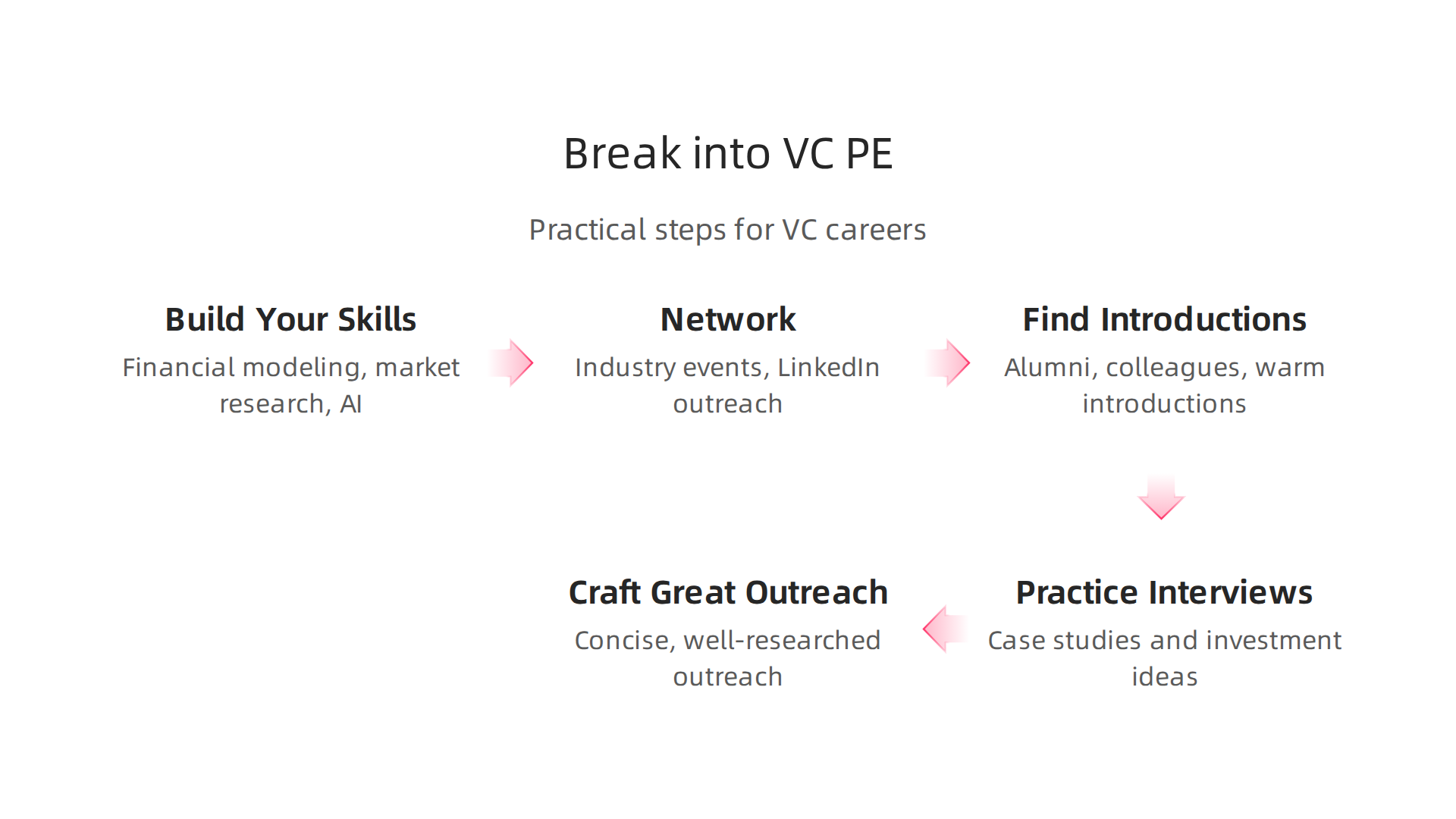
- Build Your Skills: Get good at things like financial modeling, market research, and understanding new technologies. Knowing a lot about a specific industry, like AI, is especially helpful in 2026. If you want to understand more about the basics of VC, check out this guide on Venture Capital Decode Its Meaning Funding Stages and Investor Expectations.
- Network, Network, Network: Meeting people is super important. Go to industry events, connect with professionals on LinkedIn, and join relevant groups. A warm introduction from someone a partner respects is often the most effective way to get noticed,

according to experts on VC internship programs for 2026.
3. Find Introductions: Don’t just send cold emails. Ask your college alumni, former co-workers, or friends if they know anyone in VC or PE who might be willing to chat. Researching firms you’re interested in can help you tailor your outreach. Learning to understand an investment firm profile can give you a leg up.
4. Practice for Interviews: VC and PE interviews can be tough. They often include case studies or questions about your investment ideas. Practice talking about companies, deals, and your thoughts on different markets.
5. Craft Great Outreach: When you reach out to people, make your messages clear and to the point. Show that you’ve done your homework and explain why you’re a good fit for their firm. You can find more practical advice on 10 Actionable Steps to Get a Job in Venture Capital. You might also look for resources like Top Venture Capital Portals for AI Startups in 2026 to identify relevant firms.
Getting a job venture capital means being ready to learn, work hard, and build strong relationships. It’s a journey that takes time and effort, but it can lead to a very rewarding career.
Being ready to learn and work hard is super important. Now, let’s look at what the day-to-day work actually involves in venture capital careers. It’s not just about big deals and money. It’s about finding new ideas, doing homework on them, and helping young companies grow.
Day-to-day Work and Career Tips: Sourcing, Diligence, Portfolio Support, and Platform Roles
Working in venture capital (VC) or private equity (PE) involves different kinds of tasks, depending on your role and how much experience you have. A typical week for someone in a junior role, like an Associate, might include many different activities.
- Sourcing New Deals: A big part of the job is finding new companies to invest in. This is called "sourcing." People in venture capital jobs spend time actively looking for exciting startups. They do this by networking, going to industry events, and checking out business plans that entrepreneurs send in Entry Requirements. You might also bring in your own ideas for companies to look at, which is a big plus This Is The Only Way To Break Into Venture Capital In 2026.
- Doing Homework (Diligence): Once a promising company is found, the real digging starts. This is called "due diligence." It means doing a lot of research to make sure the company is a good investment. Associates will look closely at the company’s business plan, how it makes money, and who its competitors are. They also do financial modeling and talk to the company’s customers to see if people really like what they offer Associate – Venture Capital – JN-032026-6972110. These steps are key to understanding the company’s potential. Strong math and finance skills are very important here Venture Capital Career Path: The Definitive Guide.
- Helping Companies Grow (Portfolio Support): After an investment is made, VC firms don’t just sit back. They work with the companies they’ve invested in, known as "portfolio companies," to help them succeed. This can involve giving advice on business strategies, connecting them with useful people, or helping them hire the right talent. Roles like "private equity operating partner jobs" or "business development private equity jobs" are all about this kind of hands-on support.
- Firm Operations (Platform Roles): Some jobs with venture capital involve helping the firm itself run smoothly. These are often called "platform roles" and can include marketing, organizing events, or building communities. These roles support the entire investment process and help the firm stand out.
Tips for Your Venture Capital Career
For junior and mid-level professionals, building your career in VC takes more than just doing the daily tasks. Here are some tips:
- Be Super Curious: Always be asking questions and trying to learn more. Being "unusually curious" is a key trait that firms look for VC Associate Career Guide 2026.
- Stay Organized and Clear: You’ll be dealing with lots of information. Keeping things organized and being able to explain complex ideas clearly is very important.
- Learn About New Tech: The world of venture capital is always changing, especially with new technologies like AI. Understanding these trends will make you much more valuable. For example, knowing about Tracing the History of AI Evolution from Ancient Myths to 2026 Innovations can give you an edge.
- Build Your Network: Keep connecting with people in the industry. These relationships can open doors to new deals and career opportunities.
Staying on top of what’s happening in the fast-paced world of AI is vital for anyone pursuing venture capital careers.
The AI Newsletter Worth Reading: Get clear daily AI updates from The Deep View Newsletter.
Staying on top of what’s happening in the fast-paced world of AI is vital for anyone pursuing venture capital careers. But what if your time in VC is just one step? The skills you learn in venture capital or private equity are highly valued in many other exciting jobs. It’s common for people to move from these firms to different roles, like working at startups, joining big companies in strategy teams, or becoming advisors.
Moving to New Roles from Venture Capital
Your experience in venture capital careers gives you a special set of skills. You learn how to spot good ideas, understand different markets, and help businesses grow. These skills are very useful if you want to switch jobs.
- Joining a Startup (Founder or Operator): Many people who work in VC decide to join a startup or even start their own company. It’s one of the most common next steps after working in venture capital. You already know how startups work, what makes them successful, and how to get funding Leaving VC at a Senior Level. Your background in analyzing companies and seeing many business models gives you a big advantage. If you are thinking about an AI startup job in 2026, your venture capital experience will be a huge plus.
- Corporate Strategy and M&A (Corporate Development): Another popular path is to join a larger company’s corporate development team. These teams look for other companies to buy or partner with. Your deal-making and research skills from your venture capital job are perfect here. People in these roles, sometimes called "business development private equity jobs," need to be good at analyzing businesses and making quick decisions. Knowing about corporate development careers can help you see how your skills fit in big companies Corporate Development: Career Path, Salaries & Exit Opps. You can learn more about how these roles work in places like corporate development by watching videos like Your Life at Every Level of Corp Dev (Corporate Development POV).
- Advisory and Board Roles: As you gain more experience in venture capital, you might also find opportunities to become an advisor or join the board of directors for different companies. Your deep understanding of business strategy and growth can guide these companies.
When to Make Your Move
Deciding when to transition from jobs with venture capital depends on your goals. Often, after a few years of learning and building a network, professionals feel ready for a new challenge. The key is to keep building a "portable skillset." This means making sure the things you learn in VC, like financial modeling, strategic thinking, and networking, are strong enough to use anywhere else. The venture capital world in 2026 is always changing, and having flexible skills is more important than ever.
Summary
This guide explains the practical differences between venture capital (VC) and private equity (PE) careers in 2026 and shows how the booming AI investment market is reshaping hiring and skill demands. It covers what VC and PE firms invest in, the typical investment timelines, and how roles differ across the investment ladder — from analyst to partner — as well as operating and platform roles. You’ll learn the must-have technical and soft skills (finance, diligence, product sense, and AI domain expertise), how firm size changes responsibilities, and realistic routes to land jobs whether you’re a recent graduate, an experienced hire, or an operator. The article also breaks down pay (base, bonus, and carry), promotion patterns, daily tasks like sourcing and portfolio support, and practical steps to build a portable skillset for exits into startups or corporate strategy. Overall, it gives a clear playbook for anyone aiming to join or advance in VC/PE while capitalizing on AI-driven opportunities.