

The world of Artificial Intelligence (AI) changes fast. For people who invest in new ideas, start companies, or lead technology teams, keeping up with these changes is a huge challenge. There’s so much information out there. How do you know what’s truly important and what will shape the future of AI?
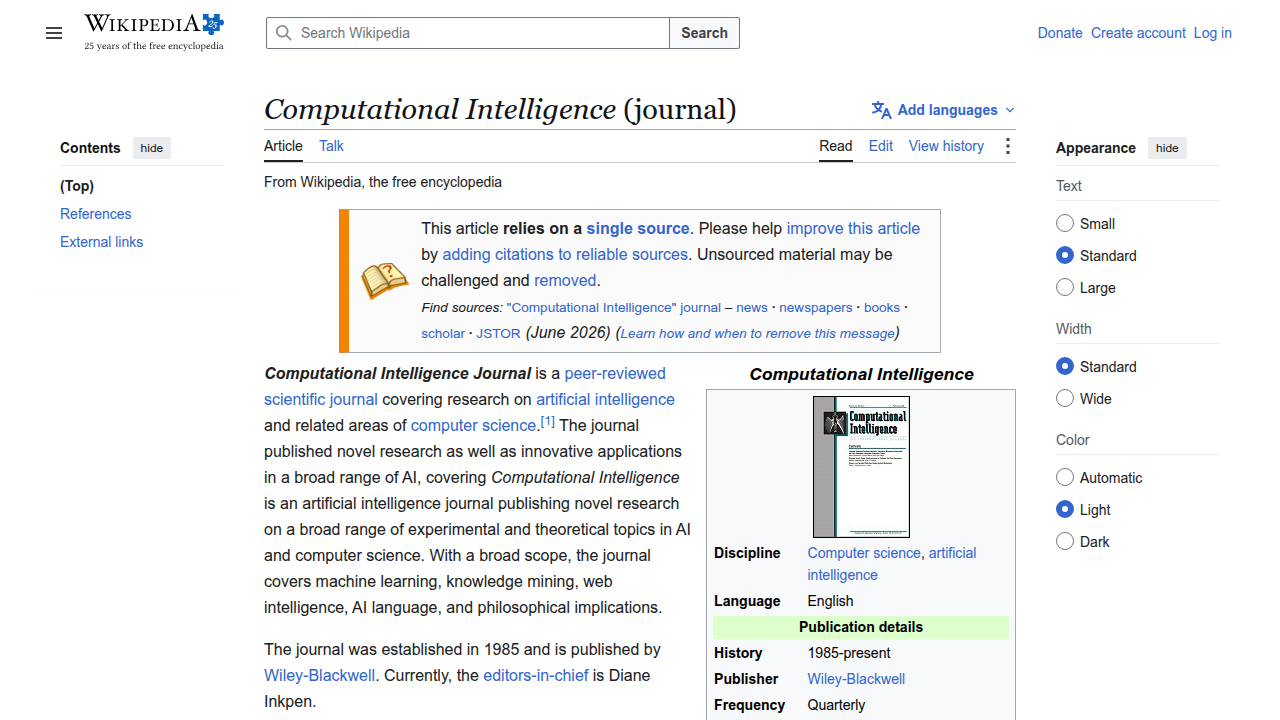
This is where the IEEE Transactions on Emerging Topics in Computational Intelligence comes in.
It’s not just a collection of research papers. Think of it as a special bridge. On one side, you have smart researchers working on new ideas in computational intelligence. On the other side, you have business leaders who need to know about these ideas to make smart choices. This journal connects those two worlds.
In 2026, understanding the latest in computational intelligence is more important than ever. This journal helps you see what’s coming next. It shows how different AI methods are starting to work together, a concept known as convergence AI. For instance, new breakthroughs in AI training methods found in the journal can directly impact how quickly and effectively new AI products can be brought to market.
For investors, this journal helps you spot new technical trends before they become widely known. This can guide your investment choices.

For founders, it offers a look at new research that could lead to your next big product idea. And for technology leaders, it helps you understand the quality of new research, so you can make better strategic decisions for your company. It is a way to stay informed about the rapidly evolving AI ecosystem for strategic planning and competitive intelligence. To dive deeper into how to navigate this landscape, you might find our 2026 comprehensive AI guide for investors, founders, and analysts helpful.
This article will show you how to use the IEEE Transactions on Emerging Topics in Computational Intelligence effectively. It’s a valuable tool for anyone serious about understanding and leading in the AI space.
Stay ahead with clear daily AI updates. The AI Newsletter Worth Reading delivers in-depth insights directly to you.
Scope, topics, and editorial structure: what the journal publishes
The IEEE Transactions on Emerging Topics in Computational Intelligence is a special journal. It acts like a compass, pointing to new and exciting ideas in computational intelligence. It helps people understand the future of AI.
The journal focuses on three main areas:
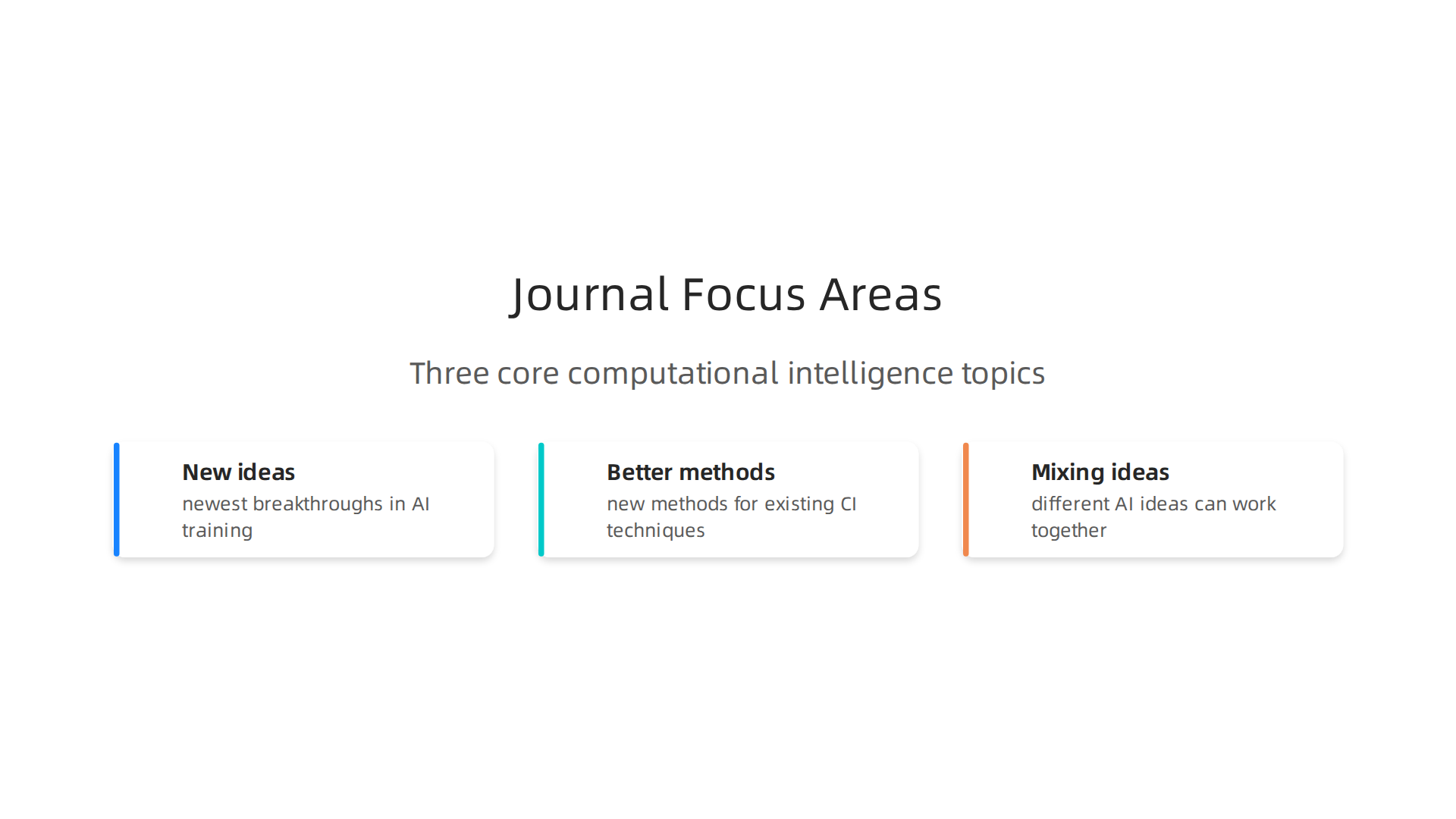
- New ideas and discoveries: It shares articles about the newest breakthroughs. These are often things that are just starting to show promise in
AI trainingand how AI systems learn. It looks at topics like new ways for AI to solve problems or adapt to changing situations. - Better methods: The journal also covers ways to make AI work better. This means new methods for existing
computational intelligencetechniques. For example, it might show how to make fuzzy logic systems smarter or how neural networks can learn faster. - Mixing different ideas: This journal is really interested in how different AI ideas can work together. This is a big part of what we call
convergence AI. It might look at how machine learning can be combined with fuzzy systems to create even more powerful tools. For investors and business leaders, understanding these combined approaches is key to seeing the next big product.
The IEEE Transactions on Emerging Topics in Computational Intelligence publishes different kinds of writings, like long research papers, shorter articles, and even survey papers that sum up a lot of research in one area. This means you can find different levels of detail depending on what you need to learn about emerging topics in computational intelligence. For more details on the kinds of articles it accepts, you can check the Information for Authors – IEEE Computational Intelligence Society.
Behind the scenes, the journal has a special team that makes sure only the best work gets published. It has editors and topic editors who are experts in different parts of AI. When someone sends in a paper, these editors guide it through a careful review process. Other experts read the paper and give their opinions. This helps make sure that the information in the journal is solid and trustworthy. Special issues are also put together sometimes. These issues focus on one very specific new area of AI, bringing together many papers on that particular theme. This helps readers get a deep dive into very current and important subjects. Knowing these different AI domains and platforms in 2026 is important for spotting where new opportunities are growing.
Indexing, bibliometrics, and how to interpret impact
The IEEE Transactions on Emerging Topics in Computational Intelligence helps people learn about new ideas in AI. But how can you know how important or far-reaching a journal’s work is? We look at two main things: how it’s indexed and its bibliometrics.
What is Indexing and Why Does It Matter?
Indexing simply means that a journal is listed in big, well-known databases. Think of these databases as huge libraries that keep track of academic papers. When a journal is indexed, it means it has met certain quality checks. Being listed in these databases helps researchers and professionals find articles easily. It also shows that the journal is a trusted source.
For example, many important journals are indexed in places like Scopus, Web of Science, and Google Scholar. These databases make sure that new research in computational intelligence, including fresh ideas on ai training and convergence ai, can be found by people all over the world. This helps new discoveries get noticed and used faster, which is good for everyone. For a helpful overview of common platforms, you can check an Indexing Database List.
Understanding Journal Impact with Bibliometrics
Bibliometrics are like scores or numbers that tell us about a journal’s influence. Here are a few common ones:
- Impact Factor: This number tells us, on average, how many times articles in a journal were cited by other papers in a certain year. If a journal has a high Impact Factor, it often means its articles are very important and are referred to a lot by other researchers.
- CiteScore: This is another way to measure how often articles in a journal are cited. It is often used for journals that are part of the Elsevier family of publications, like those found in the Scopus database.
- H-index: This number measures both how many papers a person or a journal has published and how many times those papers have been cited. For example, an h-index of 10 means there are 10 papers that have each been cited at least 10 times.
The Special Case of Emerging Topics
Now, here’s a key thing to know: for a journal like the IEEE Transactions on Emerging Topics in Computational Intelligence, these numbers might look a little different compared to older, very broad journals. That’s because it focuses on new and emerging topics.
When a journal publishes brand-new ideas, like the very first research on a convergence AI method, those papers might not get cited a lot right away. There simply aren’t many other papers existing yet that can cite them! It takes time for these new fields to grow and for more research to build upon them.
So, while Impact Factor and other scores are useful, they don’t always fully show the value of a journal that’s breaking new ground. For investors, founders, and analysts looking at AI domains and platforms in 2026, the actual content and the innovative ideas published in the IEEE Transactions on Emerging Topics in Computational Intelligence can be much more valuable than just looking at its current numbers. It’s about spotting where the future of AI is heading, not just where it has been.
Staying informed on these fast-moving topics is crucial. For those who want to dive deeper into the AI market and its leading companies, explore The 2026 Comprehensive AI Guide for Investors, Founders, and Analysts.
Do you want to keep up with the newest trends and insights in AI, without getting lost in all the noise?
Get clear daily AI updates from The AI Newsletter Worth Reading.
Notable papers and emergent technical trends (2020–2026)
The IEEE Transactions on Emerging Topics in Computational Intelligence gives us a special look into the newest and most exciting ideas in AI. From 2020 until 2026, we’ve seen some big changes and new trends that are shaping how we use smart technology today. These ideas aren’t just for scientists; they also show investors and business leaders where the next big chances and potential issues might be.
One of the most talked-about areas is the growth of large language models, often called LLMs. These are powerful AI systems that can understand and create human-like text. They’re behind many tools you might use every day. Along with LLMs, we’ve seen a rise in generative AI, which can create new content like images, music, or even code. Experts say that in 2026, AI research is moving towards how we use, check, and manage these systems in real life, not just how we build them better in labs AI Research Trends in 2026.
Another key trend is multimodal AI. This means AI that can understand and work with different kinds of information at once, like text, pictures, and sounds. Imagine an AI that can "see" what’s in a photo, "hear" what’s being said in a video, and "read" the description, then put it all together. This makes AI much smarter and more useful. We also see lots of work in computational intelligence for things like self-driving cars and smart factories, which rely on these advanced methods Recent Advances in Computational Intelligence Methodologies for Industries.
From Ideas to Business Opportunities
These technical trends bring big chances and some risks for businesses. For investors, founders, and analysts looking at AI domains and platforms in 2026, here’s how these ideas can turn into real-world impacts:
- New Products and Services: Generative AI, for example, helps companies quickly make new designs, marketing materials, or even video game content. This speeds up creation and lowers costs.
- Better Decisions: Advanced
computational intelligencesystems help businesses make smarter choices by analyzing huge amounts of data. This can be in healthcare, helping doctors find problems faster, or in finance, spotting risks Artificial Intelligence Applications in 2026: From Healthcare to Finance and Beyond. - Smarter Operations: Many papers in
IEEE Transactions on Emerging Topics in Computational Intelligenceshow how AI improves manufacturing. This includes making factories more efficient, predicting when machines might break down, and even helping with quality control The Role of Computational Intelligence in Modern Manufacturing. - Challenges and Risks: While exciting, new AI also comes with challenges. Companies need to figure out how to put these complex AI systems into their existing tools. They also need to make sure the AI is fair, can be explained, and that data is kept private. For more on how AI changes business, check out this guide on Your Guide to Artificial Intelligence Implications for Business Strategy in 2026.
The focus on convergence AI, where different AI methods work together, is especially important. This means AI systems can handle more complex tasks, leading to even more advanced tools and solutions in the near future. Keeping up with these quick changes in ai training and new technologies is key for anyone wanting to succeed in the AI world.
Staying up-to-date with the fast changes in AI training and new technologies is key for anyone wanting to succeed in the AI world. To do this, it helps to know how new research gets shared. Journals like IEEE Transactions on Emerging Topics in Computational Intelligence are where many important discoveries are first announced. But how do these ideas go from a lab to being public knowledge? It happens through a careful process of writing, reviewing, and publishing.
How Research Reaches Practice
When scientists and researchers want to share their new ideas in computational intelligence, they write papers. The IEEE Transactions on Emerging Topics in Computational Intelligence journal accepts different kinds of papers. These include full papers that share brand-new findings, shorter papers, survey papers that look at many existing studies, and letters that comment on work already published Information for Authors – IEEE Computational Intelligence Society. Other journals also welcome various types of manuscripts, from research articles to reviews Journal of Advanced Computational Intelligence and Intelligent ….
After a paper is sent in, it goes through a "peer review" process. This means other experts in the field read it carefully to make sure the research is good, correct, and adds something new.

This review takes time. For some journals focusing on AI, getting the first decision can take around 12 weeks Review Process, while others might be faster, sometimes around 20 days Scopus Indexed with Fast Review Process for AI Journals ….
Special Issues and Faster Paths
Sometimes, there are very important topics that need to be shared quickly. For these, journals create "special issues." These are collections of papers all about one specific, timely subject, like new breakthroughs in convergence AI. Special issues often have a faster review process to make sure the latest findings get out to the public sooner. For example, some peer review processes for special issues allow for about five months to complete Peer Review Schedules – IEEE Computer Society. This helps researchers, investors, and businesses quickly learn about and use the newest developments.
Understanding these pathways helps everyone involved in AI, from those who invent new ideas to those who use them to build new products or make smart investments. To keep learning about how AI impacts different areas, you can explore guides like the 2026 comprehensive AI guide for investors founders and analysts. Staying informed is crucial in the fast-moving world of artificial intelligence.
Get clear daily AI updates from The AI Newsletter Worth Reading.
Who reads and cites this research — audiences and real-world impact
Once new research, like that found in the IEEE Transactions on Emerging Topics in Computational Intelligence, is published, it doesn’t just sit there. Many different people and groups read and use these important findings. Their work helps bring ideas from paper to real-world use.
Who Uses AI Research?
- Academics: Other scientists and university professors read these papers to learn new things. They use this knowledge to do their own new research or to teach students about the latest trends in
computational intelligenceandai training. It helps them build on what others have discovered. New trends in machine learning, for example, are always being explored by academics New Trends in Machine Learning. - Industry and Businesses: Companies, especially those with research and development (R&D) teams, eagerly read these journals. They want to find new ideas for products or ways to make their current products better. For example, they might look for breakthroughs in
convergence AIto improve how machines think or learn. The newest AI research trends in 2026 focus on turning ideas into actual products and services AI Research Trends in 2026: What Researchers Should …. - Policymakers: These are people who make rules and laws. They read AI research to understand new technologies better. This helps them create smart rules for how AI is used in society, keeping things fair and safe.
- Investors: People who put money into companies, like venture capitalists or angel investors, also pay close attention to this research. They want to know which technologies are emerging and which ones might lead to the next big
biggest AI companies. This helps them decide where to invest their funds wisely. For more on how they do this, you can read about AI Startup Investors: How Angels, VCs, CVCs, and Institutional Funds Differ.
From Lab to Life: How Research Makes a Difference
The research published in journals like IEEE Transactions on Emerging Topics in Computational Intelligence has several important impacts:
- Technology Transfer: This is when ideas from a lab move into real products or services. For example, a new way to make AI understand speech, developed through research, might be used in a phone app that helps you talk to it. Computational intelligence is often used for manufacturing process control Technology Transfer of Computational Intelligence for Manufacturing Process Control.
- Startups and New Companies: Many new companies are born from fresh research. Entrepreneurs see a promising idea in a paper and build a whole business around it. These startups then create new jobs and bring new tools to the market.
- Setting Standards: When many researchers agree on the best ways to do something in AI, these ideas can become industry standards. These standards ensure that different AI systems can work together smoothly and safely.
- Product Roadmaps: Companies use research to plan what their products will look like in the future. They might see an exciting new development in a journal and decide to include it in their next generation of AI tools. This helps them stay competitive and offer the best technology. Learning about Your Guide to Artificial Intelligence Implications for Business Strategy in 2026 can help businesses understand this better.
In short, AI research isn’t just for scientists. It’s a key part of how new technologies are created, how businesses grow, and how our daily lives change for the better.
How to use this journal for competitive intelligence, investment screening, and hiring
The IEEE Transactions on Emerging Topics in Computational Intelligence journal isn’t just for academics. It’s a goldmine for business people too. If you’re an investor, a founder, or someone looking to hire the best talent, this journal can give you a real edge.

It helps you find new ideas, spot rising stars, and understand what’s coming next in the world of computational intelligence and AI.
Using Research for Competitive Intelligence
"Competitive intelligence" (CI) is simply understanding what your rivals are doing to make smarter choices for your own business. It’s about gathering and looking at facts about competitors, markets, and industry trends to make better business plans What Is Competitive Intelligence and How Do You Gather It?. The articles in ieee transactions on emerging topics in computational intelligence can help you do this.
- See What Competitors Are Building: Look at the research papers to find new ways of using
convergence AIor other advanced methods. You can learn what new technologies other companies might be looking into, sometimes even before they announce a product. Artificial intelligence tools can help keep an eye on competitors in real time AI in Competitive Intelligence, Traditional and New …. - Spot Future Trends: The journal often highlights new areas of research. By paying attention to "special issues" or topics that appear often, you can see where the industry is heading. This helps you get ready for new changes.
Finding Good Investments and Talent
For investors and hiring managers, this journal offers a unique peek behind the curtain.
- Early-Stage Technology: Investors can scan articles for groundbreaking ideas and new methods. A paper describing a novel
AI trainingapproach could point to a technology that will become very valuable in a few years. It helps you find promising tech long before it becomes widely known. - Identifying Talent: The authors of these papers are experts in their fields. If you’re looking to hire smart people for your AI team, reading who is publishing top-tier research can help you find leading scientists and engineers. Their published work acts like a super-detailed resume.
Advice for Founders and Product Leads
If you’re starting a company or leading a product team, ieee transactions on emerging topics in computational intelligence can guide your decisions.
- Market Timing: Reading about new research helps you know when the market might be ready for a new product. If many papers are exploring a similar problem, it could mean there’s a big need for a solution in that area.
- Research Partnerships: Look at who is working together on different papers. These connections can help you find partners for your own research and development projects. It’s a way to team up with top minds in
computational intelligence.
To keep up with all the fast changes in the AI world, you need clear and timely updates. Stay ahead of the curve with The AI Newsletter Worth Reading to get daily AI insights. For a wider view on AI business strategy, check out The 2026 comprehensive AI guide for investors, founders, and analysts.
Even though the IEEE Transactions on Emerging Topics in Computational Intelligence journal is a great source of information, it is important to remember that not all research is perfect. Like any publication, it can have certain biases or limits that you should be aware of. This helps you use the information more wisely.
Understanding Common Biases in Research
When you read scientific papers, especially about fast-changing fields like computational intelligence and AI, it’s good to keep a few things in mind:
- Topic Selection Bias: This means that some topics get more attention than others. Researchers and journals might focus on what’s new and exciting, or what has funding. This means that important but less "trendy" areas of AI might not show up as often. For example, in 2026, there’s a lot of focus on new AI models, but older, proven methods might not get as much new research spotlight, even if they are still very useful AI Research Trends in 2026.
- Citation Bias: Some papers are cited more often just because they are older or written by well-known people. This can make them seem more important or correct than newer or equally good papers. When looking for new talent or investment ideas, make sure to check recent papers too, not just the most cited ones.
- Reproducibility Issues: This is about whether other researchers can get the same results when they try out the methods from a paper. Sometimes, a study might have great results, but if no one else can make it work, it might not be ready for real-world use. This is a common challenge in quickly evolving tech fields.
How to Critically Read and Use Journal Signals
To make the best decisions using information from IEEE Transactions on Emerging Topics in Computational Intelligence and similar journals, follow these simple steps:
- Look for Different Views: Do not just rely on one paper or one author. Try to read a few different papers on the same topic. This helps you see if the ideas are widely accepted or still being debated. Seeing many papers on similar ideas, like
convergence AIor newAI trainingmethods, can show a real trend Recent Trends in Artificial Intelligence Technology. - Check the Authors and Their Affiliations: Who wrote the paper? Where do they work? Are they from a university, a company, or a mix? Knowing this can help you understand their point of view. For instance, a paper from a company might focus more on practical applications, while a university paper might be more about new theories.
- Compare with Real-World News: Does the research you are reading match up with what’s happening in the news or in actual companies? If a paper talks about a groundbreaking technology, see if any companies are actually trying to build products using it. This "triangulation" helps you see if the research is just theoretical or if it has practical value. For more insights on how AI is changing businesses, read about Artificial Intelligence Applications in 2026.
- Think About the "Why": Why was this research done? Was it to solve a specific problem, or to explore a new idea? Understanding the goal of the research can help you judge its value for your own needs. For instance, some research looks at big challenges for AI 3 Discussion.
By keeping these points in mind, you can use journals like IEEE Transactions on Emerging Topics in Computational Intelligence as a powerful tool, without falling into common traps.
Summary
This article explains how the IEEE Transactions on Emerging Topics in Computational Intelligence serves as a bridge between cutting‑edge research and real‑world decision making for investors, founders, and technology leaders. It covers what the journal publishes—new discoveries, improved methods, and convergent AI approaches—how editorial and peer‑review processes work, and why indexing and bibliometrics can be misleading for emerging fields. The piece highlights major technical trends from 2020–2026 (LLMs, generative and multimodal AI, and convergence AI) and shows how those trends translate into products, operational improvements, and investment opportunities. It also outlines who reads and cites this research, how ideas move from paper to practice, and practical ways to use the journal for competitive intelligence, screening investments, and hiring researchers. Finally, it warns about common biases and gives simple steps to critically evaluate papers so you can spot promising technologies before they become mainstream.