

The world of Artificial Intelligence (AI) is moving very fast in 2026. New ideas and companies pop up all the time. For people who put money into AI, start new AI companies, or lead big tech teams, it can be hard to keep up. That’s why understanding key players like Crescent Capital is so important.
Crescent Capital is a big name in the world of private equity, which means they invest in companies that are not publicly traded on a stock market. But they do more than just invest money. They have a special way of working. Their main goal is two-fold: first, they want to grow the money for their own investors. Second, they focus on making smart teamwork plans that help the AI companies they invest in grow even faster. This is called a "dual mandate." It means they’re not just looking for a quick return. They also want to build strong, successful companies that will make a big impact.
Think about other important firms in the investment world, such as Clover Capital, Arsenal Capital Partners, Palladium Equity Partners, and Phoenix Investors. Each of these firms has its own special way of doing things. But Crescent Capital stands out for its strong focus on both financial growth and building lasting partnerships within the AI sector. They carefully pick companies that have great ideas and help them succeed by connecting them with the right people and resources.
For investors, knowing Crescent Capital’s plan can help them decide where to put their money, especially if they are interested in the AI market. It shows them how strong and thoughtful an investment strategy can be. For founders of new AI companies, understanding Crescent Capital’s approach helps them know what kind of partner they might get. It’s not just about the money, but also about the support and connections that come with it. Executives at bigger companies also benefit. They learn about the latest trends and partnerships that are shaping the AI world, which helps them make quick and good choices for their own businesses.
In short, a clear and current look at what Crescent Capital does helps everyone in the AI space make better decisions with more confidence. It helps them understand not just where money is going, but how that money is being used to build the future of AI. For more on how to understand investment groups like this, you can read our guide on how to Understand an Investment Firm Profile.
Keeping up with the latest in venture capital and private equity performance is key for those in the AI sector. For example, recent reports show how venture capital fund performance has changed, with key metrics like Total Value to Paid-In (TVPI) often showing growth for various funds, as seen in the VC Fund Performance Q1 2026 analysis. These metrics help investors see how well a fund is doing.
If you want to stay updated on all the big news and important changes in the AI industry every day, check out The AI Newsletter Worth Reading.
How Crescent Capital Defines Capital Growth versus Strategic Partnership
As we have seen, Crescent Capital works with a "dual mandate." This means they have two main goals that guide all their decisions. It’s not just about one thing, but two important parts working together. Let’s look closely at what these two parts mean: capital growth and strategic partnership.
What Capital Growth Means for Crescent Capital
For Crescent Capital, "capital growth" is all about making money grow for its investors. When they put money into an AI company, they expect that money to come back much bigger over time. They have clear ways to measure if this is happening.
They use special terms and numbers to track how well their investments are doing. For example, they look at metrics like Total Value to Paid-In (TVPI). This number shows the total value created from an investment compared to the money they first put in. Another important measure is the Internal Rate of Return (IRR), which tells them how fast their money grew over a certain time. These kinds of numbers are key for showing how good a fund is at making returns for its partners, as explained in guides on Expected ROI Venture Capital: Key Benchmarks & Success Metrics. Keeping an eye on these helps Crescent Capital ensure they are meeting their promise of financial returns. Overall industry performance reports also track how private investment groups are doing each year, giving a bigger picture of success across the market.
What a Strategic Partnership Involves
Beyond just making money grow, Crescent Capital deeply believes in "strategic partnerships." This means they don’t just invest funds and then wait. They become active partners with the AI companies they support. This is a very different way of working compared to some other investment groups.
A strategic partnership goes much further than just a financial-only relationship. It means Crescent Capital offers help that isn’t just money. They might:
- Work together on new ideas: This could involve co-developing new products or features for the market.
- Open doors to new customers: They might help the AI company reach new customers or markets, making it easier to sell their products.
- Connect systems: They could help make sure the AI company’s tools can work smoothly with other important software and services.
This deep level of involvement is what makes Crescent Capital stand out. While firms like Clover Capital, Arsenal Capital Partners, Palladium Equity Partners, and Phoenix Investors each have their own ways of investing, Crescent Capital focuses on this hands-on approach. They want to be a true teammate, not just a funding source.
By working closely with AI companies, Crescent Capital helps them solve problems, grow faster, and become stronger in the market.

This belief is that when the AI company succeeds in a big way, Crescent Capital’s investment will also grow significantly. This way, both parts of their dual mandate, capital growth and strategic partnership, work together to achieve big goals.
If you are looking to understand more about these kinds of investment approaches, a good place to start is learning how to Master Investing In AI Startups Your 2026 Guide.
Crescent Capital’s unique way of working means they don’t just pick any AI company. They focus their investments on specific areas within the AI world where they can make the biggest difference. Their choices are guided by what they believe will bring both strong financial growth and chances for real partnership.
Where Crescent Capital Puts Its Money in AI
In 2026, a lot of money is flowing into artificial intelligence. Experts say that in the first three months of 2026 alone, venture capital firms put $242 billion into AI companies all over the world. This shows how big and important the AI market is right now The $242 Billion AI Investment Surge: What Q1 2026’s …. Crescent Capital looks for specific kinds of AI businesses that fit their goals. These often fall into a few key groups:
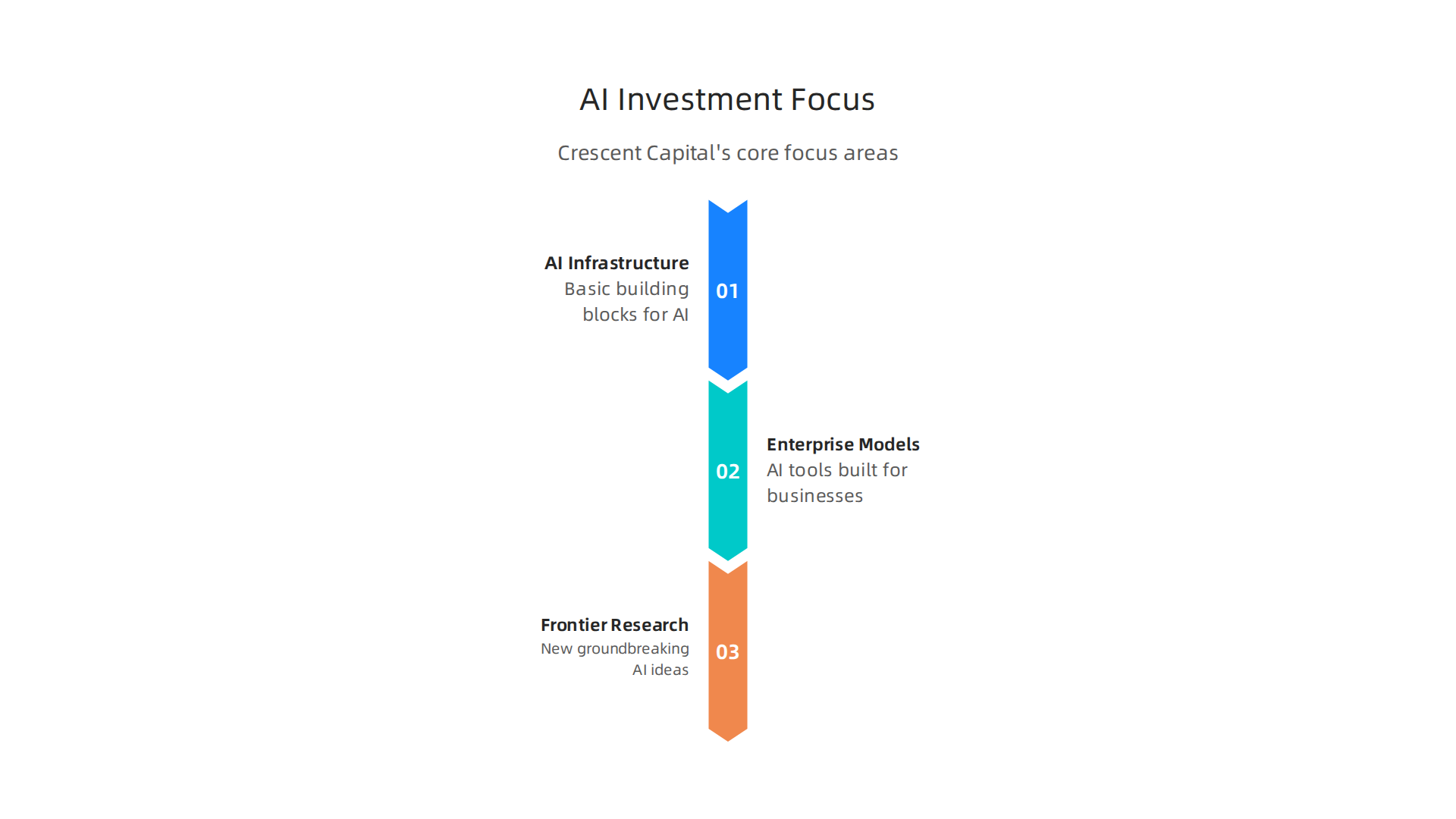
- AI Infrastructure: Think of this as the basic building blocks that AI needs to work. This includes things like powerful computer chips, huge data centers, and advanced cooling systems for computers. These parts are super important because they make AI faster and stronger. Many investors see "infrastructure first" as the main idea for AI spending in 2026, with huge amounts of money going into it AI Companies and 2026: Where the Giants Are Investing …. Investing here means supporting the foundation for all other AI growth.
- Enterprise AI Models: This refers to AI tools built for businesses. It includes:
- Foundation Models: These are very large AI programs, often called large language models (LLMs), that can understand and create text, images, or other data. They form the base for many different AI uses. A big chunk of AI funding, about 71%, goes into these foundation models AI Funding by Sector: Where the Money Goes in 2026.
- Vertical SaaS with AI: This means AI software made for a very specific industry, like AI tools for doctors’ offices or for farming. These tools solve particular problems for those businesses. In fact, most investment firms in early 2026 focused on commercial AI tools over custom ones Q1 2026 Investment Artificial Intelligence Trends.
- Frontier Research: This is about investing in new, groundbreaking AI ideas that might change how we use technology in the future. These are often cutting-edge projects that push the limits of what AI can do.
These areas are where Crescent Capital sees the most potential for growth and impact. If you want to dive deeper into these trends, understanding an AI Funding Playbook: Master 2026 Investment Strategies can be very helpful.
How Partnerships Change Where Money Goes
Crescent Capital’s focus on strategic partnerships actually helps them decide where to invest. When they partner with an AI company, they don’t just give money. They work together. This means:
- Faster Adoption: If Crescent Capital helps an AI company partner with a big cloud provider (like Amazon Web Services or Google Cloud) or a large company that will use their AI tools, it speeds up how quickly the AI technology is put to use. This makes the investment more likely to succeed.
- Targeted Growth: By working closely with their portfolio companies, Crescent Capital can help them connect with the right customers or make their products better for specific markets. This can lead to new investment opportunities in related areas.
- Better Solutions: Strategic partnerships also mean Crescent Capital can help guide the AI company to build tools that truly solve problems for businesses. This is especially true for enterprise AI software in 2026, where practical solutions are key.
By actively engaging, Crescent Capital doesn’t just watch the market trends; they help shape them. This hands-on approach strengthens their investments and makes sure the AI companies they support have the best chance to grow. It also means they are always looking for the next big thing that can truly change industries.
Keeping up with all the fast changes in the AI world can be tough. For daily, clear updates on AI and technology, consider subscribing to The AI Newsletter Worth Reading.
Crescent Capital’s unique way of working means they don’t just pick any AI company. They focus their investments on specific areas within the AI world where they can make the biggest difference. Their choices are guided by what they believe will bring both strong financial growth and chances for real partnership. By actively engaging, Crescent Capital doesn’t just watch the market trends; they help shape them. This hands-on approach strengthens their investments and makes sure the AI companies they support have the best chance to grow. It also means they are always looking for the next big thing that can truly change industries.
Deal Sourcing and Due Diligence: Finding High-Upside AI Companies
Finding the best AI companies to invest in is a careful process. For a firm like Crescent Capital, it means looking in all the right places and then doing a deep check on each company. This process is called "deal sourcing" and "due diligence." It helps ensure they pick companies that have a real chance to grow big and make a difference.

Where Crescent Capital Finds New AI Companies
Crescent Capital uses a few main ways to find promising AI startups:
- Founder Networks: Often, the best ideas come from people they already know or people recommended by trusted friends. Strong connections with founders, experts, and other investors are key. Many investment firms still find most of their deals through personal introductions, conferences, and even professional networking sites in 2026 AI for Venture Capital: Automate Dealflow & Source Better ….
- Research Spinouts: Some amazing AI companies start in universities or research labs. Crescent Capital keeps an eye on new discoveries and helps turn them into real businesses.
- Strategic Partner Referrals: Existing partners often know other great companies doing exciting work. These trusted recommendations can lead to valuable new investments.
- AI Deal Sourcing Tools: In 2026, many venture capital firms use special AI tools to help them find new deals. These tools can scan lots of data to spot new companies, track market trends, and even find early signals of success. About 82% of firms are now using AI for this kind of research, making deal sourcing faster and smarter 10 AI Tools for Venture Capital Firms in 2026 – Affinity. Tools like VC Deal Flow Signal and Harmonic.ai are becoming very popular for finding early opportunities Best Deal Flow Tools for VC Firms (2026).
What Makes an AI Startup Stand Out
Once potential companies are found, Crescent Capital looks for clear signs that they are on the right track. These "signals of product-market fit" show that a company has built something people truly want and need. This could mean:
- Early Customers: Businesses that already have users or paying customers show their product is valuable.
- Strong Engagement: People aren’t just trying the product once; they’re using it regularly and getting good results.
- Clear Problem Solved: The AI tool clearly fixes a specific, important problem for its users.
Understanding how to master investing in AI startups means knowing these signs.
Crescent Capital’s Due Diligence Checklist for AI
Before investing, Crescent Capital does a careful check of the company. This isn’t just about money; it’s about making sure the AI technology itself is strong and can last. Here are some key things on their checklist:
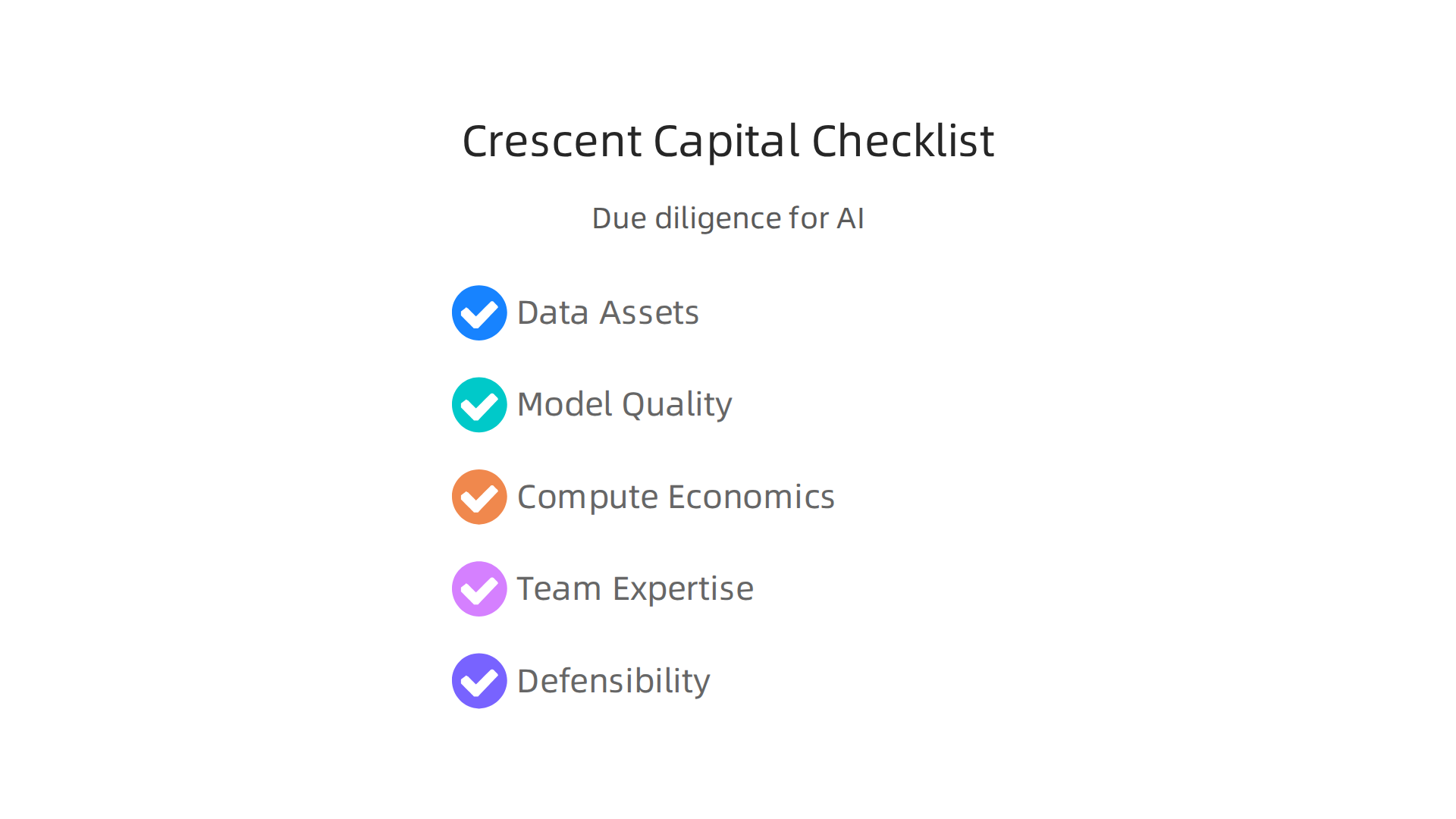
- Data Assets: AI is only as good as the data it learns from. Crescent Capital checks if the company has unique, high-quality data. Is it a lot of data? Is it special data that others don’t have?
- Model Quality: How well does the AI model actually perform? Is it accurate? Is it fast? Is it better than other options out there? This is about the "brains" of the AI. Sometimes, looking into explainable AI can help understand how these complex models make decisions.
- Compute Economics: Running powerful AI models costs money, especially for the computer power needed. Crescent Capital looks at how efficient the company is with its computing costs. Can they grow without spending too much on servers?
- Team Expertise: The people behind the AI are very important. Do the founders and their team have deep knowledge in AI? Have they built successful things before? Strong teams are often the most valuable asset.
- Defensibility: What makes this AI company special and hard for others to copy? Is it their unique data, their special AI model, a patent, or a strong network of users? This "defensibility" is what helps an AI company stay ahead of competitors.
By carefully checking these points, Crescent Capital aims to find AI companies with high potential. They also use tools to help them connect with AI startups in 2026 to find the best fit. This detailed process is how firms like Crescent Capital, and others such as Arsenal Capital Partners, Palladium Equity Partners, and Phoenix Investors, find their next big opportunities.
Finding the right AI companies is just the first part. The next big step for firms like Crescent Capital is to decide how they will work with these companies. This means figuring out the best way to invest and partner up so everyone benefits. This process involves different kinds of deals and careful talks.
Common Ways Investment Firms Partner with AI Companies
Crescent Capital uses several popular methods to build strong relationships with the AI startups they invest in. Each method helps both the investor and the startup grow.
- Minority Equity with Commercial Rights: This is when Crescent Capital buys a small part of the company. It’s like owning a few shares, but not enough to control the whole business. The "commercial rights" part means they might also get special deals or the chance to use the startup’s AI tools in their own projects. This way, Crescent Capital supports the company while also benefiting from its technology.
- Convertible Notes Tied to Partnership Milestones: Sometimes, Crescent Capital might first offer a loan called a convertible note. This loan isn’t just about money; it’s often linked to specific goals, or "milestones," the AI company needs to reach. For example, maybe the AI company needs to get a certain number of users or build a new feature. Once those goals are met, the loan can turn into actual ownership shares in the company. This helps the startup grow without giving up too much ownership too early. To learn more about how these types of investments work, you can explore what it means to decode venture capital funding stages.
- Joint Ventures for Product Co-Development: This is a closer partnership where Crescent Capital and the AI startup work together to create something new. They might combine their skills and resources to build a new AI product or service from the ground up. Think of it like a shared project where both sides put in effort and share in the success. This approach can be great for creating really innovative solutions.
What Founders Look For When Talking Deals
When an AI startup founder sits down with an investor like Crescent Capital, they have their own goals. It’s a two-way street, and founders have a few "levers" they can pull to get the best deal for their company.

- Company Value vs. Strategic Help: Founders often think about their company’s "valuation," which is how much the company is worth. A higher valuation means they give up less ownership for the same amount of money. But sometimes, strategic value is even more important. This means getting help from Crescent Capital beyond just money. It could be advice, connections, or help with finding new customers. For some founders, a slightly lower valuation might be okay if the strategic help is very strong.
- Exclusivity Clauses: A founder might talk about "exclusivity clauses." This means they want Crescent Capital to agree not to invest in a direct competitor for a certain time. It helps the startup feel safe that their investor is fully on their side.
- IP Ownership: "IP" stands for "intellectual property," which refers to new ideas, inventions, or technology. During talks, founders want to make sure they keep ownership of their core AI tech. If a new product is built together in a joint venture, they’ll need to agree on who owns what.
- Customer Introductions: One of the biggest benefits a firm like Crescent Capital can offer is access to new customers. Crescent Capital, along with other firms like Arsenal Capital Partners, Palladium Equity Partners, and Phoenix Investors, often has a wide network of businesses. Introducing an AI startup to these businesses can lead to big sales and growth, which is very valuable.
Understanding how investment firms like Crescent Capital operate and structure their partnerships can give a clearer picture of the AI investment world. It’s not just about money; it’s about building strong, lasting relationships that drive innovation. For those looking to keep up with the fast-changing world of AI and its biggest players, it’s essential to have reliable insights.
Stay informed about the critical developments in the AI industry and gain a competitive edge by getting daily, in-depth insights into AI and technology. The AI Newsletter Worth Reading delivers clear updates straight to your inbox.
For firms like Crescent Capital, building strong relationships with AI companies is a big step. But it’s also important to make sure these partnerships are doing well and to plan for the future. This means keeping an eye on how the company is growing, managing any problems that come up, and having a clear idea of how the investment will eventually pay off.
Performance Metrics, Risk Management, and Exit Strategies for Growth-Oriented Partnership Investments
To know if a partnership is successful, investment firms like Crescent Capital look at special numbers called Key Performance Indicators, or KPIs. These KPIs help them track how well the AI company is doing and how much the partnership is helping.
Watching How Partnerships Grow: Key Numbers
Crescent Capital uses different types of numbers to measure success:
- Financial Growth: They look at how fast the company’s yearly income is growing, known as Annual Recurring Revenue (ARR). They also check if customers are staying with the company, which is called customer retention. And if they helped sell a product together, they measure the return on investment (ROI) from that co-selling effort. These kinds of metrics help understand the financial impact of their involvement, as highlighted in guides about partnership performance KPIs.
- Operational Success: Beyond just money, they also look at how quickly new products are made or improved thanks to the partnership. They also check how well the partners work together and if the technology is making a real difference. A big part of this is making sure the joint efforts are efficient. You can find more detail on such evaluations in guides about partnership performance metrics for 2026.
- Overall Fund Performance: For Crescent Capital’s own investment funds, they use important numbers like Internal Rate of Return (IRR), Total Value to Paid-In (TVPI), and Distributed to Paid-In (DPI). These numbers help them see how much money their investments are making over time. For example, recent data from 2026 shows that venture capital fund performance has been improving, with median net TVPI on the rise for many funds in the first quarter of 2026, as noted in reports on VC Fund Performance Q1 2026. To truly understand an investment firm profile, it’s key to grasp these financial measures.
Handling Problems Along the Way
Every investment has risks. Crescent Capital makes sure to manage these by watching for changes in the market, new technologies that might affect the AI company, and how well the partners are working together. They also need to make sure the AI company keeps its edge over competitors. Good risk management helps protect their investment and guides the company through tough times.
Planning How to End the Investment: Exit Strategies
An "exit strategy" is how investors plan to get their money back and make a profit from their investment. It’s the end goal for the partnership.
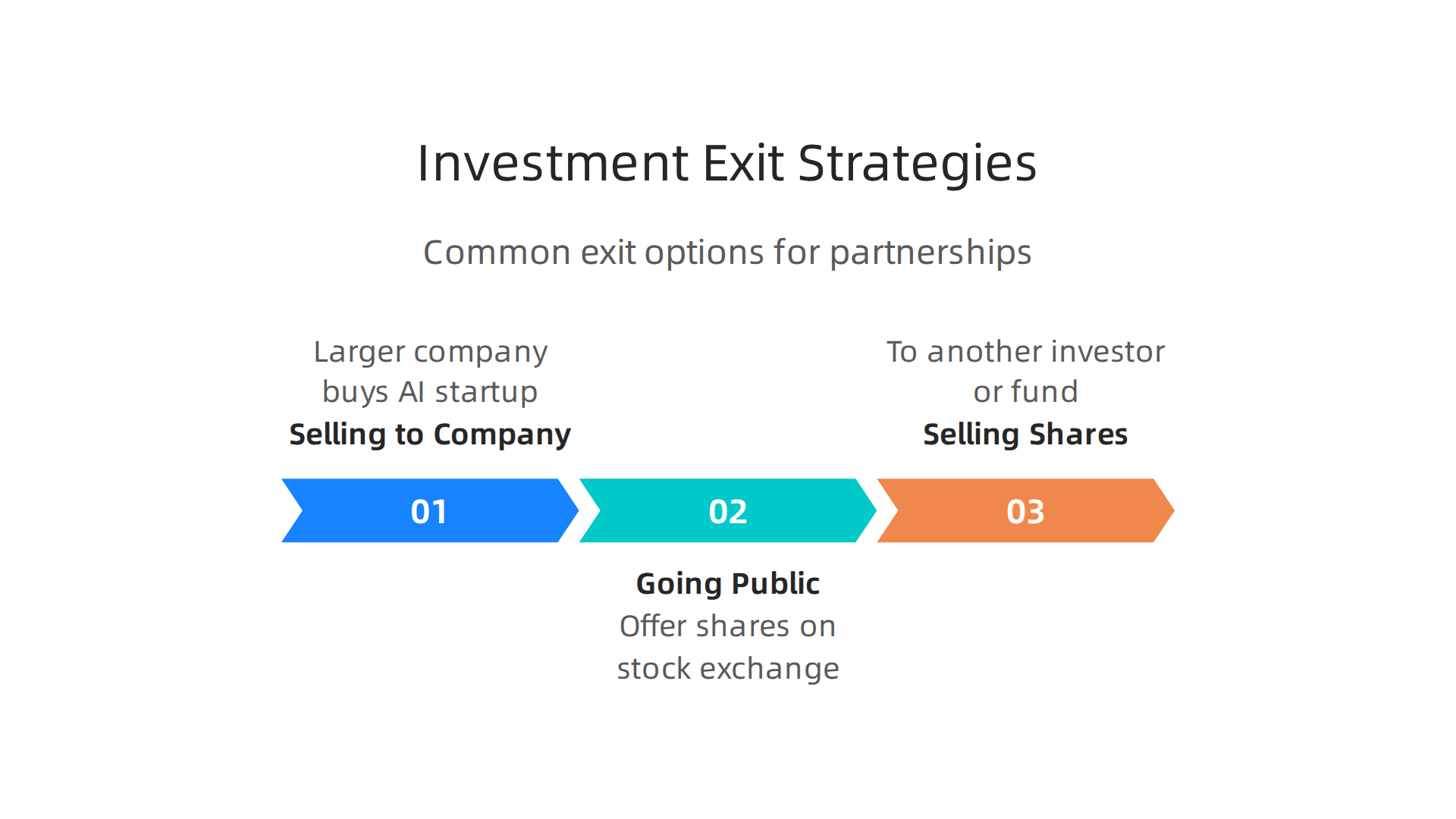
- Selling to a Bigger Company (M&A): Often, a larger company might buy the AI startup. This is called a merger or acquisition. Firms like Crescent Capital help prepare the AI company for this kind of sale.
- Going Public (IPO): Sometimes, a very successful AI company might offer its shares to the public on a stock exchange. This is known as an Initial Public Offering, or IPO.
- Selling Shares to Other Investors (Secondary Sales): The investment firm might sell its shares in the AI company to another investor or fund.
The way Crescent Capital sets up the original partnership terms can really affect these exit paths. For instance, if they have certain commercial rights, it might make the AI company more attractive to a buyer. Planning for a good exit is a critical part of how firms like Crescent Capital approach their investments. Learning more about how investment firms handle this planning can be found in a comprehensive AI guide for investors, founders, and analysts.
When founders and executives think about partnering with investment firms like Crescent Capital, they need to know what to expect. It’s not just about getting money. It’s also about finding a partner who can truly help their company grow and succeed. The way Crescent Capital plans for an investment’s end goal, as discussed before, also shapes how they work with new partners from the start.
What Founders and Executives Should Expect When Partnering with Crescent Capital
For startup founders, working with an investment firm can change everything. It’s important to look at more than just the cash offered. You should think about the strategic value Crescent Capital or a similar firm can bring. This means asking: Will they help us grow faster? Do they have connections we need? Do they understand our industry, especially in fast-moving areas like AI?
Figuring Out the Strategic Value
When you partner with a firm like Crescent Capital, they bring more than just funds. They offer deep knowledge of the market, a network of important people, and help with strategy. For example, Crescent Capital is very focused on AI, and they know a lot about which areas are getting the most investment. In Q1 2026, venture capital firms put $242 billion into AI companies, showing how big this area is becoming. Many investors are focusing on infrastructure, generative AI, and commercial AI tools, so understanding these trends is key to knowing how a partner can help your business grow in these areas, as highlighted in reports on Q1 2026 Investment Artificial Intelligence Trends.
It’s vital to make sure your vision for the company lines up with Crescent Capital’s goals. Do they believe in your long-term plan? Are they just looking for a quick profit, or do they want to build something lasting with you?
Talking About Partnership Terms
When you talk about the deal, called "negotiating partnership terms," there are a few big things to think about:
- How much ownership will they get? This is called an equity stake. You need to understand how much of your company you’re giving up.
- Will they have a seat on your company’s board? If they do, they will help make big decisions.
- Can you still make your own choices for the future? You want to protect your ability to grow in new ways, even with a partner.
- What about the exit plan? Just as Crescent Capital has an exit strategy, you should understand how their plan fits with yours. Will it help you sell your company or go public in a way that benefits everyone?
A Checklist for Corporate Partners
If you are an executive at a larger company looking to invest in or work with an AI startup alongside a firm like Crescent Capital, Clover Capital, or even Arsenal Capital Partners, here’s what you should check:
- Research the Investment Firm: Learn as much as you can about Crescent Capital or any other firm. Look at their past successes, their team, and how they typically work with companies.
- Define Your Goals Clearly: What do you hope to get from this partnership? Is it new technology, a bigger market, or a chance to grow your business in other ways?
- Know Your Role: Clearly spell out what your company and the startup will each do. This avoids confusion later on.
- Protect Your Ideas: If you are sharing new ideas or technology, make sure you have agreements in place to protect your intellectual property.
- Think About the Long Game: How will this partnership fit into your company’s overall plans for the future? Consider how it could lead to future sales or changes in your business. For a broader perspective on the AI market, you can explore a comprehensive AI guide for investors, founders, and analysts.
By carefully thinking through these points, founders and executives can make sure their partnership with Crescent Capital or similar firms like Palladium Equity Partners and Phoenix Investors is set up for long-term success, protecting their company’s future growth and making sure everyone benefits.

Stay informed on the latest trends and insights in the AI world. The AI Newsletter Worth Reading delivers clear daily AI updates to your inbox.
Summary
This article explains how Crescent Capital approaches AI investing in 2026, combining a dual mandate of capital growth and hands-on strategic partnerships. It describes the firm’s focus areas—AI infrastructure, enterprise models, and frontier research—and shows how active collaboration with portfolio companies accelerates adoption and creates targeted growth. The piece walks through how Crescent sources deals from founder networks, research spinouts, and AI deal tools, then applies a practical due diligence checklist that emphasizes data, model quality, compute economics, team strength, and defensibility. It outlines common deal structures (minority equity, milestone-linked convertible notes, joint ventures), what founders should negotiate, and how partners measure success using KPIs like ARR, retention, TVPI, and IRR. Finally, it covers risk management and exit options (M&A, IPO, secondary sales) so investors, founders, and corporate partners can evaluate strategic fit and long-term value creation.