
Why AI personal assistants will reshape how we work and what professionals need to know
Think about how fast things are changing around us. It feels like every day there’s a new tool or idea about Artificial Intelligence. Among all these changes, one thing stands out: the rise of the ai personal assistant. These smart helpers are changing how people work and live in 2026.
But here’s the thing. With so much new stuff, it can be hard to tell what’s truly useful from what’s just talk. Many professionals feel confused. They wonder how to use these new tools to really help their jobs, not just add more work. You might be asking yourself, will AI personal assistant tools actually make my job easier, or will they make me wonder what jobs will AI replace? It’s a fair question, especially with how quickly these technologies are moving.
The numbers show just how much AI is already part of our daily work. Almost half of all adults in the US, about 49%, now use AI chatbots, which is a big jump from just a few years ago.
More than half of all employed Americans have used AI in their jobs this year, according to a Gallup survey from early 2026 [^1]. Many companies are also putting AI to work. For example, 88% of businesses now use AI in at least one part of their work [^2].
This article is here to help you understand it all. We will give you clear advice, simple ways to check if something works, and steps you can take. This guide is for investors, founders, and leaders who want to use AI wisely. We will cut through the noise and show you what matters. To get even more insights into this fast-moving field, you can also explore our 2026 Comprehensive AI Guide for Investors, Founders, and Analysts.

If you want to stay updated on the latest AI trends every day, we have something just for you.
Get clear daily AI updates from The AI Newsletter Worth Reading.
[^1]: AI Assistant Statistics 2026: Adoption, Productivity Gains, …
[^2]: 79% of Companies Run AI Agents: 13 Adoption Stats (2026)
Current landscape: How organizations are using AI personal assistants today
So, we know that many people and businesses are using AI. But what does that really look like day-to-day? How are companies actually putting an ai personal assistant to work in 2026? It’s more than just a fancy new gadget. It’s about getting things done faster and smarter.

Many companies are finding smart ways to use these AI helpers. About 89% of workers now use AI for their jobs, with 38% using it every day [^1].
This shows how much these tools have become a part of our work lives.
Here are some common ways organizations use an AI personal assistant:
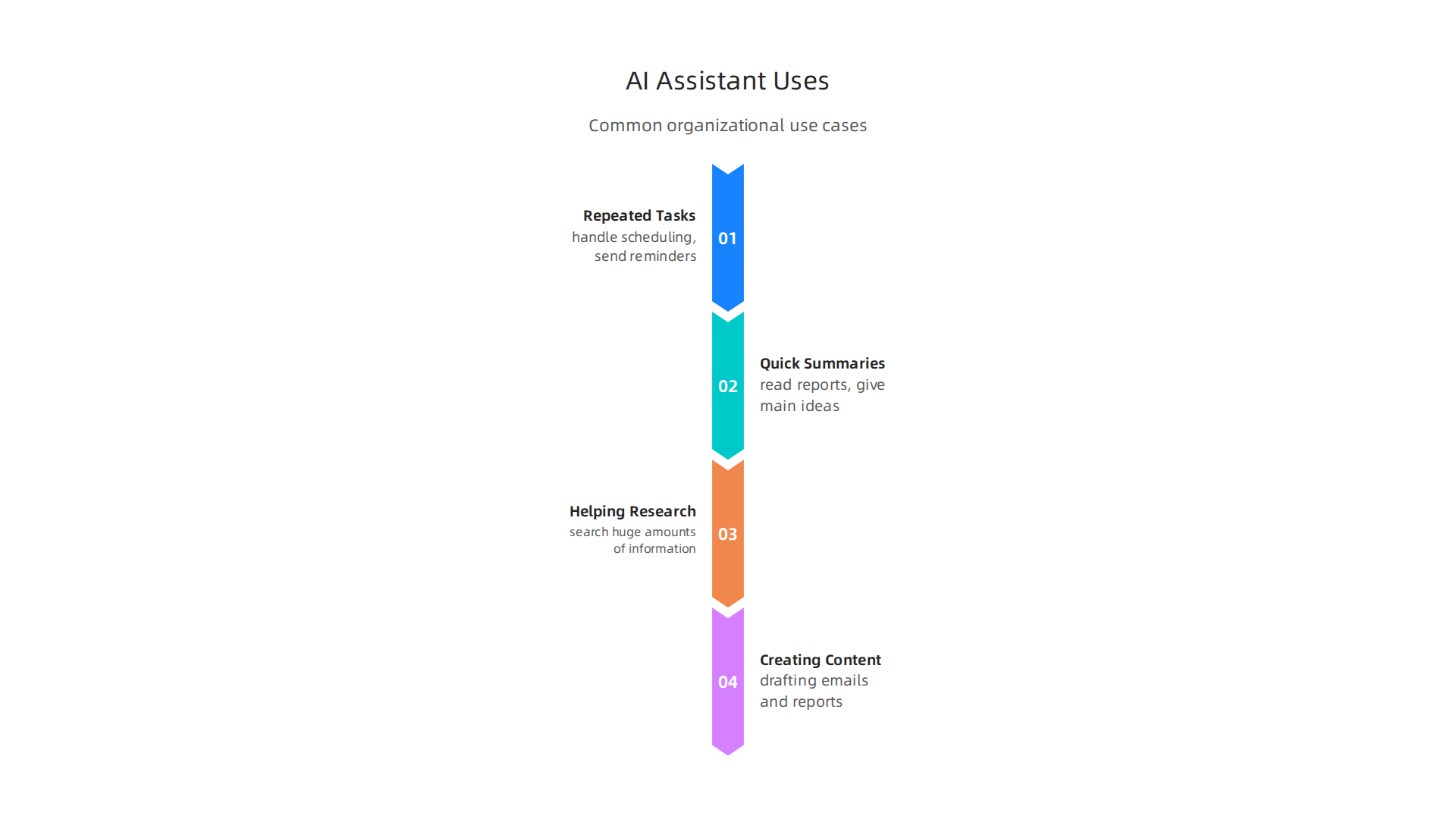
- Doing simple, repeated tasks: Imagine not having to set up every meeting yourself. AI can handle scheduling, send reminders, and even help manage calendars. This frees up people to do more important work.
- Quick summaries: Reading long reports or email chains takes a lot of time. An ai personal assistant can quickly read through these and give you the main ideas. This means you understand things faster.
- Helping with research: Need to find facts or figures for a project? AI can search huge amounts of information and bring you what you need, making research much easier. Many employees, about 54%, now use AI tools first when they need information for daily tasks [^2].
- Creating content: From drafting emails and reports to coming up with ideas for marketing, AI can give you a strong head start. It’s like having a helpful writing buddy. For example, some tools are like Best Writer AI Tools in 2026: Tested and Compared, and they can make content creation easier. Sometimes, people use how to humanize AI text with proven techniques and top tools to make AI-generated content sound more natural, using ai humanizer tools free or paid.
Across different jobs, some people use AI more than others. Software engineers (71%), marketing experts (63%), and IT workers (55%) use AI personal assistants daily more often than other groups [^1]. This makes sense because their jobs often involve lots of data, coding, or communication tasks that AI can help with.
Big companies and small ones are both jumping in. For example, about 40% of big company apps will have AI helpers built in by the end of 2026 [^3]. This shows that AI is not just a trend for tech giants. Even leaders and executives are using AI tools for hours each day to make big decisions and plan for the future. You can learn more about how big companies are using these tools by reading our guide to enterprise AI software in 2026: a guide for business leaders.
While some people worry about what jobs will ai replace, many companies see AI as a way to make workers more helpful, not to replace them. The goal is to let AI take over boring tasks so people can focus on more creative and important work. This shift means that knowing how to work with the smartest ai tools is becoming a key skill for everyone in 2026.
[^1]: AI in the Workplace Report (2026) – Founder Reports
[^2]: Pew AI 2026 Workplace Search Report Reveals New User …
[^3]: 40+ AI Assistant Statistics 2026: Adoption, Impact, and ROI
Key capabilities and architectures powering modern AI personal assistants
We’ve seen how organizations use an AI personal assistant every day to make work easier. But how do these smart tools actually do what they do? It’s like looking at a fancy car and wondering what’s under the hood.

For AI, there are several key parts working together that let these assistants understand us, remember things, and carry out tasks.
Think of an AI personal assistant as having a brain made of different layers. Each layer has a special job to make the assistant work well. Experts often talk about different layers that help these AI systems run smoothly AI Assistant Architecture Explained Simply.
Here are the main building blocks:
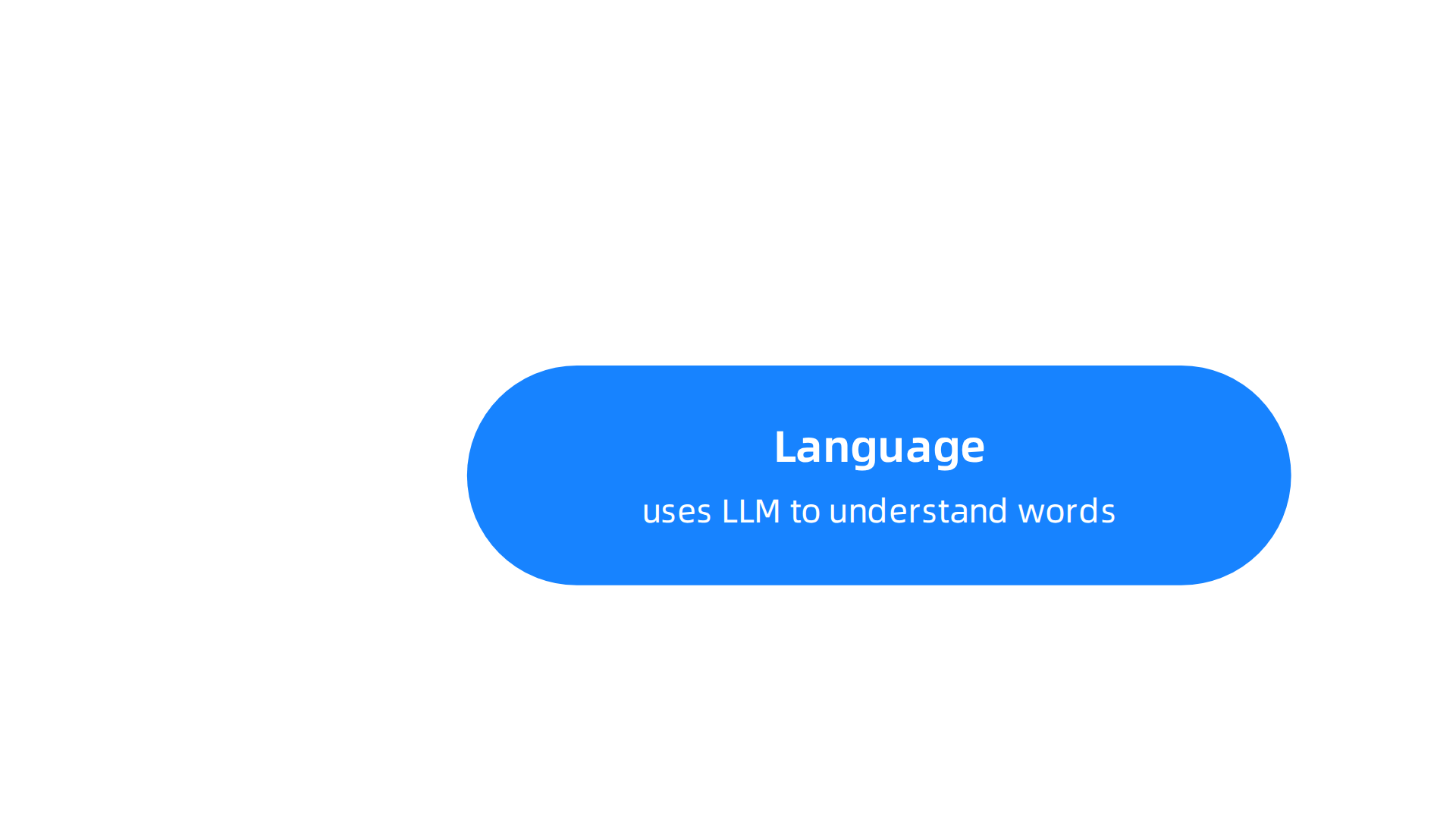
- Understanding Language (Natural Language Processing or NLP): This is the first and most important part. When you type or speak to an AI, it uses something called a Large Language Model (LLM) to understand your words. It figures out what you mean, even if your sentence is a bit tricky. This is how the
ai personal assistanttakes your request and turns it into something it can work with. - Memory and Finding Information (Retrieval): An AI assistant isn’t just smart in the moment. It also needs to remember past talks or find new information. This is where memory systems come in. These systems store what the AI has learned or has access to, like documents or company data. When you ask a question, the AI can quickly "retrieve" or pull out the right facts. Some systems use what’s called a RAG approach (Retrieval Augmented Generation) to find information and then use it to give you a helpful answer AI Agent Architecture: Build Systems That Work in 2026.
- Planning and Doing (Orchestration and Tools): Once an
ai personal assistantunderstands what you want and has the information, it needs to figure out how to do it. This is where "orchestration" comes in. The AI acts like a conductor, guiding itself to use the right "tools." These tools can be anything from your calendar app to a special company database or a search engine. The AI plans the steps and uses these tools to complete your request, whether it’s setting a meeting or writing an email. Many systems use multiple components, including a model layer, prompt layer, and tool layer to work together efficiently AI Assistant Architecture: Components and Patterns. - Learning and Improving (Fine-tuning): No AI is perfect from the start. To make an
ai personal assistanttruly useful for a specific business, it often goes through "fine-tuning." This means teaching it with more specific examples and information related to that company or job. For instance, an AI for a law firm would be fine-tuned with legal documents to make it better at legal tasks. This makes the AI even more precise and helpful for its intended use.
For businesses, integrating these parts means they can either build their own ai personal assistant from scratch, combining different services, or use ready-made solutions from companies that specialize in AI. Many vendors offer parts or whole systems that businesses can plug into their existing operations. This way, companies can get a truly smartest ai helper tailored to their needs. If you’re curious about how these fundamental AI concepts work, you can explore our guide to what is computer AI.
Getting these powerful AI tools to work with people is where the real magic happens.

It’s not just about what an AI personal assistant can do, but how well it works alongside us. This means setting up clear ways of working, knowing what the AI should and should not do, and how tasks move between humans and the AI.
Working Together: From Helping to Taking Charge
When humans and AI work together, there are different ways they can team up.
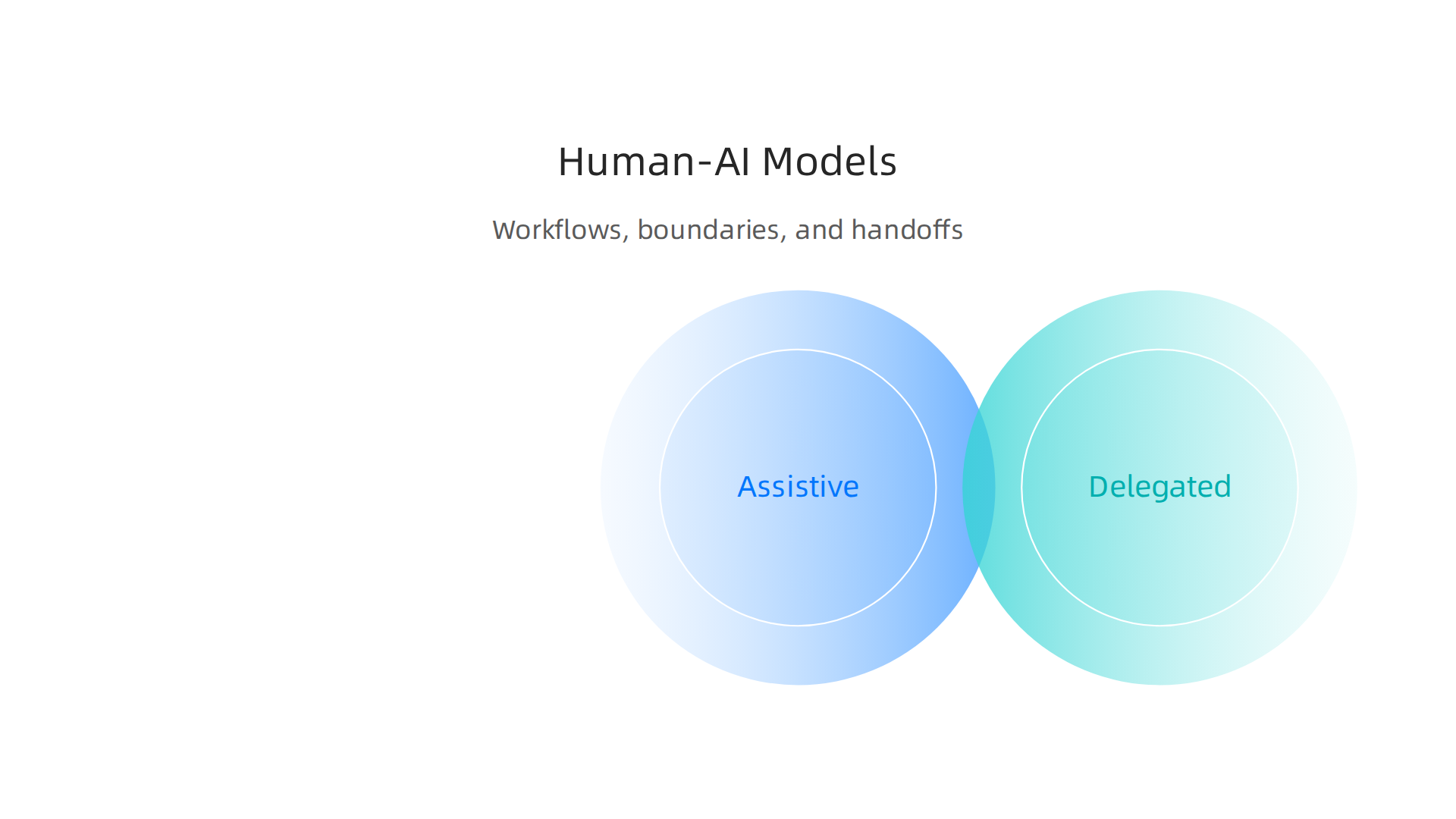
- AI as a Helper (Assistive Model): In this way, the
ai personal assistantacts like a very smart assistant. It offers ideas, gives information, or drafts things for you. But you, the human, always make the final decision. For example, an AI might suggest words for an email, but you choose what to send. This helps you work faster without losing your own control. - AI Taking Action (Delegated Model): Sometimes, the
smartest aican be trusted to do tasks all on its own. It completes the work, and a human simply checks it over later. Think of an AI that schedules meetings by itself, only alerting you if there’s a problem. This model saves a lot of time, but it needs a lot of trust and clear rules. - A Mix of Both (Hybrid Approaches): Most often, people and AI use a mix of these two ways. The AI might do the easy parts of a job, and then "hand off" the harder parts or the final checks to a human. This keeps things running smoothly and makes sure that important decisions still get a human touch.
Human Oversight, Fixing Problems, and Making AI Better
No matter how smart an ai personal assistant is, humans need to stay in charge. This "human oversight" is key for many reasons:
- Keeping Quality High: Humans can spot mistakes or strange ideas that AI might make. This is important because relying too much on AI can sometimes make our own thinking weaker The Influence of AI-Based Cognitive Tools on Human Cognition.
- Handling Special Cases: AI is good at routine tasks, but humans are better at dealing with new or tricky problems that need common sense or deep understanding. When an AI can’t figure something out, it needs a way to "escalate" or send the problem to a human.
- Giving Feedback: For an AI to get better, it needs to learn from us. When a human corrects an AI’s mistake or improves its work, that feedback helps the AI learn for next time. This constant learning makes the
ai personal assistantmore useful over time. Some studies even show that using AI can change how we think, which means we need to be careful Human-AI Interactions: Cognitive, Behavioral, and Emotional Impacts.
This balance helps make sure we use AI wisely. We get the benefits of speed and efficiency, but we also keep our own skills sharp and maintain control over important tasks. For example, while AI can help write content, sometimes you might need how to humanize AI text with proven techniques and top tools to ensure it sounds natural.
Actually, one big concern for many people is what jobs will ai replace. Instead of full replacement, collaboration models show that AI is often a partner, changing jobs rather than eliminating them entirely by helping people do their work better and faster. This means learning to work with AI is a key skill for the future. Staying informed about how AI is changing work and daily life is essential.
Want to understand the big picture of AI and how it’s shaping our world?
Get clear daily AI updates from The AI Newsletter Worth Reading.
Instead of jobs being fully replaced, the way people work is shifting. This means companies need to think about how they bring in AI tools like an ai personal assistant. It’s not just about getting new software, but about helping people learn new ways of working and making sure everyone feels good about the changes.
Organizational impacts: roles, skills, hiring, and change management
When companies welcome smartest ai tools, it often changes how jobs are done. Some jobs might be "augmented," meaning the AI helps people do their tasks better and faster. For example, a customer service person might use an AI to quickly find answers, letting them focus on helping customers with harder problems. Other jobs might be "redefined," where a person’s main duties shift a lot because the AI now handles many old tasks. This means the human takes on new, often more creative or strategic work.
To make these changes smooth, companies need to look closely at their teams. They should ask:
- Which tasks can an
ai personal assistanttake over? - How will this change what each person does day-to-day?
- What new skills will our team members need?
It’s clear that people will need different skills to work well with AI. These include understanding how AI works, knowing when to trust AI and when to check its work, and being good at problem-solving for things AI can’t do. Some research even suggests that relying too much on AI for writing can make it harder for us to remember our own arguments or record them well, highlighting the need for balanced use AI, Human Cognition and Knowledge Collapse. This means companies need to invest in teaching new skills. Learning platforms powered by AI can actually help with this, offering custom training for employees on how to use new tools and adapt to changing roles. You can learn more about how AI powered learning platforms are reshaping corporate training in 2026.
Hiring will also change. Companies will look for people who are eager to learn new technologies and can work well alongside AI. It’s less about asking "what jobs will ai replace" and more about "what new skills do we need for jobs that AI will change or create?" For leaders, managing these changes is vital.

Here’s a quick checklist for leaders adopting AI assistants in 2026:
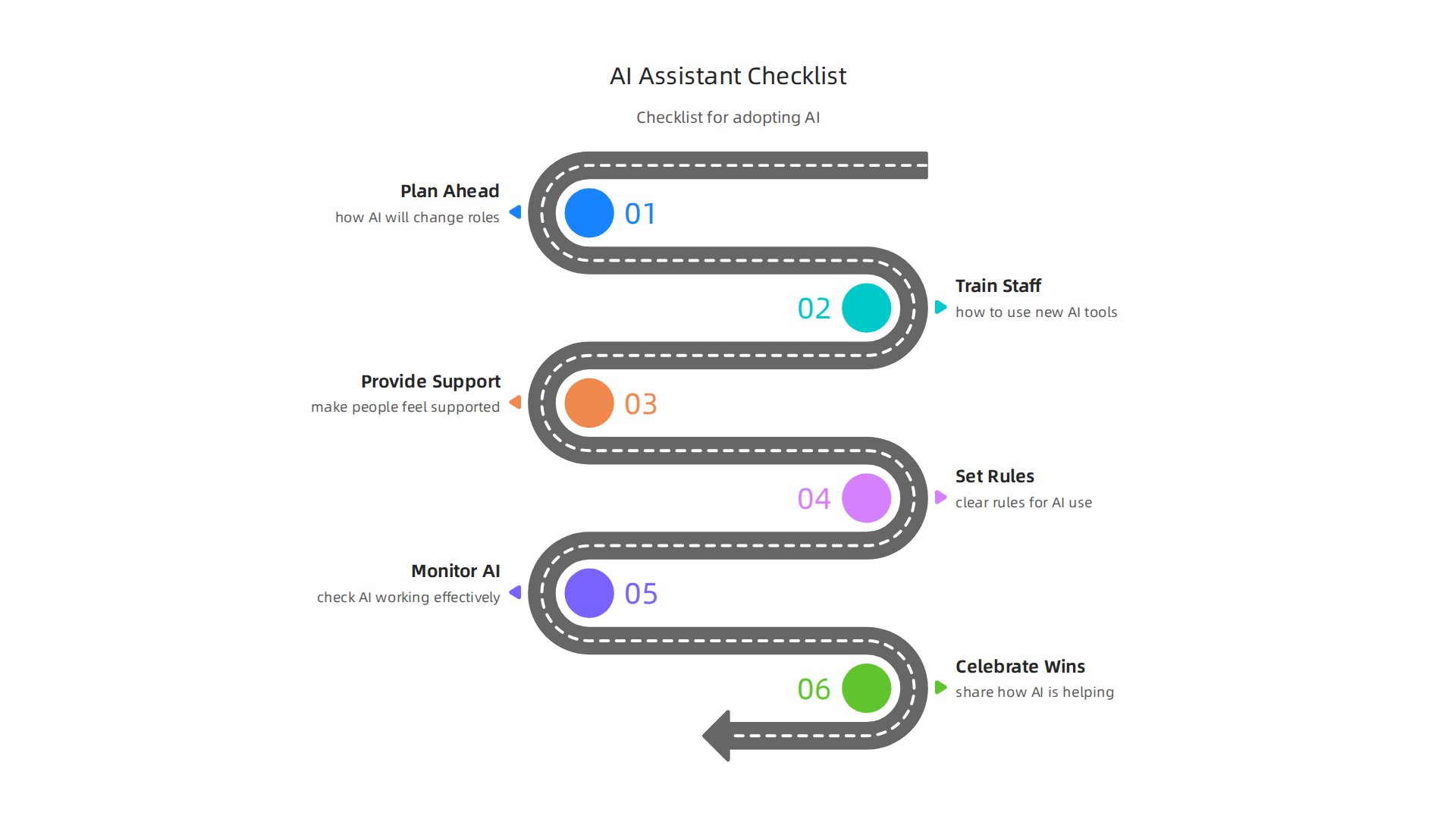
- Plan Ahead: Think about how AI will change roles before you bring it in. Talk to your team about it.
- Train Your Staff: Offer clear training on how to use new AI tools and what new skills are important.
- Give Support: Make sure people feel supported during the change. Address any fears they might have about their jobs.
- Set Rules: Create clear rules for how AI should be used, including who checks its work and how to handle mistakes.
- Keep an Eye On It: Regularly check how well the AI is working and if people are using it effectively. It’s important for company leaders to oversee AI use, keeping an eye on things like bias and privacy risks NACD Calls on Boards to Restructure AI Oversight, Flagging Bias, Hallucination, and Privacy as Core Governance Risks.
- Celebrate Successes: Share stories of how AI is helping the team and making work better.
By managing these changes well, companies can use AI to grow and make their teams more effective. This thoughtful approach ensures that technology serves people, rather than the other way around. Understanding the broader picture of how AI in everyday life is reshaping work and daily routines in 2026 can help leaders make informed decisions.
When companies bring in an ai personal assistant or other smartest ai tools, it is super important to know if they are actually helping. Just like you check if a new pair of shoes fits, businesses need to check if their new AI tools are working well. This means looking at how much value they bring, which we call "Return on Investment" or ROI.
To measure this, companies can make a simple plan. Think about what tasks the AI helps with and how you can count the improvements.
How to Measure What an AI Assistant Does
Here is a simple way to track the impact of an ai personal assistant:
| Activity the AI helps with | What to measure (Metric) | How to get the data (Data Source) |
|---|---|---|
| Meeting Preparation | Time saved on research | Employee surveys, time tracking |
| Writing Emails | Faster draft creation | AI tool reports, employee logs |
| Customer Questions | Quicker answers, fewer calls to human agents | Customer service logs, feedback |
| Finding Information | Time to find data | Internal search logs, user feedback |
For example, if an AI helps a team prepare for meetings, you might measure how much less time they spend gathering information. If the AI helps customer service, you can check how many questions it answers without a human stepping in. This is often called the "containment rate" or "deflection rate," and some companies aim for 70-80% of issues to be handled by AI without human help initially How to measure AI support agent performance: 10 key ….
Many companies are already seeing big changes. Half of American workers used AI in their jobs in early 2026, which is a big jump from before Here’s who’s leading AI adoption in the workplace. This shows that AI is becoming a common part of work. Actually, 71% of knowledge workers globally use at least one AI assistant every week, with 44% using three or more What 50000 Employees Actually Use vs What HR Thinks.
Testing AI to Show Its Value
To truly show that an AI tool is valuable to company leaders or investors, you can run tests.
- Pilot Programs: Start by letting a small group of people or one department use the
ai personal assistant. This is like a trial run. You can then compare how well this group does compared to others who are not using the AI. This helps you see clear differences and collect real stories about how the AI helps. - A/B Testing: This involves having two groups. One group uses the AI (Group A), and another group does not (Group B). You then compare results between the two groups. For example, if an AI helps write marketing emails, you can compare how many people open emails written with AI versus those written without AI help. This helps answer questions like whether AI is making work more efficient or if it’s changing
what jobs will ai replaceby making them more productive.
By using these methods, companies can collect strong proof that their AI investments are paying off. This helps everyone understand the clear benefits of new technology. Knowing how to measure success is key to making smart choices about AI.
Are you looking for more detailed information and analysis on the leading AI companies and market trends?
The AI Newsletter Worth Reading gives you clear daily AI updates from The Deep View Newsletter.
After running pilot programs and A/B tests to see the clear benefits of an AI tool, the next step is to make sure it works well for everyone. This means moving from a small test to a bigger launch. It’s like going from a small test kitchen to a full restaurant. A good plan, sometimes called an operational playbook, helps make this happen smoothly.
From Pilot to Full Scale: A Clear Roadmap
When you are ready to use an ai personal assistant more widely, there are important things to think about.
-
Data Strategy: AI tools need good data to learn and work correctly. Think of data as the food for the AI’s brain. You need a clear plan for how to collect, store, and use this data. This includes making sure the data is safe and follows all privacy rules. Many advanced AI systems, especially the
smartest aiagents, rely on different layers of architecture, including memory systems to hold session state and searchable knowledge, so a robust data strategy is essential for these components to function well AI Assistant Architecture: LLM, Memory, Tools, Routing …. Another common way to build an AI assistant is to use an "ingestion layer" to help the AI understand information from the real world The 5 Architectural Layers Every AI Agent Needs to Survive …. -
API Integration: This is how your AI tool "talks" to other programs and systems your company uses. For example, your AI personal assistant might need to connect with your customer service software or your email system. Making sure these connections (APIs) work well together is key. A well-designed AI agent architecture often includes a tool and action layer that connects the agent with APIs and databases 9 Layers for Production-Grade AI Agent Architecture. This helps the AI perform actions and access information from outside its own core programming. You might even want to look into how to master specialized AI software for 2026 investment and business growth to ensure smooth integration.
-
User Onboarding and Training: Even the best AI tool needs users to know how to use it. Providing good training and support helps people feel comfortable and get the most out of the AI. This can also help ease worries about
what jobs will ai replaceby showing how AI can help people do their jobs better, not take them away. -
Continuous Monitoring: After launching, you need to keep watching how the AI performs. This means checking its accuracy, speed, and how happy users are with it. Monitoring helps you catch problems early and make improvements. Metrics like task success rate, response time, and how often the AI gives incorrect information (hallucination rate) are important to track Beyond Accuracy: The New KPIs for Measuring AI ….
Avoiding Common Mistakes
Deploying AI can have its challenges. Here are some things to watch out for:
- Bad Data: If your AI is fed bad or incomplete data, it will give bad results. Always aim for clean, reliable data.
- Poor Integration: If the AI doesn’t connect well with other tools, it can create more work, not less.
- Lack of Clear Purpose: If you don’t know exactly what you want the AI to do, it’s hard to measure if it’s succeeding. Define the assistant’s purpose first to measure its performance effectively How to Measure AI assistant performance in 2025.
- Ignoring User Feedback: People using the AI every day have valuable insights. Listen to them to make the tool better.
- Not Having Guardrails: Guardrails are like safety rules for AI. They help make sure the AI acts responsibly and doesn’t do things it shouldn’t. This can include setting limits on what information the AI can access or how it responds to certain questions.
By following these best practices, companies can make sure their AI investments, like a new ai personal assistant, truly bring value and help everyone work smarter. It’s about careful planning and continuous care, ensuring the technology serves the people.
After putting your AI tool through its paces in tests, the next big step is to make sure it’s used safely and fairly by everyone. This means looking closely at any possible risks, what is right and wrong (ethics), and how to follow all the rules (governance). When you bring an ai personal assistant into your daily work, it’s like welcoming a new team member. You need clear guidelines to make sure they act responsibly and don’t cause unexpected problems.
Key Risks of AI Deployment
Even the smartest ai tools come with certain risks that companies must understand and manage.
- Privacy Concerns: AI systems often need a lot of data, some of it very private, to work well. If this data isn’t handled with great care, it can lead to privacy breaches. Companies need strong rules about collecting, storing, and using personal information to keep it safe and comply with privacy laws. Clear privacy policies and careful data handling are very important to avoid problems AI Governance – 5 Privacy.
- AI Hallucination: This is a tricky problem where an AI makes up information that sounds completely real but is actually false. It’s not lying on purpose, but it can lead to wrong decisions if users trust the incorrect information. To control this, it’s vital to have systems that check AI responses against real facts and to involve people in reviewing important outputs New sources of inaccuracy? A conceptual framework for studying ….
- Bias and Fairness: AI learns from the data it’s given. If that data has unfair patterns or reflects human biases, the AI can learn and repeat those biases. An
ai personal assistantshowing bias can lead to unfair treatment or decisions regarding people. To fight this, companies must carefully check their training data for any biases and set up ways to make sure the AI acts fairly for everyone Bias, Model Drift, Hallucination – AI Governance Controls. - Cognitive Impact and Over-reliance: When people use AI too much, they might start to rely on it heavily, which can change how they think. Studies show that constantly using AI for tasks might lessen our own ability to remember or think deeply The Influence of AI-Based Cognitive Tools on Human Cognition. This connects to worries about
what jobs will ai replace, but the real concern is that AI could reduce human critical thinking. We want AI to help us think better, not to replace our own minds. This over-reliance is sometimes called "cognitive offloading" Human-AI Interactions: Cognitive, Behavioral, and Emotional Impacts.
Building Strong AI Governance and Compliance
To handle these risks well, companies need a strong plan for AI governance. This is a set of rules, systems, and steps that guide how AI is developed, used, and maintained to ensure it’s ethical and follows all laws. Think of it as a roadmap for responsible AI use.
Key parts of good AI governance include:
- Clear Policies and Guidelines: Setting up written rules for how AI should be used, what it can and cannot do, and how it should handle sensitive data. These rules should cover everything from how data is gathered to how decisions are made.
- Data Quality and Oversight: Making sure the data used to train AI is clean, accurate, and free from bias. Regular checks of this data are a must to keep the AI fair.
- Transparency and Explainability: It’s important to understand how an AI system comes to its conclusions. This doesn’t mean knowing every tiny detail, but understanding the main reasons behind its actions. Tools like Explainable AI demystifies black box systems for business trust and regulatory compliance can help here.
- Human-in-the-Loop: For important decisions or tasks, always keep a human in charge. The AI can assist and suggest, but a person should make the final call, especially in sensitive areas.
- Continuous Monitoring and Auditing: After an AI is launched, it needs to be watched closely. Companies should regularly check the AI’s performance, accuracy, and fairness to catch problems quickly. Regular audits help ensure that the AI continues to meet ethical and legal standards Responsible AI You Can Defend: Privacy, Bias, ….
- Escalation and Remediation Policies: Have a clear plan for what to do if an AI system makes a mistake or behaves improperly. This includes knowing how to report the issue, who is responsible for fixing it, and how to correct any negative impacts. For larger companies, board members should even have a clear overview of AI risks and how they are being managed NACD Calls on Boards to Restructure AI Oversight, Flagging Bias, Hallucination, and Privacy as Core Governance Risks.
- Evaluating Third-Party AI: If you use AI software or services from other companies, you must check their security, data handling practices, and ethical guidelines before you start using them.
By actively putting these governance steps in place, businesses can make sure their AI tools, including every ai personal assistant, are not only powerful but also safe, fair, and trustworthy. Understanding the broader artificial intelligence implications for business strategy in 2026 is part of this responsible approach.
Summary
AI personal assistants are rapidly reshaping how professionals work by automating routine tasks, surfacing research, drafting content, and orchestrating tools across business systems. This article explains where adoption stands in 2026, how organizations use these assistants day-to-day, and the core technical layers that power them—NLP/LLMs, retrieval and memory, orchestration/tooling, and fine-tuning. It outlines collaboration models (assistive, delegated, hybrid), gives leaders a practical pilot-to-scale roadmap (data strategy, API integration, onboarding, monitoring), and shows how to measure value with simple metrics and A/B tests. The guide also covers organizational impacts—skill shifts, hiring, and change management—and lays out the key governance and risk controls needed to limit privacy breaches, bias, hallucinations, and cognitive over-reliance. Readers will finish able to evaluate, test, and govern an AI personal assistant so it boosts productivity while staying safe and fair.