

In the fast-moving world of business and investment in 2026, staying ahead means making smart choices quickly. But there is so much information out there. For busy investors and top executives, finding the right facts about important companies can feel like looking for a needle in a haystack. This is where clear, easy-to-understand profiles of firms become incredibly important.
Think about a company like Bracebridge Capital. Without a good profile, you might spend hours sifting through many different sources to figure out what they do, how they invest, and what makes them stand out. A well-made firm profile changes all that. It brings together all the key details into one place. This helps time-pressed professionals quickly grasp the most important points.
When you have a structured overview of a firm, it cuts through the common problem of too much information.

Instead of feeling swamped, you get the essential facts you need. This helps you make decisions much faster and with more confidence. Whether you are looking into firms like prospect capital, checking out the work of kps capital partners, or trying to understand the biggest private equity firms, having a clear profile is a huge help. It ensures you have reliable information at your fingertips, which is key for making smart moves in today’s market. If you are even thinking about how to start your private equity firm, understanding how other successful firms operate is a crucial first step. Just as understanding a Starwood Capital Group profile gives you insights into real estate investment, comprehensive profiles of other capital firms offer similar advantages.
Staying informed about the complex world of finance and technology is more important than ever. To keep up with critical developments, many professionals find regular updates invaluable. Get clear daily AI updates from The AI Newsletter Worth Reading.

Firm overview: history, ownership, and positioning
Once you know why firm profiles are important, the next step is to look at what goes into a good one. A clear profile starts with the basics: knowing a firm’s story, who owns it, and who leads it. This helps you understand its roots and how it makes decisions.
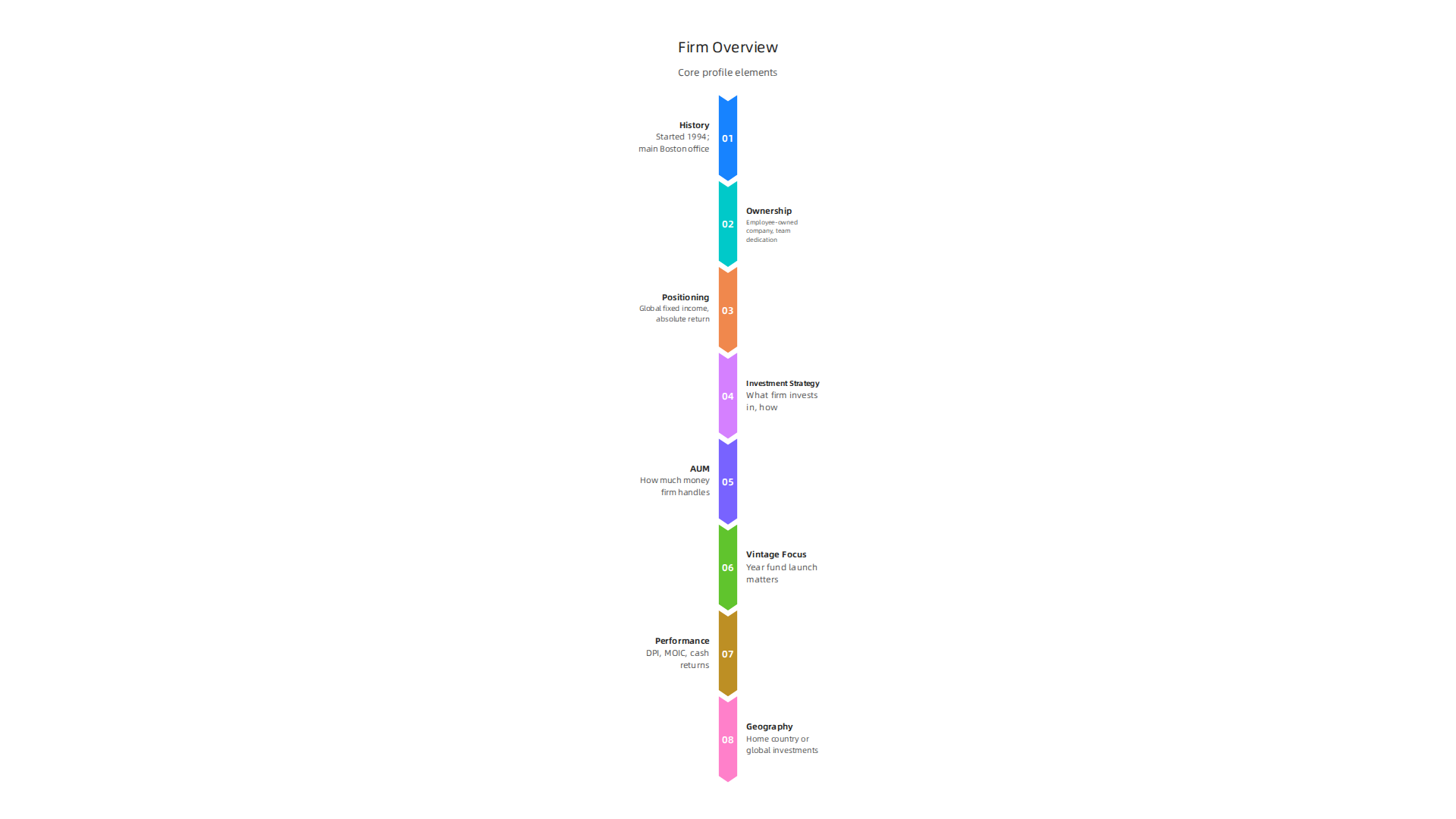
Let’s use Bracebridge Capital as our example. This firm was started in 1994 by Nancy Zimmerman and Gabriel Sunshine. It set up its main office in Boston, Massachusetts, which is where it still operates today Bracebridge Capital. Knowing these founding details helps us see where the firm came from and how long it has been in business.
When we talk about who owns a firm, for Bracebridge Capital, it is an employee-owned company. This means the people who work there have a say in how things are run and benefit from its success. This kind of ownership can show how dedicated the team is. The firm is known as a hedge fund manager and works mostly with big investment groups, like university funds Bracebridge Capital Hedge Fund Manager Profile | Preqin.
Having good leaders is also key for any company. A strong leadership team guides the firm’s plans and makes sure everything runs smoothly Leadership Team – Bracebridge Capital.
Next, we look at how a firm positions itself. This means understanding its value and what it focuses on. Bracebridge Capital primarily invests in global fixed income markets. They also look at public company stocks and distressed securities, which are investments in companies facing financial trouble but have a chance to recover. Their main goal is to protect money and make steady returns, no matter how the market is doing Bracebridge Capital, LLC – LinkedIn. This focus on "absolute return" is what sets them apart. They manage billions of dollars for their clients.
Understanding this clear picture of Bracebridge Capital is really helpful. It lets you quickly compare it to other firms, whether you are looking at prospect capital, checking out kps capital partners, or learning about other largest private equity firms. By knowing each firm’s history, ownership, and what they specialize in, you can make better choices about who to work with or invest in. It is all about having the right information at your fingertips for smart investing in 2026. For a broader understanding of how different investment strategies work, especially in new fields, you might also want to consult a 2026 comprehensive AI guide for investors founders and analysts.
Investment strategy and thesis: how the firm picks winners
After learning about a firm’s background and what it does, the next big step is to understand its investment strategy and thesis. This tells you how the firm plans to make money and why it thinks certain investments will succeed. It is like a detailed map that guides all their choices.
An investment thesis is usually a written plan. It helps explain the firm’s main ideas for investing. When putting together this plan, a firm needs to think about a few key things:
- Stage of Investment: Does the firm invest in brand-new companies, growing companies, or very large, established businesses? Each stage has different risks and rewards. For example, some firms might look for small startups, while others focus on big, stable ones.
- Sectors and Industries: What areas does the firm like to invest in? This could be technology, healthcare, real estate, or something else. Bracebridge Capital, for instance, focuses on global fixed income markets, meaning they invest in things like government bonds and corporate debt worldwide. This is their chosen sector.
- Geographic Focus: Does the firm invest only in its home country, or does it look all over the world? Bracebridge Capital, as we know, has a global focus.
By documenting these points, firms create a clear framework for their investment teams.
How to spot a firm’s investing style
Understanding a firm’s strategy also means looking at its investing style. You can often tell if a firm is:
- Research-driven: These firms spend a lot of time doing deep homework. They analyze companies, markets, and trends very carefully before making a move. They build detailed financial models and keep track of a company’s financial health, as suggested by experts in investment analysis

7 tips: best practices for equity research analysts. They might look at SEC filings, like the quarterly reports that show a firm’s holdings, to understand what top investors are buying and selling EDGAR Filing Documents for 0001426486-26-000002.
- Opportunistic: These firms look for chances to make money when special situations come up. Maybe a company’s stock price drops for a short time, or there is a sudden change in the market. They are quick to act on these new openings.
- Index-like: Some firms try to simply match the performance of a market index, like the S&P 500. They might invest in a broad range of stocks or bonds that make up an index, rather than picking individual "winners."
Bracebridge Capital’s focus on "absolute return" (making money no matter what the market does) means they likely blend research-driven and opportunistic methods to find value in fixed income markets. You can also research a firm’s past holdings through public databases to get a clearer picture of its investment choices, just like you would with Bracebridge Capital, Portfolio and News | GuruFocus. This helps you see if they are consistent in their strategy or change things often.
Knowing a firm’s investment strategy helps you compare it with others, such as prospect capital or kps capital partners, or other largest private equity firms. For anyone looking to understand how these strategies are put into action, especially with new tools, exploring a resource like AI Funding Playbook: Master 2026 Investment Strategies can be very valuable. Staying informed about the latest trends in finance and technology is key.
If you are an investor, founder, or analyst who needs to stay ahead in the fast-changing world of AI and investing, you will appreciate getting regular insights.
The AI Newsletter Worth Reading: Get clear daily AI updates from The Deep View Newsletter. The AI Newsletter Worth Reading
Portfolio composition and notable investments
Once you understand a firm’s investing plan, the next thing to look at is what their actual investments are. This is called their portfolio. The portfolio shows you exactly what the firm owns and how those choices match their stated strategy. It’s like looking at a chef’s completed dishes after seeing their recipe.
How to summarize portfolio breadth and concentration
When looking at a firm’s portfolio, you will want to understand two main things:
- Breadth (how wide it is): Does the firm invest in many different types of assets, or just a few? A broad portfolio might include many different companies, industries, and places. This can spread out risk, meaning if one investment does poorly, it does not hurt the whole portfolio too much.
- Concentration (how focused it is): On the other hand, a concentrated portfolio means the firm puts a lot of money into a smaller number of investments. If these few investments do very well, the firm can see big gains. But if they do poorly, the losses can also be big.
For example, a firm might have 30% of its money in technology stocks, 20% in healthcare bonds, and the rest spread across other areas. Looking at reports, like the BlackRock Investment Funds 2026 Annual Report, can show you how different funds spread their money across sectors like banks or utilities in 2026, giving you a clear picture of their portfolio’s makeup BlackRock Investment Funds 2026 – Annual Report.
Comparing a firm’s portfolio to industry benchmarks helps you see how well they are doing against similar investors. There are many tools and reports available for this. For instance, you can use services like Cambridge Associates, which offers private investment benchmarks to help compare performance Private Investment Benchmarks.
Other resources like the Investment Application Benchmark 2026 also provide a global look at digital investment platforms and market trends Investment Application Benchmark 2026. This kind of information helps investors, founders, and analysts better understand the AI market.
How to highlight representative or flagship investments for sector context
Beyond just the numbers, some investments in a firm’s portfolio are more important than others. These are often called "flagship" or "representative" investments. They are the ones the firm is most proud of, or that best show off their investing skills.
For a firm like bracebridge capital, which focuses on fixed income, a flagship investment might be a special kind of government bond from an emerging market that they bought at a great price, or a complex corporate debt package that paid off really well. These investments highlight their specific expertise in global fixed income markets.
You can often find information about these key investments in the firm’s own reports, investor presentations, or even news articles. They help tell a story about the firm’s success and how they put their strategy into action. For anyone interested in the broader world of investment and how AI plays a role, learning to read these kinds of reports is key. You might also want to learn how to start your private equity firm: the 2026 expert guide to better understand how firms like prospect capital or kps capital partners operate and build their portfolios. Understanding these details can give you a better idea of how even the largest private equity firms make their investment decisions.
When you look at an investment firm, it’s not just about what they invest in. It’s also really important to understand how the firm itself is built, how it makes its big decisions, and who the main people in charge are. This is called its structure, governance, and key personnel. Knowing these things helps you see if the firm is stable and if its leaders are good at what they do.
Why firm structure and governance matter
Imagine a team playing a sport. If you don’t know who the coach is, who the captain is, or how they decide on plays, it’s hard to trust their game plan. Investment firms are similar. Their structure tells you how the business is legally set up. Many firms, like Bracebridge Capital, LLC, are set up as LLCs, which stands for Limited Liability Company. This is a common way for businesses to protect their owners while still running as a partnership. This setup helps define who is responsible for what.
Governance is about how the firm is run. It’s the rules and systems for making decisions, from everyday choices to big investment moves. Good governance means decisions are made fairly and smartly. It also means there are clear ways to handle problems. For investors, knowing a firm has strong governance builds trust, showing that the company cares about doing things the right way. You can often learn about a firm’s details, like its founding in 1994 by Nancy Zimmerman and Gabriel Sunshine, from public records and other sources Bracebridge Capital.
Key personnel roles to profile and why
The people at the top make a huge difference. Think about the Chief Investment Officer (CIO) or the main portfolio managers. These individuals are often the "brains" behind the investment strategy. They decide where the money goes and how risks are managed. For example, a firm might have a team of leaders guiding its overall direction and how investments are put into action Leadership Team – Bracebridge Capital.
It’s smart to look into their backgrounds and experience. Have they been successful before? Do they have a clear vision? Knowing who these people are, and what their past work looks like, gives you a better idea of how the firm will likely perform. For instance, public filings like quarterly reports can show you details about holdings and even changes in ownership for key people at firms like bracebridge capital EDGAR Filing Documents for 0001426486-26-000002. These reports are important for understanding the actual people behind the big investment decisions in 2026.
This attention to detail is true whether you are looking at bracebridge capital, prospect capital, kps capital partners, or even the largest private equity firms. Understanding these pieces helps investors, founders, and analysts get a complete picture. To keep learning about how the biggest AI companies and investment firms operate in 2026, consider reading The 2026 Comprehensive AI Guide for Investors, Founders, and Analysts.
Get clear daily AI updates from The AI Newsletter Worth Reading.
When you understand the inner workings of a firm like Bracebridge Capital, the next natural step is to see how it stacks up against others. Comparing investment firms is like looking at different kinds of vehicles. They all get you from one place to another, but a sports car is very different from a family van.

Knowing the differences helps you pick the right one for your journey.
Benchmarks for Comparing Investment Firms
To compare firms effectively, you need some key measures or benchmarks. Here’s what to look at:
- Investment Strategy: This is about what the firm invests in and how. Does it focus on short-term trades like many hedge funds, or does it buy and improve whole companies, like private equity firms such as KPS Capital Partners or Prospect Capital? Some firms might even specialize in specific sectors, like technology or real estate.
- Assets Under Management (AUM): This number tells you how much money the firm handles for its clients. Firms with larger AUM, like some of the largest private equity firms, often have more resources and influence. You can find detailed reports that help benchmark investment applications for 2026, giving you a wider view of the market Investment Application Benchmark 2026.
- Vintage Focus: For private funds, "vintage" refers to the year a fund was launched. This is important because market conditions change, and a fund started in a strong year might perform differently from one started in a weaker year. Comparing funds of the same vintage gives a fairer picture.
- Performance Metrics: Beyond just returns, look at metrics like DPI (Distributions to Paid-in Capital) and MOIC (Multiple on Invested Capital). These help show how much cash has been returned to investors and how much value has been created. In 2026, many investors are looking at liquidity as a critical factor Clearer view, tougher terrain.
Using Comparisons to Spot Differences and Opportunities
By comparing firms using these benchmarks, you can quickly see what makes each one special. Does a firm have a unique strategy that sets it apart, or does it seem to do the same thing as many others? This helps investors find firms that truly offer something new.
For example, you can use benchmarking tools from places like Cambridge Associates or Preqin to compare fund performance across different strategies, geographies, and fund sizes Private Investment Benchmarks. These tools help show if a firm’s returns are truly outstanding or just average for its type. Understanding these comparisons helps investors decide where to put their money, founders identify potential partners, and analysts understand market trends. If you’re looking to delve deeper into how to set up and manage these types of investment vehicles, explore resources like Start Your Private Equity Firm The 2026 Expert Guide.
The previous section helped us understand how to compare investment firms using important measures. Now, let’s dive deeper into how you look at what a firm has done in the past, how well it performed, and the chances it might lose money. This means checking a firm’s track record, performance, and understanding its risks. Firms like Bracebridge Capital, KPS Capital Partners, or Prospect Capital all have these things that need careful looking over.
What Performance Signals Matter
When we talk about a firm’s track record, we want to see real results. Not just promises, but actual money made and given back to investors.
- Realized Exits: This refers to when a firm sells an investment it made. For example, if a private equity firm buys a company, improves it, and then sells it for a profit, that’s a realized exit. These are important because they show actual cash returns, not just paper gains.
- IRR (Internal Rate of Return): This is a fancy way to measure how profitable an investment was over time. It gives you a percentage that helps compare different investments. However, IRR can sometimes look better if the firm sells off its best investments early, leaving the harder ones in the fund longer.
- Relative Returns: This simply means how a firm’s performance compares to others doing similar investments. Did it do better or worse than the average? You can find reports showing Private equity fund performance by the numbers for a better idea of what’s typical in 2026.
Understanding the Limitations
It’s not enough to just look at these numbers. You need to understand their limits. For example, a high IRR might look great, but if it comes from just one or two very successful deals, it might not mean the firm is consistently good. Also, some firms might show "paper" gains that haven’t been turned into cash yet.
How to Evaluate Risk
Every investment has risks. When looking at firms like Bracebridge Capital or other private equity firms, you should consider a few key things:
- Strategy Risk: Does the firm’s way of investing carry high risks? For example, some strategies are very sensitive to market changes.
- Sector Cycles: What industries does the firm invest in? Some industries, like technology or real estate, have "cycles" where they go up and down. If a firm puts most of its money into one sector, it faces higher risk when that sector is down. For instance, an annual report from 2026 shows how some funds have significant weightings in specific sectors like banks or utilities BlackRock Investment Funds 2026 – Annual Report.
- Concentration Risk: This is about how spread out a firm’s investments are. If a firm has too much money in just a few companies, or a few kinds of investments, that’s a higher risk. You can often see a firm’s holdings by looking at their public filings. For example, you can find details about Investment Adviser Firms like BRACEBRIDGE CAPITAL, LLC – Investment Adviser Firm – IAPD through public records.
These filings provide important clues about their investment choices. You can also search for a company’s past filings using tools like the EDGAR Full Text Search.
By looking at these things, you get a clearer picture of how a firm truly performs and the risks involved. Staying informed about the market, especially rapidly changing areas like AI, can give investors, founders, and analysts an edge.

For a deeper dive into understanding this dynamic field, read The 2026 Comprehensive AI Guide for Investors Founders and Analysts. And for those who want to keep up with the latest in artificial intelligence, consider checking out The AI Newsletter Worth Reading.
Knowing how to look at an investment firm’s past actions, how well it has done, and its risks is very useful. This information helps many different people make smart choices.
How Investors, Founders, and Analysts Should Use These Profiles
Learning about firms like Bracebridge Capital, KPS Capital Partners, or Prospect Capital goes beyond just understanding their numbers. It helps you in several real-world situations:
-
For Making Smart Investment Decisions (Due Diligence): If you are an investor, you need to be very careful before putting your money into a firm. Checking a firm’s profile helps you see if their way of investing matches your goals. You can look at their past successes, how much risk they take, and who is leading the company. For example, finding details on firms like Bracebridge Capital, LLC — RIA in Boston, MA | $100B AUM can show you their total money managed and their focus. This is part of doing good "due diligence," which means doing your homework before you invest. There are also important Best Practices For Investment Analysis to guide you.
-
For Finding Business Partners (Partner Outreach): If you are a founder looking for money or a partner for your business, you need to find firms that are a good fit. By looking at a firm’s profile, you can see what kind of companies they usually invest in and what their goals are. This helps you reach out to the right
largest private equity firmswho might be interested in what you do. -
For Understanding Your Competition (Competitive Intelligence): Analysts and founders need to know what other firms are doing. By studying the profiles of competitors, like other
largest private equity firms, you can learn about their investment strategies and where they are putting their money. This helps you understand the market better and plan your own moves. -
For Career Choices (Hiring Decisions): Even if you are looking for a job, these profiles can help. You can learn about a firm’s focus, its leaders, and its overall health. This helps you decide if a company like
Bracebridge CapitalorKPS Capital Partnerswould be a good place to work.
A Simple Way to Check and Keep Profiles Updated
To make sure you’re using the best information, follow these steps:
- Start with Official Sources: Always look at the firm’s official reports first. This includes their yearly reports or documents they file with government regulators. These are often the most accurate sources. You can also watch videos on How to research and analyze companies 2026 to get tips on finding good information.
- Check Company Websites: Look at the firm’s own website. They often share information about their team, their history, and their investment style. Websites for firms like
Prospect Capitalwill give you a good overview. - Use Trusted Financial Websites: There are many reliable financial websites that gather information about investment firms. These can help you cross-check details.
- Keep Records Up-to-Date: The investment world changes fast. Make sure you check back on profiles now and then, especially before making big decisions. New information, like changes in leadership or new investments, can affect a firm’s outlook.
By using these methods, you can gain a strong understanding of investment firms and make more informed decisions, whether you’re investing, seeking partners, or charting your career path. To delve deeper into how money flows into cutting-edge technologies, consider reading our guide on how to master investing in AI startups.
Summary
This article explains why concise, well-structured firm profiles are essential for busy investors, founders, and executives who need reliable facts fast. Using Bracebridge Capital as an example, it outlines the core components of a strong profile—company history, ownership, leadership, investment strategy, portfolio composition, governance, and performance signals. You will learn how to read a firm’s investment thesis, judge portfolio breadth versus concentration, and identify flagship holdings that reveal sector expertise. The guide also shows how to benchmark firms using AUM, vintage, IRR and other metrics, and how to spot risks like sector or concentration exposure. Practical steps for research—official filings, company sites, and trusted databases—help you do better due diligence, find partners, or evaluate employers. Finally, the article recommends a simple updating routine and points to AI and investment resources to stay current in 2026’s fast-moving markets.