

The world of technology is changing very fast, and artificial intelligence (AI) is at the heart of it. We’re seeing AI pop up everywhere, especially in special computer programs and tools that help us understand data better. These "software tools for artificial intelligence" are used in many areas, from making smart business choices to handling complex tasks in regulated fields.
Think about how many new AI startups are getting big investments. For example, in the first three months of 2026 alone, AI startups received a huge $290 billion across over 1,600 deals Q1 2026 AI Startup Report: $290B in 1677 Deals. This shows just how quickly this field is growing. The total market for AI is expected to grow from about $375 billion in 2026 to over $2.4 trillion by 2034 Artificial Intelligence (AI) Market | Global Report 2034.
This rapid growth means a lot for many people. Investors want to know where to put their money. Business owners and leaders need to figure out how to use AI for their companies, like using artificial intelligence lottery software to predict trends or deepsearch ai for complex data analysis. People working in these fields need to understand the latest tools, and job seekers want to know where the best opportunities are. Everyone needs clear, trustworthy information to make smart choices.
This guide is here to help you. We will give you a clear way to look at new AI technology, the companies that make it, any possible problems, and good signs for investment. It’s important to understand this changing landscape, whether you are interested in artificial intelligence cost estimation or simply want to stay ahead. For a deeper look into the world of AI, consider our The 2026 Comprehensive AI Guide for Investors Founders and Analysts.
If you want to keep up with daily AI updates and in-depth insights, then you should check out The AI Newsletter Worth Reading.
Market Landscape: Where Specialized AI Software Sits in the AI Ecosystem
As we move forward in 2026, it’s clear that AI is not just one big thing. Instead, it’s many different tools and programs. We can think of these software tools for artificial intelligence in two main ways. First, there are broad AI platforms. These are like big toolkits that can be used for many different tasks. They are very flexible, such as large language models that can write text or answer questions across many topics.
Then, there are specialized AI software products. These are made for a very specific job or industry. For example, some programs might focus only on helping doctors, while others might be designed for finance. An excellent example of this is artificial intelligence lottery software, which uses complex calculations to look for patterns in past lottery results. Another type is deepsearch ai, which can sift through massive amounts of data to find tiny bits of important information for very specific tasks. These specialized tools are becoming more and more important because they can do certain jobs much better and faster than general AI.
These specialized AI programs are finding their way into key parts of the market:
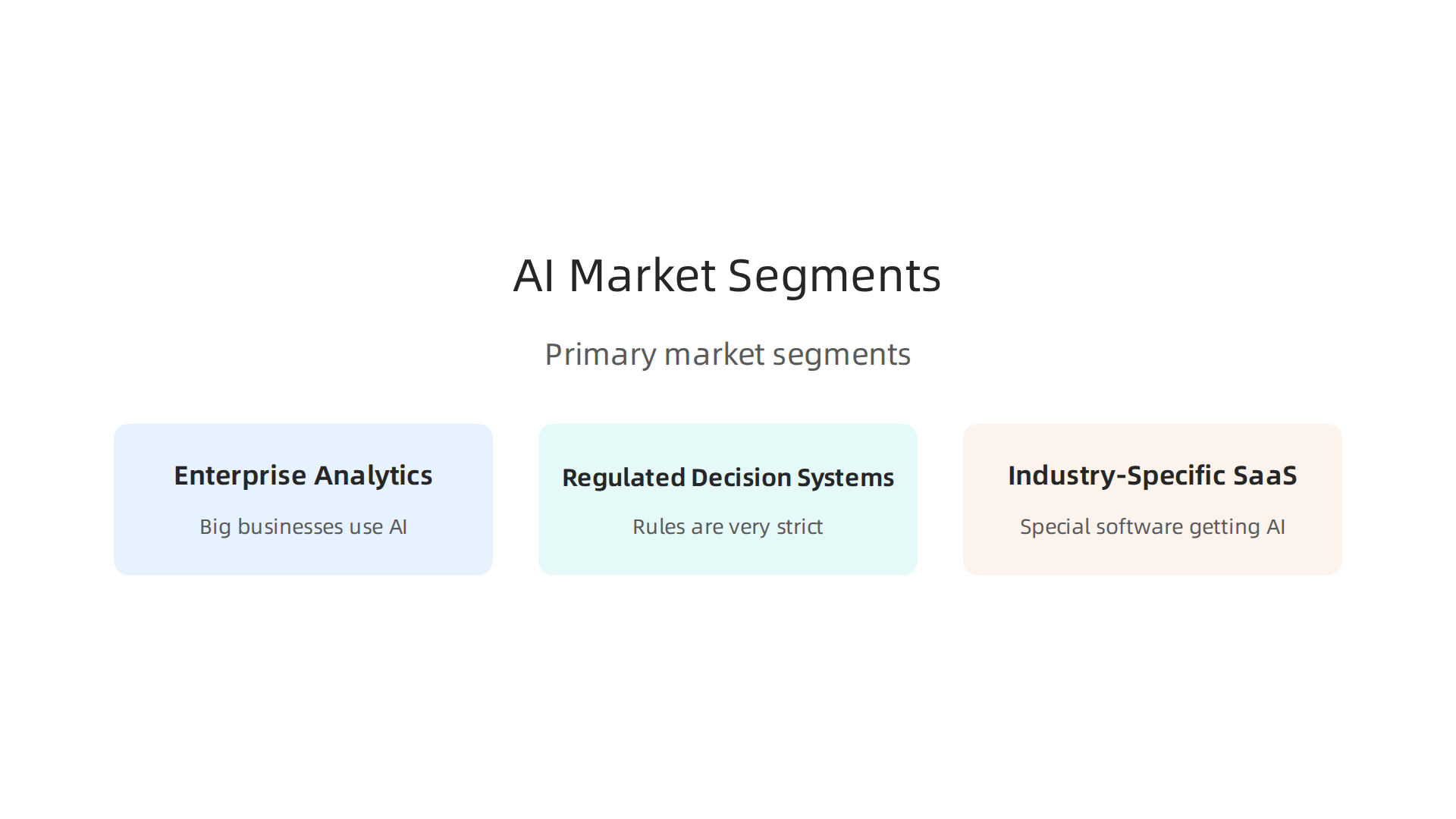
- Enterprise Analytics: Big businesses use AI to understand huge piles of data. They want to make smarter choices about their customers, their money, and how they run things. These AI tools help them see trends and predict what might happen next.
- Regulated Decision Systems: In fields like banking, insurance, or healthcare, rules are very strict. AI tools here must be very accurate and reliable. They help make important choices, like approving loans or finding risks, while still following all the laws.
- Industry-Specific SaaS: Many industries have their own special software (Software-as-a-Service). Now, these tools are getting AI added to them. This helps companies in those specific industries work better. For instance, using
artificial intelligence cost estimationtools can help construction companies figure out project costs more precisely.
What makes buyers want these specialized AI tools? They usually want to solve a clear problem, save money, or get ahead of their rivals. For business leaders looking to bring AI into their company, understanding these different types is key.

You can learn more about how to use AI in big companies by checking out our guide on enterprise AI software in 2026.
For investors, there are important signs to watch in this market. Venture capital investments in AI software companies are big, with billions of dollars being poured into these firms in early 2026 alone AI Startups Raise Record £220B in Early 2026. You should keep an eye on:
- Funding Trends: Where is the money going? Is it mostly to big, general AI platforms, or are specialized tools getting more attention? Knowing this can show where growth is happening.
- Consolidation: Sometimes, bigger companies buy smaller, promising AI companies. This can be a sign that a specialized tool is very valuable. Mergers and acquisitions are often driven by firms looking for specific expertise and market reach AI Market Trends 2026: Global Investment, Risks, and Buildout.
- Ecosystem Partnerships: When different companies work together, it often means their AI tools are becoming part of a bigger system. This can make them even more powerful and useful.
Keeping track of these points helps investors and business leaders make smart decisions in the fast-changing world of specialized AI software. If you’re looking to invest in this exciting space, understanding how funding works is crucial. Dive deeper into how to handle these investments with our AI funding playbook.
Key Use Cases: From Analytics to Regulated Decisioning (including Lottery & High-Integrity Systems)
Specialized AI software is not just for big companies anymore. These smart software tools for artificial intelligence are built for specific jobs, making them very powerful. Let’s look at some important ways these tools are used in 2026.
Advanced Analytics and Smart Predictions
Many businesses want to understand what their data is telling them. Specialized AI helps them look at huge amounts of information very quickly.
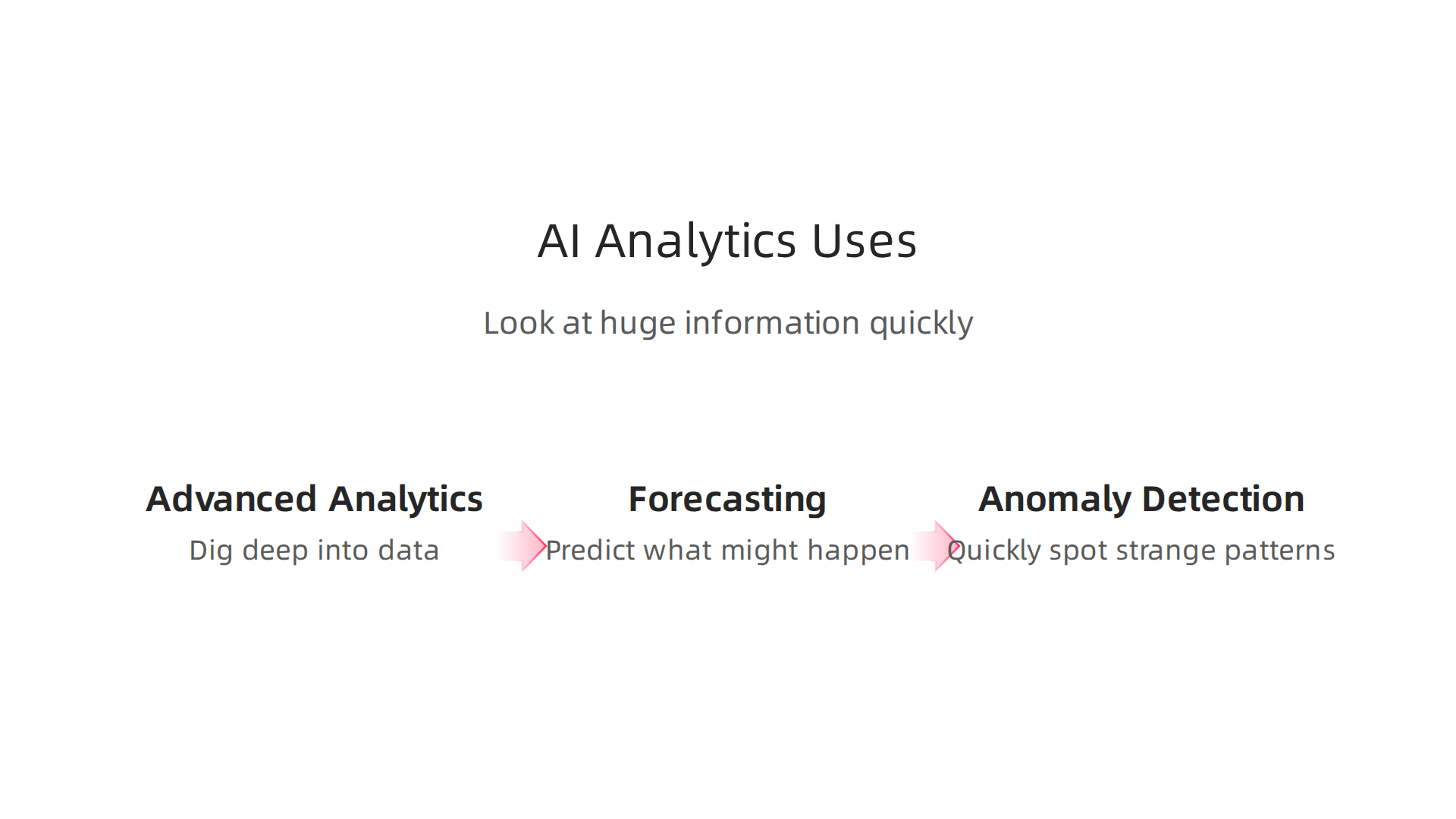
- Advanced Analytics: This means using AI to dig deep into data. For example, a
deepsearch aitool can find tiny but important facts that regular computer programs might miss. This helps companies learn more about their customers or how their products are performing. - Forecasting: AI can help predict what might happen in the future. This is useful for knowing how many products to make, how many staff to schedule, or what sales might look like next season. It helps businesses plan better and avoid surprises.
- Anomaly Detection: Sometimes, something unusual happens in a company’s data. It could be a security threat, a problem with a machine, or even fraud. Specialized AI can quickly spot these "anomalies" or strange patterns. This helps businesses react fast to protect their information or fix problems before they get too big.
AI in Regulated Decision Systems
Some areas have very strict rules and need extra careful systems. This is where specialized AI shines. These systems are used in important fields like banking, healthcare, and even lotteries. They need to be very accurate, fair, and easy to understand.
- Lotteries: You might wonder if
artificial intelligence lottery softwarecan help you win. While no AI can guarantee a win or change how a lottery works, these specialized tools are used to analyze past results to look for patterns. Someartificial intelligence lottery softwareaims to help players choose numbers based on this analysis, while others are used by lottery organizations to prevent fraud AI-Powered Lottery Fraud Detection. These systems must be designed carefully because the integrity of the lottery is very important
From Randomness to AI: The Next Integrity Challenge in Lottery Systems.
- Financial Compliance: In banks, AI helps check if financial deals follow all the rules. This stops illegal activities and protects customers.
- Healthcare Workflows: AI can help doctors and hospitals manage patient information, schedule appointments, and even assist in finding possible health issues from medical scans. These systems must be very trustworthy because people’s health is at stake.
For these regulated systems, it’s not enough for the AI to just give an answer. People need to know why the AI made a certain decision. This is called "explainability" and "auditability." It means the AI’s choices must be clear and able to be checked, especially in high-stakes situations The Rise Of AI Driven Decision Making In 2026 And Beyond.
There’s a big difference between using AI for quick insights, like in advanced analytics, and using it for critical decisions that need to be perfect every time. Understanding these many applications of AI is key to making smart choices about using these powerful tools. To see more ways AI is changing different industries, explore our guide on Artificial Intelligence Applications In 2026 From Healthcare To Finance And Beyond.
Staying up to date with all the new ways AI is being used can be tough. Get clear daily AI updates to help you stay ahead.
The AI Newsletter Worth Reading
Understanding the many ways AI is used is very important. But to really get how these smart tools help, we also need to look under the hood.

This means understanding the basic ideas and setups that make special AI software work.
Core Technologies & Architectures Behind Domain-Specific AI
Specialized AI software, including tools like artificial intelligence lottery software, works because of smart designs and careful handling of information. It’s not magic, but a well-thought-out system of "brains" and "food" for those brains.
AI’s "Brains," Clues, and Food Storage
Think of AI as having different types of "brains" to solve problems.
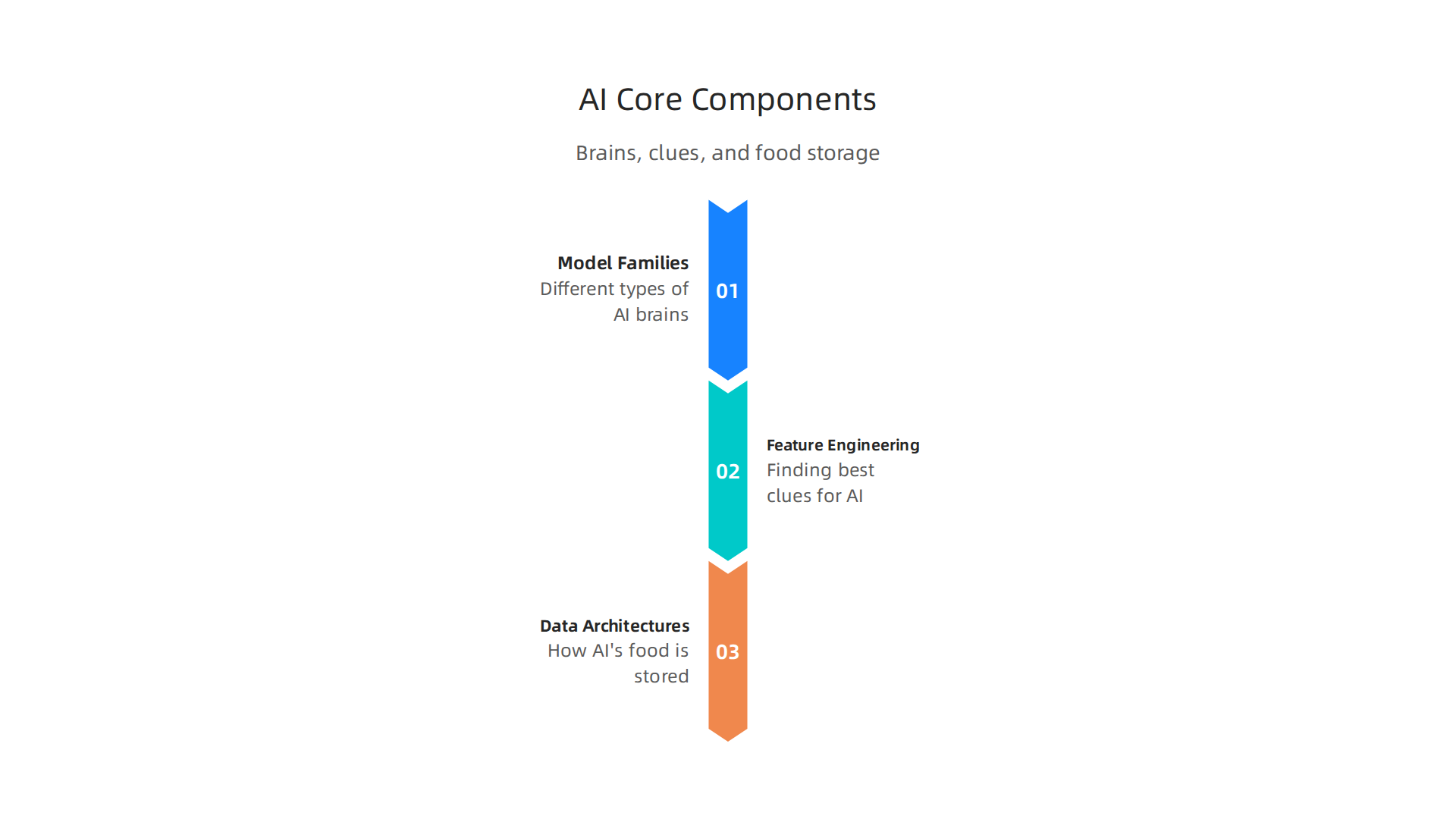
- Model Families: These are the different types of AI brains. Some are good at sorting things into groups. Others are great at finding hidden connections. For instance, a
deepsearch aitool might use a very deep brain structure to find tiny details in huge amounts of text or images. These "brains" learn patterns from data. - Feature Engineering: This is like finding the best clues for the AI brain to learn from. Imagine you’re teaching a computer to tell the difference between a cat and a dog. You wouldn’t just show it random pixels. You’d point out important clues like pointy ears, whiskers, or a long tail. Choosing the right "features" or clues from data makes the AI much smarter and faster.
- Data Architectures: This is about how the AI’s "food" (data) is collected, stored, and prepared. Just like we need a well-stocked pantry and a clean kitchen to cook, AI needs data that is easy to get, well-organized, and ready to be used. This setup ensures that the AI always has fresh, reliable information to learn from.
Choosing the Right AI Brain for the Job
Not all AI tasks are the same. So, we have different ways to build or train AI brains, depending on the job.
- Pre-trained Foundation Models: Imagine a very smart student who has read a library full of books. This student knows a lot about many general topics. Pre-trained AI models are similar. They’ve learned from vast amounts of general data and can handle many different tasks without much new teaching.
- Fine-tuned Models: This is like taking that smart student and giving them special lessons for a very specific exam. You use the general knowledge they already have and adapt it to a new, specific task. This approach, called "transfer learning," is very common in 2026. It lets us make specialized AI tools, like
artificial intelligence cost estimationsoftware, by taking a broad AI and teaching it the ins and outs of calculating specific costs A survey on transfer learning for evolving domains. It saves time and resources compared to starting from scratch A survey of transfer learning – Journal of Big Data. - Bespoke Algorithmic Approaches: Sometimes, a task is so unique that you need to build an AI brain entirely from the ground up, just for that one job. This is like creating a brand-new student designed to learn only one very specific skill. This takes more effort but can be perfect for truly one-of-a-kind problems where no existing knowledge fits. These are true custom
software tools for artificial intelligence.
Keeping AI Smart and Safe
For any specialized AI, like one that might help with complex financial models or even improve artificial intelligence lottery software analysis, there are important ongoing needs.
- Data Labeling: The AI learns by example. For it to know what a "fraudulent transaction" looks like, someone has to show it many examples and label them correctly. This is like giving the AI a study guide with all the right answers.
- Data Governance: This means having clear rules about how data is used, stored, and protected. It makes sure the AI is fair, unbiased, and follows privacy laws.
- Continuous Retraining: The world changes, and so does data. An AI model that worked perfectly last year might not be as good today. So, AI systems need to be regularly updated with new data and retrained. This keeps them smart and accurate over time.
- MLOps: This big word just means the practices and tools that help teams build, deploy, and manage AI models safely and effectively. It’s like having a dedicated team to keep all the
software tools for artificial intelligencerunning smoothly, making sure updates happen, and fixing any problems fast.
Understanding these foundational parts helps us see how specialized AI tools are built to solve real-world problems. To dive deeper into the basics of AI and machine learning, explore our guide on Artificial Intelligence and Machine Learning Fundamentals: What You Need to Know in 2026.
Choosing the right tools for your business is a big decision, especially when it comes to special AI software. Just like you would carefully pick a car for a specific job, you need to be smart about picking an AI vendor. This is true whether you’re looking for artificial intelligence lottery software or a powerful deepsearch ai system. In 2026, many companies offer such tools, so knowing how to pick the best one is key.
Vendor Landscape and How to Evaluate Providers of Specialized AI Software
Finding the perfect partner for your specialized AI needs means looking closely at what different companies offer. You want a vendor whose software tools for artificial intelligence truly fit what you need to do.
A Smart Way to Check AI Vendors
To help you choose, it’s good to use a checklist, like a scorecard. Experts say that a good way to check AI vendors looks at several important things before you sign any papers AI Vendor Evaluation Framework: 6 Dimensions to Score.
- Does the Product Fit? First, does their AI software actually solve your problem? If you need
artificial intelligence cost estimation, does their tool really give good estimates for your kind of costs? Make sure it’s not just a general AI but one that does the specific job you need. - Can It Use Your Data? AI needs data to work. Can the vendor’s software easily connect to your existing data? If it’s too hard to feed the AI your information, it won’t be helpful.
- Can You Understand It? Sometimes, AI can feel like a black box. You put data in, and an answer comes out, but you don’t know why. Good specialized AI software should be "explainable." This means the vendor can show you how the AI came up with its answers.
- What Promises Do They Make? These promises are often called Service Level Agreements, or SLAs. They tell you how well the software will work, how much downtime it might have, and what happens if things go wrong. Make sure these promises are clear and fair.
- Is Your Data Safe? This is super important. The vendor must have strong rules and systems to keep your data private and safe. They should follow all the security and privacy laws in 2026. This is often part of what’s called data governance How Enterprises Should Evaluate AI Vendors in 2026.
How You "Buy" AI and Connect It to Your Business
Vendors offer different ways to use their software tools for artificial intelligence:
- Software as a Service (SaaS): You often pay a monthly fee to use the software over the internet. The vendor handles all the updates and technical stuff. It’s like renting a service.
- Licensing: You might buy the software once and install it on your own computers. This gives you more control but also means you’re responsible for maintaining it.
- Managed Services: Some vendors offer to run the AI software completely for you. They manage everything from start to finish.
- Integration: Think about how well the new AI tool will work with the computer systems you already have. Does it connect easily, or will it be a big headache to set up?
What to Watch Out For and What to Look For
When picking an AI vendor, here are some helpful tips for buyers and even investors.
Red Flags (Things to Watch Out For):
- Over-the-Top Promises: If a vendor says their
artificial intelligence lottery softwarecan guarantee you win every time, that’s a red flag. AI is powerful but not magic. - Not Being Clear: If they can’t clearly explain how their AI works or how they protect your data, be careful.
- Poor Support: What happens if you have a problem? If their customer support seems weak or slow, it could cause big issues later.
- No References: If they can’t provide happy customers who have used their software, that’s not a good sign. Actually, asking for references that had a difficult time and how the vendor solved it can be very telling 65% of AI Vendor Implementations Fail.
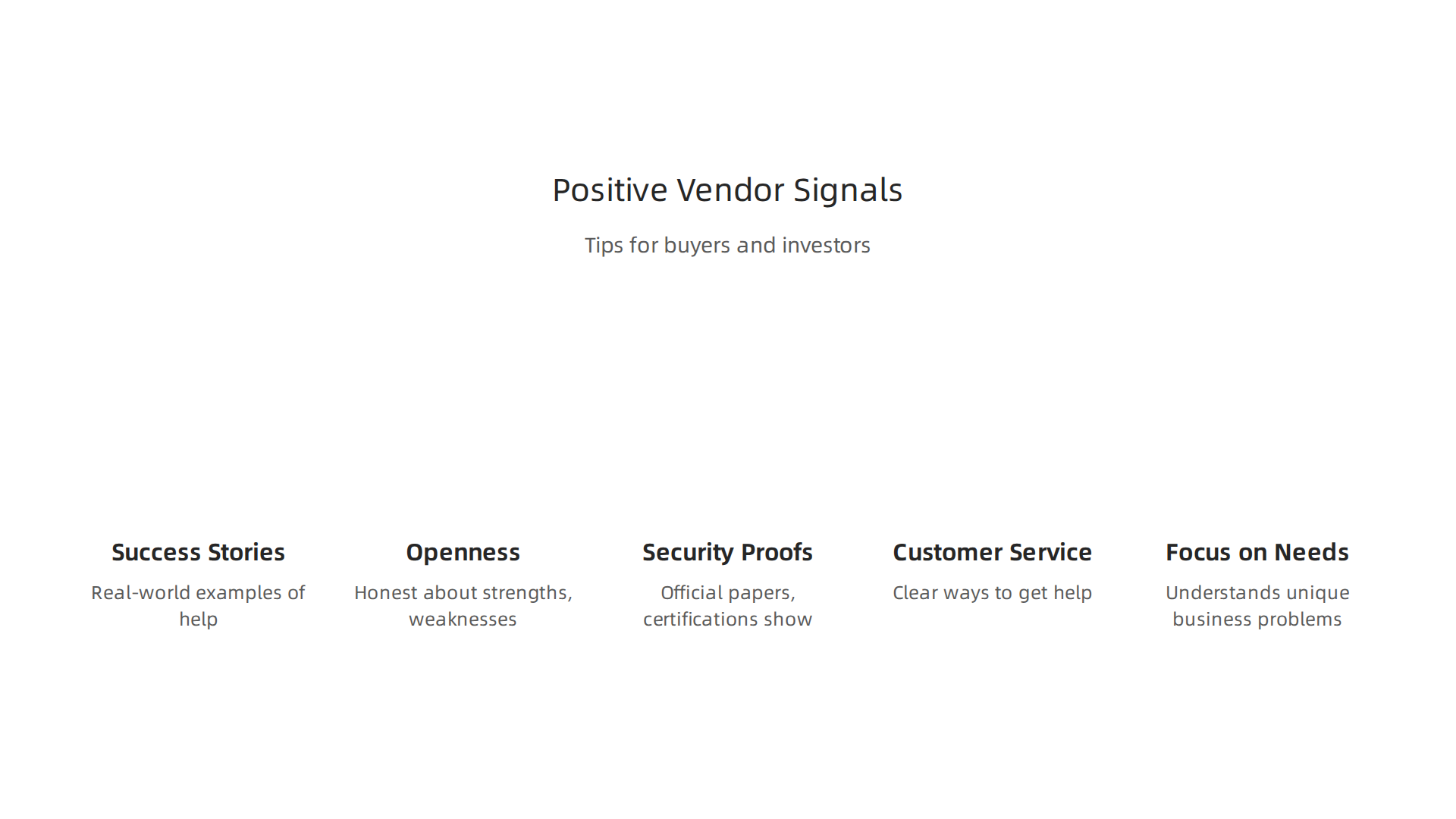
Positive Signals (Good Things to See):
- Clear Success Stories: Look for vendors who can show real-world examples of how their AI has helped other businesses similar to yours.
- Openness about Limitations: A good vendor will tell you what their AI can and cannot do. They’re honest about its strengths and weaknesses.
- Strong Security Proofs: They should have official papers or certifications that show their data security is top-notch.
- Good Customer Service: They offer clear ways to get help and support when you need it.
- Focus on Your Specific Needs: They take the time to understand your unique business problems, rather than just selling you a general product.
Choosing the right specialized AI vendor is a careful process. By using a good framework and looking for the right signals, you can find a partner that helps your business truly benefit from software tools for artificial intelligence. To learn more about how AI can fit into your business strategy, read our guide on AI implications for business strategy in 2026.
If you want to stay on top of all the important changes in AI, consider subscribing to a reliable source. Get clear daily AI updates from The AI Newsletter Worth Reading.
After looking at how to pick a good AI vendor, it’s also very important to understand the hidden dangers. Even the best software tools for artificial intelligence can cause problems if not handled with care. This is especially true in areas where rules are strict, like with artificial intelligence lottery software or deepsearch ai in finance.
Risks, Ethics, and Regulation for Domain-Specific AI (what to watch in regulated markets)
When using specialized AI software, businesses and investors need to be aware of certain risks. These risks are even more important in markets that have many rules, like when dealing with money, health, or public trust.
Main Risks with Specialized AI
- Model Bias: AI learns from the data it’s given. If this data is unfair or incomplete, the AI can learn these biases too. This can lead to unfair or wrong decisions. For example, an AI used for
artificial intelligence cost estimationcould give skewed results if its training data was biased. - Auditability Gaps (The "Black Box"): Sometimes, an AI system makes a decision, but it’s hard to understand why it made that choice. This "black box" problem means you can’t easily check the AI’s reasoning. For sensitive areas, like lotteries, this lack of clarity can be a big problem, as AI systems do not always explain their reasoning clearly and may give unexpected results [From Randomness to AI: The Next Integrity Challenge in Lottery Systems].
- Data Privacy and Security: AI systems often need a lot of private data to work well. Keeping this data safe from hackers and making sure it’s used correctly is a huge responsibility. If this data is not protected, it can cause major harm.
- Systemic Failure Modes: In systems that make very important decisions, like those in finance or healthcare, an AI mistake can have wide and serious effects. A small error could lead to big problems for many people or businesses.
New Rules and What to Expect in 2026
Governments and industry groups are working hard to create clear rules for AI.

In 2026, we are seeing more focus on:
- Transparency: AI systems need to be more open about how they work and what information they use. This helps people trust them. New rules from places like the European Union are pushing for clear labels on content created by AI [Guidelines on Transparency of AI-Generated Content].
- Audits: Just like financial records, AI systems will need regular checks, or "audits," by outside experts. These checks make sure the AI is fair, safe, and does what it’s supposed to do. In fact, 2026 is becoming the year when AI audit trails are a must, not just a good idea [AI Audit Trail Requirements: 2026 Checklist for Finance].
- Accountability: New laws are being made to clearly state who is responsible if an AI system makes a mistake. For instance, in the US, there are talks about federal rules for AI that include transparency and third-party audits [AI: The Washington Report — July 2026 Edition]. This also means AI should be "responsible, equitable, traceable, reliable, and governable" [Artificial Intelligence: An Accountability Framework for Federal Agencies and Other Entities].
- Specific Rules for Certain Markets: For fields like gambling, there are special concerns. The laws in the United States, for example, are already looking at how
artificial intelligence lottery softwareis used to make sure it is fair and follows the rules [Is It Illegal to Use AI for Lottery Predictions? What the Law Says].
Ways to Make AI Safer
Businesses and investors can take steps to reduce these risks:
- For Product Teams:
- Build Explainable AI: Design AI from the start so it can show how it reached its answers. This helps everyone understand and trust its decisions.
- Test for Bias: Regularly check your AI models and the data they use to find and fix any unfairness.
- Strong Security: Use the best methods to keep all data safe and protect your AI systems from cyber threats.
- Keep Humans Involved: For important decisions, always have human experts oversee the AI. AI should help people, not fully take over their judgment.
- For Investors:
- Ask Deep Questions: Before investing in
software tools for artificial intelligence, especially in regulated industries, ask vendors how they plan to handle ethics, security, and compliance. - Look for Good Governance: Invest in companies that have clear rules and dedicated teams to manage AI risks.
- Understand the Rules: Stay informed about new AI laws and rules. This helps you see which companies are ready for the future and which might run into problems. To guide your decisions, explore our 2026 Comprehensive AI Guide for Investors Founders and Analysts.
- Ask Deep Questions: Before investing in
By following these steps, businesses and investors can make sure they use AI in a way that is both powerful and responsible in 2026.
By following these steps, businesses and investors can make sure they use AI in a way that is both powerful and responsible in 2026. Now, let’s look at specific ways different groups can make smart choices about AI. This is a playbook for investors, company leaders, and product creators.
Implementation & Investment Playbook: How Investors, Founders, and Executives Should Act
Making sure AI is used well means everyone plays a part.

From those who fund new ideas to those who build and use them, smart choices are key. In 2026, the AI market is growing fast, with huge investments in startups. For example, AI startups raised a record £220 billion in early 2026 alone, showing how much money is flowing into this area [AI Startups Raise Record £220B in Early 2026].
For Investors: Finding the Right Opportunities
Investors need to look for signs of strong, responsible AI growth. It’s not just about how cool the technology is. It’s also about how well a company handles the risks we talked about earlier.
- Look for Strong Governance: Invest in companies that have clear rules and teams to manage AI risks, ethics, and security. They should also show how they plan to make their AI trustworthy.
- Understand Their Data Strategy: How does the company get its data? How do they keep it safe and private? Ask about their approach to bias in data and how they train their AI models.
- Check for Real-World Value: Does the AI solve a real problem for customers? How do they measure success? Be wary of companies that make big claims without clear ways to show results.
- Stay Informed on Market Trends: The AI market changes quickly. Knowing where the money is going and what segments are growing helps you make better choices. For example, the total AI market is projected to reach $375.93 billion in 2026 [Artificial Intelligence (AI) Market | Global Report 2034].
If you’re looking for more guidance on where to put your money, consider exploring our AI Funding Playbook Master 2026 Investment Strategies.
For Founders: Building AI Products Smartly
If you’re creating software tools for artificial intelligence, how you build them from the start makes a big difference.
- Build for Explainability: Design your AI so it can clearly show how it came up with an answer. This is extra important for sensitive applications like
artificial intelligence lottery softwarewhere trust is everything. - Focus on Ethical Design: Think about fairness and preventing bias from day one. Regularly test your AI to make sure it’s fair to everyone.
- Strong Security and Privacy: Make data protection a top priority. Build security into every part of your product.
- Pilot Projects and ROI: Before rolling out a product fully, run small tests. Measure what works and how much value it brings. This helps you show the return on investment (ROI) to customers and investors.
For Executives: Bringing AI into Your Company
Leaders bringing software tools for artificial intelligence into their business have key steps to take.
- Careful Vendor Selection: Don’t just pick the flashiest AI. Use a good system to check out potential AI partners. This means looking at their security, how well their AI works, and if they fit with your company’s goals. A good framework scores vendors on many points like security, integration, and how ready they are to implement [AI Vendor Evaluation Framework for 2026: A 30-Point …].
- Align Teams: Make sure everyone involved in using AI knows their part. This includes technical teams, legal experts, and business leaders. Everyone needs to agree on what the AI will do and how it will be used safely and fairly.
- Measure Everything: When you use AI for things like
artificial intelligence cost estimationordeepsearch aiin your business, track how well it works. Set clear goals and measure if the AI helps you reach them. - Start Small, Scale Smart: Begin with pilot projects to test AI in a controlled way. If a pilot works well, then plan how to grow it across the company. This helps you learn and fix problems before they become big issues. Many AI vendor implementations can fail if not properly evaluated [65% of AI Vendor Implementations Fail. Here’s …].
Staying on top of these trends and practical steps is vital in 2026. For daily insights into the fast-moving world of AI, you’ll want to stay informed.
Get clear daily AI updates from The AI Newsletter Worth Reading.
Summary
This article explains the rise and role of specialized software tools for artificial intelligence in 2026, showing how narrow, domain-specific AI differs from broad foundation models and why businesses and investors should care. It maps the market landscape, funding trends, and buyer motivations, then walks through key use cases—from advanced analytics and anomaly detection to regulated decision systems like finance, healthcare, and lottery applications. The guide breaks down core technologies (model families, transfer learning, feature engineering), operational needs (data governance, labeling, continuous retraining, MLOps) and gives a practical vendor-evaluation checklist covering fit, integration, explainability, SLAs and security. It highlights regulatory and ethical risks to watch, offers steps founders and executives should take when building or buying AI, and outlines what investors should look for to spot durable, responsible AI companies. After reading, you’ll know how to assess specialized AI tools, reduce implementation risks, and make smarter buying or investing decisions in this fast-moving space.