
Why knowing the foundational texts and concepts matters now
In 2026, the world of Artificial Intelligence (AI) is growing faster than ever. Every day, it feels like there’s a new AI tool or exciting development. This rapid growth is amazing, but it can also make it hard to tell what’s truly important from what’s just hype. Many people feel lost trying to keep up.
To really understand AI, you need a strong foundation. This means knowing the core ideas and the books that explain them well. Getting a clear grasp of these basics helps you see how different types of AI work and how the many subfields of artificial intelligence fit together.
One of the most important books is "Artificial Intelligence: A Modern Approach by Russell & Norvig." This book is often called the "AI Bible" because it breaks down complex ideas into easy-to-understand parts. It covers how intelligent agents work, which are systems that can think and act. It also dives into things like problem-solving and how AI learns, helping you understand the real brains behind artificial intelligence. The fourth edition of Artificial Intelligence: A Modern Approach has been updated to include the latest advancements, making it highly relevant even today, as it still grounds its approach in intelligent agents, systems that decide what to do and then do it Artificial Intelligence: A Modern Approach.
This guide aims to give you a clear map to these foundational texts and the main ideas every person should know about AI. Whether you’re an investor, a business founder, or just someone curious about the future, knowing these core concepts will help you make better sense of the AI world in 2026. For even more help staying on top of daily AI changes, consider subscribing to The AI Newsletter Worth Reading.
A brief intellectual history of AI and canonical milestones
To truly grasp the world of AI in 2026, it helps to look back at how we got here. The story of artificial intelligence is a long one, filled with big ideas, hard problems, and amazing breakthroughs. Think of it like a journey that started with simple questions and slowly grew into the complex systems we see today.

Early thinkers wondered if machines could ever think like humans. For a long time, these were just ideas in books. But in 1956, something very important happened. A group of smart people met at Dartmouth College. They talked about how to make machines "think," and that’s where the term "artificial intelligence" was first used. This meeting kicked off the real work of AI.
In the early days, AI focused on solving problems that humans found hard, like playing chess or proving math theorems. Researchers created programs that could do these tasks step-by-step. These early wins showed that computers could indeed do more than just simple calculations.
However, AI’s journey was not always smooth. There were times, sometimes called "AI winters," when progress slowed down, and people lost a bit of hope or funding. But then new ideas would emerge, leading to "AI springs." For example, in one such spring, "expert systems" became popular. These were computer programs filled with lots of rules and facts about a specific topic, acting like a digital expert.
Over time, the focus shifted to different approaches. One big change was the rise of "machine learning." This is where computers learn from data instead of being told every single rule. This led to the development of neural networks, which are computer systems inspired by the human brain. These systems can learn to recognize patterns, like faces in photos or words in a sentence, which greatly improved the different types of AI we see today.
Many of these historical ideas and methods are brought together in foundational texts like "artificial intelligence a modern approach by russell & norvig." This book covers the entire breadth of the field, from early problem-solving methods to how intelligent agents decide what to do and do it Artificial Intelligence. It shows how different subfields of artificial intelligence have grown from these historical roots.
Today, these historical shifts still guide company strategies and research. The lessons learned from past successes and failures help us decide what new AI projects to start, how to evaluate their progress, and how to build safer, more reliable AI. Understanding this timeline of AI history gives you a clearer picture of why certain technologies are popular now and what might come next.
Why ‘Artificial Intelligence: A Modern Approach’ (Russell & Norvig) still matters
As we look at the history of AI, it’s clear that certain ideas and books stand out. One book that has remained a guiding star for anyone serious about AI is "Artificial Intelligence: A Modern Approach" by Stuart Russell and Peter Norvig. Even in 2026, this book is not just a dusty old textbook. It’s still a core resource that shapes how we think about, learn, and build AI systems.
The main idea of "artificial intelligence a modern approach by russell & norvig" is built around "intelligent agents." Think of an intelligent agent as a system that can decide what to do and then do it, much like a person choosing an action after looking at the world around them. This book aims to explore all the different ways to build such agents. It covers many important subfields of artificial intelligence, from how machines solve problems, to how they learn from data, and even how they use logic and probability to make good choices. It really explores the full breadth of the field, showing the many types of AI.
The book’s big scope makes it a go-to choice for education. It’s often used in college courses, serving as a primary text for students learning about artificial intelligence. Many universities use it in sequences that can last one or even two semesters, because it has so much to teach. The latest version, the fourth edition, has been updated to include the newest technologies and present concepts in a clearer way, keeping it fresh and relevant for today’s learners in 2026, as noted by its publisher Pearson. You can find out more about this edition from Pearson directly. It’s considered a popular textbook, a true classic for anyone studying AI.
This textbook isn’t just for students. It also helps people in the real world make smart choices about AI.
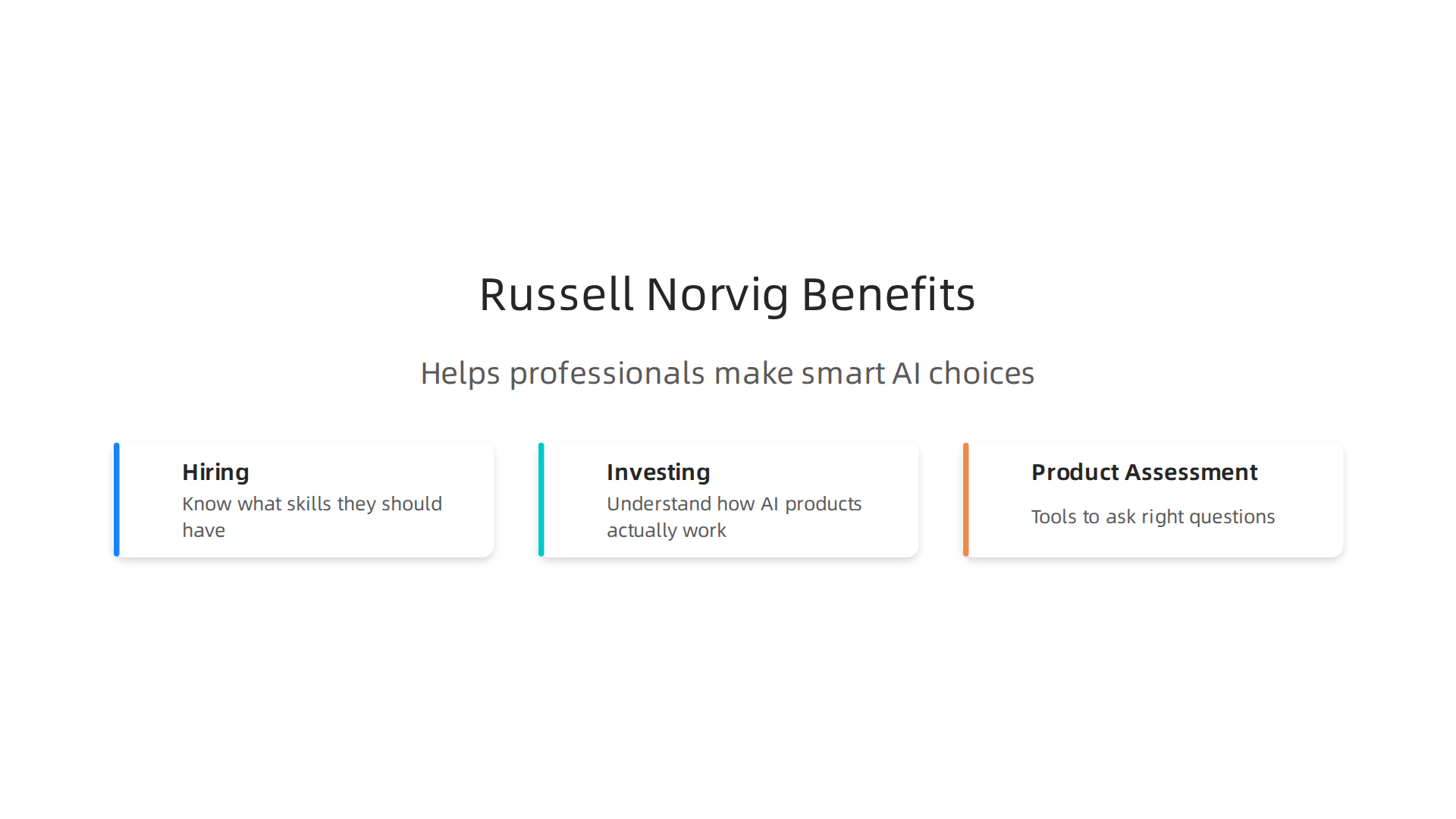
- Hiring: If you’re looking to hire someone for an AI role, understanding the concepts in this book helps you know what skills and knowledge they should have. It gives a clear benchmark for what a well-rounded AI professional should know.
- Investing: For investors, the book provides a solid base to understand how AI products actually work. This helps them look past the hype and truly see which AI companies have strong, workable technology.

- Product Assessment: If you’re evaluating AI products or solutions for your business, "artificial intelligence a modern approach by russell & norvig" gives you the tools to ask the right questions and assess how good these solutions truly are. It helps you understand if an AI system is intelligent in a meaningful way or just seems impressive on the surface.
In short, "Artificial Intelligence: A Modern Approach" is like a map for the complex world of AI. It gives students and professionals the deep knowledge they need to build, understand, and use AI wisely in 2026 and beyond.
Staying informed about AI’s fast changes is a job in itself.
The AI Newsletter Worth Reading
Get clear daily AI updates from The Deep View Newsletter.
Core technical concepts every professional should master
While "Artificial Intelligence: A Modern Approach" gives a wide view of AI, it also dives deep into the technical ideas that make AI work. For professionals like investors, founders, and business leaders, understanding these core concepts isn’t just for computer scientists. It helps you see beyond the buzzwords and truly judge AI products and teams in 2026.
Let’s look at some key technical areas that the book, often called "artificial intelligence a modern approach by russell & norvig," covers:
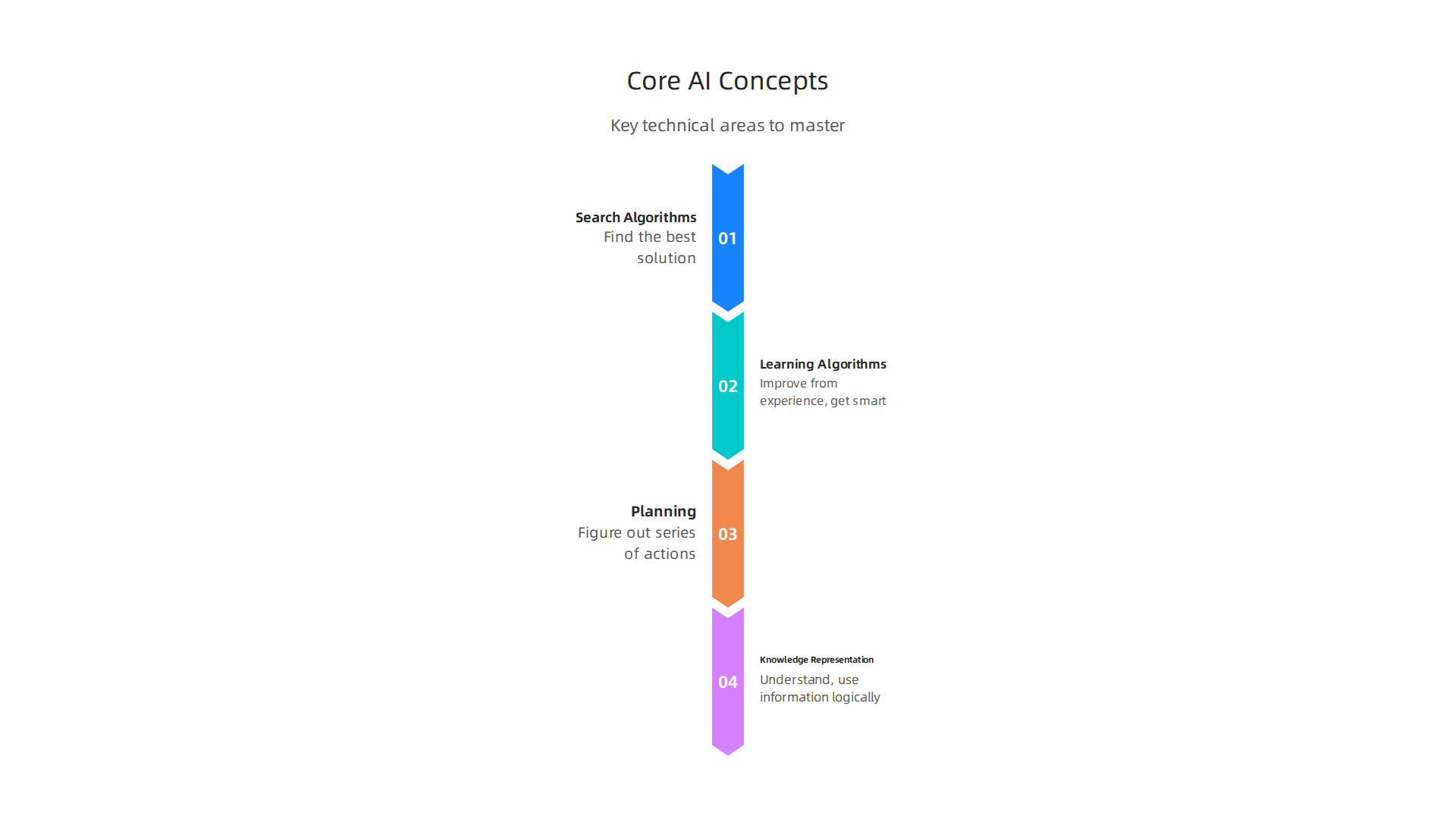
- Search Algorithms: Imagine an AI trying to find the best way to get from point A to point B, or the best move in a game. Search algorithms are how AI explores different possibilities to find the right solution. They are vital for tasks like planning routes, solving puzzles, and making quick decisions. When evaluating an AI product, you might ask: "How efficiently does this AI find solutions? Can it handle complex choices without getting stuck?" A strong understanding of search can help assess its problem-solving abilities.
- Learning Algorithms: This is where AI truly gets "smart." Learning algorithms allow AI systems to improve from experience, much like people do. This includes things like machine learning and deep learning, which are big parts of modern AI. Knowing about these artificial intelligence and machine learning fundamentals helps you understand if an AI will get better over time, adapt to new information, or if its "intelligence" is fixed. Investors should look for teams that clearly explain how their AI learns and adapts, rather than just making vague claims about it.
- Planning: This concept is about how an AI can figure out a series of actions to reach a specific goal. It’s not just about one decision, but many steps put together. For instance, a robot vacuum cleaner plans its route to clean a room. For business tools, planning helps AI automate complex processes or manage resources smartly. When you see an AI product that claims to automate tasks, understanding planning concepts helps you ask if it can truly create intelligent, multi-step solutions.
- Knowledge Representation and Reasoning: This is how AI understands and uses information about the world. It’s about storing facts, rules, and relationships, then using them to make logical guesses or decisions. Think of it as the AI’s "brain" for common sense. This area helps AI understand context and make choices that make sense, which is especially important for types of AI that interact with people, like chatbots. A good AI should be able to explain its reasoning, not just give an answer.
Why these matter for smart decisions
For investors and business operators, understanding these technical building blocks of AI helps you evaluate claims. It’s easier to spot if an AI company has solid technology or if they are just good at marketing. A company with a strong grasp of these core ideas, as taught in a textbook like "artificial intelligence a modern approach by russell & norvig," will be able to clearly explain how their systems work, how they learn, and how they solve problems.
When evaluating an AI team, ask if they can explain the algorithms their AI uses. Do they understand the strengths and weaknesses of different learning methods? This shows a deep knowledge, which is a good sign. For evaluating products, a strong understanding helps you check if an AI truly performs complex tasks intelligently, or if it’s just following simple rules. It’s also important to remember that behind all these clever algorithms are strong mathematical ideas like linear algebra, probability, and optimization. These are the basic tools that power AI, and a good grasp of them is essential for anyone building or assessing AI solutions today. You can learn more about these fundamental skills in guides like Math for AI in 2026: Essential Linear Algebra, Calculus, Optimization Guide or through videos that explain the Math Skills That Power AI.
Knowing these technical foundations helps you make informed choices about AI investments, partnerships, and product adoption. It allows you to critically assess AI tools and truly measure their potential impact in 2026.
Math, probability, and formal tools that underpin modern AI
Beyond the clever programs, AI systems are built on a strong base of math. These math ideas are the hidden power behind how AI learns, makes choices, and solves problems. For anyone looking at AI companies or products in 2026, knowing a little about these math tools helps you really understand what’s going on. Experts agree that fields like linear algebra, probability theory, and optimization are key mathematical foundations of artificial intelligence.
Let’s break down some of these important math ideas:

- Linear Algebra: This part of math deals with numbers in lists and grids, called vectors and matrices. Think of it like organizing lots of data. In AI, especially with powerful systems, linear algebra helps AI represent big datasets and handle the complex math needed for things like neural networks. It’s how AI sees and uses patterns in vast amounts of information. Understanding this helps you ask if an AI can manage and process large, real-world data effectively. This math is crucial for how AI learns from and manipulates data, which is a core part of mathematics behind artificial intelligence and machine learning.
- Probability and Statistics: These are about dealing with chance and understanding data. AI often has to make decisions when things are uncertain. Probability helps AI guess what might happen, like predicting the weather or a stock price. Statistics helps AI understand what data means and how reliable its guesses are. For example, if an AI predicts a customer will buy something, probability gives a number to how likely that is. This is super important for any AI that needs to be fair or explain why it made a certain choice. It helps you see if an AI’s predictions are just guesses or based on solid reasoning.
- Optimization: This is about finding the best way to do something. In AI, optimization helps models learn and get better. For example, when an AI is training, it’s trying to find the best settings to make the fewest mistakes. Optimization helps it slowly change its internal workings until it’s as accurate as possible. This is vital for making AI systems efficient and precise, whether they are in the subfields of artificial intelligence like machine learning or complex planning.
Why math rigor matters for AI professionals
For investors, founders, and business leaders, understanding these math tools is not about doing the calculations yourself. It’s about knowing what questions to ask. When a team explains their AI, do they talk about the math behind it? Can they show how their models are tested and how they handle uncertainty? A strong math background in an AI team means their solutions are likely more reliable and can be trusted. Just as "artificial intelligence a modern approach by russell & norvig" lays out the theory, a good team builds on these foundational principles.
To quickly check a team’s math strength, look for signals like:
- Clear explanations of how their AI handles complex data.
- Evidence of robust testing and validation processes.
- Team members with strong academic backgrounds in math, computer science, or related engineering fields.
If you’re looking to deepen your own understanding or find programs to help your team, there are many great resources. You might explore an AI learning roadmap to get started, or check out the best AI courses to take in 2026. Staying updated on these deep technical areas will give you a real edge in evaluating the ever-changing AI landscape. For more insights into the broader AI ecosystem, consider exploring the 2026 comprehensive AI guide for investors, founders, and analysts.
Keep up with the most important happenings in AI by subscribing to The AI Newsletter Worth Reading for clear daily updates.
When you understand the math behind AI, the next step is to look at new AI ideas in research papers. For investors, founders, and business leaders in 2026, reading AI research is key. It helps you find true breakthroughs and spot things that are just hype. You don’t need to be a scientist to evaluate these papers. You just need to know what questions to ask.
Here’s a simple way to read AI research and check if it’s truly valuable:
1. Is the Idea New and Important?
First, think about if the AI idea is fresh.
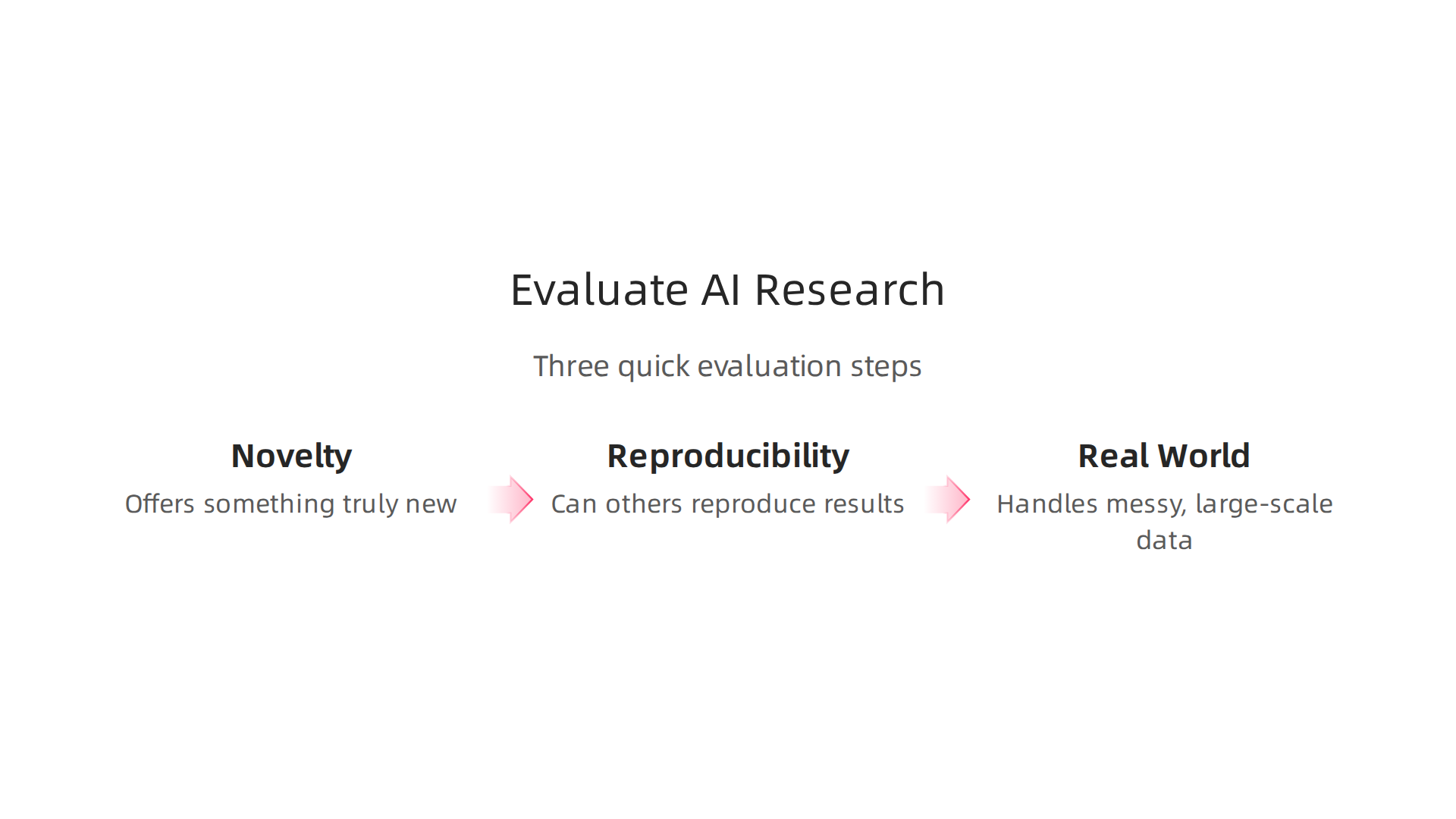
- Novelty: Does the research offer something truly new? Or is it just a small change to something that already exists? Look for ideas that solve problems in a new way or open up new possibilities for types of AI that haven’t been explored before.
- Impact: If the idea works, how big of a difference will it make? Will it save a lot of money, make things much faster, or solve a very hard problem? Big impacts mean big potential.
2. Can You Trust the Results? (Reproducibility)
This is super important. "Reproducibility" means that if someone else follows the steps in the paper, they should get the same results.
- Clear Steps: Does the paper clearly explain how they did their work? This includes details about the data they used, the computer code, and how they set up their experiments. Top AI conferences like AAAI and NeurIPS even have special checklists to help researchers make their work clear
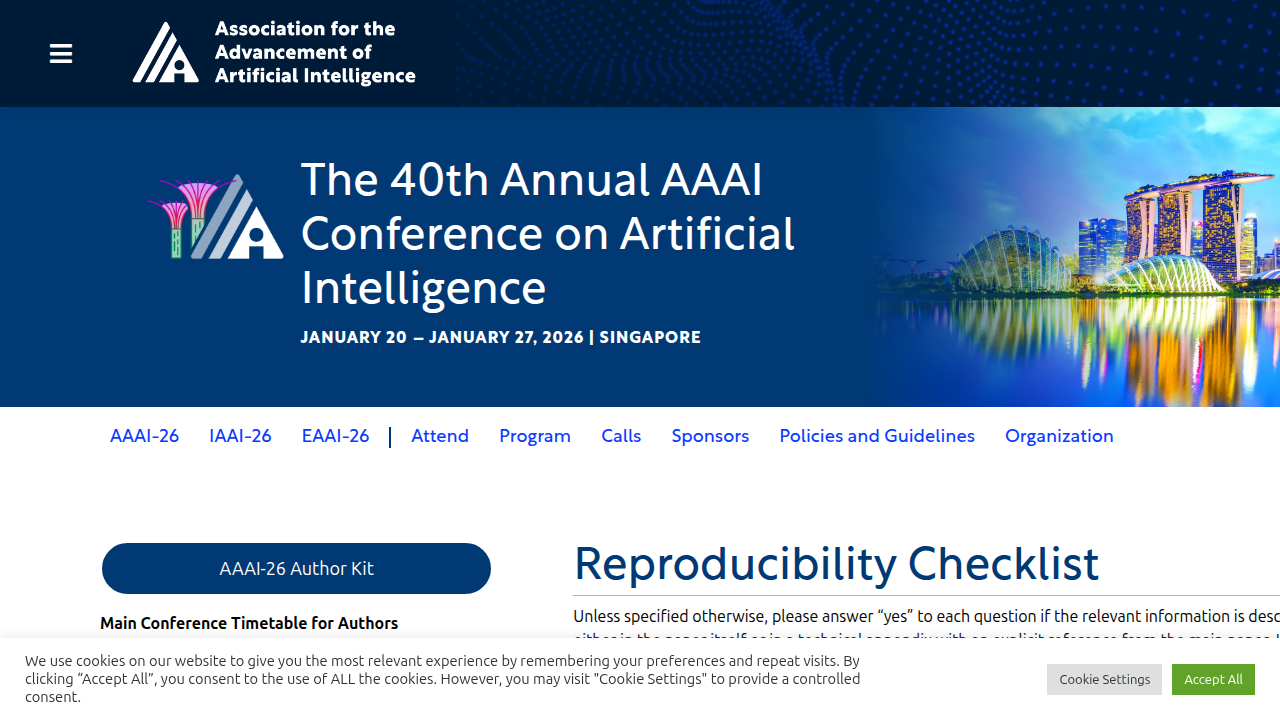
AAAI-26 Reproducibility Checklist and NeurIPS Paper Checklist Guidelines.
- Data and Code: Did the researchers share their data or code? If they did, it’s a good sign. It means others can check their work. In 2026, sharing these things is a mark of good, honest science. Research on how to make AI publications more open has pointed out the importance of making data available in community repositories with basic information On Reproducible AI.
- Tests and Comparisons: Did they test their AI method in many ways? Did they compare it to other popular methods? Good research shows why their new idea is better than what’s already out there.
3. Will it Work in the Real World?
An AI that works great in a lab might not work so well in real life.
- Real-world Data: Was the AI tested with data that looks like real-world information? Sometimes, AI is only tested on very clean, simple data. Real data is messy.
- Scale: Can the AI system handle a lot of data or many users? Some AI ideas only work for small tasks. For a business, you often need something that can grow.
- Limitations: Does the paper talk about what the AI can’t do? Honest researchers usually share the weak points of their work. This helps you understand where the AI might not be useful.
Red Flags and Green Lights to Watch For
When you read an AI paper, keep an eye out for these signals:
-
Red Flags (Be careful!):
- Vague descriptions: Not enough detail on how they built or tested their AI.
- No comparisons: They don’t show how their AI stacks up against other methods.
- Too-good-to-be-true claims: Promises that seem impossible without very strong proof.
- No public code or data: This makes it hard for others to check their work.
-
Green Lights (Good signs!):
- Open and clear: All steps, data, and code are shared.
- Lots of tests: The AI was tested in many different situations, not just one.
- Honest about limits: They tell you what their AI can and cannot do.
- Peer-reviewed: The paper was checked by other experts before being published in a respected journal or conference.
By asking these simple questions, you can cut through the noise and truly understand the value of new AI research. This helps you make smart decisions about AI tools guide and investments in the fast-moving world of artificial intelligence.
After checking if an AI idea is truly useful and trustworthy, smart leaders know there’s another big piece of the puzzle: how AI affects people and society. In 2026, thinking about ethics, fairness, safety, and how AI is managed (what we call governance) is not just a nice extra step. It is a main part of understanding and using artificial intelligence wisely.
Ethics, Safety, and Societal Implications as Foundational Concepts
For investors, founders, and business leaders, understanding these concepts is key to making good choices. It means looking beyond just what an AI can do, and also thinking about what it should do, and how it might impact real lives.
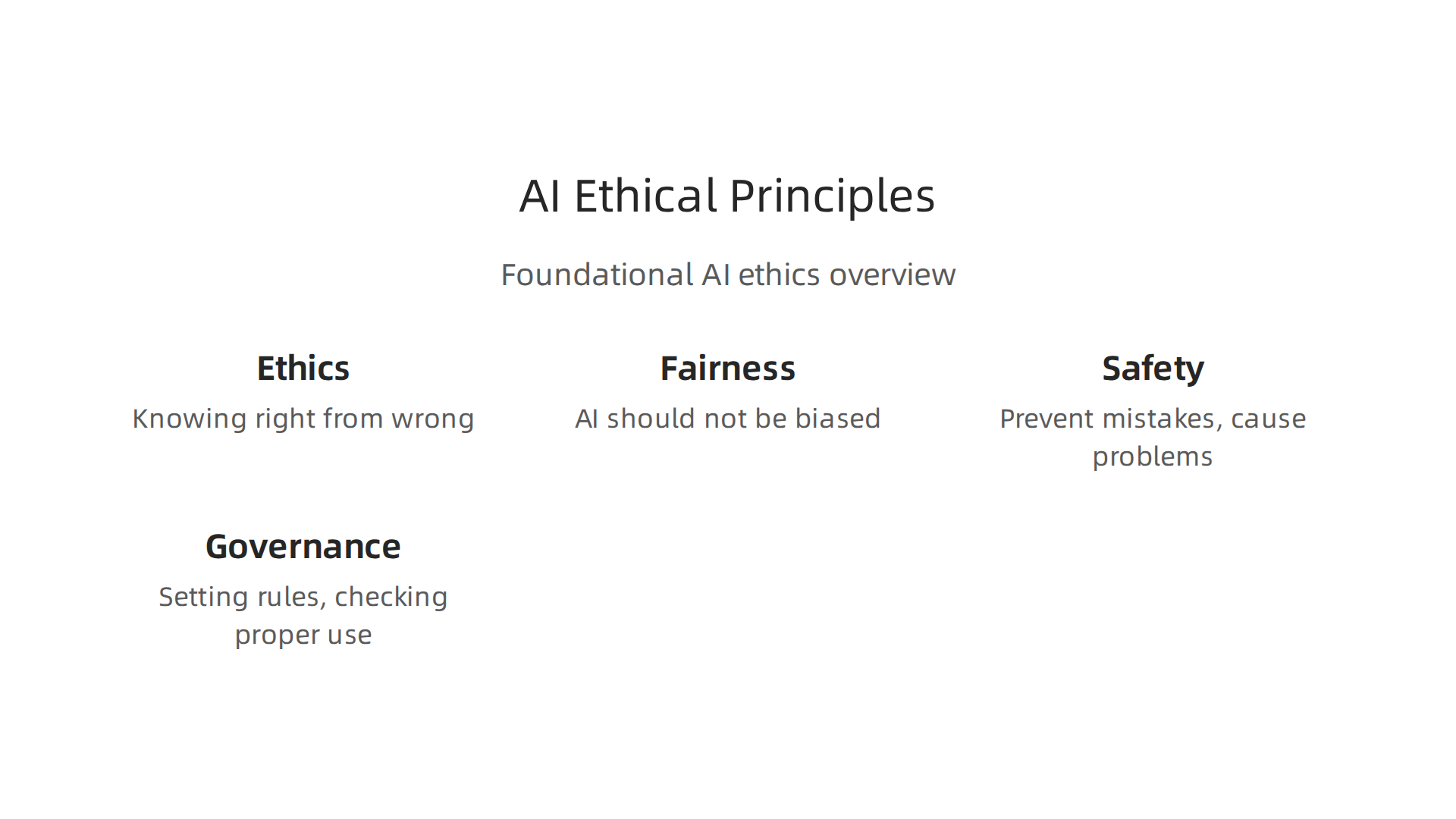
- Ethics: This is about knowing right from wrong. With AI, it means making sure the system acts fairly and does not harm people. For example, will an AI system treat everyone equally, no matter their background?
- Fairness: AI should not be biased. If an AI helps decide who gets a loan or a job, it must not favor one group over another. This is a big challenge in the world of types of AI, as data used to train AI can sometimes carry old biases.
- Safety: Just like any new technology, AI needs to be safe. This means preventing AI systems from making mistakes that could cause real-world problems, from self-driving cars to medical tools. Ensuring safety is a key focus in discussions about the future of AI.
- Governance: This is about setting up rules and ways to check that AI systems are developed and used properly. It’s like a roadmap for how we guide AI. The United States, for example, has put forward a National Policy Framework for Artificial Intelligence to help steer its use. Other countries like India have also introduced India AI Governance Guidelines to make sure AI is adopted safely.
Why these matter for decision-makers:
Leaders need to think about these things for a few reasons:
- Avoiding Risks: AI that is unfair or unsafe can lead to big problems. This includes legal issues, losing customer trust, and even financial losses.
- Building Trust: Companies that show they care about ethical AI will earn more trust from their customers and the public.
- Shaping the Future: Decisions made today about AI ethics will shape the world tomorrow. Think of movies like the one with Jude Law artificial intelligence, where complex ethical questions about AI are explored. The books, such as "Artificial Intelligence: A Modern Approach by Russell & Norvig," lay out the technical foundations, but the real-world application calls for deep ethical thought.
In 2026, many frameworks and policies are guiding how we manage AI risks. The NIST AI Risk Management Framework is a well-known guide that helps organizations manage AI risks through careful planning and oversight. Governments and companies around the world are also working on their own voluntary AI safety standards and regulations. These efforts aim to make sure that as artificial intelligence grows, it benefits everyone fairly and safely.
Staying on top of these fast changes can be hard. If you want clear, daily updates on AI and technology, consider getting The AI Newsletter Worth Reading.
Summary
This article explains why knowing AI’s foundational texts and concepts matters for investors, founders, and business leaders in 2026. It traces the field’s intellectual history—from Dartmouth and early symbolic AI through machine learning and neural networks—and shows how core books like Russell & Norvig’s Artificial Intelligence: A Modern Approach still shape thinking today. The guide outlines the technical building blocks (search, learning, planning, knowledge representation), the essential math (linear algebra, probability, optimization), and practical steps to read and judge research papers. It also highlights what to watch for when evaluating teams and products, and why ethics, safety, and governance are now central to any AI decision. After reading, you’ll be able to ask better technical questions, spot red flags in research claims, and assess whether an AI project or vendor rests on solid foundations.