

Why AI Funding Deserves a Focused Playbook Right Now
The world of Artificial Intelligence (AI) is growing super fast. In 2026, we see a huge wave of money pouring into AI companies. This fast growth is making things exciting but also a bit confusing for people who want to invest or lead a startup. There’s so much information out there that it’s hard to know what’s truly important.

Just to give you an idea, in the first three months of 2026, about 80% of all global venture capital funding went to AI companies. That’s a massive amount of money, hitting around $242 billion! This shows how much people believe in AI. With so many "series b startups" and other companies getting big checks, it’s clear that understanding this space is more important than ever. Whether you’re an investor looking for the next big thing, or a founder trying to get "startup funding austin" for your new idea, knowing how AI funding works is key. Even big names like "alpha capital" and banks such as "capital one spark business" are closely watching this trend.
This guide is here to help you make sense of it all. We will give you a clear, easy-to-follow plan for understanding AI funding. We’ll look at how money flows into AI companies, what investors care about when they check out new ideas, what kind of deals are being made, and how to help these companies grow after they get funded. Think of it as your playbook for success in the busy world of AI investment. It’s a comprehensive look designed for everyone from new founders to seasoned investors, helping you make smart choices in this fast-moving field. For an even broader perspective, check out the 2026 comprehensive AI guide for investors, founders, and analysts.
Want to stay updated on all the big changes in AI?
The AI Newsletter Worth Reading gives you clear daily AI updates from The Deep View Newsletter.
The flood of money into AI is certainly big, but it’s helpful to look at where all this cash is actually going. In 2026, we see clear trends about which types of AI companies get the most attention and at what stage of their growth. This helps investors, from large groups like "alpha capital" to individual angels, make smarter choices.

What Kinds of AI Companies Are Getting Money?
Not all AI is the same, and investors are picking their spots carefully. Here are the main areas where money is flowing:
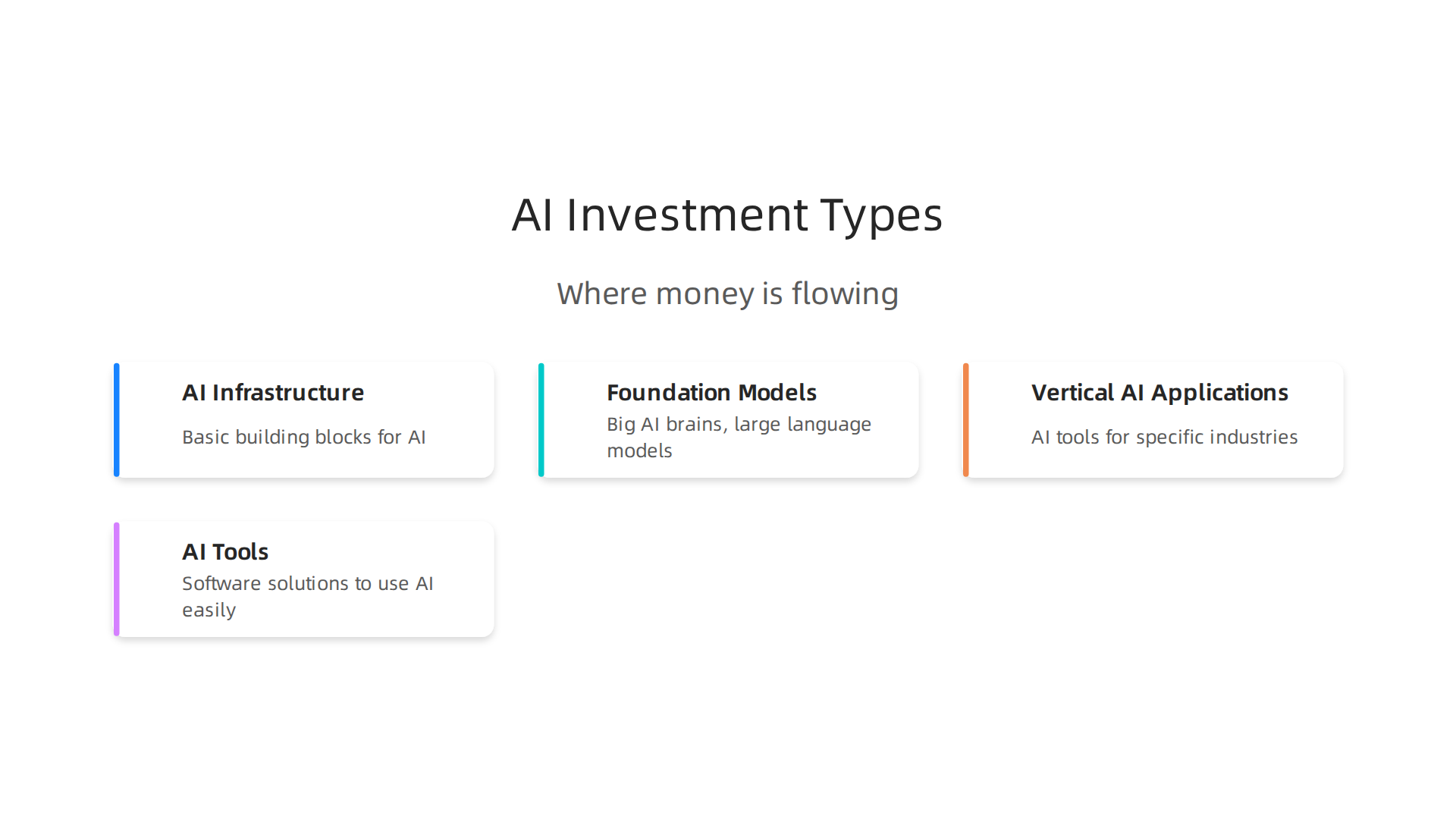
- AI Infrastructure: Think of this as the basic building blocks that AI needs to run. This includes special computer chips, powerful software platforms, and ways to manage huge amounts of data. These are like the roads and power grids for the AI world. Investors are putting a lot of money into this area because every AI company needs good infrastructure to succeed. Companies building this foundational tech are highly valued.
- Foundation Models: These are the big AI brains, like the large language models (LLMs) that can understand and create human-like text. They are very complex and expensive to build, so only a few companies can truly lead here. Big names like OpenAI and Anthropic have attracted a huge share of all global venture capital (VC) money, making up about 65% of all VC dollars from Q1 2026 alone. This shows how much faith investors have in these core technologies. You can learn more about these powerful models in our guide on artificial intelligence and machine learning fundamentals.
- Vertical AI Applications: These are AI tools built for specific jobs or industries. For example, AI that helps doctors diagnose diseases, or AI that makes farming more efficient. Venture capitalists are very interested in enterprise AI software that can automate tasks and help businesses work better, as noted by experts looking at what venture capitalists are looking for in AI business models. This is where many "series b startups" are finding success by focusing on a niche.
- AI Tools: These are software solutions that help developers and businesses use AI more easily. They might include tools for making AI models, managing data, or integrating AI into existing systems.
Funding Stages: Where the Big Money Lands
It’s not just about what kind of AI gets funded, but also when in a company’s life it gets money.
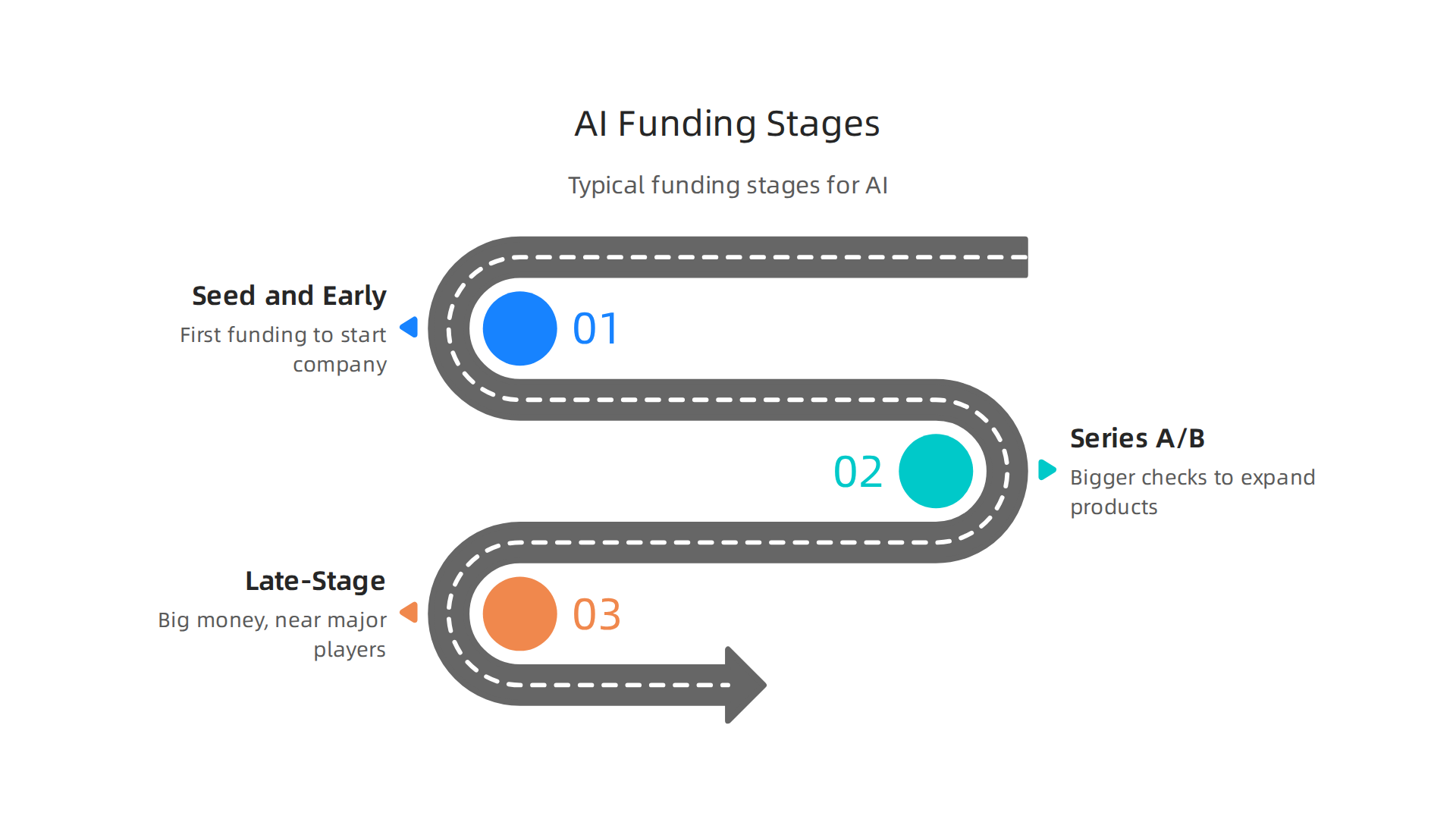
- Seed and Early-Stage Rounds: This is the first money a brand-new idea gets. It’s often small amounts, but very important for getting a startup off the ground. These deals are risky, but if the idea takes off, investors can see huge returns.
- Series A/B Rounds: After proving an idea works, companies look for more money to grow. This is where "series b startups" come in. They get bigger checks to expand their teams, develop products, and reach more customers. These rounds are still risky but have clearer goals than seed rounds.
- Late-Stage Funding: This is where the really big money is concentrated in 2026. For example, in the first three months of the year, global venture funding hit around $300 billion, with a big part of that coming from late-stage deals. Many of these large rounds go to companies that are already well-established and close to becoming major players in the market. In fact, late-stage and technology growth rounds did "most of the work" in Q1 2026, reaching very high numbers across many deals. The US alone saw venture funding hit $412.7 billion in the first half of 2026, with AI deals making up almost all of that jump, largely due to a few giant AI rounds.
This focus on later-stage funding means investors are looking for companies with proven success. While early-stage investments can lead to massive gains, late-stage deals offer a more stable, though perhaps smaller, return. Whether you’re looking for "startup funding austin" or trying to understand giants backed by "venture capital one" firms, knowing these different stages helps make sense of the current AI money landscape.
After understanding where the money goes, it’s also helpful to know who is actually giving it out. Not all investors are the same, and each type brings different things to the table. This is key for anyone looking for startup funding austin or just trying to understand the big picture of AI investment in 2026.
Where Capital Comes From: VC Tiers, Corporate Funds, and Nontraditional Investors
Money for AI startups comes from a few main places. Each has its own way of working and what it looks for.
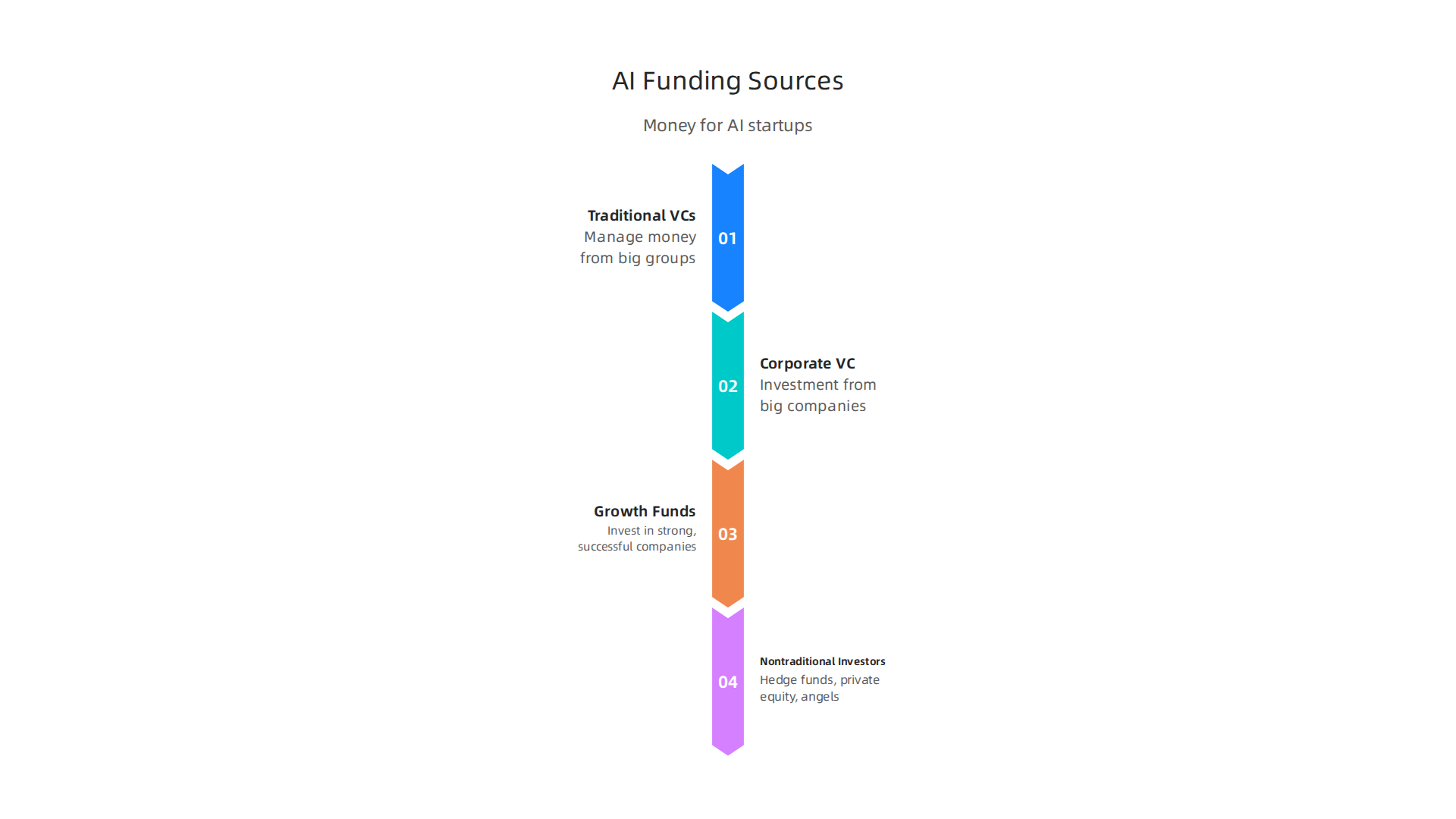
Knowing these differences can help founders set their expectations and choose the right partners.

1. Traditional Venture Capital (VC) Firms
These are the classic investors that focus on growing new companies. They often manage money from big groups like universities or pension funds. Their main goal is to find startups that can grow very fast and make a lot of money in return. Firms like alpha capital are always on the hunt for the next big thing in AI. VCs are a top source of funding for AI companies, often leading the way in new investments, as research into global investment trends shows Beyond Profit.
For founders, traditional VCs usually mean:
- High growth expectations: They want to see a clear path to becoming a very large company.
- Hands-on help: Many VCs offer advice, connections, and support to their portfolio companies.
- Clear financial terms: While deals can be quick, especially in AI, term sheets usually include standard items like liquidation preferences. In 2026, AI deals are often seen with founder-friendly terms, such as 1x non-participating liquidation preferences, meaning investors get their initial money back first, but don’t get an extra share of profits beyond that if the company performs well Term Sheet U.S. Financings Guide.
2. Corporate Venture Capital (CVC)
This type of investment comes from big companies, not just financial firms. For example, a large tech company might have its own CVC arm. They invest in startups that could help their main business grow or give them access to new technologies. It’s not just about money for them; it’s also about strategy. They want to partner with innovative series b startups or even earlier-stage companies.
The implications for founders when working with CVCs include:
- Strategic partnerships: You might gain a big customer, partner, or channel for your product.
- Less focus on immediate profits: CVCs can be more patient as they often look for long-term strategic value.
- Potential conflicts of interest: Be aware that your corporate investor might also be a competitor or have specific goals that might not always align perfectly with yours.
3. Growth Funds and Nontraditional Investors
These groups come into play as companies get bigger. Growth funds typically invest in companies that have already shown strong success and are looking to scale even more. They often lead series b startups and later funding rounds.
Nontraditional investors can include hedge funds, private equity firms, and even wealthy individual investors (angel investors) who specialize in certain areas. They are becoming more active in the AI space. For instance, some of the biggest checks in the AI world are now being written by these diverse groups, sometimes even from public companies or large banks like those with a venture capital one mindset that might explore different investment avenues.
For founders, dealing with these diverse investors means:
- Varying expectations: Growth funds want proven models; others might have different goals.
- More complex deal terms: Later-stage deals often have more intricate agreements. It’s wise for founders to focus negotiations on key areas like valuation, liquidation preference, board composition, and option pool size to keep control and protect their interests Startup Funding 2026: Stages, Valuations & What Works.
- Different levels of involvement: Some might be very hands-on, others might be more passive.
Understanding these different sources of money helps founders know what kind of support and expectations come with each investment. It also helps them navigate the venture landscape more effectively. For a deeper look into the world of AI investing and the players involved, you can explore our guide on AI Startup Investors: How Angels, VCs, CVCs, and Institutional Funds Differ.
Staying informed about who is investing where and what types of deals are being made is crucial for founders, investors, and anyone interested in the AI market.
To keep up with the fast-changing world of AI and how it’s funded, make sure you get regular updates.
The AI Newsletter Worth Reading
When investors look at a startup, especially one focused on AI, they don’t just look at the big idea. They dig deep to really understand what makes the company tick and whether it’s a good bet. This detailed look is called due diligence.

It’s super important for firms like alpha capital and any group with a venture capital one mindset that wants to make smart choices. They want to know the tech is sound, the data is clean, and the team can actually make it happen.
Let’s explore the key things investors check during this process, whether it’s for early seed funding or for series b startups.
Technical Due Diligence: The Core of AI Startups
For AI companies, the technology itself is a huge part of the review. Investors need to make sure the AI isn’t just a flashy demo but a strong, working product.
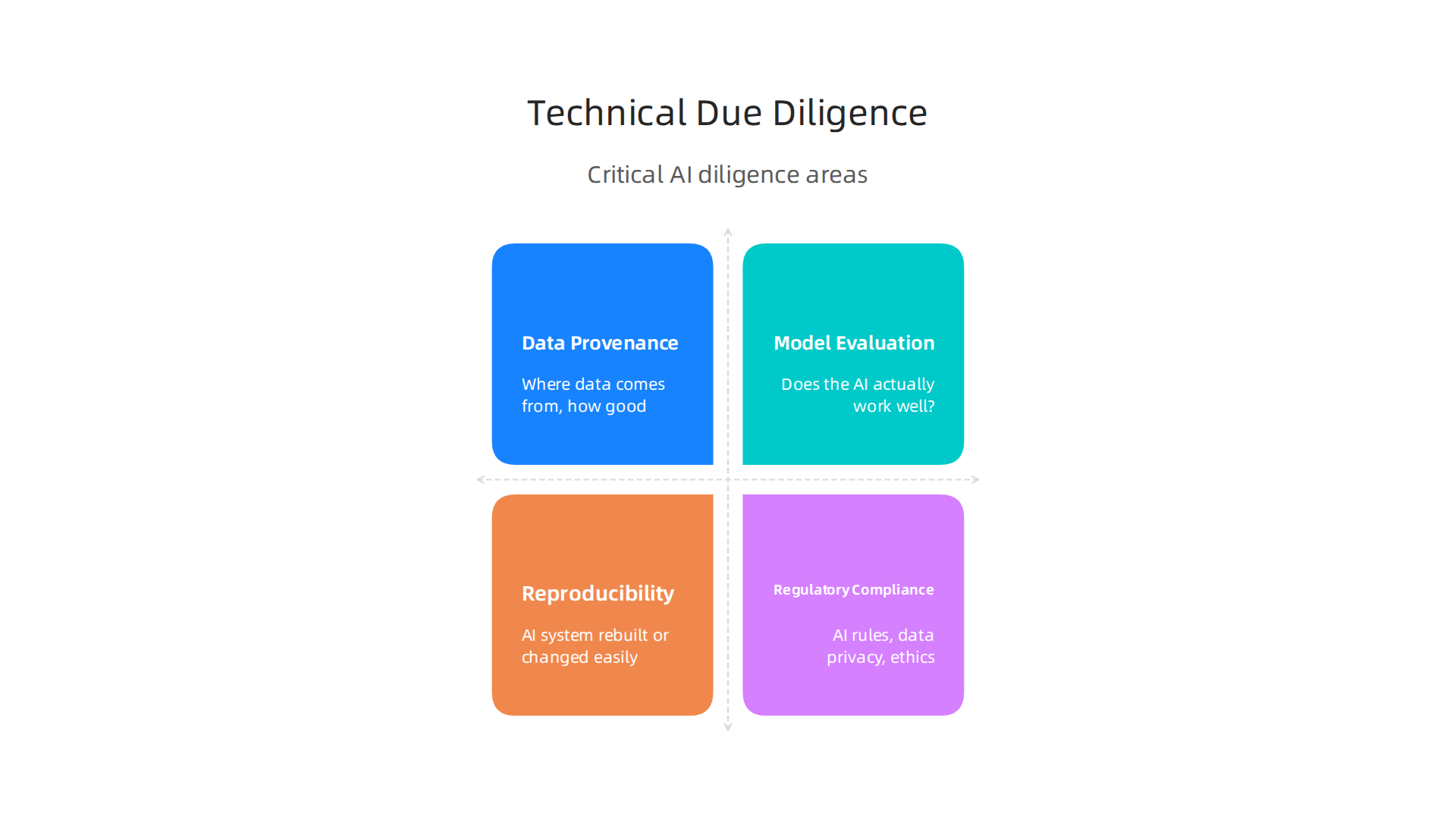
An AI/ML due diligence checklist helps them evaluate the "intelligence layer" of a company, including its models and training data AI/ML Due Diligence Checklist.
Here’s what they look at:
- Data Provenance and Quality: This is about where the data comes from and how good it is. Investors want to know that the data used to train the AI was gotten legally and is high quality. They check if the training data was pulled correctly and if it includes permissions to use it AI M&A Due Diligence Checklist for Acquirers (2026). They also check for things like data bias and how privacy is handled. A clean data room, showing raw datasets, how data is labeled, and where third-party data comes from, is key AI due diligence in 2026: what the IC actually needs to see ….
- Model Evaluation and Performance: Does the AI actually work well? Investors ask for proof that the AI’s claimed abilities are real and tested in real-world settings, not just in demos. They look at how accurate the models are, how fast they respond, and if they meet set goals Evaluate with an AI due diligence checklist | Lower risks now.
- Reproducibility and MLOps Maturity: Can the AI system be rebuilt or changed easily? This is about how well the company manages its AI operations (MLOps). It means checking if they have good ways to keep track of their models, update them, and make sure they work the same way every time. This shows a company is organized and ready to grow.
- Regulatory Compliance and Ethics: In 2026, AI rules are getting serious. Investors check if the startup follows laws about data privacy, like the EU AI Act or US state laws, and if they consider ethical issues like bias and fairness. Avoiding problems here is crucial for long-term success.
Team and Go-to-Market Signals
Beyond the tech, investors look closely at the people behind the company and their plan to sell the product.
- Team Expertise and Vision: The team needs to have the right skills and experience. Investors want to see leaders who understand the AI field deeply and have a clear, exciting vision for the future. They look for folks who have worked well together before and can handle tough challenges.
- Market Fit and Strategy: Does the AI product solve a real problem for many people? Investors want to see that the startup knows its customers well and has a clear plan to reach them. This includes understanding the market size, who the competitors are, and how the startup will stand out. This is true whether you’re seeking
startup funding austinor in a bigger tech hub. - Traction and Scalability: Investors want to see early signs of success. This could be a growing number of users, good reviews, or early sales. They also want to know the company can grow bigger without hitting major roadblocks. They look for how easily the product can be scaled up to serve many more customers.
Understanding these detailed checks is key for any founder. It helps them prepare for what investors will ask and show that their AI startup is ready for prime time. For those keen to learn more about how to attract such investments, delving into guides that cover the investor perspective can be very helpful. You can get a detailed overview of what matters by checking out our guide to Master Investing in AI Startups Your 2026 Guide.
After investors have looked closely at an AI startup’s technology and team during due diligence, they move on to figuring out the actual agreement. This part is about setting up the deal terms. These terms are super important because they decide how the money works, who has control, and what happens later on. Venture capital firms, like those with a venture capital one focus, pay very close attention to these details.
Let’s look at the practical choices and common terms you’ll see in AI investments in 2026.
Deal Terms & Structuring for AI Investments: Practical Choices
For AI startups, some parts of a deal can be a bit different from other types of companies. This is because AI can be very complex and moves fast.
- Protective Provisions: These are special rules that give investors a say in big company decisions. For example, they might need to agree if the company wants to sell a major part of its business or take on a lot of debt. In 2026, AI deals often have terms that are more favorable to founders, especially around control provisions How AI is Reshaping the U.S. Venture Landscape. However, investors still want to protect their money, which is a key part of what groups like
alpha capitalconsider. - Milestones: Investors might link future payments or funding to certain goals the AI startup needs to reach. These could be things like finishing a new AI feature, getting a certain number of users, or making a specific amount of money. This helps make sure the company is hitting its targets. Some deals, especially for
series b startupsand later, have started including structured deal language with milestone-based payments Term Sheet Drafting for Indian Startups: 2026 Guide. - Licensing and IP Carve-Outs: This is about who owns the smart ideas and technology (Intellectual Property or IP). For AI, this can get tricky, especially if the company uses open-source tools or partners with others. Investors want to make sure the startup truly owns its core AI technology. Sometimes, there are special agreements about how certain parts of the AI or its data can be used or licensed.
- Founder Incentives: Investors want founders to stay motivated and committed for a long time. This often means putting in place "vesting" schedules, where founders earn their company shares over several years. This way, if a founder leaves early, they don’t take all their shares. Reports show that founder vesting is more common in AI deals venturecapital #ai #deeptech #startups.
When to Use Different Funding Types
The way a startup gets money can vary a lot, especially for AI companies.
- Convertible Instruments and SAFEs: These are simpler ways to raise money early on, like for seed funding or when you’re looking for
startup funding austin. They are not true investments at a set price yet. Instead, they are promises to get shares later when the company raises a bigger, "priced" round of funding. SAFEs (Simple Agreement for Future Equity) are very popular in 2026 for early-stage AI startups, making up 90% of pre-seed deals Seed Deal Terms in 2026: The Mid-Year Benchmark Report. They are quick and easy, which is great for fast-moving AI companies that need cash without spending too much time on complex legal work. - Priced Rounds: This is a more formal way of raising money. Here, the company’s value is set, and investors buy shares at a specific price. This often happens in
series b startupsand later rounds. It means more legal work but also gives a clear value to the company and its shares. This is when largerventure capital onegroups often step in, bringing substantial funding.
Knowing these different options helps founders pick the best path for their AI company’s growth. If you are an investor looking to understand the funding world better, you can explore resources like our guide on AI Startup Investors. For those tracking the big picture, staying informed about broader trends in AI investment is key.
Get clear daily AI updates from The AI Newsletter Worth Reading.
Getting the deal terms right is just the first step. After an investment is made, smart investors, especially those focused on venture capital one, don’t just sit back. They actively help AI companies grow and succeed. This "value-add" support is super important for turning a good idea into a big business. It helps reduce risks and speeds up how fast a company can get customers.
Here are some key ways investors help AI startups after putting in their money:
- Data Partnerships: AI companies need lots of good data to train their systems. Investors often have connections to other companies or data sources. They can help their AI startups get access to valuable data they might not find on their own. This helps the AI models get better and faster. Strong data quality and proper data governance are things investors look for, and then help improve, even after the deal is done AI Due Diligence Checklist 2026: Avoid AI Failures, ….
- Recruiting Top Talent: Finding the right people with AI skills is really hard in 2026. Investors often have a network of experts they can tap into. They help startups find and hire engineers, data scientists, and leaders who know a lot about AI. This means the company can build its team quicker and get things done. If you’re looking to get into this field, there are many resources on how to land an AI startup job in 2026.
- Regulatory Strategy: The rules and laws around AI are changing all the time. It can be confusing for a small startup to keep up. Investors often bring in legal experts or advisors who understand AI laws, like those about privacy and ethics. They help guide the startup to make sure its AI products follow all the rules, which prevents big problems down the road. This focus ensures
alpha capitalinvestments stay compliant. - Compute Credits and Infrastructure: Running powerful AI models needs a lot of computer power, which can be very expensive. Many
venture capital onefirms have deals with cloud providers like Google, Amazon, or Microsoft. They can offer their portfolio companies "credits" for using these services, cutting down big costs. They also help startups set up their systems efficiently, focusing on things like MLOps maturity to run AI smoothly AI/ML Due Diligence Checklist. - Customer Validation and Introductions: Investors want their startups to get paying customers fast. They often introduce their AI companies to potential clients in their network. This helps the startup test its product in the real world and get feedback. It’s a quick way to show that the AI solution truly works and adds value. This kind of hands-on support is what helps
series b startupsmove to the next level.
This kind of help from investors goes beyond just money. It’s about providing the tools, connections, and advice an AI startup needs to scale up quickly and effectively in 2026. For a deeper look into the world of AI investing, consider reading a comprehensive AI guide for investors, founders, and analysts.
Beyond simply helping a company grow, smart investors also think about the tricky parts of AI businesses. These include special risks, new rules, and how a company might get bought out or go public later on. This is super important for anyone in venture capital one looking to make good choices.
Risk, Regulation, and Exit Paths: What Investors Must Consider
AI companies face unique challenges that traditional businesses might not. Understanding these helps investors protect their money and guide startups to success.
Facing AI Risks and Rules
One big area is regulation. Laws around AI are changing very fast in 2026. What was okay last year might not be okay now. Countries and states are putting new rules in place to make sure AI is used safely and fairly. For example, the EU AI Act is becoming fully active, and its rules are strict, with many parts having been enforceable since early 2025. This means AI companies need to be very careful about how they build and use their technology, especially in Europe AI Act | Shaping Europe’s digital future.
It’s not just Europe. In the US, many states are also making their own AI laws. California, for instance, has new rules about generative AI data transparency that started in 2026 AI Watch: Global regulatory tracker – United States. These rules cover things like data privacy, fairness, and whether AI systems show bias. The government is not just giving advice anymore; they are actively checking and giving out fines when rules are broken AI Compliance in 2026: The Enforcement Shift From Guidance …. Investors and alpha capital firms must make sure their series b startups know these rules well. For more on navigating this complex landscape, you might want to learn about Your Guide to Artificial Intelligence Implications for Business Strategy in 2026.
Also, there are ethical risks. AI systems can sometimes make unfair decisions or spread false information. This can harm people and hurt a company’s reputation. Investors need to check that AI startups have clear plans to handle these problems.
How Risks Affect Getting Out (Exit Paths)
All these risks and regulations can make it harder for an AI company to find an "exit." An exit is when investors get their money back, usually by selling the company or by the company going public (IPO). If an AI company has big problems with rules or ethics, it might not look attractive to a larger company wanting to buy it. They don’t want to buy a business that could face huge fines or bad press. This means the exit might take longer, or the company might sell for less money.
For investors, thinking about exit paths means looking at how the AI startup is built from the start. They check if the technology is truly special and hard to copy. They also look at how many customers the company has and if it’s making good money. Strong customer loyalty and clear paths to growth are key. Most AI startups are either bought by bigger tech companies or, if they get very big, they might go public on the stock market. The best exit paths usually come from startups that solve real problems, have strong patents or unique data, and can show they follow all the necessary rules.
Staying on top of these fast-changing rules and market shifts is crucial for investors, founders, and analysts alike. Get clear daily AI updates to help you make informed decisions with The AI Newsletter Worth Reading.
Summary
This article explains why AI funding needs a focused playbook in 2026, describing where capital flows, who is writing the checks, and what founders and investors must watch for. It summarizes the main AI investment targets—infrastructure, foundation models, vertical applications, and developer tools—and shows how funding concentrates across seed, Series A/B, and especially late-stage rounds. The guide breaks down the differences between traditional VCs, corporate venture arms, and nontraditional growth investors, and it details the technical, team, and go-to-market checks used during due diligence. It also walks through deal mechanics—protective provisions, milestones, IP carve-outs, and instrument choices like SAFEs and priced rounds—and explains how investors add value post-close via data, talent, compute credits, and customer introductions. Finally, the article covers regulatory and ethical risks that affect valuations and exit options, giving readers a practical framework to raise, deploy, or evaluate capital in today’s fast-moving AI market.