
Why leaders must reframe strategy and governance for AI
In 2026, artificial intelligence (AI) is no longer just a new idea; it’s changing how businesses work every day. Leaders everywhere are seeing that the old ways of making plans and rules don’t quite fit the fast-moving world of AI anymore. This means that understanding the "artificial intelligence: implications for business strategy" is more important than ever.

Actually, many companies are putting a lot of money into AI. A recent survey from 2026 found that almost 60% of companies are spending at least $1 million on AI each year. But here’s the thing: only about 29% of those companies are seeing truly big benefits from their AI efforts Key findings from our 2026 AI adoption survey.
This shows a clear gap between hoping for results and actually getting them.
The simple truth is that AI changes how companies win in the market. It affects everything: how a business plans for the future, what skills its workers need, and even how it measures success. Because AI is so powerful, leaders can’t just add it to their existing plans. They must rethink their entire approach to strategy and how they set up rules for using AI, also known as governance. This often means setting up a strong "technology strategy board" to guide these big changes.
With so much information and so many new AI tools, it can be hard for business executives and investors to know what to do first. They need clear ways to sort through all the noise and decide where to put their time and money. This includes understanding the latest in "ai platforms for business" and even how an "ai powered collaboration platform" can help their teams. A good framework helps everyone focus on what really matters for success in the AI age. For a deeper look at this new landscape, consider reading The 2026 Comprehensive AI Guide for Investors, Founders, and Analysts.
To keep up with these quick changes and get clear, daily updates on what’s happening in AI, there’s a helpful resource.
The AI Newsletter Worth Reading
How AI changes sources of competitive advantage
When it comes to winning in business, AI changes the game entirely. The old ways of simply having a great product or service are still important, but they are no longer enough on their own. Now, how a company captures value and gets ahead depends on new things. This is a core part of understanding "artificial intelligence: implications for business strategy".
One big shift is that value now comes from special data, unique AI models, and how quickly a company can improve things. It’s not just about what a product does, but what data powers it and how smart its AI brain is. Companies that gather unique data and build custom AI models based on it can get a big lead. Actually, treating AI model building as a core part of a company’s setup, rather than just a one-off test, is becoming a must Shifting to AI model customization is an architectural imperative. This means that having special knowledge or "intellectual property" in AI models becomes a key way to stand out. And because AI systems learn and get better over time, how fast a company can try new things and make improvements becomes super important. This kind of quick learning and change is vital for any modern "ai platforms for business".
Another big change is how powerful network effects, platform setups, and working with other companies (ecosystem partnerships) have become. Think about it: when more people use an "ai powered collaboration platform", it often gets better because it learns from all those users. This makes the platform more useful for everyone, bringing in even more users. This is called a network effect, and it makes successful AI businesses even stronger, faster. The whole AI world is really like a big ecosystem with many parts working together, from basic software to complex applications The AI Ecosystem in 2026: Infrastructure, Foundation Models …. This means that companies that build strong connections and work well with others in the AI space will tend to grow bigger and faster.
So, in 2026, leaders need to focus on these new ways to win. They should think about their data, their unique AI models, how quickly they can adapt, and how well they connect with other businesses. For more helpful information on how AI is changing business operations, check out this guide on Enterprise AI Software in 2026: A Guide for Business Leaders.

It’s a whole new playbook for success.
To really make these new advantages work, companies need a clear plan for their "artificial intelligence: implications for business strategy". It’s not enough to just know that AI can help; leaders must figure out exactly which AI projects fit their company’s main goals. This means carefully picking which AI ideas to pursue and how much effort to put into each one.
Prioritizing AI Projects
One key step is using special tools called prioritization frameworks. These frameworks help leaders decide which AI projects are worth doing. For example, some AI ideas might be small tests or "pilots" to see if they work, while others are big projects meant to change how the company runs. A good framework helps a company’s "technology strategy board" sort through all the different ideas. It helps decide which projects to grow big (scale) and which ones to just try out on a smaller scale How to Prioritize AI Projects in 2026: 5-Criteria Scoring Framework.
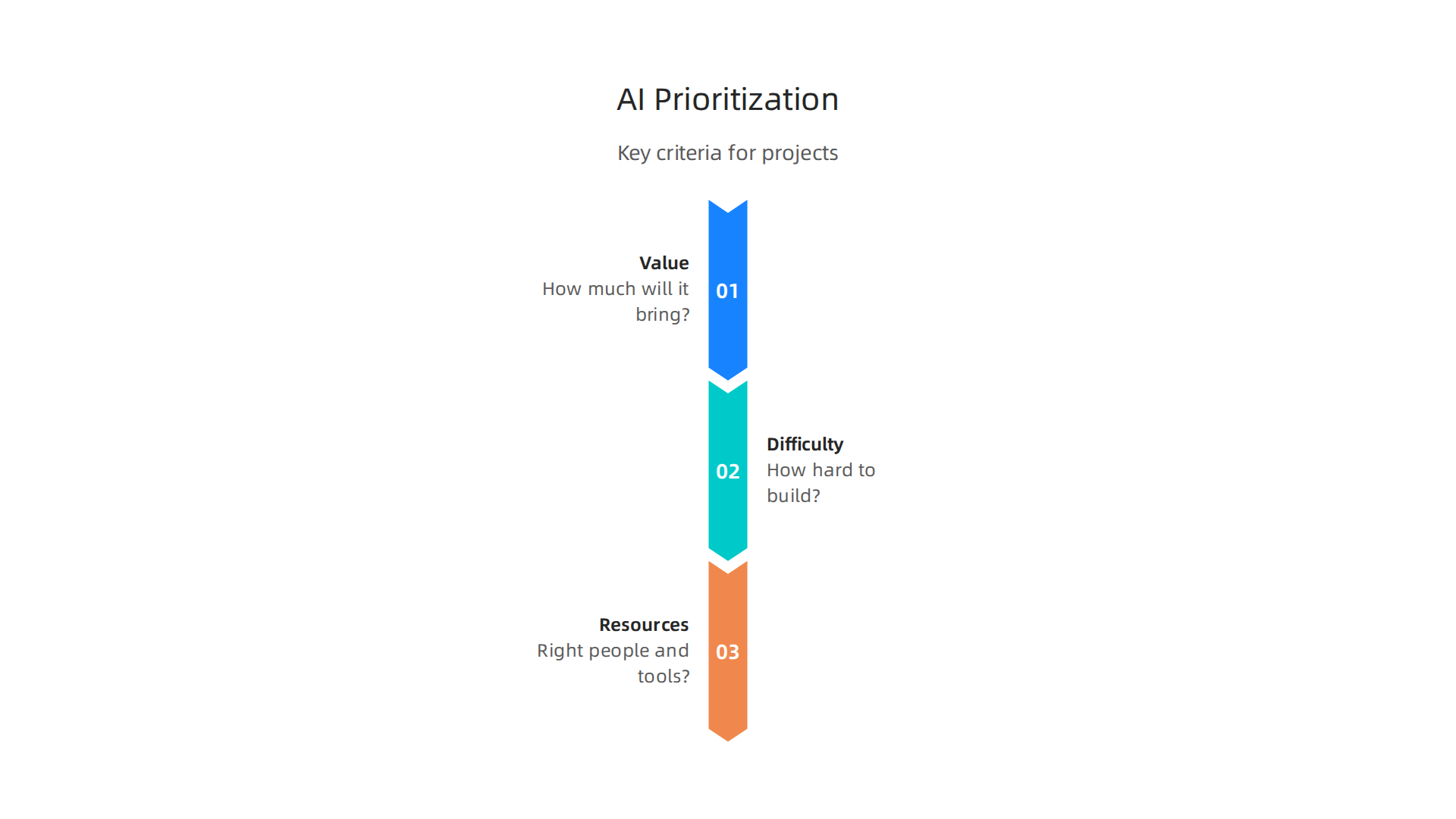
These frameworks often ask questions like:
- How much value will this AI project bring?
- How hard will it be to build?
- Do we have the right people and tools for it?
Some projects might be "quick wins" that are easy to do and bring fast, small improvements. Other projects are "big wins" that need more effort but can greatly improve how the business works, like creating new ai platforms for business or upgrading an ai powered collaboration platform. Deciding between these different types of projects is a big part of guiding a company’s AI efforts How to prioritize AI projects.
Linking AI to Business Goals
For any AI project to get the green light, it needs to show how it helps the company’s main goals. This means clearly linking what the AI does to things like making more money, cutting costs, or reaching important company targets (Key Performance Indicators, or KPIs). When a "technology strategy board" or other leaders can see how AI directly affects these business goals, they are much more likely to approve and support the project.
It is important to clearly define your business goals before looking at AI projects. This way, you can make sure that any AI initiative, whether it’s a small pilot or a large-scale deployment, truly helps the company succeed The AI Use Case Identification and Prioritization Framework. This clear link helps ensure that resources like money and people are used wisely. To learn more about setting up your company for success with AI, explore The 2026 Comprehensive AI Guide for Investors, Founders, and Analysts.
Staying informed about the latest trends in AI is crucial for making smart strategic decisions.
The AI Newsletter Worth Reading
To truly guide a company’s use of AI, simply knowing trends isn’t enough. Companies also need a clear plan for how decisions are made and who is in charge. This is called organizational governance, and it’s super important for understanding the artificial intelligence: implications for business strategy.
Organizational governance: structures, roles, and board oversight
Good AI governance means setting up clear rules and systems for how AI is used in a company. It spells out who gets to make decisions, who is responsible for watching over AI projects, and what to do if problems come up. This helps make sure AI is used in a safe and fair way. For instance, a clear AI Governance Framework in 2026: Responsible AI & Data … helps companies manage AI risks and follow ethical rules.
When a company sets up its AI governance, it needs to think about different parts. These include:
- Clear decision rights: Knowing who has the final say on AI projects.
- Oversight responsibilities: Making sure someone is always checking AI systems to see if they are working right and following rules.
- Escalation paths: Having a clear way to report and fix problems quickly if an AI system isn’t doing what it should.
Boards of directors and other top executive teams need to learn new things to manage AI well. They must understand the possible risks that come with AI, like how it might affect privacy or make unfair decisions. They also need to be ready to change their regular reports to include how AI is doing and any issues that arise. In 2026, many countries have new rules for AI, like the AI Act | Shaping Europe’s digital future – European Union which sets different risk levels for AI systems.

These rules mean that a company’s "technology strategy board" must be very careful when looking at new AI platforms for business.
For companies using advanced AI, like those building new ai platforms for business or an ai powered collaboration platform, proper governance is key. It ensures these tools are not just powerful, but also reliable and trustworthy. Understanding the best practices for handling powerful software can help business leaders in this area. You can learn more about this by reading our guide on Enterprise AI Software in 2026: A Guide for Business Leaders. With good governance, companies can use AI to grow and innovate without creating big problems.
Risk, ethics, and regulatory compliance for AI
While good governance helps manage AI, it’s also important to understand the actual dangers that AI can bring. Using artificial intelligence: implications for business strategy means looking at different kinds of risks. These include problems with the AI system itself, how it treats people, and how others see your company.
Types of AI Risks
When companies use AI, they face three main kinds of risks:
- Systemic risks: These are big problems that can happen if an AI system fails or makes bad choices. For example, an AI controlling a factory could cause a big slowdown if it malfunctions.
- Model risks: This refers to issues within the AI model itself. Maybe the AI was trained on biased data, leading it to make unfair decisions about loans or hiring. This can also lead to serious reputational risks for a company.
- Reputational risks: If an AI system acts unethically or makes big mistakes, people might lose trust in the company using it. This can hurt the company’s image and business.
To handle these risks, companies need different teams to work together. They must set up checks and balances to make sure AI is used safely and fairly. This is key for any company, especially those developing new AI powered collaboration platform tools or ai platforms for business.
Ethics and Evolving Regulations
Beyond just technical risks, there are big ethical questions with AI. Companies need to think about privacy, making sure AI doesn’t misuse people’s data. They also need to ensure AI systems are fair and explainable, meaning we can understand why an AI made a certain decision.
In 2026, rules about AI are changing quickly around the world. Governments are trying to keep up with how fast AI is growing. For instance, many expect companies to clearly show where AI is used and how it affects people’s rights. Regulators also want to see good records proving that AI systems are responsible. Staying ahead of these rules is vital. Companies must think about compliance before issues arise, not after. In the U.S., for example, new AI laws are always coming out, with some significant updates in 2026, especially for finance companies who must follow rules like ECOA and BSA/AML when using AI models The Emerging Landscape of AI Regulation in U.S. ….
A company’s technology strategy board needs to keep a close eye on these changing rules and ethical standards. This helps them make sure that all AI development is legal and responsible. Knowing about the AI Governance and Regulation 2026: A Complete Guide to … can help leaders steer their companies in the right direction. For a wider view of how AI is shaping the industry, you might also be interested in exploring The 2026 Comprehensive AI Guide for Investors, Founders, and Analysts.
Want to stay informed about all the rapid changes in AI? Keep up with all the new rules, risks, and innovations shaping the industry. Discover The AI Newsletter Worth Reading.
After understanding the risks and rules for using AI, the next big step is to know if your AI is actually doing a good job. It is not enough to just make sure AI works. You also need to see if it helps your business grow. This means looking at more than just how "accurate" an AI model is. For any business that uses artificial intelligence: implications for business strategy must also measure how these tools affect their real-world goals.
Beyond Technical Accuracy: Business-Aligned KPIs
When we talk about measuring AI, many people first think about how well the AI predicts things or finds patterns. These are often called "accuracy" or "precision." While these technical scores are important, they do not tell the whole story for a business. What really matters is how AI helps reach business goals.
Here are some business-focused ways to measure AI success in 2026:
- Revenue Impact: How much extra money did the AI help bring in? Did an AI tool for sales lead to more deals or bigger sales? Companies often track specific business metrics like quote turnaround time, win rates, or revenue per quote to see this impact directly The KPI dashboard for AI in a mid-market service business.
- Cost Savings: Did the AI help your company save money? Maybe an
ai platforms for businessautomated a task that used to cost a lot in human effort, like processing many documents. - Efficiency and Speed: Does the AI make things faster? This could be about how quickly a customer gets help or how fast a product moves through a factory. Key metrics here include process cycle time and documents processed per employee The KPI dashboard for AI in a mid-market service business.
- Customer Satisfaction: Are your customers happier because of AI? An AI chatbot might help customers find answers faster, making them more satisfied. You can track things like churn risk or customer satisfaction trends KPI Dashboards with AI: How Leaders Track Business Health.
- Robustness: How well does the AI handle new or unexpected situations? A robust AI keeps working well even if the data changes a bit.
- Fairness: As we talked about earlier, it is crucial that AI systems are fair and do not show bias. Measuring fairness means making sure the AI treats everyone equally.
These metrics should be put into a clear dashboard. A good dashboard shows how your AI projects are doing across different areas like usage, quality, safety, and money earned Your AI KPI Dashboard: From Inputs to Business Outcomes.
Consistent Measurement and Investment Decisions
Having a clear way to measure AI performance is very helpful. It lets your company’s technology strategy board compare different AI projects. This way, they can see which AI tools are doing the best and where to put more money or effort. This consistent way of measuring helps decide where to scale up your investment. It also helps businesses build a strong base for all their AI efforts, just like understanding how to choose the right AI tools guide: Evaluate, implement, and invest smartly in 2026 can guide your strategy.
After figuring out how well AI helps your business, the next big step is to choose the right tools and setups. It’s like deciding if you need a big workshop or a small one, and what kind of machines you will put in it. For any company, these choices for artificial intelligence: implications for business strategy are very important for how well AI works, how much it costs, and how safe it is.
Technology and infrastructure choices: cloud, edge, and models
When bringing AI into your business, you have to decide where your AI will live and what kind of AI brains it will use. These choices can change everything from how fast your AI works to how much money you spend.
Where Does Your AI Live?
Imagine your AI needs a home. This home is called its infrastructure. You have a few main options in 2026:
- Cloud: This is like renting a big, powerful computer in someone else’s data center. It’s flexible, meaning you can get more power when you need it and less when you don’t. This can save money because you only pay for what you use. Many
ai platforms for businesslive in the cloud. Using cloud platforms also helps with governance, as you can manage AI interactions through specific controls, rather than allowing systems to run locally without checks arXiv:2304.11090v2 [cs.CL] 23 May 2023. - On-Premise: This means you have your own computers and servers right in your office. You have full control, but you also have to pay for all the setup and upkeep.
- Hybrid: This is a mix of both cloud and on-premise. You might keep very sensitive data on your own servers and use the cloud for tasks that need a lot of computing power.
- Edge: This is when AI runs on smaller devices very close to where the data is made, like on a smart camera or a robot. It makes AI super fast because the data does not have to travel far. However, managing many "edge" devices can be tricky.
These infrastructure decisions affect cost, how quickly AI responds (latency), and how you manage rules and safety (governance). The whole AI Ecosystem in 2026 is built on these layers of infrastructure, models, and frameworks that shape how your AI performs The AI Ecosystem in 2026: Infrastructure, Foundation Models ….
What Kind of AI Brain Will You Use?
Beyond where your AI lives, you also need to pick its "brain" or model.
- Foundation Models: These are very large AI models trained on huge amounts of data. They can do many different tasks and are a good starting point for building AI applications because they make it easier to prototype and build new systems On the Opportunities and Risks of Foundation Models. Think of them as a very smart general assistant. Companies like Microsoft are releasing new ones in 2026 Microsoft takes on AI rivals with three new foundational models. These can make it cheaper and faster to use advanced AI How to use foundation models and trusted governance ….
- Custom Models: These are AI models built specifically for one job, trained on your company’s own data. They might not be as "smart" in general as foundation models, but they can be very good at their specific task. Sometimes, a simpler, custom-trained model can work just as well, or even better, and can cost less with better control Do You Really Need a Foundation Model?.
Choosing between foundation and custom models affects how much data you need, the kind of skilled people you need to hire, and how you manage and improve your AI systems (called MLOps practices). Your technology strategy board will want to think about these things carefully. Making AI a core part of your business strategy means looking at how these models fit into your overall plans, not just as one-off projects Shifting to AI model customization is an architectural imperative.
To stay on top of all these fast-moving changes and make smart choices, many professionals find it helpful to get regular updates. Get clear daily AI updates from The AI Newsletter Worth Reading.
After understanding the core decisions for integrating AI into your business, the focus naturally shifts to recognizing success. Just as companies decide on their artificial intelligence: implications for business strategy for growth, investors and market analysts constantly look for clear signs that an AI company is truly a "winner" in 2026. These signals go beyond just new ideas and dive into how well a company actually builds and uses AI.
Signals Investors and Analysts Should Track to Find Winning AI Companies
For those looking to invest in or understand successful AI companies, certain key indicators stand out. These aren’t just guesses; they are concrete signs of a strong artificial intelligence: implications for business strategy at work.

First, look for companies with proprietary datasets and defensible model IP. This means they have unique information or special AI models that others cannot easily copy. Imagine a company that has collected very specific data for years, giving its AI an advantage no competitor can quickly match. This uniqueness makes their AI valuable and hard to beat.
Next, deployment references are super important. This means seeing where and how an AI company’s products are actually being used by real customers. It’s not enough to just have a great AI idea; it needs to be working in the real world. For investors, seeing successful deployments is a strong sign. Many leaders track AI performance through key indicators, much like a KPI dashboard for AI in a mid-market service business. These metrics show how well the AI is improving things like efficiency or customer satisfaction, acting as powerful signals for outside observers. In 2026, checking a company’s KPIs for gen AI: Measuring your AI success can reveal if their AI is truly making a difference.
Beyond what an AI company has and what it does, you also need to look at its business health. Capital efficiency is a big one. This means how well the company uses its money to grow and create value. Are they spending wisely or burning through cash too quickly? Also, watch out for customer concentration. If a company relies too heavily on just one or two big customers, it can be risky. A diverse customer base is much healthier.
Finally, partnerships are a major signal. Strong partnerships with other established companies can show that an AI company’s technology is trusted and valuable. These alliances can also help them grow faster and reach new markets. For investors, understanding these aspects is crucial for a master investing in AI startups your 2026 guide.
By tracking these signals, investors and analysts can get a clearer picture of which AI companies are truly poised for success in the rapidly changing AI landscape. These points highlight how an effective technology strategy board and smart leadership decisions contribute to long-term wins.
For any company to truly win with AI, it’s not enough to just have great ideas or strong investment signals. You also need to know how to use AI in real life, day by day. This means setting up the right teams, making sure your AI systems work well, and working smartly with outside helpers. It’s all about how you run things, which is a big part of your overall artificial intelligence: implications for business strategy.
Operationalizing AI: talent, processes, and third-party partnerships
To make AI work for your business, you need clear plans for your people, how you do things, and who you partner with. This helps your AI efforts grow and stay strong.
Getting Teams to Work Together
First, companies need teams that work together across different areas. This means people from different departments like tech, sales, and customer service all helping with AI projects. When everyone understands the goal, it’s easier to use AI to improve things for customers or make work smoother. Thinking about how to prioritize AI projects is a key first step for these teams, often involving a clear scoring framework to decide what matters most, as discussed in How to Prioritize AI Projects in 2026.
Setting Up Good AI Processes
Next, you need good ways to build and run your AI systems. This is often called MLOps, which is like a set of rules and tools to make sure AI models are made well, tested properly, and kept working smoothly once they are live. It’s like having a blueprint for how your AI should operate, making sure it’s fair and safe. Leaders in 2026 are often focusing on key priorities for data and AI, treating AI like a product line with clear steps for success, as highlighted in The Top Strategic Priorities Guiding Data and AI Leaders in 2026. This structured way of working helps big companies get the most out of their enterprise AI software in 2026.
Managing Outside Help
Many businesses get help from other companies for their AI work. This means you need clear rules for how you work with these outside partners, a process called vendor governance. It’s important to make sure they follow your rules, keep your data safe, and deliver good quality work. This part of your technology strategy board helps you stay in control while still getting the expertise you need.
Finding the Right People
Finally, having the right people is super important. This means finding a good balance between:
- Your own team: People who work directly for your company and know your business inside and out.
- Outside experts: Hiring people for specific tasks or projects when you need extra skills.
- Working with research labs: Partnering with universities or special labs to stay updated on the newest AI discoveries.
By combining these different ways of getting talent, companies can build strong AI teams. This also includes thinking about what AI platforms for business will help your teams work together.
Making AI operational means putting these pieces together. It’s about clear strategy, good systems, smart partnerships, and the right people working on the right things. To stay updated on how the biggest AI companies are handling these challenges, it’s important to keep learning.
Get clear daily AI updates from The AI Newsletter Worth Reading.
Summary
AI is reshaping how companies compete, so leaders must rethink strategy and governance rather than patching old processes. The article explains why heavy AI investment often fails to deliver and what successful firms do differently: build defensible data and model assets, exploit network effects, and move quickly with disciplined prioritization frameworks. It describes how boards and technology strategy teams should set clear decision rights, oversight, and escalation paths, while embedding ethics, compliance, and risk controls into AI programs. The piece also covers how to measure AI impact with business-aligned KPIs, choose infrastructure and model approaches (cloud, edge, foundation vs custom models), and operationalize AI through MLOps, cross-functional talent, and vendor governance. Finally, it outlines the investor signals that reveal durable AI advantage and offers practical steps to govern, measure, and scale AI responsibly.