

Introduction: Why the Right Venture Tech Group Matters for AI Success
Building an artificial intelligence company in 2026 is not like building a regular software startup. AI needs massive computing power, top-tier talent, and years of research before turning a profit. That is why picking the right venture tech group matters more than ever.
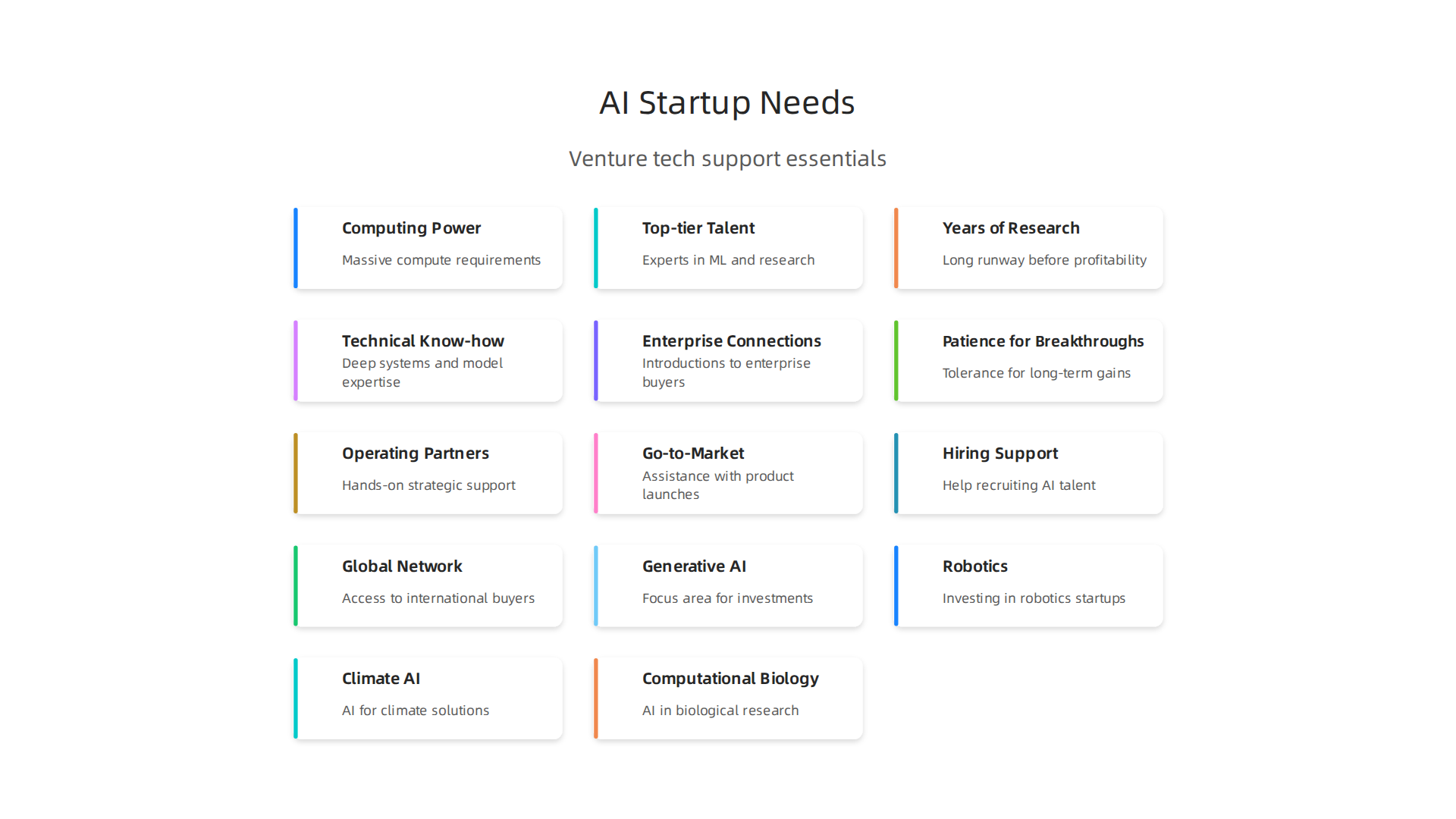

The best venture tech firms today do more than just write checks. They bring deep technical know-how, connections to enterprise buyers, and the patience to wait for true breakthroughs. Think of firms like Iconiq Capital, Incline Equity Partners, or Cerberus Capital Management. These are not ordinary capital venture backers. They are strategic partners who understand the long game of deep tech.
In fact, Sequoia Capital’s growing AI portfolio now includes nearly 60% of its new investments going into AI startups. This shows how much the landscape has shifted. The firms leading AI investing today combine financial power with real domain expertise and network effects.
This article profiles the top 10 venture tech groups that founders, investors, and operators should track closely in 2026. Whether you are raising your next round or looking for smart places to deploy capital, these firms define the state of AI investing today. For a deeper look at how to evaluate AI startups as an investment, check out this investing in AI startups guide.
The AI Newsletter Worth Reading delivers daily AI updates straight to your inbox so you never miss a key development.
Sequoia Capital – The Gold Standard for AI Infrastructure and Frontier Models
If you ask any founder which venture tech group they dream of having on their cap table, Sequoia Capital is almost always the first name.


And for good reason. This firm has backed foundational AI companies at every layer — from the infrastructure that runs large models to the frontier labs pushing toward AGI and the applications that bring AI to millions of users.
Sequoia’s track record speaks for itself. They were early investors in OpenAI, Nvidia, and a long list of AI-native startups that now define the industry. What sets this venture tech group apart is not just the check size. It is the operating partner model.
Portfolio companies get hands-on help with go-to-market strategy, hiring top AI talent, and navigating enterprise sales cycles. The firm’s global network means a startup in San Francisco can get introductions to buyers in Europe or Asia within days.
In 2026, Sequoia is doubling down on a new thesis. According to their internal research published in AI in 2026: A Tale of Two AIs, the firm sees a split between two kinds of AI progress. On one side, there are delays in building data centers and achieving AGI. On the other side, real-world AI adoption by end users is accelerating fast. Sequoia’s partners believe the next big wave is agentic AI and enterprise productivity tools — software that does tasks on its own rather than just generating text or images.
If you want to understand the difference between agentic AI and the generative models most people use today, check out this agentic AI vs generative AI guide. It breaks down exactly why Sequoia is betting on autonomous agents.
For any founder or investor tracking AI in 2026, Sequoia Capital remains the gold standard among venture tech groups. Their capital venture strategy combines deep technical diligence with the patience to hold through long development cycles. That is a rare combination in today’s fast-moving market.
Andreessen Horowitz (a16z) – From AI Research to Crypto AI and Everything In Between
If Sequoia is the gold standard for infrastructure bets, Andreessen Horowitz is the venture tech group that covers everything else.

Actually, "everything else" might be an understatement. a16z has built the most diversified AI portfolio among all capital venture firms. Their investments span biotech, crypto, enterprise software, and consumer apps. No other venture tech group comes close to that range.
What makes a16z different is the research arm. Their in-house team publishes detailed market reports that founders and investors treat as required reading. They break down where AI is heading across every sector. This mix of hands-on investing and deep research gives a16z a unique edge. They see trends before they become headlines.
The firm runs a dedicated AI fund called a16z AI. It writes multi-million dollar checks from the seed stage all the way to growth rounds. That means a startup can work with the same venture tech group from its first idea to its Series C without switching investors. For founders, that kind of long-term partnership is rare.
For anyone studying how capital venture firms pick winners, a16z is a must-watch. Their bets on AI agents, crypto AI applications, and bio-focused models show where the smart money is going in 2026.
If you are new to how top venture firms think, this guide to AI startup investors explains how VCs, corporate funds, and angel investors differ. And for daily updates on which AI companies a16z and other top players are backing, try The AI Newsletter Worth Reading. It delivers clear daily AI news without the noise.
GV (Google Ventures) – Corporate Firepower with Deep AI Roots
While a16z operates as an independent venture tech group, GV brings something different. As Alphabet’s venture arm, GV offers startups direct connections to Google’s AI infrastructure, research teams, and talent pool.

That kind of access is hard for any capital venture firm to match. GV operates with the resources of a corporate giant but the independence of a firm like Iconiq Capital.
What makes GV unusual is how independently it operates. GV invests separately from Alphabet, meaning it sometimes backs companies that compete with Google’s own products. The firm once invested in Slack while Google had a competing chat product. Today, according to a report on how GV bets big on AI magic, the firm is doing the same with AI startups that go head-to-head with Alphabet. This independence shows the firm’s commitment to backing strong founders first.
In Europe, the AI focus is especially clear. GV Europe now puts about 80% of new investments into AI or AI-native companies, according to a breakdown of Google Ventures Europe AI investments. That is a massive signal for anyone tracking where this venture tech group sees the most opportunity.
GV tends to focus on data-heavy industries like healthcare AI, machine learning operations, and enterprise software. Their team includes former engineers and entrepreneurs who work directly with startup teams on hard technical problems. For a deeper look at how capital venture firms like GV pick their bets, check out this investing in AI startups guide.
Index Ventures – Leading the European AI Charge
While GV brings corporate firepower, Index Ventures takes a different approach. It is widely considered the top venture tech group for AI companies in Europe. With offices in London, Geneva, and San Francisco, Index has built a reputation for spotting deep tech and applied AI startups early.
What sets Index apart is its dedicated AI team. The firm does not just write checks. It actively works with founders on technical challenges and product strategy. Index also hosts regular AI-specific networking events where founders can meet researchers, engineers, and potential customers. That kind of hands-on support is rare in the capital venture world.
Index’s portfolio says it all. The firm has backed several European AI unicorns that later expanded globally. These include companies in healthcare AI, autonomous driving, and enterprise software. For any founder looking for the right venture tech group, Index should be high on the list. To learn more about how different investors support startups, check out this overview of how AI startup investors differ.
If you want to stay on top of which firms are backing the next big AI company, you need reliable daily updates. That is why we recommend The AI Newsletter Worth Reading. It delivers clear, curated AI news straight to your inbox every day.
While Index focuses heavily on Europe, Accel takes a truly global approach. This venture tech group is known for stepping in once an AI company has product-market fit and is ready to scale. Accel invests across both the US and Europe, which gives it a unique cross-border advantage. If you are building a company that needs capital in the Series B or C stage and you plan to expand internationally, Accel is a firm to know.
Accel’s AI portfolio is broad. It covers cybersecurity, healthcare, fintech, and developer tools. The firm recently raised $5 billion to double down on late-stage AI bets, with strong returns from companies like Anthropic and Cursor fueling that confidence. That move shows how serious Accel is about backing scaling AI businesses.
Unlike some funds that only write checks, Accel stays involved as you grow. Their teams work with founders on product strategy and go-to-market planning. For any founder evaluating which venture tech group to partner with, Accel offers both capital and real operational support.
To see a full list of the top capital venture firms backing AI right now, check out this guide to the top venture capital portals for AI startups in 2026.
Lightspeed Venture Partners – Betting on AI for the Enterprise
Lightspeed Venture Partners takes a different path than Accel. While Accel steps in at the scaling stage, Lightspeed focuses on enterprise AI from the ground up. If you are building AI for businesses, this venture tech group belongs on your radar.
Lightspeed invests heavily in SaaS platforms that use AI, data infrastructure tools, and vertical solutions made for specific industries. Their partners come from backgrounds as CTOs and IT leaders. That experience helps them advise portfolio companies on long enterprise sales cycles. They know how hard it is to sell into a big company, and they help founders navigate that process.
Since 2024, Lightspeed has increased its AI check size significantly. The firm also runs an AI founder program to support early stage teams. That combination of larger checks and hands on mentoring makes Lightspeed a strong choice for enterprise focused founders.
If you want to understand how enterprise AI software is reshaping business in 2026, our enterprise AI software guide breaks down the key trends and tools to watch.
CTA: Staying on top of the AI funding landscape takes time. Get clear daily updates from The AI Newsletter Worth Reading so you never miss a key move from top venture groups like Lightspeed.
Khosla Ventures – AI-First from Day One
While Lightspeed focuses on enterprise software, this venture tech group took a much bolder bet. Khosla Ventures backed artificial intelligence long before it became a mainstream trend.
Vinod Khosla was an early investor in OpenAI. That decision alone shows how this firm thinks.
They look for frontier technologies that could completely change industries. And they do not spread their money thin. Khosla runs a concentrated portfolio with a high conviction approach. They often lead the very first funding round in a startup, sometimes when it is just a founder and a whiteboard.
The firm focuses on four big areas: generative AI, robotics, climate AI, and computational biology.
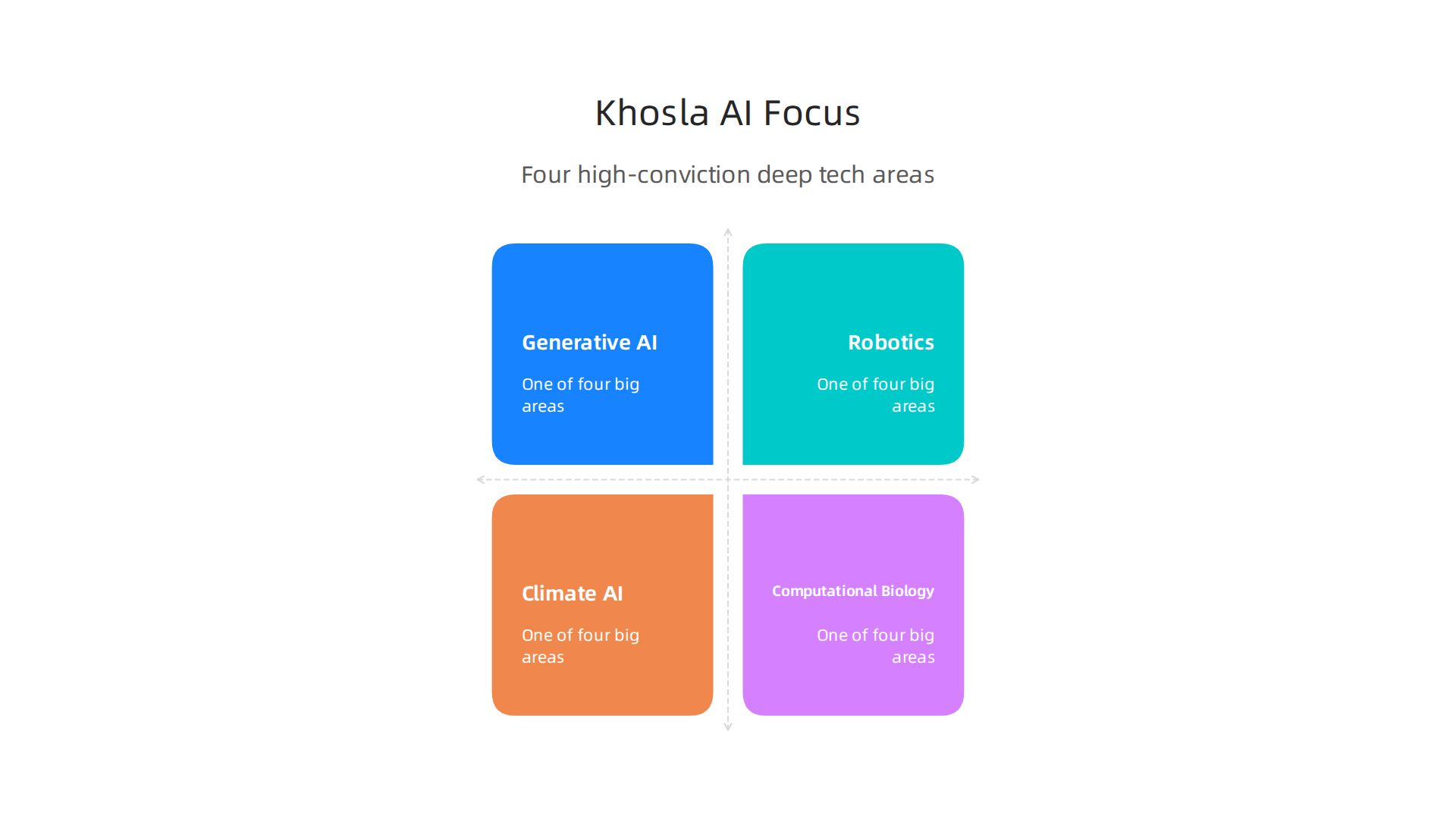
These are not safe bets. They are deep tech bets that could reshape the world. As the firm’s Khosla Ventures Investment Thesis explains, they back bold breakthroughs with a decade long view.
Khosla believes AI will completely change how we live within 15 years. One Vinod Khosla prediction on AI and the future of work says the technology will drive down living costs and free people from traditional jobs. That is the kind of big vision this capital venture firm bets on.
For founders building something truly ambitious, Khosla offers more than money. They offer a partner who backed AI when nobody else would. If you want to find the right investors for your startup, check out our guide to the top venture capital portals for AI startups in 2026.
Felicis Ventures – The Undiscovered AI Gems and AI-Native Startups
Khosla bets big on moonshots. Felicis Ventures takes a different path. This venture tech group focuses on finding the AI-native startups that are still flying under the radar.
Felicis looks for early-stage companies that are built around artificial intelligence from day one. They are not adding AI as an afterthought. These are startups where the core product depends on machine learning and data. And Felicis helps them grow with a very hands-on approach. They provide operational playbooks, connect founders with experts, and share proven growth strategies.
Their portfolio shows this clearly. They have backed breakout AI companies in legal tech, education, and healthcare. These are not general AI platforms. They are specialized tools that solve real problems in specific industries. That focus on verticals is what makes Felicis different from many other investors.
If you are a founder building an AI-native company, Felicis could be the right partner. They understand the unique challenges of selling AI into traditional markets. And they have the playbooks to help you scale. The 2026 AI investment landscape analysis shows that top VCs are increasingly targeting vertical AI solutions, which matches Felicis perfectly.
For any founder, understanding how different investors work is critical. Check out our guide on how AI startup investors differ to see which type of fund matches your stage and vision.
And if you want to stay ahead of the fast-moving AI market every single day, you need a trusted source. Get clear daily AI updates from The Deep View Newsletter. It is the go-to resource for daily, in-depth AI and technology insights.
Madrona Venture Group – Seattle’s Enterprise AI Powerhouse
Now, let’s turn to a venture tech group that has deep roots in Seattle. Madrona Venture Group has been a fixture there since 1995. Three decades of backing startups that became household names.
Amazon. Redfin. Smartsheet. But in 2026, Madrona is doubling down on applied AI.
What makes Madrona different? Their connections to the Seattle tech ecosystem. They are right next to Microsoft, Amazon, and the Allen Institute for AI. That gives them an insider view of what enterprises actually need.
Madrona is not looking for flashy demos. They want startups building AI for manufacturing, logistics, and enterprise productivity. Practical tools that solve real problems. They recently raised $770 million specifically for founders building applied AI, as highlighted in their applied AI fund announcement.
Their portfolio includes Spangle, which uses AI to personalize online shopping, and Gradial, which runs AI agents for customer support. These are not general platforms. They are vertical solutions for specific industries.
Madrona has been investing in AI since 2012. That is over a decade of learning what works. They also absorbed their startup studio, Madrona Venture Labs, back into the firm in 2025, which gives them even more hands-on power to incubate new ideas.
For enterprise founders, Madrona is a strong partner. They understand long sales cycles and compliance rules. They also co-invest with cloud giants like AWS and Azure. If you are building enterprise AI tools, you can read our guide on enterprise AI software in 2026 to see what business leaders are looking for.
Insight Partners – Scaling AI Companies to Global Dominance
Now let’s look at another venture tech group with a very different playbook. Insight Partners is a growth equity firm based in New York. They focus on scaling software companies that already have traction.

Since 1995, they have invested in over 400 companies and helped many reach multi-billion-dollar valuations. Their AI portfolio includes names like Veeam, GitLab, and Pluralsight.
What makes Insight Partners stand out is their hands-on operational support. They have a team called Insight Onsite that works directly with portfolio companies on hiring, sales, marketing, and product strategy. This is not just writing a check. They embed experts into the companies they back.
Insight Partners also runs a massive portfolio community called Insight Peer Communities. Over 5,000 executives from their portfolio companies share best practices and solve problems together. For AI companies, this network is gold. It connects founders with peers who have already faced scaling challenges.
Their AI focus areas include data and analytics, cybersecurity AI, and vertical SaaS with embedded AI. They look for companies that have strong revenue and a clear path to market leadership. Insight Partners is a good fit for AI startups that are past the early stage and ready to grow fast.
If you want to explore other ways to connect with investors, check out our list of top venture capital portals for AI startups in 2026. And if you want to stay ahead of the fast-moving AI investment scene, you can subscribe to The AI Newsletter Worth Reading for clear daily AI updates.
Summary
This article profiles the top venture tech groups founders and investors should watch in 2026 and explains why picking the right partner matters for AI success. It reviews how firms such as Sequoia, a16z, GV, Index, Accel, Lightspeed, Khosla, Felicis, Madrona, and Insight differ in focus, check size, and value add—from infrastructure and frontier research to enterprise and vertical AI. You’ll learn which firms favor early AI‑native teams versus later‑stage scalers, how corporate venture arms can grant product and infrastructure access, and why networks and operating support often matter as much as cash. The piece highlights practical signals to match your startup to a fund (stage, sector, and geographic focus) and explains how top groups help with hiring, sales, and technical challenges. It also points founders to resources for deeper learning and daily market updates so you can track where capital is flowing. After reading, founders and investors will better understand which venture partners align with their timeline, product, and scale plans, and how to prioritize outreach and diligence preparation.