

Introduction: The Investor’s Challenge in AI
The AI startup market in 2026 is massive and growing fast. But here’s the problem: it’s also incredibly fragmented. For investors trying to find the next big opportunity, the sheer number of new companies, funding rounds, and technological shifts can feel overwhelming.

In 2025, AI companies raised $211 billion globally. That is 85% more than the year before, and it represents roughly half of all venture capital funding worldwide, according to the Venture Capital in 2025 report from Eqvista.
This trend has continued into 2026, with AI still dominating the investment landscape. But despite all this money moving around, finding quality deals remains a serious challenge.
The difficulty comes down to information overload. Between startup announcements, venture capital news, and rapid tech changes, it is tough to know where to focus. Even seasoned investors struggle to separate hype from real potential. The Global Venture Capital Outlook from Bain & Company notes that AI pulled in about half of all US venture funding in late 2025, with money flowing into everything from infrastructure to developer tools. That breadth makes it hard to pick winners.
This article will help you cut through the noise. We will look at data-driven methods and trusted platforms that can help investors connect with the most promising AI startups. Whether you work with Redbird Capital Partners, Crestline Investors, or you are an independent angel investor, the goal is the same: find strong opportunities without wasting time.
We have a guide on master investing in ai startups that covers the basics in more detail. And if you want to stay updated daily on the latest funding rounds and company news, The AI Newsletter Worth Reading delivers clear daily AI updates straight to your inbox. It is a quick way to keep your finger on the pulse of the industry.
Let’s get into it.
The 2026 AI Startup Funding Landscape: Key Trends and Data
To understand where the money is moving, you need to look at the big picture. The numbers from 2025 tell a clear story, and they shape how investors connect with the right AI startups in 2026.
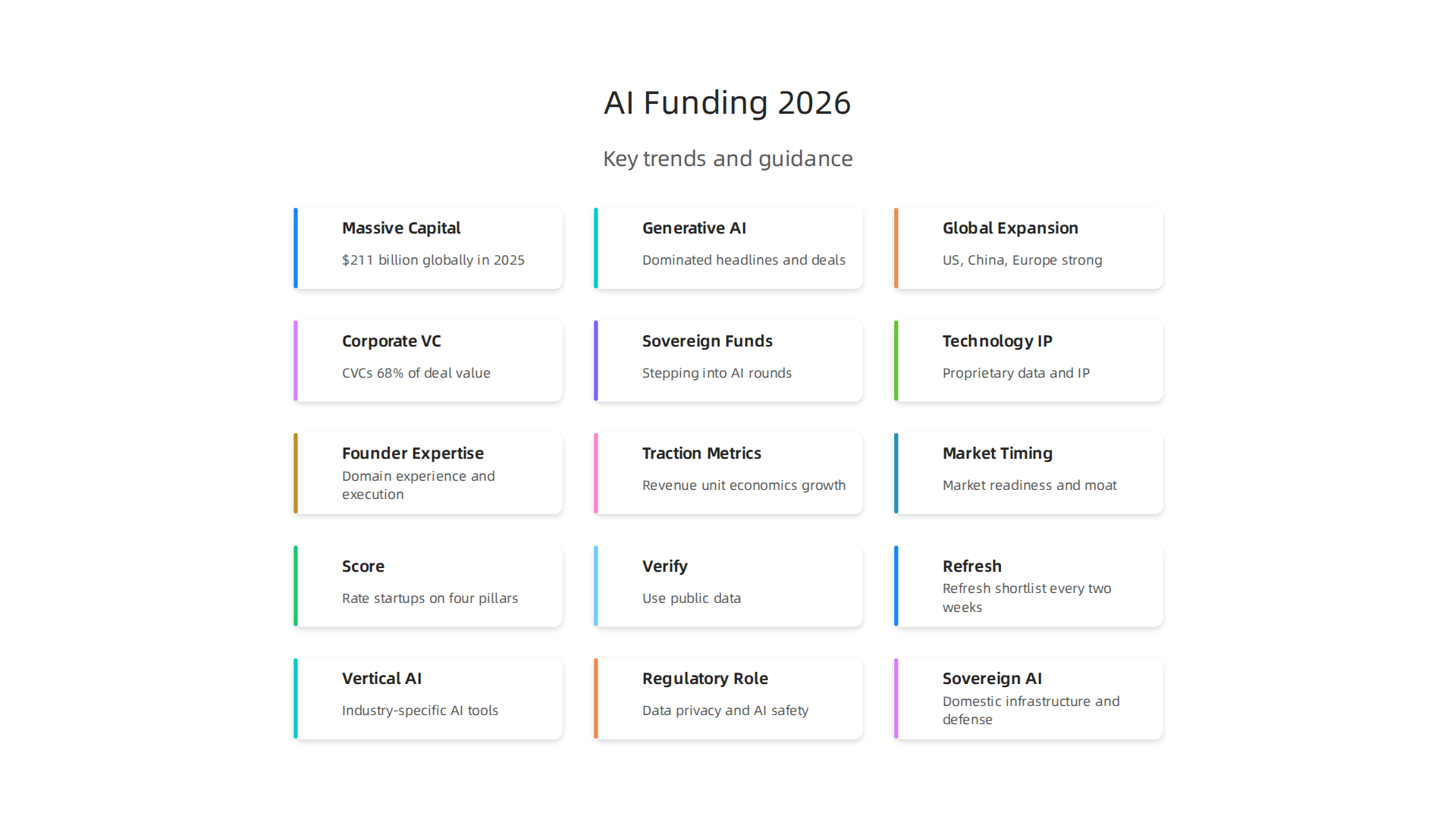
Let’s start with the massive amounts of capital flowing in. In 2025, AI companies raised $211 billion globally. That is 85% more than the year before. To put that in perspective, five companies alone — OpenAI, Scale AI, Anthropic, xAI, and Project Prometheus — raised a combined $84 billion. That is 20% of all global venture funding sitting with just five names, according to the Artificial Intelligence H1 2025 Global Report from Ropes & Gray.
Generative AI dominated the headlines and the deal sheets. Foundation models and large language models pulled in the most funding of any category. But here is the thing: the money is starting to spread.
Silicon Valley still leads. No question about that. US VC funding hit $274 billion in 2025, capturing about 64% of the global total. But other regions are waking up. China gained meaningful momentum in late 2025, powered by AI and autonomous vehicle rounds. Europe showed strength in sustainability and software too. The days when you only looked at Sand Hill Road for AI deals are over.
This shift matters for Redbird Capital Partners and Crestline Investors just as much as it matters for individual angels. The opportunity set is getting wider geographically, which means you need better tools to spot the best deals wherever they show up.
Another big trend is the rise of corporate venture capital. Big Tech companies are not just building their own AI. They are investing aggressively in outside startups too. CVCs participated in 68% of overall AI deal value in 2025, driven by favorable policy signals and faster adoption timelines. Sovereign wealth funds are also stepping into AI rounds more often. These deep-pocketed players change the game because they can write checks that traditional VC firms struggle to match.
For founders and investors alike, this means the competitive dynamics are shifting. You need to understand who the real players are in each round. For a deeper look at which startups are leading right now, check out our list of top AI startups 2026. It gives you a clear view of the companies that are actually moving the needle.
The bottom line? The funding landscape is bigger, more scattered, and more crowded than ever. But that also means more opportunity if you know where to look.
How Top Investors Evaluate AI Startups: Criteria That Matter
So you know how much money is moving. Now the real question: How do investors actually decide which AI startups get funded? And how can you improve the way investors connect with the right opportunities?
The days of betting on a slick demo deck are fading fast. In 2026, top firms like Redbird Capital Partners and Crestline Investors use a clear set of criteria. They don’t guess. They evaluate through a structured lens.

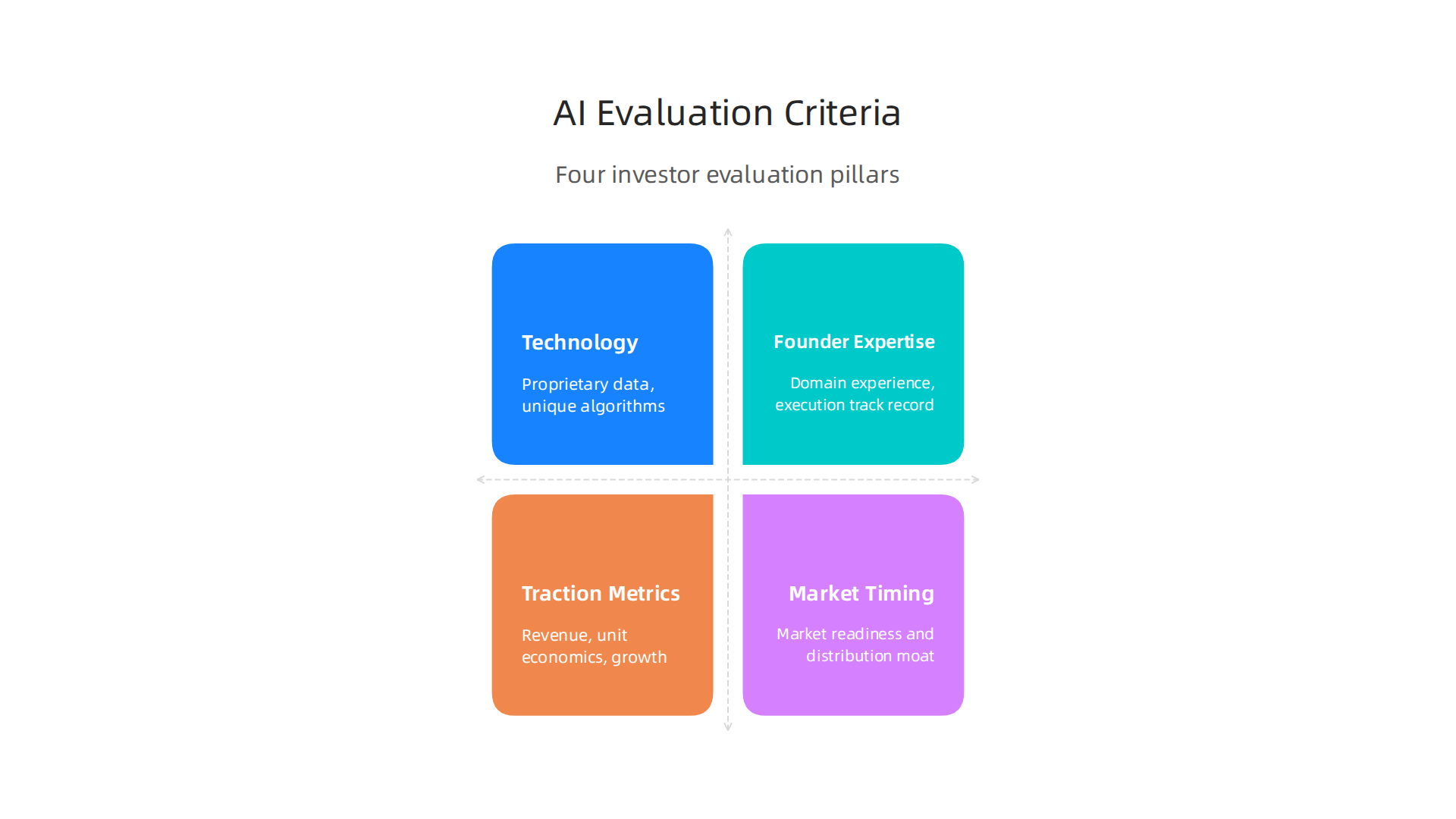
According to the VC evaluation framework for 2026 from Spectup, investors look at four main pillars: founder team, product-market fit, total addressable market, and traction metrics. The weight shifts depending on the stage.
Let’s break down what matters most right now.
Technology Differentiation and Defensibility
This is the top factor for most investors. Your AI startup needs a real moat. That usually means proprietary data, unique algorithms, or deep technical IP. The AI startup valuation guide from Lucid.now points out that intangible assets like proprietary datasets often make up 70 to 80 percent of an AI company’s total value. If your model relies entirely on third-party APIs, that’s a red flag. Investors want to see that you can’t be copied by a bigger player next quarter.
Founder Expertise and Team Quality
At the early stage, team beats idea almost every time. Investors want to see founders with deep domain experience, a track record of execution, and real resilience. Teams with research backgrounds from top AI labs can command valuation premiums of 200 to 500 percent. That’s a huge edge. It also helps if your cofounders have complementary skills and can work through hard problems together.
Traction Metrics That Actually Move the Needle
Sign-up numbers don’t impress the way they used to. In 2026, investors want to see real revenue and smart unit economics. For Series A, you typically need at least $3 million in annual recurring revenue, a lifetime value to customer acquisition cost ratio above 5 to 1, and sustainable 15 to 20 percent month-over-month growth for six months. Those are the benchmarks outlined in the Series A funding requirements for AI startups from Angel Investors Network. Capital efficiency is also huge. Investors look at revenue per employee as a clear signal. AI-native companies often show much higher revenue per employee than traditional SaaS, which gets noticed.
Market Timing and Distribution Moat
Even a great product fails if the market isn’t ready. Investors ask: Is the timing right? They also want to see a distribution moat. How do you acquire customers? Do you have organic growth channels, network effects, or a clear sales playbook? These days, distribution strength can be more valuable than the technology itself.
If you want to stay on top of which startups are winning and what criteria are shifting, you need to keep your finger on the pulse. That’s where The AI Newsletter Worth Reading comes in. It delivers clear daily AI updates straight to your inbox, so you never miss a shift in the funding landscape.
For a deeper look at how to apply these criteria when picking your next opportunity, check out our guide on investing in AI startups. It walks you through the full process step by step.
Top Platforms and Networks for Connecting Investors with AI Startups
Knowing what investors look for is only half the picture. The other half is finding a way to actually get your startup in front of the right people. So where do these connections happen?
The landscape of tools and networks that help investors connect with AI startups has grown a lot. It is no longer just emailing partners and hoping for a reply. In 2026, there are three main ways smart investors find and evaluate AI deals.
AI Startup Directories and Databases
These are the backbone of deal sourcing. Platforms like PitchBook, Crunchbase, and Tracxn have evolved into full venture intelligence systems. They let you filter by sector, stage, revenue, and even technical depth. According to the best AI startup scouting tools guide from Qubit Capital, PitchBook now includes a proprietary AI Business Quality scorecard that evaluates capital efficiency, compute independence, and revenue quality. That means you can screen for exactly the type of AI company that fits your thesis.
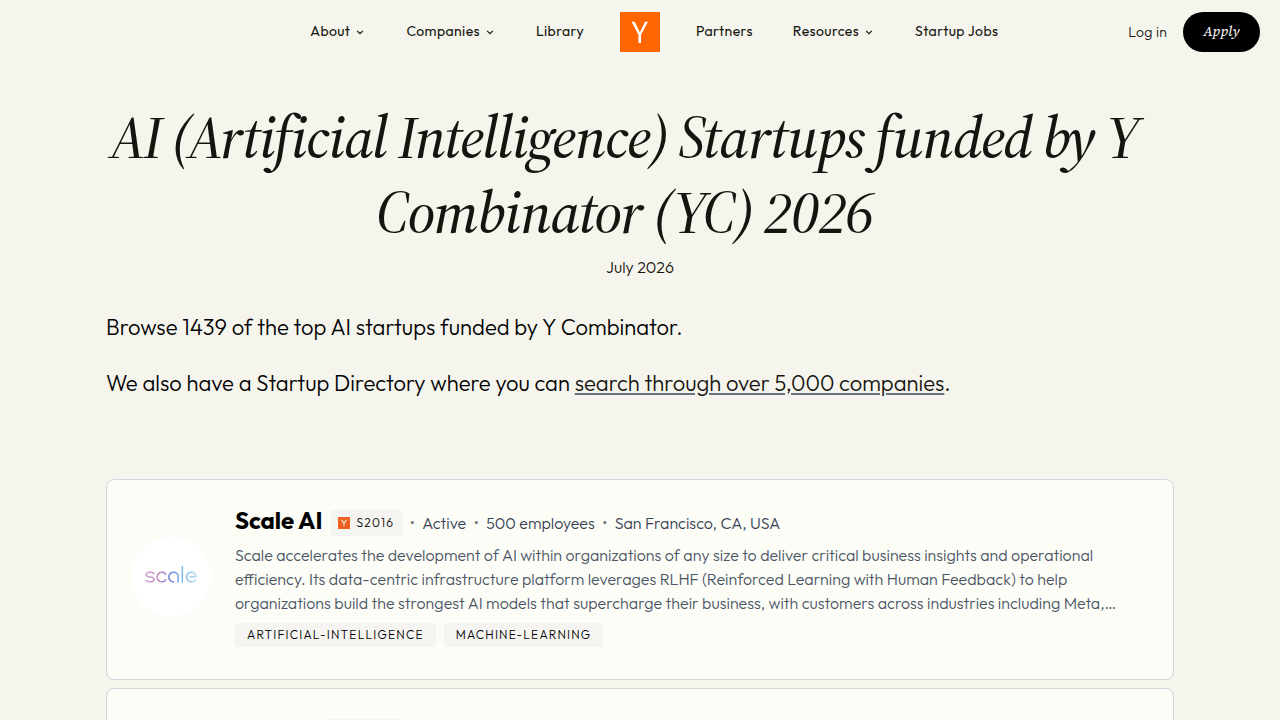
Y Combinator also runs a public directory of every AI startup they have funded. It is a goldmine. You can browse over 1,400 AI companies backed by YC on their Y Combinator AI startups page and dig into their traction, team, and product before making contact.
Angel Networks and Investor Syndicates
Warm intros still dominate. But structured networks make them easier to find. Platforms like AngelList, SeedInvest, and OpenVC connect accredited investors directly with vetted startups. OpenVC provides access to 5,000 to 6,000 early-stage investors including angels, VCs, and family offices. The OpenVC AI investor directory lets you search by check size, stage, and technical expertise. Relevance beats quantity every time here.
These networks also let investors co-invest in syndicates. That means you can write smaller checks alongside a lead investor who does the heavy diligence. It is a smart way to get exposure without doing all the research yourself.
AI-Powered Matchmaking Tools
This is the newest category. Platforms like Metal use machine learning to match investors with startups based on thesis alignment, market timing, and founder fit.
Instead of manually scanning databases, the algorithm surfaces the most relevant opportunities. The best fundraising platforms for AI startup founders from Metal shows how AI-driven discovery can surface investors who are specifically looking for your type of company. For investors, the same tool works in reverse, finding startups that match your investment criteria.
If you want to stay ahead of which startups are gaining traction and which platforms actually work, you can keep up with the latest market intelligence through our guide on the biggest AI companies in 2026. It covers the players shaping the entire deal flow landscape.
Building a Vetted Shortlist: A Step-by-Step Process Using Data
So you have found the platforms where investors connect with AI startups. Now what? The real work begins when you turn a long list of hundreds of names into a shortlist of the right ones. You cannot meet everyone. You need a repeatable process that uses real data, not gut feelings.

Here is a simple three-step framework to build and maintain a strong shortlist.
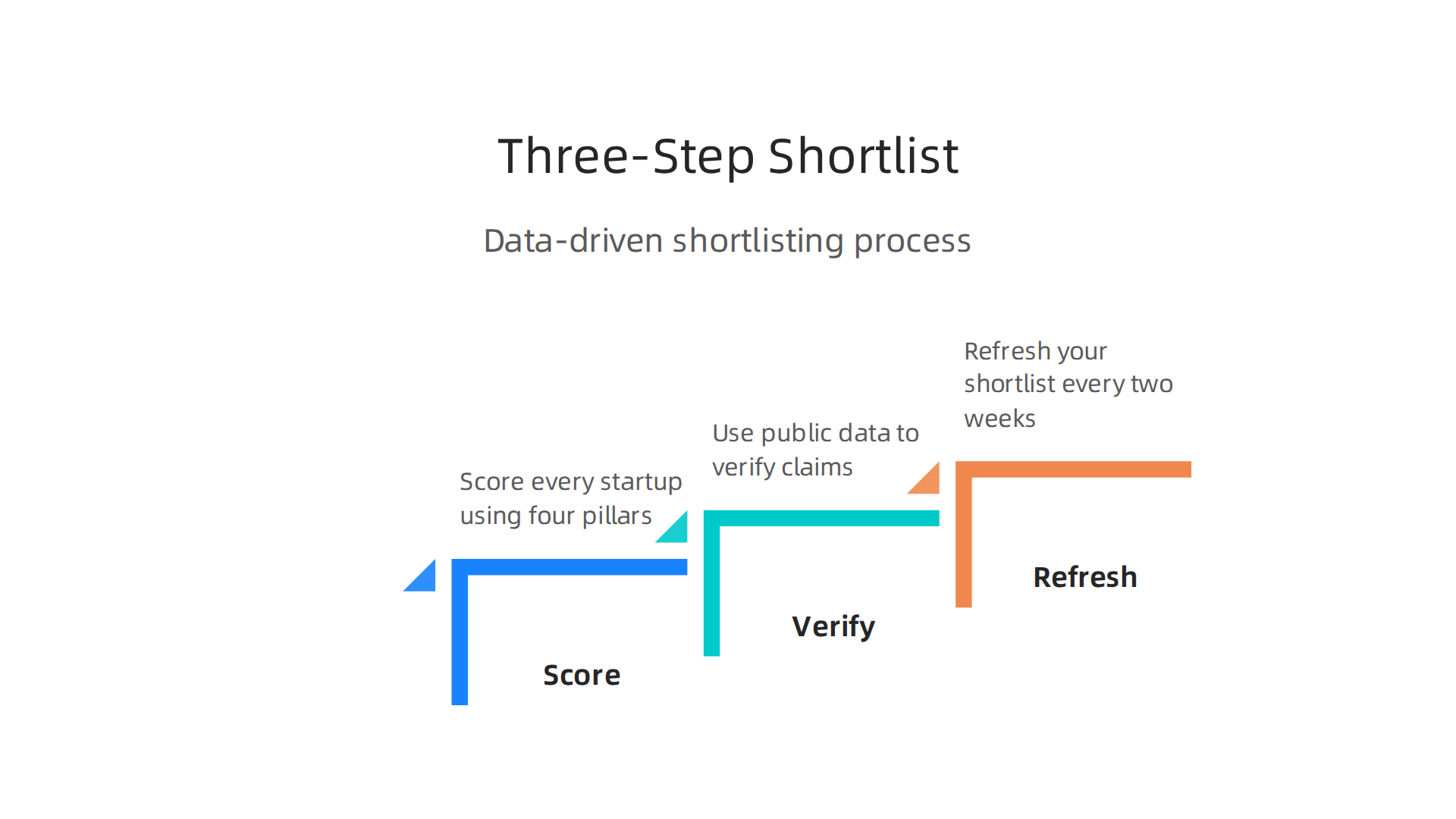
Step 1: Score Every Startup Using Four Pillars
Do not look at pitch decks first. They tell a story, but data tells the truth. Create a scoring system with four categories.
Technology. How real is the AI? Investors in 2026 look for proprietary data and unique model architecture, not just a thin wrapper on top of ChatGPT. The Series A metrics VCs expect in 2026 from CRV show that AI-native companies with genuine technical depth command much higher valuations. Score higher for startups that own their training data or use novel techniques.
Team. Check the founders background. Have they built AI products before? Do they have relevant domain expertise? Look at their LinkedIn histories and past exits. A strong technical co-founder paired with a business-minded co-founder scores well.
Traction. This is the biggest clue. Look for real metrics: monthly recurring revenue (MRR), net revenue retention (NRR), pilot-to-paid conversion rates, and active users. Even at seed stage, many top AI startups show early revenue or strong user growth. Public funding history on Crunchbase or PitchBook tells you who else has already done diligence.
Market fit. Is the problem big? Is the market growing fast? Check the total addressable market and look for signs of product-market fit like customer testimonials or case studies. Startups that solve real pain in healthcare, finance, or enterprise software tend to attract attention from firms like Redbird Capital Partners and Crestline Investors.
Score each startup from 1 to 10 in each pillar and sort by total. That gives you your initial shortlist.
Step 2: Use Public Data to Verify What You See
Pitch decks are polished. Public data is harder to fake. Pull in three data sources:
- Funding history. How much have they raised? From whom? A startup backed by top-tier VCs already passed rigorous screening.
- Patents. AI companies with issued patents for unique models or data processing methods have a moat. Search the USPTO database.
- Hiring trends. Are they hiring senior AI researchers or just salespeople? Rapid hiring in technical roles signals product growth. Flat hiring may signal trouble.
These signals help you cut through the noise. They also reduce how much you rely on founders claims about traction.
Step 3: Refresh Your Shortlist Every Two Weeks
The AI market moves fast. A startup that looked weak last month could close a major partnership or launch a breakthrough product. Set up alerts on Crunchbase, PitchBook, or use an AI-powered scouting tool that monitors changes. If you want to build deeper skills around evaluating these companies, check out this master investing in AI startups guide. It walks through how top investors build conviction.
Keeping your shortlist fresh means you never miss a rising star. And when you combine scoring, public data verification, and regular updates, you turn the chaotic world of startup funding into a clear pipeline of high-conviction opportunities.
To make this easier, you can also stay on top of daily venture capital news and emerging trends. That is exactly why we created The AI Newsletter Worth Reading. It delivers clear daily AI updates straight to your inbox so you never fall behind.
The Role of Data and Analytics in AI Investment Decisions
Building a shortlist is only half the battle. The real edge comes from using data and analytics to make smarter investment decisions. In 2026, top investors rely on platforms that track funding, valuations, and competitor moves in real time.
Market intelligence platforms are the new standard. Tools like PitchBook, Crunchbase Pro, and Affinity use AI to scan thousands of startups and surface the ones that match your investment thesis. They pull in funding history, team backgrounds, and growth metrics automatically. This saves analysts hours of manual research. A guide to 10 AI tools for venture capital firms in 2026 shows how platforms like Vessel and Standard Metrics automate portfolio monitoring and deal sourcing. Instead of checking spreadsheets, investors get live dashboards with early warning signals.
Predictive analytics takes this a step further. Instead of just looking at past data, these models highlight early signals of breakout startups. For example, the AI tools for predicting investor behavior discussed by Qubit Capital use machine learning to score startups based on technical, fundamental, and sentiment signals. They can flag a company weeks before it becomes a hot deal. This forward-looking view helps you get in early, before the competition drives up valuations.
Another major shift is the rise of standardized data rooms. In the past, comparing two startups was like comparing apples and oranges. Each founder used different metrics, different definitions, and different formats. Now platforms like Standard Metrics and Harmonic extract key financial KPIs directly from board decks and spreadsheets. This creates a consistent view across your pipeline. You can compare MRR, net revenue retention, and burn rates side by side with confidence. The AI for venture capital practical guide by Tommaso Maria Ricci explains how structured data agents now interview customers, parse industry reports, and build competitive benchmarks automatically. This means due diligence goes faster and with fewer surprises.
Data and analytics don’t replace human judgment. But they make your judgment sharper. They give you the facts you need to say yes or no with conviction. If you want to dive deeper into the tools that power these workflows, check out this AI tools guide for evaluating and investing smartly in 2026. It breaks down which platforms top investors actually use and how they integrate them into their daily process.
Future Trends and Opportunities in AI Investing
The next few years are shaping up to be a wild ride for anyone watching where AI money flows.

If you want to know where to put your attention and capital, you need to look at the trends that are already forming.
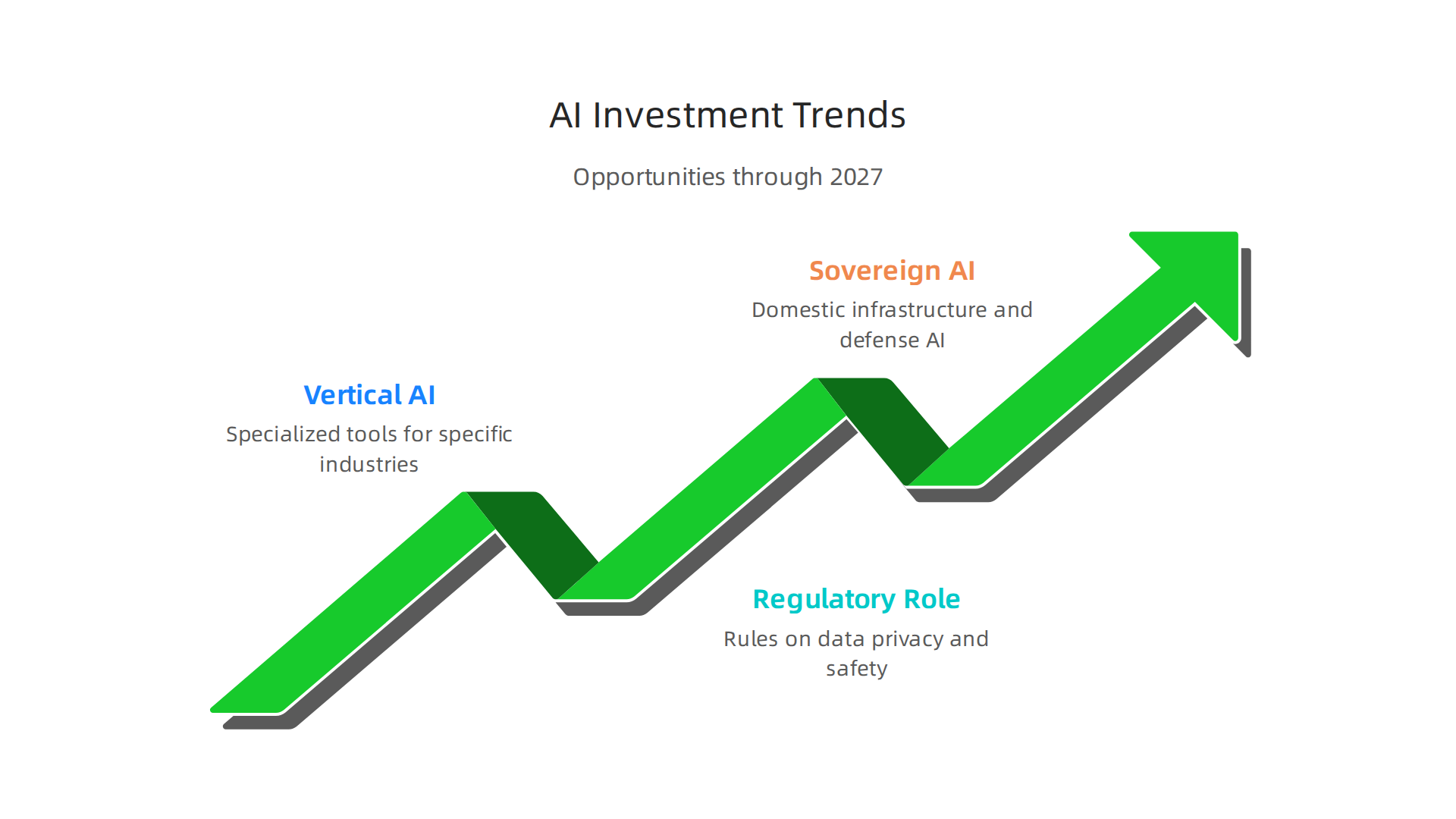
Generative AI and vertical AI applications are expected to capture the most investment dollars through 2027. According to the AI in 2026: Investment, Agentic AI & Business Transformation report, investors are moving beyond generic large language models and focusing on specialized tools for healthcare, legal, finance, and manufacturing. These vertical solutions solve real problems for specific industries, which means they can charge more and grow faster. Generic AI is becoming a commodity. Vertical AI is where the real value lies.
Regulatory developments will also play a huge role in shaping which startups survive and which ones fail. Rules around data privacy, AI safety, and fair use are being written right now in the US, Europe, and Asia. The AI Market Trends 2026: Global Investment, Risks, and … analysis from Morgan Stanley notes that tighter export controls and tariffs could fragment supply chains and raise costs for startups that rely on foreign chips or cloud services. If you are investing, you need to pay close attention to a startup’s regulatory risk profile. Companies that build with compliance in mind from day one will have a big advantage.
Sovereign AI and national security concerns are opening up entirely new investment theses. Governments around the world are pouring money into domestic AI infrastructure, semiconductor manufacturing, and defense-related AI. The US and China are leading the charge, but Europe and the UK are also racing to build their own capabilities. This creates opportunities for startups that work on chip design, data center efficiency, cybersecurity, and military AI applications. Keep an eye on companies that help nations reduce their reliance on foreign technology.
If you want to stay ahead of these trends, you need a steady stream of clear, daily updates. That is exactly what The AI Newsletter Worth Reading delivers. It gives you the essential AI news and analysis without the noise, so you can make smarter investment decisions every day. For more depth on how these trends connect to building a portfolio, check out this guide to master investing in AI startups.
Summary
This article helps investors cut through the noise of a fragmented, high‑velocity AI startup market by explaining where money is flowing, what top investors look for, and which tools make deal sourcing scalable. It reviews 2025–2026 funding trends, shows how large pools of capital and corporate venture arms reshape competition, and emphasizes why geographic and sector breadth matters. The piece breaks down the four evaluation pillars—technology defensibility, team quality, traction metrics, and market fit—and gives concrete Series A benchmarks and scoring guidance. It then maps the best platforms and networks (directories, syndicates, and AI matchmaking) and offers a three‑step, repeatable process to build and refresh a vetted shortlist. Finally, it covers analytics and predictive tools that speed diligence and highlights near‑term trends investors must watch, so readers can source better deals and make higher‑conviction investments.