
Introduction
You have probably noticed something shifting in your daily routine. Maybe you asked your phone to add milk to the grocery list without touching it. Or you fired off a quick message to an AI chatbot to draft an email. Perhaps you let a smart scheduling tool book your next meeting while you stayed focused on something else.
These moments are not just convenient tricks. They are signs of a much bigger change.

In 2026, a personal AI assistant is no longer a futuristic idea. It is a tool millions of people use every day, at home and at work.
But here is the catch. This change is happening fast. Really fast. New tools pop up weekly. Terms like "agentic AI" and "contextual models" get thrown around. It is easy to feel lost in the noise.
The numbers prove just how fast this shift is. The personal AI assistant market is now worth over $4.84 billion and is growing at more than 40% each year. Meanwhile, about 84% of developers already use AI tools in their coding work. That is nearly everyone building the software you rely on.
So how do you keep up? How do you know which assistant actually helps and which one just adds clutter?
This article gives you a clear, practical overview of the personal AI assistant landscape in 2026. We will look at the key technologies driving these tools, what they can do for you right now, and where they are headed next. You will learn the difference between a simple voice bot and a true AI companion that learns your habits and helps you reclaim hours each week.
Whether you want to save time on errands, get better at your job, or simply understand what all the buzz is about, you are in the right place.
Staying informed is half the battle. If you want daily, no-fluff updates on everything happening in AI, you can get clear insights straight to your inbox with The AI Newsletter Worth Reading.
It cuts through the noise so you can focus on what matters.
Ready to dive in? Let us start with the basics of how personal AI assistants actually work and why they have become so essential in 2026.
What Defines a Personal AI Assistant in 2026?
The term "personal AI assistant" used to mean a voice-powered helper that set timers, answered trivia, or played your favorite song. But in 2026, that definition has changed completely. Today, the most powerful personal AI assistant is a proactive, autonomous agent that understands you, predicts what you need, and acts without waiting for step-by-step instructions.
Think about the old Siri or Alexa. You had to say "Hey, set a reminder for 3pm" or "What’s the weather?" The assistant reacted. It did exactly what you said, nothing more. It had no memory of your preferences, no ability to connect your calendar with your inbox, and no way to notice patterns in your behavior.
The new generation of assistants is different. They combine natural language understanding, task automation, deep personalization, and cross-platform integration.

You can talk to them like a human, and they remember who you are. They learn your routines, your work habits, and your communication style. Then they take action. For example, a tool like Lindy can draft your emails, manage your Slack messages, schedule meetings, and even fill out forms across dozens of apps, all without you micromanaging every step. That shift from reactive to proactive is what defines the modern personal AI assistant.
Here are the four key attributes that separate a true 2026 assistant from a simple voice bot:
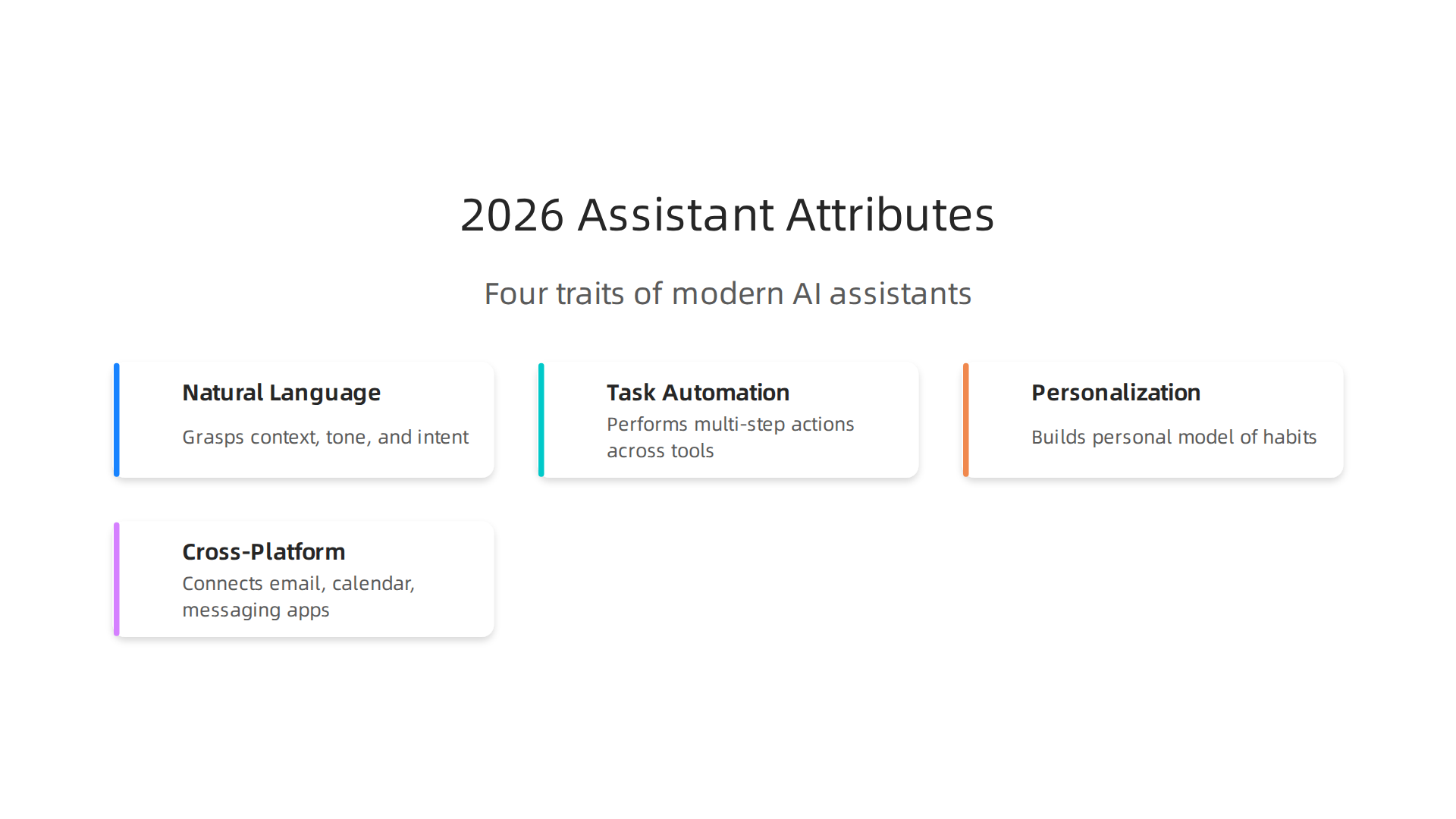
- Natural language understanding: You can speak or type in plain sentences, not rigid commands. The assistant grasps context, tone, and intent.
- Task automation: It performs multi-step actions across your tools, from booking a flight to updating a CRM. You give the goal, and it figures out the steps.
- Personalization: It builds a personal model of your habits, preferences, and ongoing projects. Over time, its suggestions get better.
- Cross-platform integration: It connects your email, calendar, notes, messaging apps, and more. No more toggling between six tabs.
This evolution means an assistant can now manage your inbox overnight while you sleep, or reschedule your entire day when a conflict pops up, without you lifting a finger. If you want to understand how these capabilities link back to the bigger picture of AI agents, our guide on agentic AI vs generative AI explains the underlying technology behind these autonomous actions.

What does this mean for you? It means choosing the right assistant in 2026 is not about picking the one with the best voice. It is about finding a tool that understands your life, remembers your context, and acts on your behalf. The best assistants, according to the latest roundup of the best AI personal assistants of 2026, excel at exactly these two things: execution and memory. They finish tasks across your apps and they remember everything you have told them.
Next, we will look at the top tools on the market and how they compare in real-world use. But first, remember that you can stay ahead of this fast-changing space with daily, curated updates. While the CTA for this section has already been used in the introduction, the smartest move is to keep learning. Let us move on to the comparison.
But before we dive into the comparisons, it helps to understand how we got here. The journey from a simple voice command bot to a proactive autonomous agent happened fast. Very fast.
The Rapid Evolution: From Siri to Autonomous Agents
Let us walk through the key moments that shaped the modern personal AI assistant.
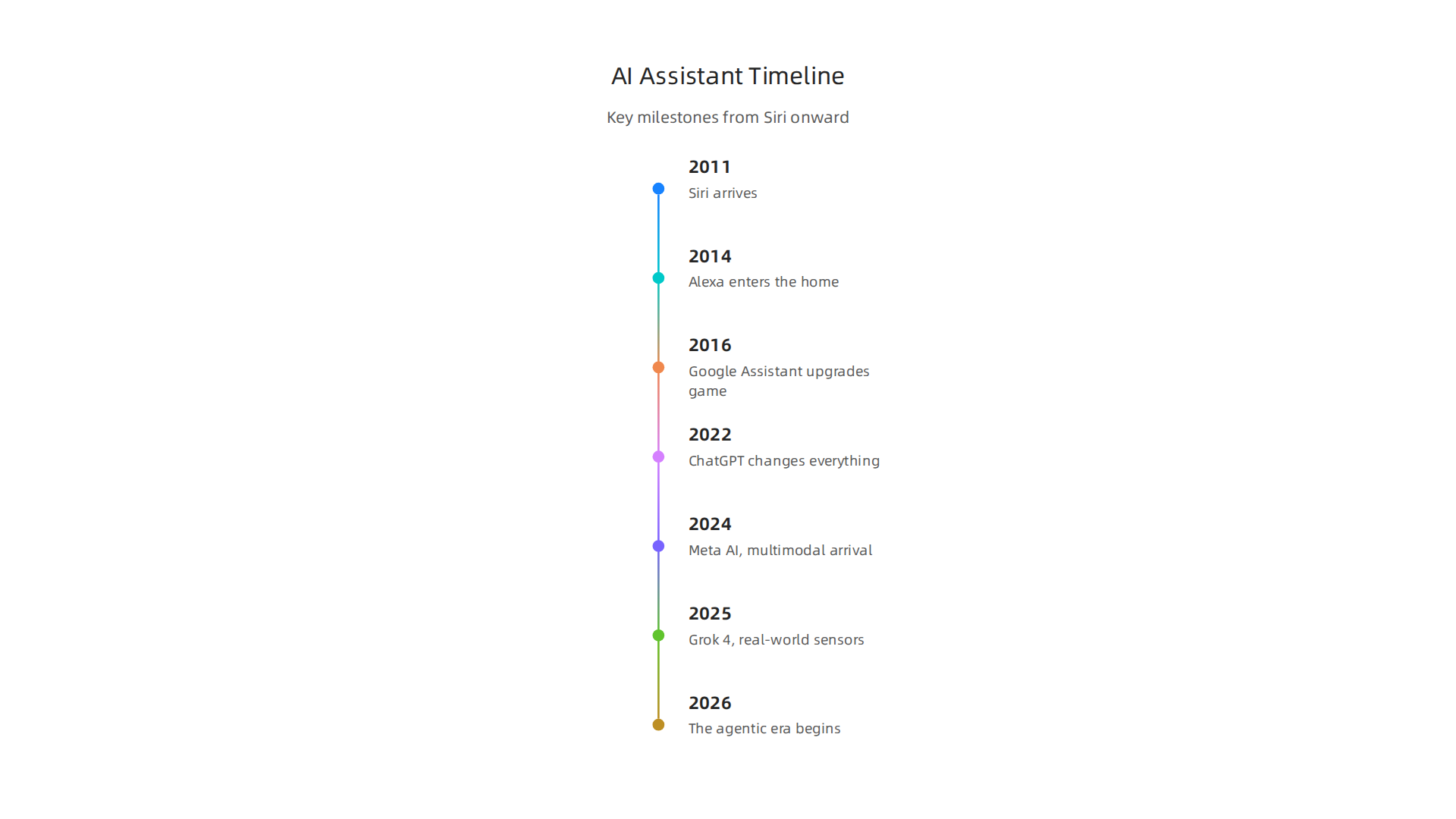
2011: Siri arrives. Apple launched Siri as the first mainstream mobile AI assistant. You could ask for the weather, set a timer, or schedule a reminder. It was a big deal at the time. But looking back, it was just a voice-controlled search tool. It had no memory and no ability to take real actions across apps. The 31 Popular AI Assistants in 2026 roundup lists Siri as the pioneer that started it all.
2014: Alexa enters the home. Amazon introduced Alexa alongside the Echo speaker. Voice assistants moved from phones into living rooms. People started asking for music, news, and shopping lists. But the assistant still reacted. You commanded. It obeyed. Nothing more.
2016: Google Assistant upgrades the game. Google launched Google Assistant as a smarter successor to Google Now. It understood context better and could handle follow-up questions. Still, it was mostly a conversational interface.
2022: ChatGPT changes everything. OpenAI released ChatGPT powered by GPT-3.5. For the first time, millions of people experienced an AI that could hold real conversations, write essays, and even write code. But ChatGPT was still a chatbot. It answered questions and generated text, but it did not take action on your behalf. It had no memory of who you were across sessions.
2024: Meta AI and multimodal arrival. Meta deployed its LLaMA-based assistant across Facebook, Instagram, and Messenger, as well as smart glasses. This was the first mass-market assistant that could generate images, understand context, and work across multiple apps. The shift toward multimodal interaction was on.
2025: Grok 4 adds real-world sensors. xAI launched Grok 4 with camera input and real-time voice reasoning. Your assistant could now see your environment. That was a huge leap beyond text-based chat.
2026: The agentic era begins. Google launched Gemini Live 2.0 with real-time screen context awareness on Android. Amazon announced Alexa+ for business with automated calendar arbitration and CRM sync. Apple released an on-device LLM for Siri that supports natural interruption and multi-app commands. The market report on AI-Powered Personal Assistants Market Size notes that 48% of global enterprises now deploy generative AI assistants for internal help desks, up from 22% in 2024.
The pattern is clear. Each milestone pushed the assistant from reactive to proactive. From single commands to autonomous workflows. From no memory to persistent context that learns your habits.
This evolution is why the best personal AI assistants today are not chatbots. They are digital teammates that execute tasks, remember your preferences, and coordinate across your tools. If you want to see how this fits into the bigger picture of daily life, our guide on AI in everyday life is reshaping work and daily routines covers how these assistants are changing the way we work.
The pace of change is only speeding up. New tools launch every month, and the capabilities grow faster than most people can track. That is why staying informed matters. Getting clear daily AI updates from a trusted source can save you hours of research. You can subscribe to The AI Newsletter Worth Reading to keep up with every major shift without the noise.
Now that you know the road behind us, let us look at the top tools on the market today and see which one fits your life best.
Core Technologies Powering Personal AI Assistants
Before we jump into comparing specific tools, it helps to understand what actually makes them tick. Knowing the core technology behind a personal AI assistant helps you pick the right one for your needs.
It also makes it easier to evaluate new tools as they hit the market. And if you are curious about the tech itself, understanding these basics is a great first step in how to learn AI.
Large Language Models and Multimodal AI
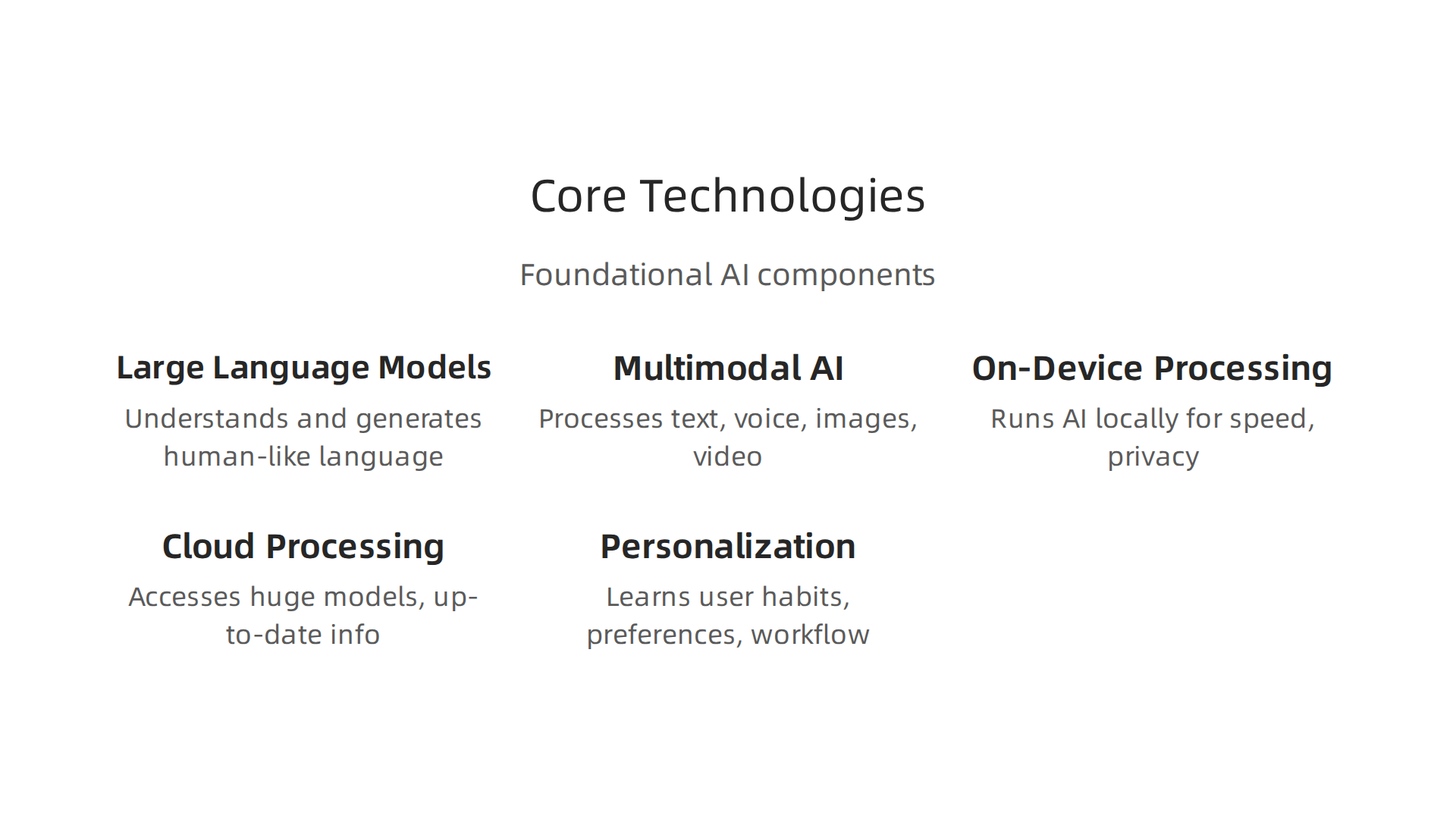
At the heart of every modern personal AI assistant lives a large language model, or LLM. These are neural networks trained on massive amounts of text from the internet, books, and other sources. They learn patterns in language, so they can understand your questions and generate human-like answers. But today’s assistants go beyond text. They are multimodal. That means they can process text, voice, images, and even video all at once. For example, you can show your assistant a photo of a broken appliance and ask it to find a repair part. Or you can speak a question while it reads your screen. The ability to handle multiple formats makes the ai response feel much more natural and useful. If you want a deeper look at how these models work, the guide on building a personal AI assistant in 2026 explains the role of LLMs, retrieval augmented generation (RAG), and API integrations in plain language.
On-Device vs Cloud Processing
Where does your assistant actually run? That split matters more than you might think. Cloud-based assistants, like ChatGPT and Gemini, send your request to powerful servers and send the response back. This gives them access to huge models and up-to-date information. But it raises privacy questions and requires an internet connection. On-device processing runs the model directly on your phone or laptop. It is faster, works offline, and keeps your data local. Apple and Google now push more on-device intelligence for everyday tasks. The trade-off is that on-device models are smaller and less capable than cloud models. Many assistants blend both approaches, using on-device AI for quick responses and cloud AI for complex tasks.
Personalization Through Machine Learning
The best personal AI assistant does not treat every user the same. It learns your habits, preferences, and workflow. This personalization comes from machine learning models that analyze how you interact. Your assistant remembers your meeting schedules, which emails you ignore, and your typical lunch order. Over time, it gets better at predicting what you need before you ask. Some assistants also integrate with your calendar, email, and project management tools to build a persistent memory of your goals. That is the difference between a generic chatbot and a personalized digital teammate. For a broader view of how these technologies come together, our guide on AI and machine learning fundamentals covers the building blocks that make personalization possible.
When you understand the technology behind the tools, choosing the right assistant becomes much easier. You can look for the features that matter most to you, whether that is strong privacy from on-device processing, deep multimodal support, or advanced personalization that adapts over time.
Large Language Models and Natural Language Understanding
Have you ever asked your assistant a follow-up question and it actually remembered what you said earlier? That smooth back-and-forth comes from large language models. LLMs are the brain behind your personal AI assistant. They allow it to hold a conversation, keep track of context, and understand what you mean even when your wording is messy. Without them, you would be stuck repeating yourself over and over.
LLMs learn from huge amounts of text. They pick up patterns in language, so they can predict what comes next. That is why the ai response feels natural instead of robotic. But raw LLMs are not enough to make a truly helpful assistant. That is where fine-tuning and retrieval augmented generation (RAG) come in. Fine-tuning adapts the model to your specific needs, like your writing style or job role. RAG lets it pull in fresh information from your documents or the web to give better answers. This combination makes the assistant more useful for real tasks. If you want to learn more about how the technology works, a guide on core AI concepts gives a clear explanation of LLMs and other building blocks.
Choosing the right model for your personal AI assistant also matters. Different models have different strengths. Some are better for creative writing, others for data analysis. The ability to pick the best model for each job helps your assistant perform better.
If you want to stay on top of the latest breakthroughs in LLMs and personal AI assistants, get clear daily AI updates from The Deep View Newsletter. It keeps you informed without the noise.
On-Device AI and Edge Computing
Now, let’s talk about where all this processing happens. When your personal AI assistant runs on your phone or laptop instead of a distant server, that is on-device AI. Edge computing is the same idea. The AI works right where you are.
The biggest benefit here is privacy. Your questions, your documents, your personal data never leave your device. That matters a lot when you ask your assistant about sensitive topics. Processing everything locally also feels faster. There is no waiting for a server to respond. The ai response comes back almost instantly because it does not travel over the internet.
For this to work well, your device needs special hardware. Modern phones and laptops now include something called a Neural Processing Unit, or NPU. These dedicated AI chips handle the math behind large language models much faster than a regular processor would. Without an NPU, running a powerful model on your device would drain your battery and feel slow.
Companies like NVIDIA are building edge AI platforms specifically for this purpose. You can find a helpful guide to running LLMs locally on edge devices that shows how to set everything up at home or in your workflow.
If you want full control over your data and want your assistant to respond instantly, look into open source AI software for savings and control. This approach puts you in charge.
Top Personal AI Assistant Platforms and Applications (Comparison Table)
Now that you know how on-device AI keeps your data private and fast, let’s look at the actual personal AI assistant platforms you can start using today. In 2026, there are many options. Some work great for writing. Others excel at scheduling or research. The key is matching the tool to what you actually need.
Here is a quick comparison of the most popular platforms.
This data comes from a comprehensive review of the best AI personal assistant apps for 2026.
| Platform | Best For | Standout Feature | Starting Price |
|---|---|---|---|
| ChatGPT | General writing, brainstorming, problem solving | Versatile reasoning and voice mode | Free; $20/month |
| Google Gemini | Google Workspace users | Native access to Gmail, Drive, Docs | Free; $9.99/month |
| Microsoft Copilot | Office and Windows users | Deep integration with Word, Excel, Teams | Included with Microsoft 365 |
| Claude | Long documents and careful writing | Large context window for complex tasks | Free; $20/month |
| Amazon Alexa | Smart home and ambient voice control | Hands free automation across devices | Free (device required) |
Each platform has different strengths. ChatGPT is your best bet for an all around personal ai assistant. It can handle everything from drafting emails to explaining tough concepts. Amazon Alexa still rules the smart home space. And Google Gemini is perfect if you live inside Gmail and Google Calendar.
What really sets these tools apart in 2026 are three things:
Multimodal capabilities. The best assistants can now understand text, images, audio, and even video. You can snap a picture of a whiteboard and ask your assistant to summarize it. Or record a meeting and get an ai response with action items.
Agentic features. Some assistants can take action on your behalf. They can book meetings, send messages, or fill out forms without you clicking every button. This is called agentic AI. To learn more about how this differs from regular generative AI, check out our guide on agentic AI vs generative AI.
Ecosystem integration. The assistant that works inside your existing tools saves you the most time. If you use Google every day, Gemini is a natural fit. If you live in Microsoft Office, Copilot is ready to help.
With so many choices, the best approach is to try a few. Most offer free tiers. Pick the one that feels most helpful for your daily tasks.
If you want to stay ahead of all these fast moving changes, you might enjoy getting clear daily AI updates from The Deep View Newsletter. It will help you understand which platforms matter and why.
Ethical and Privacy Challenges with Personal AI Assistants
A personal AI assistant can feel like magic. It schedules your meetings, drafts your emails, and answers your questions instantly. But behind that magic are real ethical and privacy risks.

Every question you ask and every task you delegate sends data somewhere. If that data is not handled carefully, it can expose your personal life to companies or even hackers.
Data privacy is the biggest concern. These tools need your information to work well. But how much do they keep? Who gets to see it? In 2026, laws like the EU AI Act and the California Consumer Privacy Act (CCPA) are trying to answer these questions. They force companies to be open about what data they collect and how they use it. The rules are getting stricter. For a detailed legal look at these privacy challenges, see this overview on Data Privacy Day 2026.
Security is another major issue. Bad actors can target AI systems to steal sensitive information. That is why the White House recently released an executive order on AI security to fight these threats.

Even without hackers, the answers you get might be biased. An ai response can reflect unfair patterns found in its training data. This is especially dangerous when you use an assistant for hiring advice, health tips, or financial planning.
The rules around AI are changing fast. In the US, states are leading the way. A report on U.S. Privacy and AI Regulations shows how complicated the rules are for companies right now. The best way to protect yourself is to understand the tools you use. Read their privacy policies. Adjust your data settings. And stay informed about how these technologies actually work.
If you want to build a strong foundation, learning the core concepts of computer AI will help you spot risks early. You can also check out the many ways AI is reshaping daily life to see both the benefits and the dangers. The goal is not to fear a personal ai assistant. It is to use one wisely. By staying aware of the ethical and privacy challenges, you can enjoy the help without giving up your safety.
How Businesses and Individuals Are Using Personal AI Assistants
Even with all the privacy and security concerns, people and companies are jumping into a personal AI assistant at record speed. In 2026, the personal AI assistant market is worth about $4.84 billion. And it is growing fast. Experts predict it will hit $19.63 billion by 2030. That is a growth rate of over 40% each year. Why the big rush? Because these tools actually save real time and make life simpler.
Enterprise use: getting more done with less effort
At work, the personal AI assistant has become a must have tool. A recent report shows that workers who use AI assistants regularly save 10 to 12 hours each week on tasks like scheduling, email triage, and meeting summaries. That is a full day of work reclaimed.

Companies are also using AI for data analysis. Instead of spending hours digging through spreadsheets, employees ask their assistant a question and get an instant answer.
Businesses also use these assistants for customer service. Over 78% of organizations now use generative AI in at least one business function, according to AI adoption statistics Q1 2026. From marketing content to personalizing customer recommendations, the list keeps growing.
If you want to see how these tools fit into specific industries, check out this guide on artificial intelligence applications in 2026 from healthcare to finance and beyond. It covers real world examples of how businesses are putting AI to work.
Personal use: your helper at home and on the go
For everyday life, a personal AI assistant does a lot more than set alarms. Smart home control is one of the biggest uses. You can tell your assistant to dim the lights, adjust the thermostat, or lock the doors without moving a finger. Voice assistants like Google Assistant, Alexa, and Siri are still the most popular choices. In 2026, about 39% of people use Google Assistant, 36% use Alexa, and 29% use Siri, based on intelligent virtual assistant statistics.
People also use these tools to learn new things. An AI response can explain a tough concept in simple words or help you practice a new language. Health tracking is another big area. Many folks connect their fitness tracker to their assistant to check steps, heart rate, or sleep quality with a simple voice command.
Nearly 53% of U.S. adults have used generative AI for personal tasks. And 41% of those regular users interact with it every single day. That is a lot of trust in a machine. But when used wisely, an assistant can be like having a smart friend always ready to help.
The key is picking the right tool for your needs and staying informed. One great way to keep up with everything happening in AI is to read a daily newsletter. The AI Newsletter Worth Reading delivers clear, short updates that help you understand new tools and trends without the hype.
Future Trends: What’s Next for Personal AI Assistants?
Imagine your personal AI assistant doing more than just answering questions. What if it started your morning coffee before you even opened your eyes? That future is closer than you think. In 2026, assistants are moving from reactive (you ask, it answers) to proactive (it acts before you ask). This shift is one of the biggest personal AI assistant trends to watch.
Proactive AI agents and multimodal interaction
Right now, most assistants wait for your command. The next generation will learn your routines and jump in automatically. For example, your AI might check your calendar, see you have a flight, and pre‑order an Uber without you saying a word. This proactive behavior relies on the assistant understanding context from multiple sources at once.
That is where multimodal interaction comes in. Instead of just using voice or text, future assistants will combine voice, images, video, and even touch. You could show your phone a picture of a broken part, and the AI response might include a 3D model with repair steps. Already, companies like lucid ai and forefront ai are building tools that blend different input types to give richer, faster answers.
Integration with AR/VR, IoT, and emotional intelligence
Your assistant will soon be everywhere you look. With augmented reality (AR) and virtual reality (VR), it could appear as a hologram in your field of view. Imagine wearing smart glasses and seeing your AI pop up with directions overlaid on the real street. That is already happening in early products. At the same time, the Internet of Things (IoT) means your assistant will control your entire home. Lights, locks, speakers, and even your oven will talk to each other through one central AI.
One of the most exciting trends is emotional intelligence. New assistants are learning to detect your tone of voice or facial expression. If you sound stressed, your AI might play calming music or suggest a breathing exercise. This makes interactions feel more human and caring. To dive deeper into how these changes are happening, check out this overview of multimodal and agentic AI trends for 2026.
Of course, all this intelligence comes with new rules. The European Union’s AI Act introduces transparency rules for AI systems in 2026 that require assistants to clearly label when content is AI-generated. This helps keep trust high as these tools get smarter.
With so much changing fast, staying informed is key. The AI Newsletter Worth Reading delivers clear, short daily updates so you always know what is coming next without the hype.
Conclusion: Navigating the Personal AI Assistant Landscape
The personal AI assistant space has moved fast. In just a few years, these tools went from simple voice commands to proactive agents that understand your context, control your home, and even read your emotions. The numbers back it up. The personal AI assistant market report 2026 shows the market hit USD 4.84 billion this year, with a 42.2% growth rate. That kind of acceleration tells you this is not a passing trend.
You now have a clear picture of the core technologies behind these assistants. Multimodal inputs, emotional intelligence, and integration with AR, VR, and IoT are reshaping what they can do. And ethical guardrails are catching up too. The EU AI Act already requires transparent labeling of AI-generated content, which builds trust as adoption grows.
So what should you do with all this information? First, keep experimenting. Try out different assistants and see which one fits your workflow. Second, stay informed. The landscape changes every week. New tools launch, old ones update, and regulations shift. That is why reliable sources matter.
Picking the right channels to follow can save you hours of sifting through noise. For example, the best AI newsletters for daily briefings give you curated insights without the hype. Industry reports from firms like Research and Markets and McKinsey also provide solid data on adoption and market direction.
The key takeaway is simple. Personal AI assistants are becoming a daily necessity, not a luxury. They save you time, personalize your experience, and keep getting smarter. By understanding how they work and where they are headed, you put yourself ahead. Stay curious, stay informed, and let these tools do the heavy lifting.
Summary
This article explains how personal AI assistants have evolved by 2026 from simple voice bots into proactive, agentic companions that understand context, act across apps, and learn your preferences. It covers the core technologies—LLMs, multimodal AI, on-device vs cloud processing, and personalization—then compares leading platforms and use cases for both individuals and businesses. The piece also highlights practical benefits (time savings, automation), the main privacy and security trade-offs, and the ethical and regulatory landscape shaping adoption. Finally, it outlines future trends like AR/VR integration, emotional intelligence, and agentic workflows, and gives readers a framework for testing and choosing the right assistant for their needs.