
Introduction
The AI sector is on fire in 2026. Funding has hit record levels, and innovation is happening faster than ever. For investors, founders, and analysts, the challenge isn’t finding information. It’s finding the right information.

With thousands of AI companies competing for attention, knowing which ones actually matter can feel impossible. That’s why we created this guide. We wanted to cut through the noise and highlight the top startups that are truly shaping the industry right now.
The numbers tell a powerful story. The combined funding of the most promising privately held AI companies has surpassed $305 billion according to the latest Forbes AI 50 list. Juggernauts like OpenAI and Anthropic alone account for roughly $242.6 billion of that total. These aren’t just big numbers. They signal a fundamental shift in where the tech world is heading.
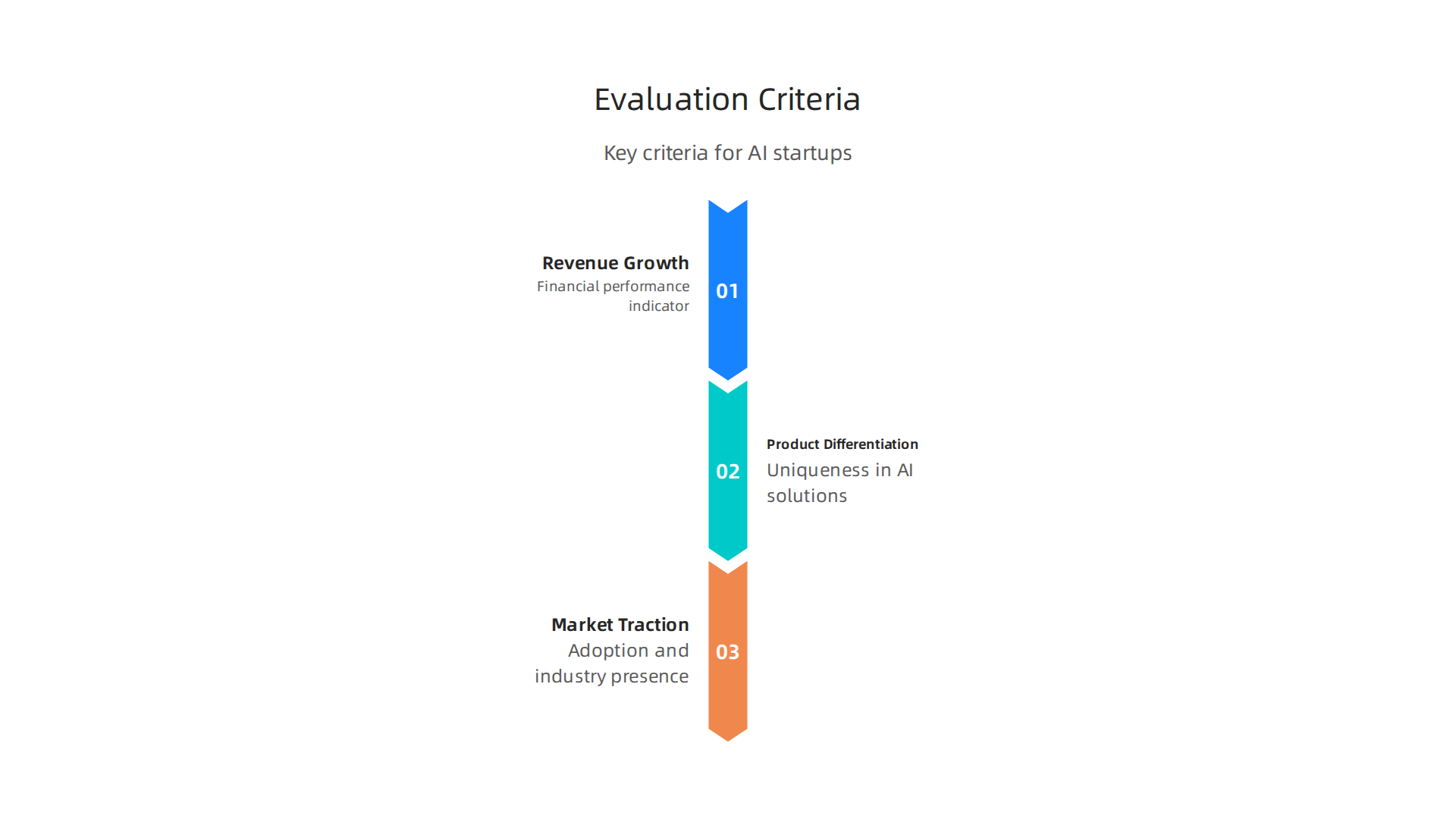
If you are wondering where to focus your attention or your investment dollars, you are in the right place. This listicle covers the hottest AI companies to watch in 2026, from foundation model leaders to vertical AI specialists and infrastructure builders. Each company was evaluated on revenue growth, product differentiation, and market traction.
For a deeper look at the overall landscape, check out our breakdown of the biggest AI companies in 2026.
It covers the trends reshaping the entire industry right now.
Staying informed is half the battle. The other half is having the right information delivered to you daily. That is exactly why so many professionals rely on The AI Newsletter Worth Reading for clear, daily AI updates that cut through the hype.
Let’s dive into the top startups you need to know in 2026.
1. XAI: The Frontier of Explainable AI
You have probably heard that AI models can feel like black boxes. You put data in, and you get an answer out. But how the answer was reached remains a mystery. That is a big problem for industries like finance and healthcare where regulators demand clear explanations for every decision.
That is exactly where XAI comes in. This top startup focuses on explainable artificial intelligence. It builds tools that show you exactly why an AI model made a certain choice. No guesswork. No hidden logic.
This matters more in 2026 than ever before. Regulators around the world are tightening rules on automated decisions. Banks need to explain loan denials. Hospitals need to show how an AI arrived at a diagnosis.

XAI makes that possible with a product that combines cutting-edge research with real-world software that enterprises can actually use.
The results speak for themselves. XAI recently closed a strong Series B funding round. Top VC firms and even some private equity firms jumped in. That kind of investor confidence tells you this startup is solving a very real pain point.
For a deeper look at how AI is already transforming those two industries, check out our guide to AI applications in healthcare and finance. It shows how tools like XAI fit into the bigger picture.
The demand for transparency is only going to grow. If you are looking for top startups that are building something truly useful, XAI deserves a spot on your radar.
2. Cerebras Systems: Redefining AI Hardware
Making AI models explainable is one thing. Running them fast enough to be useful is another. That is where Cerebras Systems comes in. This startup built something totally different: the largest chip ever made.
In 2026, Cerebras is on its third generation wafer-scale engine, the WSE-3. This single giant chip replaces the clusters of smaller GPUs that most AI models rely on. That design gives Cerebras a serious speed advantage in training large neural networks. It also cuts down on the energy and cooling costs that come with running hundreds of separate chips.
The company has become a key player in the AI compute infrastructure race. While Nvidia still dominates the market, well funded alternatives like Cerebras are grabbing attention from researchers who need raw performance without the bottlenecks. Major national labs and research institutions have partnered with Cerebras to work on problems in climate modeling, drug discovery, and fusion energy. Those partnerships validate the technical approach and show real world demand.
Cerebras is clearly one of the top startups in the hardware space. Its approach is unconventional, but the results are hard to ignore. If you are tracking which companies will power the next wave of AI, Cerebras deserves a close look.
For a broader view of the companies leading the AI industry this year, check out our guide to the biggest AI companies in 2026 and the trends reshaping the industry. It puts Cerebras in context with the giants it competes against.
If you want daily updates on startups like Cerebras and the entire AI landscape, get clear insights from The Deep View Newsletter.
3. Anthropic: Safety and Capability
Cerebras is reshaping hardware, but Anthropic is rethinking the software side of AI. This startup proves that safety and strong performance can work together. Its Claude model series has become a favorite for developers and businesses who need reliable, trustworthy AI.
The company builds its models using a method called constitutional AI. That means Claude follows a set of principles to stay helpful, honest, and harmless.

For enterprise clients with strict compliance needs, this is a big selling point. Banks, healthcare providers, and law firms can use Claude without worrying about unpredictable outputs.
Anthropic has also raised enormous sums from top tier venture capitalists. In March 2026, it closed a $30 billion Series G at a $380 billion valuation, making it the second most valuable private AI company in the world, according to the list of top AI startups to watch in 2026. That kind of funding shows deep confidence from the best investors in the industry.
The company’s revenue has grown fast too. By early 2026, Anthropic’s annualized revenue run rate passed $30 billion, driven largely by its coding tools and enterprise contracts. That puts it ahead of some bigger names in revenue.
Anthropic is clearly one of the top startups you should track. Its focus on safety gives it a unique edge in a market that often values speed over caution. If you are thinking about where to put your attention or your money, Anthropic deserves a close look. For a deeper dive on finding and backing companies like this, check out our guide to master investing in AI startups.
4. Scale AI: The Data Engine for AI
If Cerebras and Anthropic are building the hardware and safe software, Scale AI quietly powers the fuel behind them: high-quality training data. Every major frontier model you have heard of likely used Scale’s platform to label, clean, and prepare the data that makes those models smart.
Founded by Alexandr Wang, Scale AI has become the essential middle layer in the AI stack. Top labs like OpenAI and companies in autonomous driving rely on it to turn raw data into usable training sets.

Without this curated data, even the best chips and models would underperform.
But Scale is not just serving private tech companies anymore. A huge part of its recent growth comes from government contracts. The U.S. Department of Defense and other federal agencies use Scale to power AI projects for national security and logistics. This move into public sector work shows real market diversification and a long-term revenue base.
The demand for curated data is exploding. As more industries adopt AI, the need for clean, labeled data grows. Scale’s revenue reflects that trend. The company has seen strong growth year over year, and it remains one of the most valuable private AI companies in the world.
In 2026, AI captured roughly 80% of global venture funding according to the AI Captured 80% of Global Venture Funding report. That massive flow of capital goes to companies like Scale that provide the critical infrastructure for AI development.
For anyone tracking the top startups in the AI ecosystem, Scale belongs on the shortlist. It is the data engine that feeds the frontier. To see how Scale fits alongside the biggest players, check out our guide to the biggest AI companies in 2026 and the trends reshaping the industry.
If you want daily updates on companies like Scale and the entire AI landscape, you should try The Deep View Newsletter. It delivers clear AI insights straight to your inbox without the hype.
5. Cohere: Enterprise LLM Solutions
After looking at the data engine behind AI, let’s talk about a company that focuses on making large language models actually useful for businesses. That company is Cohere.
Cohere takes a different path than some of the flashier AI labs. Instead of building general chatbots for everyone, Cohere builds secure and customizable LLMs for corporations. This is a big deal for companies that cannot afford to share their private data with public AI models.
Cohere’s models run in your own cloud environment or on-premise. That means your sensitive information stays inside your walls. For banks, hospitals, and law firms, this is a must-have feature.
Another thing that sets Cohere apart is its multilingual strength. Its models work well in many languages, not just English. This makes it a great fit for global companies that need localized AI tools.
Recent partnership deals with major cloud providers have also boosted Cohere’s reach.
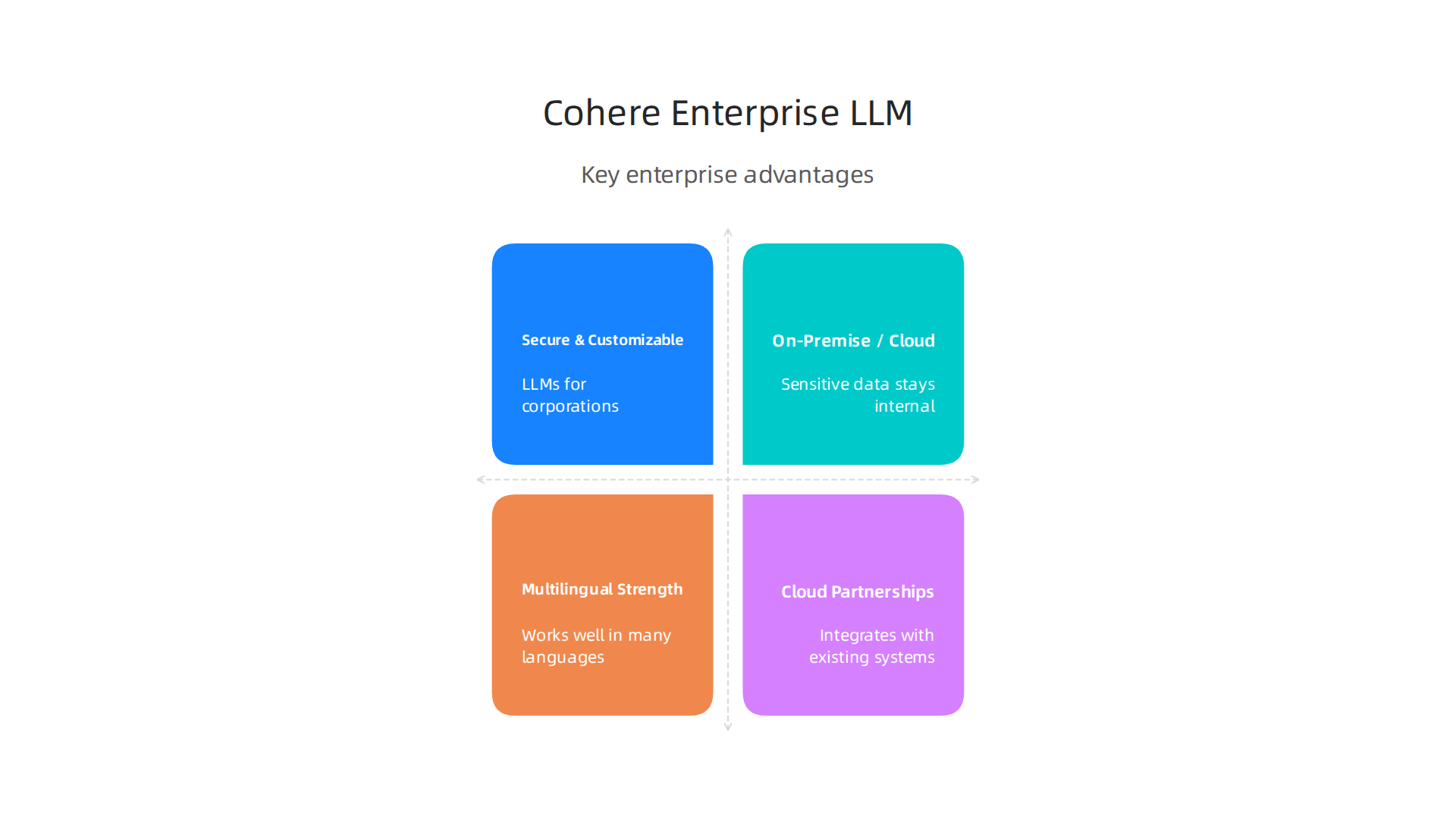
By working with giants like Google Cloud and Oracle, Cohere makes it easy for enterprises to plug AI into their existing systems.
In 2026, enterprise AI is a huge market, and Cohere is positioned as one of the top startups in this space. It has attracted investment from some of the top vc firms in the world, showing strong confidence in its approach. According to a guide on top VCs investing in AI in 2026, enterprise and B2B AI is a major focus for several leading funds.
To see how Cohere’s enterprise focus compares with other major players, check out our guide to mastering AI for enterprise software companies. That page walks you through implementing AI smartly in a business setting.
Cohere proves that not every AI company needs to build a consumer hit. Sometimes the real value is in helping other businesses get AI right.
6. Synthesia: AI Video Generation
Another area of AI that has taken off in 2026 is video creation. And the company leading this space is Synthesia.
Synthesia builds hyper-realistic AI avatars that can speak any script you give them. You type your words, pick an avatar, and the tool generates a professional video in minutes.
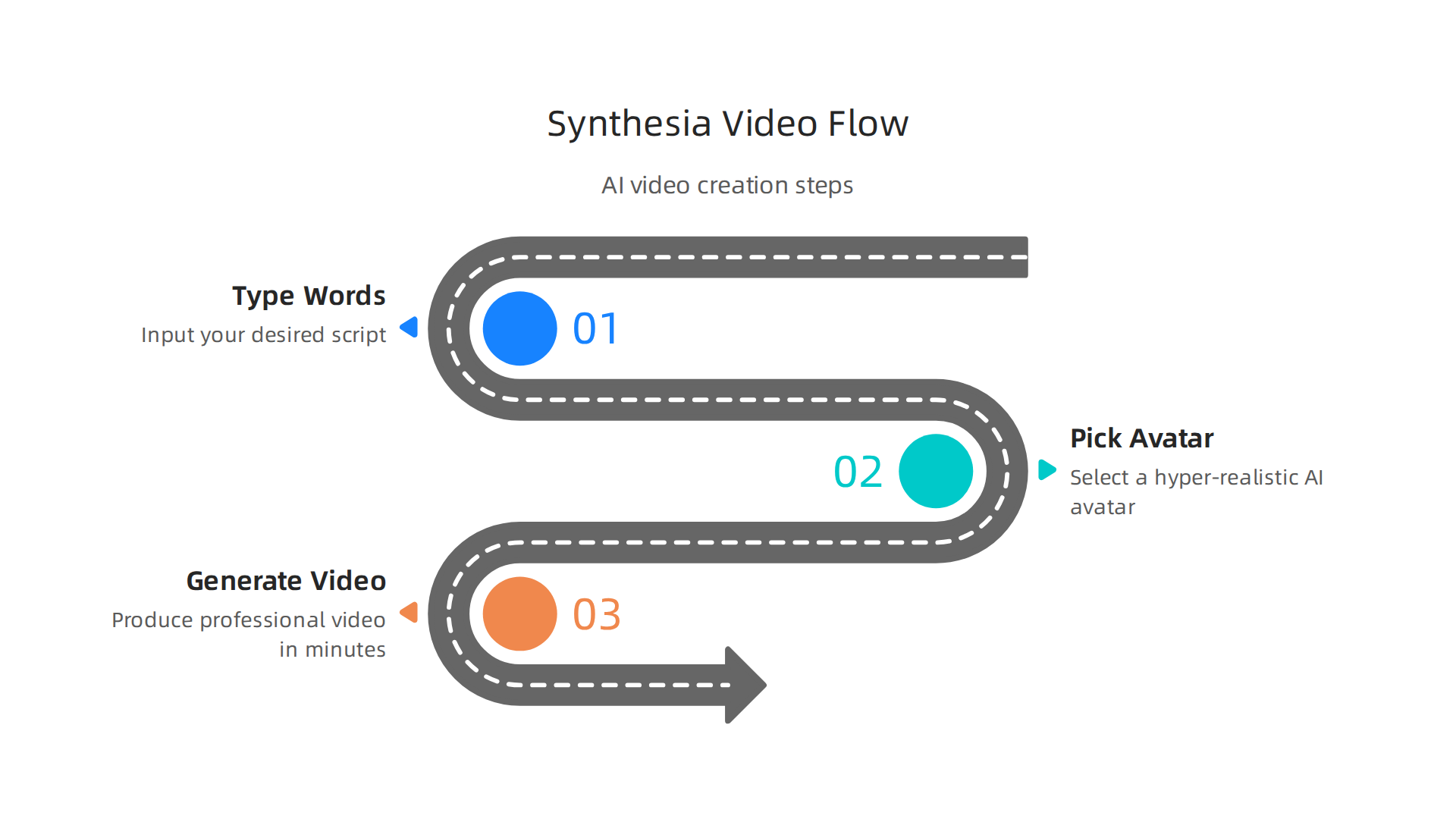
No cameras, no actors, no editing skills needed.
For businesses, this is a game changer. Making training videos, product demos, or internal updates used to cost thousands of dollars and take weeks. Now it takes a few clicks. The avatars look so natural that viewers often think a real person is speaking. And they work in over 120 languages, which is huge for global teams.
Enterprise adoption has been massive. Companies across banking, retail, healthcare, and tech have switched to Synthesia to produce content faster and cheaper. The platform is also popular with educators and marketers who need to create personalized video at scale.
Synthesia recently raised another big funding round aimed at real-time personalized video. Imagine a sales video that automatically changes the product name, customer name, and pricing for every viewer. That is the future they are building.
The company is now one of the top startups in AI, backed by some of the top vc firms in the world. The broader AI boom is powering this growth. In fact, AI captured 80% of global venture funding in Q1 2026, with video generation being a major focus area.
To dive deeper into how text-to-video tools work and which platforms are best, check out our full guide on text-to-video AI in 2026.
If you want to stay updated on fast-growing AI companies like Synthesia, consider getting the daily briefing that industry professionals trust. Subscribe to The AI Newsletter Worth Reading for clear daily updates on the biggest AI companies and breakthrough tools.
7. Databricks: Unified Analytics for AI
Databricks is one of the most important top startups in the AI infrastructure world. If you have heard of companies building powerful AI models, Databricks is likely the engine running behind the scenes. Their platform lets developers and data scientists build, train, and deploy AI models at scale on a single unified system.

What makes Databricks stand out is their focus on the data layer. AI models are only as good as the data they learn from. Databricks gives companies a way to organize, clean, and manage all that data in one place. Then they can plug in AI models on top. This approach has made them the go-to platform for thousands of enterprises, from banks to healthcare providers.
A big move came when Databricks acquired MosaicML in 2023. That deal gave them the tools to help companies train their own large language models (LLMs) without relying on expensive cloud APIs. In 2026, MosaicML is a core part of the Databricks product, letting businesses customize open-source models with their own private data. This makes Databricks a serious player in the LLM ecosystem.
The company is also a favorite among top vc firms. Over the years, they have raised billions from investors like Andreessen Horowitz and Tiger Global. In late 2024, they closed another massive funding round at a $43 billion valuation. Many analysts now expect a huge IPO in the near future. That is one reason Databricks remains a top investment target for both venture capital and private equity firms eyeing the next big public AI company.
In the broader AI landscape, companies like Databricks are helping to drive what experts call a new era of intelligent systems. As noted in predictions for 2026, enterprises are moving beyond basic AI experiments to building integrated systems that handle complex workflows. Databricks sits right at the center of that shift.
If you want to understand how to evaluate and invest in fast-growing AI platforms like Databricks, check out our guide on how to master investing in AI startups. It covers the key metrics and strategies to spot the next breakout company.
8. Hugging Face: The AI Community Hub
If you have ever used an open-source AI model, there is a good chance you got it from Hugging Face. Think of it as the GitHub of artificial intelligence. It is the central place where developers, researchers, and companies share their trained models, datasets, and AI apps with the world.
What makes Hugging Face special is its focus on community and collaboration. Instead of every team training a model from scratch, they can grab a ready-made model from Hugging Face, fine-tune it with their own data, and deploy it fast. This cuts down weeks of work and makes AI accessible to smaller teams and independent developers.
In 2026, Hugging Face hosts hundreds of thousands of models. From text generation to image recognition to voice cloning, you can find almost any type of AI model there. Big tech companies like Microsoft, Google, and Amazon also partner with Hugging Face to make their models available on the platform. This keeps the ecosystem growing and helps new top startups enter the AI space without needing massive budgets.
The rise of open-source models is one of the most important shifts in AI right now. According to predictions from experts, we are seeing major open-source AI breakthroughs in 2026 that challenge the dominance of closed, proprietary systems.
Hugging Face sits at the center of this trend, giving anyone the tools to experiment, learn, and build.
For people who want to understand how open-source AI actually works in practice, reading our guide on open-source AI software is a great next step. It breaks down cost savings and control benefits for real teams.
If you want to stay on top of all these fast-moving developments in AI, signing up for a daily briefing can make a huge difference. Get clear daily AI updates from The Deep View Newsletter. It helps you cut through the noise and focus on what actually matters in the AI world each day.
Summary
This article highlights the top AI startups to watch in 2026, profiling companies that are shaping the industry across explainability, hardware, foundation models, data infrastructure, enterprise LLMs, and generative media. It explains why these names matter by citing recent funding, revenue traction, and strategic partnerships, and it describes the specific problems each startup solves—like XAI for regulatory explainability, Cerebras for wafer-scale chips, and Synthesia for text-to-video. The guide covers how companies were evaluated (revenue growth, product differentiation, market traction) and points to real-world demand from enterprises and governments. Readers will come away knowing which firms are driving core AI layers, where investors and buyers are focusing, and practical ways to follow or evaluate these startups. The piece also situates these companies within broader trends—open-source models, enterprise adoption, and rising regulatory pressure—so you can prioritize attention or capital more confidently.