

Introduction: Navigating the New Frontier of AI
It feels like every week brings another jaw-dropping breakthrough in AI. One day a new model passes PhD-level science exams. The next day a startup claims its magic AI can write code better than seasoned engineers. Keeping up is exhausting. And honestly, separating real progress from hype has never been harder.
That’s exactly why this guide exists. We are living through a historic shift. The global AI market is projected to grow from $375.93 billion in 2026 to over $2.48 trillion by 2034, according to the latest Artificial Intelligence (AI) Market Global Report 2034.

That kind of growth tells you something big is happening.
The problem is that most coverage focuses on flashy headlines instead of practical, useful information. You need a clear map. You need to know which future tools AI will actually change how you work, invest, and plan. You need honest answers about AI development trends and which AI systems are worth your time.
This guide provides exactly that. We have combed through the most credible industry reports, expert interviews, and venture funding data to deliver a structured overview of the most promising emerging AI technologies and concepts in 2026. No fluff. No hype. Just actionable insights.
For a deeper look at how AI is reshaping specific fields, check out our roundup of artificial intelligence applications in 2026 covering healthcare, finance, and more.
Staying ahead in this fast-moving space takes consistent effort. To get clear daily AI updates without the noise, consider The AI Newsletter Worth Reading.
It delivers curated analysis right to your inbox so you never miss what matters.
Foundation Models Go Multimodal: The Power of Unified AI
Remember when AI could only work with text? Those days are over. In 2026, the biggest shift in future tools AI is the move toward multimodal foundation models. These are AI systems that can understand and generate content across text, images, video, and audio all at once.
Think about what that means. Instead of using one tool to write a report and another to create images, a single model can do both.

It can look at a photo, describe what it sees in words, and then create a matching video clip. That kind of unified intelligence was pure science fiction just a few years ago.
The Big Three Go Multimodal
OpenAI, Google DeepMind, and Anthropic are leading this charge.
Their latest models are built to handle multiple types of data from the ground up.
Google’s Gemini 2.0 was designed natively multimodal from the start. According to the Spring 2026 AI model rankings, Gemini shows particular strength in visual reasoning tasks. That means it can analyze charts, diagrams, and real-world images with impressive accuracy.
OpenAI’s GPT-5 series and Anthropic’s Claude 4 models are not far behind. They can now process images, understand audio, and even work with video. The competition is pushing AI development forward faster than ever.
What Multimodal Models Actually Do
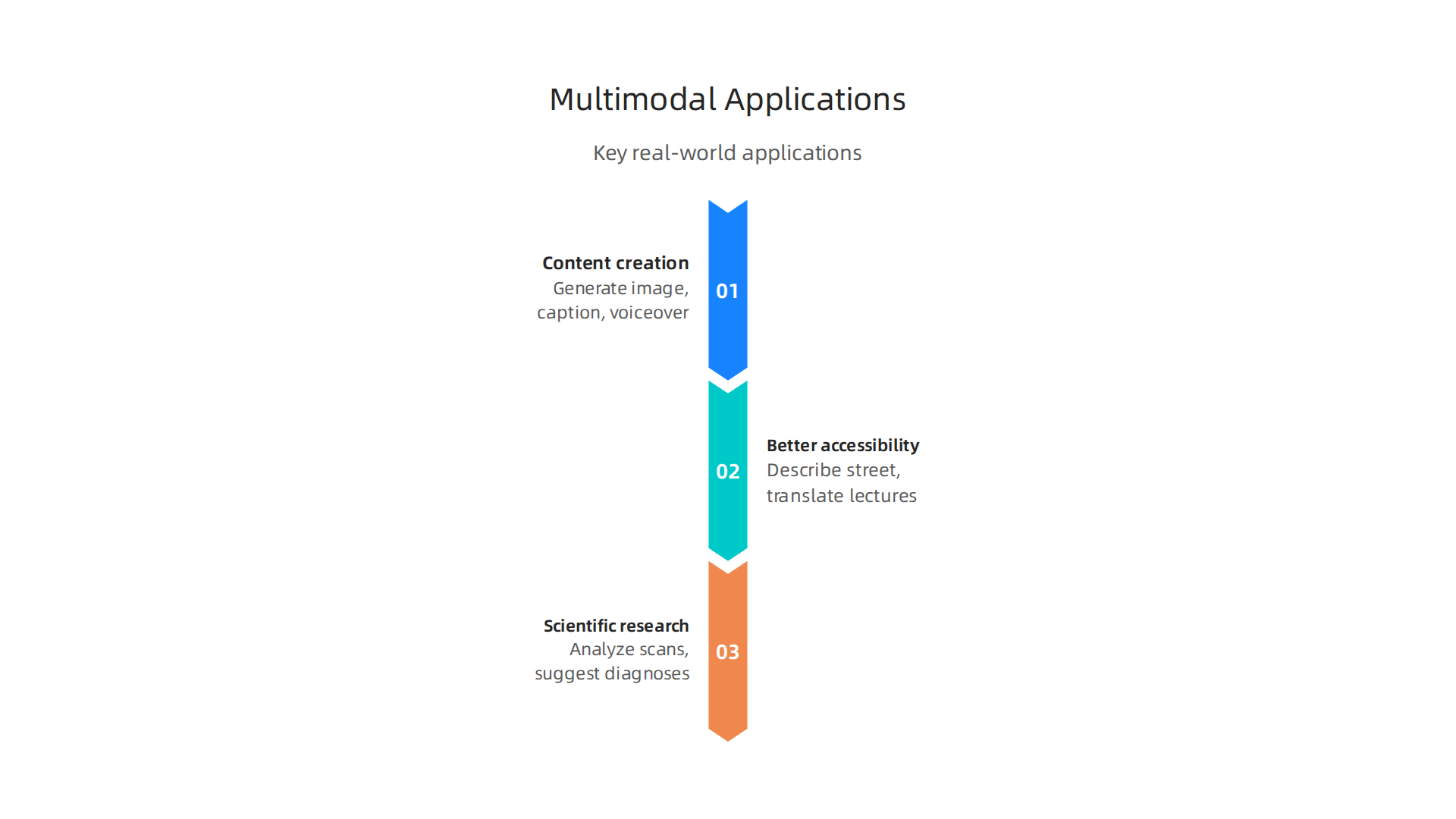
So why does this matter for you? Here are three real-world applications:
-
Content creation on steroids. You can describe a scene in plain language, and a multimodal model will generate the image, write the caption, and even produce a voiceover. No need to jump between different apps.
-
Better accessibility tools. Imagine an AI that can look at a busy street and describe every obstacle to someone with vision loss. Or one that translates a spoken lecture into captions and diagrams in real time.
-
Scientific research breakthroughs. Multimodal models can analyze medical scans, read research papers, and suggest diagnoses all in one workflow. This speed is changing how labs work.
The Real Benchmark Results
The numbers back up the hype. According to the Flagship Model Report, GPT-5.1 scored 85.4% on the Massive Multi-discipline Multimodal Understanding benchmark, while Gemini 3 Pro hit 81.0% and Claude Opus 4.5 reached 80.7%. These scores show that AI systems are now seriously good at reasoning across text and images.
For practical everyday use, the best AI model comparison in 2026 notes that Gemini 2.5 Flash offers the best price-to-performance ratio for multimodal tasks. If you need deep analysis, Claude Opus 4.6 leads on complex reasoning. The choice depends on what you need.
What This Means for You
The era of single-purpose AI tools is ending. The magic AI that futurists promised is becoming reality. Not because of some secret breakthrough, but because foundation models now combine skills that used to live in separate boxes.
If you want to see how these multimodal capabilities apply to video creation specifically, check out our guide to text to video AI in 2026.
The next few years will only accelerate this trend. Models that can see, hear, read, and speak will become the new normal. And the tools built on top of them will change how we create, learn, and solve problems.
Agentic AI: From Chatbots to Autonomous Action
Multimodal models are amazing at understanding and creating content. But they still mostly wait for you to ask. You type a prompt, they respond. You ask again, they answer again. That is useful, but it is not truly autonomous.
Agentic AI changes that. Instead of just answering questions, AI agents can plan, use tools, and complete complex tasks on their own. You give them a goal, and they figure out the steps.

Think about an AI that can book your flight, check your calendar, write a summary of the meeting you missed, and email it to your team. All without you guiding each step. That is the promise of agentic AI systems in 2026.
How Agentic AI Works
An agent uses a large language model as its brain. But it also has access to tools. It can browse the web, run code, query databases, and call other APIs. The agent plans a series of actions, executes them, checks the results, and adjusts if needed.
Frameworks like AutoGPT, CrewAI, and LangGraph provide the structure to build these agents reliably. According to the top AI agent frameworks of 2026 article, LangGraph has emerged as a leading standard for production-grade systems because it emphasizes governance, safety, and observability.
The Main Frameworks in 2026
The landscape has exploded. Microsoft rebuilt AutoGen from scratch. OpenAI, Anthropic, and Google all launched their own agent development kits. But some open source frameworks remain the most popular.
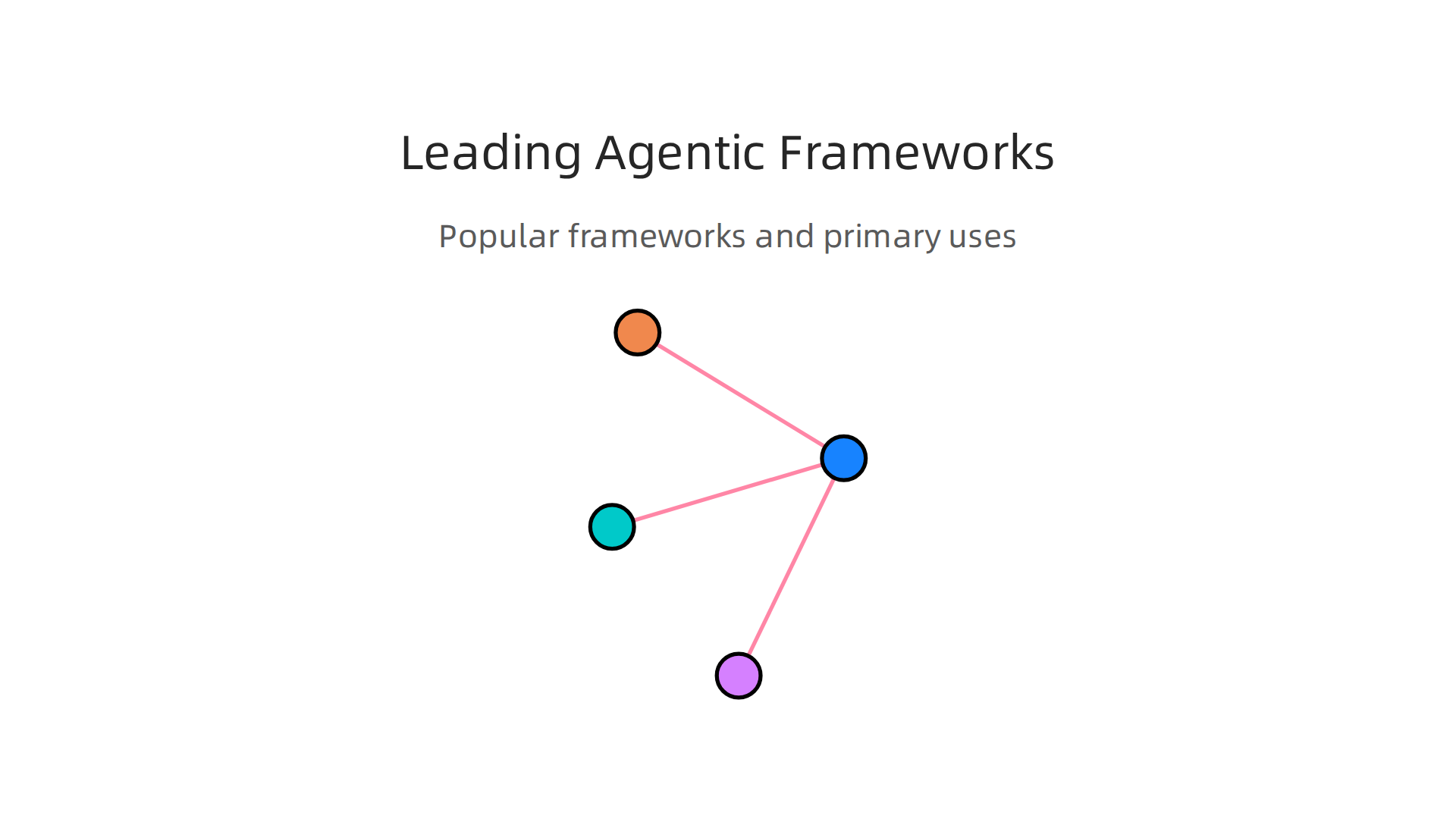
- LangGraph – Best for complex, stateful workflows where you need control and predictability. It uses stateful graphs to manage agent interactions.
- CrewAI – Perfect for role-based teams of agents. You can assign one agent as a researcher, another as a writer, and let them collaborate.
- AutoGen – Focused on conversational multi-agent systems. Agents talk to each other, disagree, and improve solutions together.
- LlamaIndex – Great for knowledge-heavy agents that need to search and understand large amounts of data.
The complete guide to AI agent frameworks in 2026 lists PydanticAI as a favorite for engineers who prioritize reliability and type safety. If your task requires production grade code quality, that might be your best bet.
Real World Use Cases
Companies are already using agentic AI for:
- Customer support – Agents that can look up orders, process refunds, and escalate issues without humans.
- Software development – Agents that write code, run tests, and even deploy updates.
- Data analysis – Agents that pull data from multiple sources, clean it, run models, and generate reports.
For example, a marketing team could use an agent to monitor social media, draft responses, schedule posts, and track campaign performance. All in one automated workflow.
The Hard Parts
Agentic AI is powerful but not perfect. The biggest challenges in 2026 are safety and reliability. An agent that takes actions on its own can make mistakes. If it books the wrong flight or deletes an important file, the consequences are real.
That is why most production agents include human in the loop checkpoints. The agent suggests actions, but a person approves them.
Integration with existing enterprise systems is another hurdle. Many companies run on old software that is not designed to talk to AI agents. Frameworks like Microsoft Semantic Kernel focus on solving exactly that problem for large organizations.
What This Means for You
Agentic AI is moving from demos to real products. If you want to understand how to evaluate these tools for your own work, check out our guide to evaluating AI tools in 2026. It covers exactly what to look for when choosing an agent platform.
The era of passive chatbots is ending. The next stage of AI development is about agents that do, not just talk.
And to stay ahead of the curve, you need clear, daily insights. The AI Newsletter Worth Reading delivers exactly that straight to your inbox every day. No fluff, just the developments that matter for your work and investments.
Edge AI: Bringing Intelligence to the Device
All the AI we talked about so far runs in the cloud. You send your data to a server, it processes it, and sends the result back. That works great, but it has two big downsides. First, it adds a delay. Every round trip to the cloud takes time. Second, your data leaves your device. That is a problem for privacy.
Edge AI solves both problems. It runs the AI model directly on your phone, camera, smartwatch, or sensor. No cloud needed. The magic of AI happens right where you are.
Why Edge AI Matters in 2026
Think about a factory robot that needs to spot a defective part in milliseconds. If it has to ask the cloud every time, the part is already past. Edge AI lets the robot decide instantly. The same goes for a self driving car that needs to recognize a pedestrian without any lag.
Privacy is the other big win. When your health data or personal video stays on your device, nobody else sees it. Apple, Google, and others have made on device processing a major selling point. The 2026 iPhone and Pixel phones run powerful language models locally for tasks like smart replies and photo editing.
Hardware That Makes It Possible
The real breakthrough came from silicon. Companies like NVIDIA, Qualcomm, and Apple designed chips specifically for on device AI. Apple’s Neural Engine in the M4 and A18 chips can process trillions of operations per second. Qualcomm’s Snapdragon X Elite brings desktop class AI to laptops.
These chips are so fast that huge models can run locally. For instance, the Gemini 2.5 Flash hitting 347 tokens per second makes real time on device inference practical. Models that once needed a server now fit in your pocket.
Where Edge AI Is Used Today
Manufacturing is a huge adopter. Smart cameras on assembly lines check every product for defects instantly. No cloud connection needed.
In healthcare, devices like portable ultrasound machines use AI to help doctors spot problems right at the bedside. The data never leaves the hospital.
Smart cities use edge AI in traffic cameras to manage intersections in real time. The system reacts to traffic jams immediately, not seconds later. For a deeper look at how AI is transforming different industries, check out our article on artificial intelligence applications in 2026 from healthcare to finance and beyond.
The Future of Edge AI
Edge AI is still growing fast. By the end of 2026, experts predict most new smartphones will have built in AI chips that can handle large language models. That means your phone will be a full AI device, always ready, always private.
The combination of edge AI with agentic AI is especially exciting. Imagine an agent that lives on your phone, watching your calendar and messages, and taking actions without ever sending your data to the cloud. That is the next wave of future tools AI.
Edge AI is not just a trend. It is how we bring intelligence back to the user, where it belongs.
AI for Scientific Discovery: Accelerating Innovation
Edge AI lets your devices think fast. But AI is also thinking fast in laboratories and research centers around the world. Scientists are using ai systems to solve some of humanity’s hardest problems. Drug discovery, materials science, and genomics are all being transformed by machine learning models that learn patterns no human could spot alone.

Faster Drug Discovery
Drug development used to take over a decade and cost billions. Now AI is cutting both time and money. Take AlphaFold from DeepMind. It predicted the shape of almost every known protein. That is a huge deal because protein shape determines how a drug attaches and works. Before AlphaFold, figuring out one protein structure could take years.
Then there are tools like GNoME (Graph Networks for Materials Exploration). It discovered millions of new crystal structures that could lead to better batteries, solar panels, and electronics. And generative chemistry models can design entirely new drug molecules from scratch in days instead of months.
The numbers back this up. As of early 2026, over 173 AI-originated drug programs are in clinical development. AI-discovered molecules have an 80 to 90 percent success rate in Phase I trials, compared to a historical average of about 52 percent. That is a massive leap. You can read more detailed stats in this overview of AI applications in the drug development pipeline.
LLMs as Research Assistants
Large language models are not just for writing emails or generating code. Companies are fine tuning them to read millions of scientific papers and summarize findings. These ai development tools help researchers spot connections across fields that would otherwise take years of reading.
Imagine you want to know if a certain gene is linked to a disease. Instead of digging through hundreds of papers, an AI can synthesize the evidence in seconds. It can even generate new hypotheses for experiments. This speeds up the whole research process.
Pharma Companies Are All In
Big pharmaceutical companies are not waiting around. They are putting AI at the center of their R&D. Companies like Novartis, Pfizer, and Merck now have AI teams that work alongside chemists and biologists. The goal is simple: find the best drug candidates faster and cheaper.
The result is that what used to take six years in preclinical work now takes as little as 30 months. For example, Insilico Medicine moved an AI designed fibrosis drug from discovery to preclinical testing in just 30 months. That is a record.
If you are interested in how to choose and invest in these kinds of breakthrough technologies, our guide to evaluating and implementing AI tools walks through the process.
The Bottom Line
AI for scientific discovery is moving from hype to real results. The first fully AI discovered drug could get FDA approval as early as 2027. That would be a milestone for future tools ai. And it would prove that the magic ai happening inside those models is not just clever tricks. It is a genuine way to speed up innovation and save lives.
Keeping up with these fast developments is hard. But you do not have to do it alone. The best way to stay informed is to get clear daily updates. That is exactly what The AI Newsletter Worth Reading delivers straight to your inbox.
Navigating Regulation and Governance in the AI Era
Powerful AI systems are not just changing science and business. They are also changing how governments write the rules. As we look toward future tools ai, regulation is becoming a big part of the picture. Countries are stepping in to make sure this technology stays safe, fair, and trustworthy.
The biggest move so far is the European Union’s AI Act. It is the first complete legal framework for AI in the world.
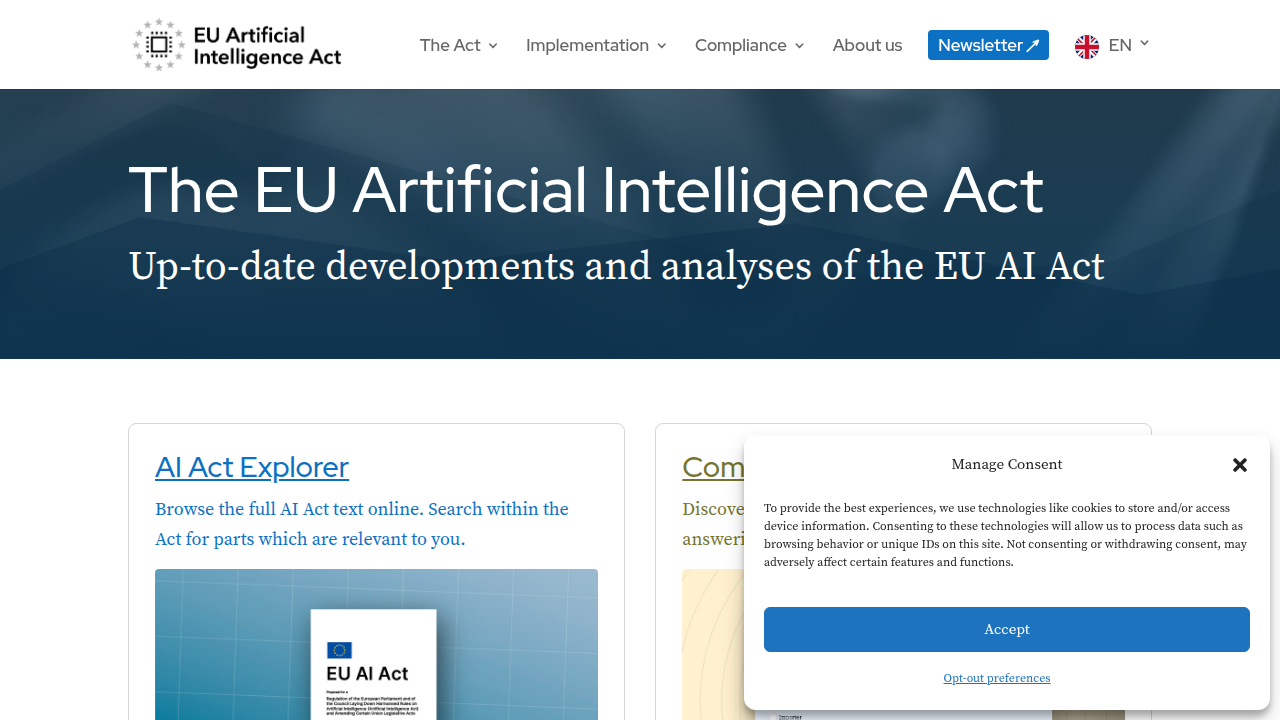
The law entered into force in August 2024 and will be fully applicable starting August 2026. That is this year. The Act uses a risk based approach. High risk AI systems, like those used for hiring or credit scoring, must meet strict rules on transparency and accuracy. Some uses are banned completely. You can see the full timeline on the EU AI Act implementation timeline.
The United States is also acting. Executive orders and agency guidance push for fairness, safety, and accountability in AI. Other countries like China, Canada, and Japan are creating their own rules. This patchwork of laws means companies building or using ai systems must pay close attention to where they operate.
For businesses, this creates a real challenge. How do you keep innovating while following new rules? The answer is to build compliance into the development process from the start. That means testing models for bias, explaining how decisions are made, and keeping humans in the loop for important choices. There is no magic ai that can ignore these rules. Smart companies treat regulation as a guide, not a roadblock.
If you are interested in how these rules affect the business side of AI, our guide to investing in AI startups in 2026 covers the regulatory landscape for investors and founders.
As AI development speeds up, governance will only become more important. The companies that get this right will be the ones that build lasting trust and success.
Healthcare Transformation: AI from Diagnosis to Treatment
Imagine walking into a doctor’s office where a computer helps read your X-ray in seconds. Or getting a treatment plan designed just for your genes. This is not science fiction. It is happening now with future tools AI. Healthcare has become one of the most exciting areas for AI development because the technology can save time and lives at the same time.
AI systems are already working behind the scenes in radiology and pathology. They scan medical images for signs of disease that human eyes might miss. This helps doctors catch cancer, heart problems, and other conditions much earlier. The same type of technology is now being used for drug discovery. Finding a new medicine used to take years. Now, AI can analyze massive amounts of data to identify promising drug candidates in months instead of decades. In fact, 2026 is the year many expect the first fully AI-discovered drug to reach patients. Learn how this is reshaping the entire pharmaceutical process in this article about how AI is reshaping drug discovery.
Personalized medicine is another big win. AI looks at your unique biology, your medical history, and even your lifestyle to recommend treatments that fit you specifically. No more one-size-fits-all pills. And generative AI is making a huge difference in how doctors talk to patients. It helps write clear notes, explain complex test results, and even translate medical language into plain English. This means less time on paperwork and more time on care.
Wearable devices like smartwatches and fitness trackers now use AI to monitor your heart rate, sleep patterns, and activity levels. They can send alerts if something seems wrong, sometimes before you feel anything. Remote monitoring with these tools brings healthcare to people who live far from hospitals. It also helps older adults stay independent longer.
There is no magic ai that can replace a human doctor. But these tools make doctors faster and smarter. If you want to explore more examples, check out our guide to AI applications across industries including healthcare.
For daily updates on how AI is changing medicine and every other field, consider The AI Newsletter Worth Reading. It delivers clear, useful AI news straight to your inbox so you never miss what matters.
Summary
This guide surveys the most impactful AI trends of 2026 and explains what they mean for professionals, businesses, and investors. It covers multimodal foundation models that handle text, images, video, and audio; agentic AI that plans and executes tasks autonomously; and edge AI that runs powerful models on devices for speed and privacy. The article also reviews AI-driven advances in scientific discovery and drug development, highlights real healthcare applications, and outlines the evolving regulatory landscape companies must navigate. You’ll learn which frameworks and vendors are leading each area, common production challenges (safety, integration, governance), and practical ways to evaluate and adopt these tools. Read this to understand where AI is already delivering measurable results, what to watch next, and how to pick tools that fit your needs while managing risk.