
Introduction: The State of Notion AI in 2026
Keeping up with Notion AI in 2026 can feel like a full-time job. Every week brings another update, a new feature, or a shift in pricing. If you blink, you might miss something important.
Notion has grown fast. The platform now serves over 100 million users and makes $600 million in annual recurring revenue. AI is a big reason for that growth. In the past year alone, Notion rolled out Custom Agents, changed how it sells AI access, and launched a developer platform that turns your workspace into a hub for AI agents. According to a recent report from TechCrunch, this move makes Notion one of the most flexible productivity tools on the market.
But all this change comes with a downside. It is hard to separate the real news from the noise. You might wonder: What matters most for my workflow?

Which updates are worth my time? And is Notion still the right tool for my team?
This article cuts through the clutter. We have gathered the most important Notion AI news and trends of 2026 so far. You will get a clear, expert-driven overview without the fluff. Whether you are a daily user or just exploring AI productivity tools, this guide will help you stay informed.
If you want to keep up with even more AI developments throughout the year, consider subscribing to The AI Newsletter Worth Reading. It delivers daily, clear updates straight to your inbox so you never miss a beat.
We will start by looking at the biggest Notion AI announcements of the year. Then we will dive into pricing changes, new features, and what they mean for you.
The Evolution of Notion AI in 2026
Notion AI started as a simple writing helper. It could rewrite a sentence, summarize a page, or generate a quick draft. That was helpful, but it only scratched the surface. In 2026, Notion AI has turned into something much bigger.
Today, Notion AI acts more like a teammate than a tool.
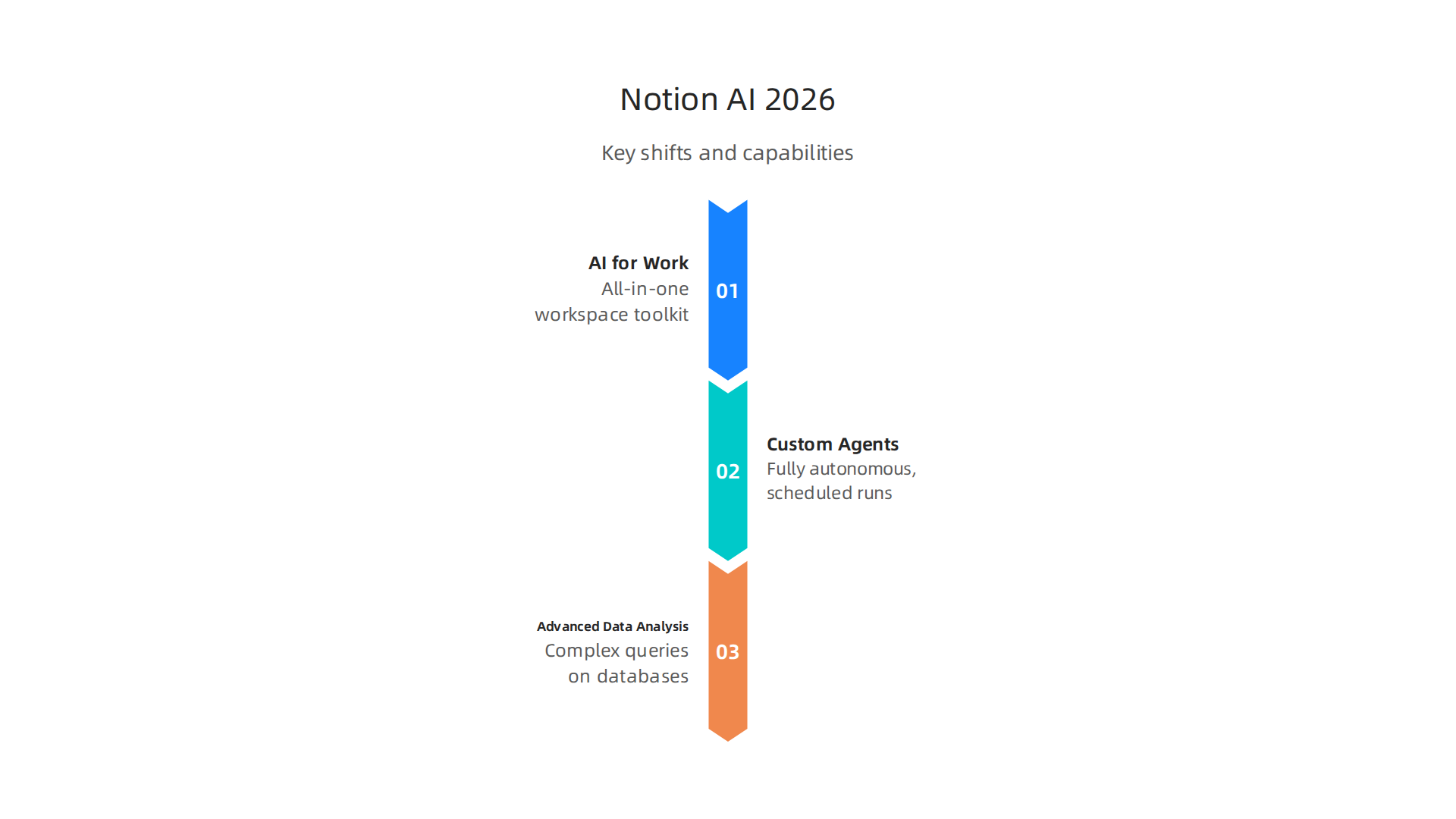
It can manage projects, analyze data, and automate entire workflows. When Notion launched its AI for Work bundle, it brought features like AI Meeting Notes, Research Mode, and Enterprise Search all under one subscription. According to the official announcement, this change made Notion AI an all-in-one toolkit built directly into your workspace.
The most important shift happened when Notion introduced Custom Agents. These agents are fully autonomous. You can set them to run on a schedule, like every Monday morning, and have them write project updates, check databases, and even pull information from Slack or email. They do not wait for you to ask. They just work in the background.
Another big update is advanced data analysis. Now you can ask your Notion AI complex questions about your databases. For example, you might say, "Show me all sales accounts with call notes that mention European data residency," and it will scan across properties and notes to find the answer. That makes Notion useful for real business intelligence.
These changes have completely shifted how people see Notion. It is no longer just a digital notebook. It is an AI-first platform where you build, automate, and analyze everything in one place. If you are still using it like a basic note app, you are missing out on a lot.
For more on how to evaluate tools like this for your own work, check out our complete AI tools guide for 2026. It covers what to look for and how to make smart choices.
Notion AI’s Impact on Productivity
So what does all this mean for your actual workday? Early adopters and enterprise teams are reporting big time savings in content creation and project planning.

Instead of writing project updates from scratch every week, people now let Notion AI generate them automatically. It pulls data from databases, checks recent activity, and produces a clean status report in seconds.
Users also say that integrating Notion AI into their daily workflows has cut down the friction of managing knowledge. Before, finding the right document or answer inside a messy workspace could take minutes. Now, Notion AI acts like a smart search engine that also understands context. You can ask a question about your sales pipeline or a meeting note, and it pulls the answer from across your entire workspace.
Adoption is growing fast for both individual users and whole teams. One reason is how Notion AI handles repetitive tasks. For example, the custom agents introduced in late 2025 can be set to run on a schedule, writing status updates, sorting requests, or even reaching into external apps. This kind of automation is a major shift. According to a thorough explanation of Notion’s latest features, these agents can handle multi-step tasks without you needing to check in. That frees up hours every week.
Another improvement is in data analysis. The July 2025 update gave Notion AI the ability to answer complex questions about your databases. You can ask something like, "Which accounts mention budget changes in their notes?" and it scans everything to find the answer. This turns Notion into a lightweight business intelligence tool.
If you are testing different writing assistants for your team, our breakdown of the best writer AI tools in 2026 can help you compare options side by side.
For ongoing coverage of notion ai news and the broader AI landscape, consider subscribing to The AI Newsletter Worth Reading for daily insights you can actually use.
Competitive Comparison: Notion AI vs. Rivals
You might be wondering how Notion AI stacks up against the big names. The AI assistant market is full of options in 2026. ChatGPT, Microsoft Copilot, and Google Gemini are the giants. Each one has a different strength.
ChatGPT is the all-around leader with 900 million weekly users. It handles creative writing, coding, and research better than most. Microsoft Copilot is built for teams already using Office 365. It can draft emails, create slide decks, and pull data from your work files. Google Gemini works inside Gmail, Docs, and Sheets.
But here’s the thing: Notion AI plays a different game. It doesn’t try to be a chatbot you visit in a browser.
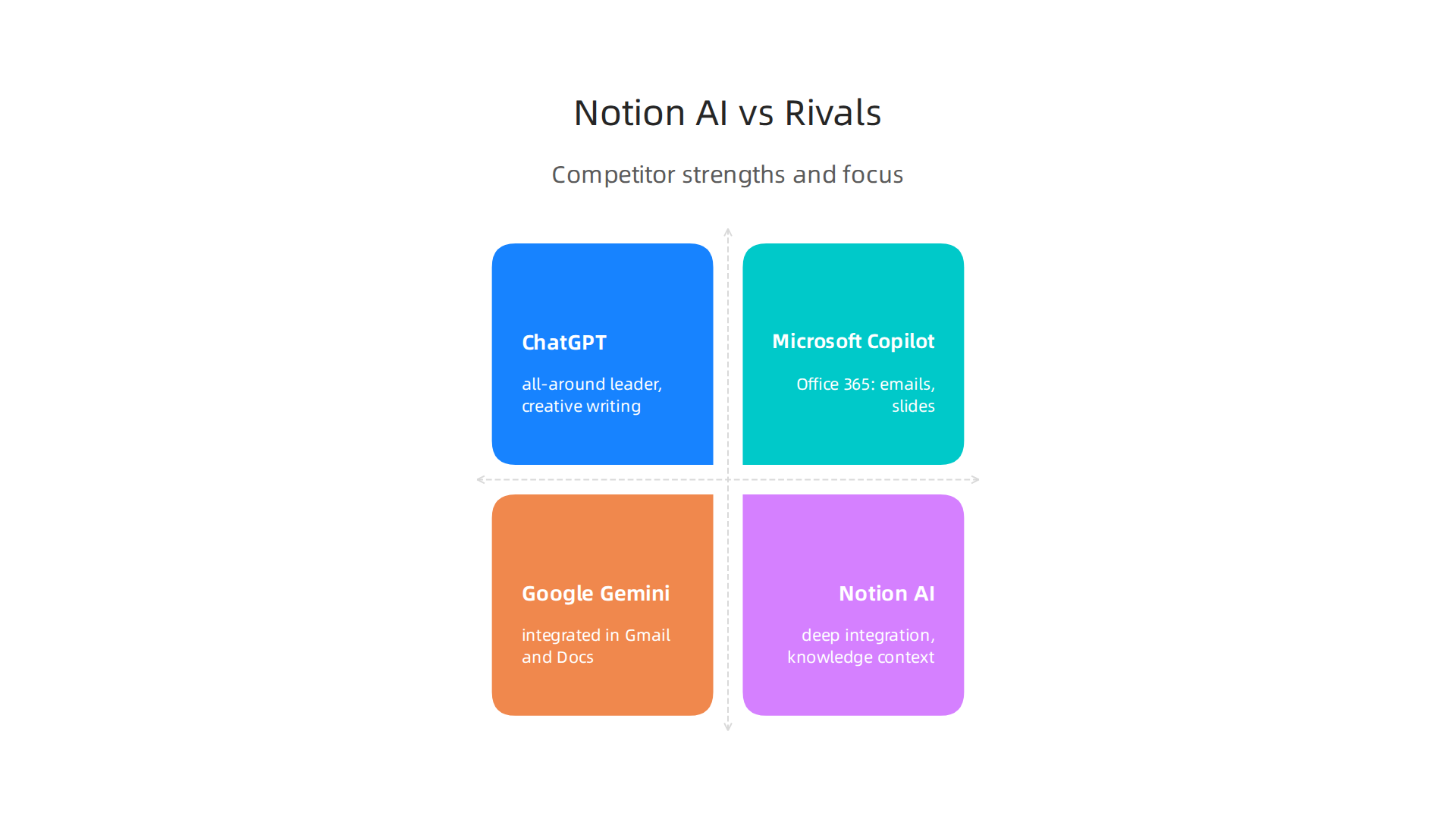
Instead, it lives inside the workspace where you already plan projects, write notes, and manage databases. That deep integration makes it much smarter about your actual work. According to a detailed comparison from Pickaxe, Notion AI is the top platform for knowledge management because it can reference your existing pages, project briefs, and style guides when helping you write.
The output is more relevant because it has genuine context.
This focus pays off. In the knowledge management segment, Notion AI holds a strong market share. Teams that use Notion as their central hub find the AI add-on invaluable. It is not about raw model power, but about being in the right place at the right time.
Of course, the AI space is evolving fast. Beyond these major players, specialized tools like Harvey AI for legal work and various stealth AI startups are emerging. And if you want to stay on top of all the notion ai news, including ai data centers news and new entrants, you need a good source of information.
If you are evaluating which AI tools to invest in or adopt for your business, a comprehensive guide to evaluating AI tools in 2026 can help you compare options based on your specific needs.
Notion AI’s Integration Ecosystem
One of the biggest questions people ask about Notion AI is how well it connects with the tools they already use. The answer is: very well. Notion AI is built to work inside your existing workflow, not replace it. In 2026, the platform offers deep native integrations with popular apps like Slack, Google Drive, and Salesforce. Using Notion’s AI Connectors feature, you can search accounts, leads, and contacts from Salesforce right inside your Notion workspace. You can also pull in documents from Google Drive and messages from Slack to give the AI more context when you ask questions.
Notion also adds new native integrations with project management platforms every quarter. The latest update, released in May 2026, introduced the Notion Developer Platform 3.5 release, which includes an External Agents API that lets you bring your own AI agents into Notion. This opens up connections with tools like Zendesk, Salesforce, and even personal apps like Strava. It is a clear sign that Notion is serious about becoming the central hub for all your work data.
Beyond native integrations, the Notion API lets you build custom workflows. You can connect Notion to hundreds of other apps using automation tools like Zapier or Make. This makes it possible to automate repetitive tasks, sync data between platforms, and create a truly personalized workspace. Whether you want to auto-create Notion pages from form submissions or pull in bank transaction data, the API makes it happen.
Staying on top of all these updates is important if you rely on Notion AI for your daily work. To keep up with the latest notion ai news, including new integration releases and broader ai data centers news, you need a reliable source. For that, you can Get clear daily AI updates from The Deep View Newsletter. It covers developments across the AI landscape, from major platform updates like Notion AI to emerging tools like Harvey AI and stealth AI startups.
And if you are thinking about which AI tools to adopt for your business, check out this comprehensive AI tools evaluation guide to compare your options.
Expert Predictions for Notion AI
If you follow notion ai news closely, you know the platform is changing fast. But what comes next? Experts who study the space predict three big shifts for Notion AI in 2026.
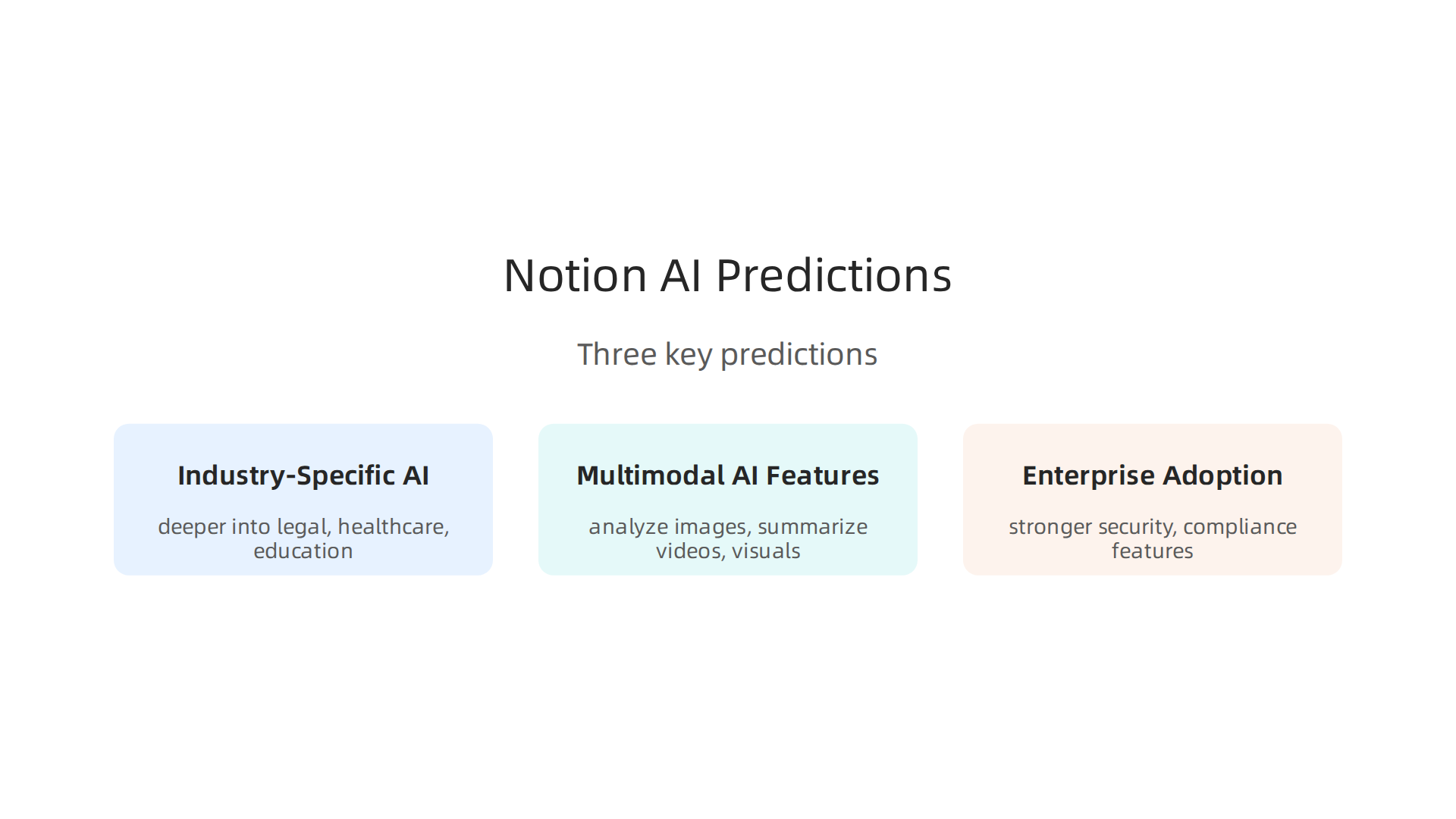
These changes could reshape how teams use the tool across different fields.
First, analysts expect Notion AI to go deeper into specific industries. Think legal, healthcare, and education. Instead of a one-size-fits-all assistant, Notion may build features custom made for each sector. For example, in law firms, tools like Harvey AI already show how AI can handle contract review and document analysis. Notion AI could add similar legal-specific functions. In healthcare, it might help with patient note summarization and compliance checks. The same goes for education, where teachers could get AI that drafts lesson plans or grades assignments. This vertical focus makes sense because it solves real pain points for professionals. You can already see how AI applications in healthcare and finance are changing those fields.
Second, multimodal AI features are expected later in 2026. Right now, Notion AI mainly works with text. Soon, you will likely be able to ask it to analyze images inside your notes, summarize videos, or even generate simple visuals. This will make Notion AI useful for teams working with rich media, like marketing or design departments. Imagine pasting a screenshot of a whiteboard and having the AI extract action items automatically.
Third, enterprise adoption will speed up as Notion adds stronger security and compliance features. Big companies have been slow to adopt AI tools because of data privacy worries. Notion is already connecting to enterprise tools like Microsoft and Google through its AI Connectors, which helps keep data secure and compliant. As these features mature, more businesses will feel safe rolling out Notion AI to their entire workforce.
All of these predictions point to one thing: 2026 is a huge year for Notion AI. Keeping up with these changes is key if you want to use the tool to its full potential.

How to Stay Informed About Notion AI News
Keeping up with notion ai news doesn’t have to be a full time job. With the right sources, you can catch every update without drowning in noise. Here are the three most effective ways to stay in the loop in 2026.
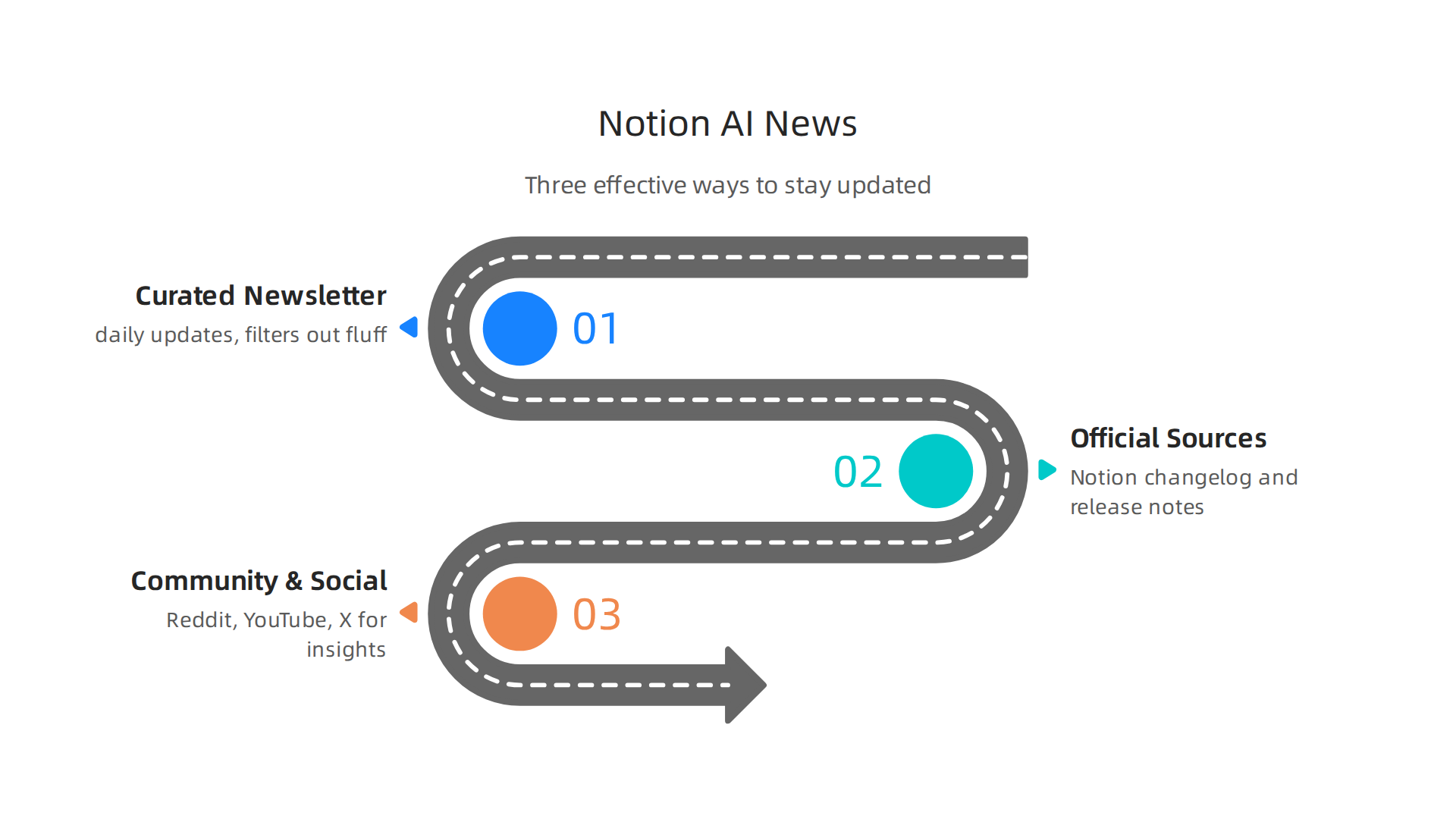
1. Subscribe to a Curated Daily Newsletter
General tech news moves fast, but a focused newsletter saves you the digging. The Deep View Newsletter delivers clear daily AI updates straight to your inbox, including major Notion announcements. It filters out the fluff so you get only the notion ai news that matters most for your workflow.
2. Go Straight to the Official Sources
There is no substitute for hearing it from the source. The Notion changelog and release notes lists every new feature, bug fix, and AI improvement the moment it goes live. Bookmark it and check once a week. The official blog also posts detailed breakdowns of major launches, like the new Custom Agents and AI Connectors.
3. Join the Community and Follow Social Channels
Reddit, YouTube, and X (formerly Twitter) are goldmines for real world tips and early insight. The r/Notion community frequently discusses upcoming features beyond AI and shares workarounds before they become official. YouTube creators also publish hands on tutorials that show exactly how to use the latest notion ai news in practice.
If you want a broader view of the AI landscape beyond Notion, our guide to evaluating and implementing AI tools can help you compare options and make smart choices.
Staying informed takes just a few minutes a day. Pick one method that fits your style and you will never miss a Notion AI update again.
User Adoption Statistics and Trends
The numbers behind Notion AI are hard to ignore. The platform has grown faster than most productivity tools, and the data shows why so many teams are making the switch.
Notion reportedly reached 100 million users by 2026, according to Notion Statistics 2026. That includes both free and paid accounts across all devices. While daily active users are likely lower, the overall trend shows steady growth since the AI rollout began. Millions of people have tried Notion AI, and the company has made it a core part of the product, not just an extra add-on.
Enterprise adoption is the real engine behind this growth. In one year, the paid attach rate for Notion AI jumped from 20% to over 50%, according to AI Statistics and Trends 2026. That means more than half of paying users now subscribe to the AI features. These features also account for half of Notion’s annual recurring revenue. When a large share of revenue comes from AI, it shows that businesses are not just trying it, they are sticking with it.
What keeps retention so high? The integrated AI features save real time. Teams cut down on searching for information and spend more time on actual work. Once users get used to having AI inside their notes, databases, and docs, it becomes hard to go back. That lock-in effect is powerful for a subscription product.
This trend fits a bigger picture across the tech world. Over 75% of organizations now use AI in at least one business function, and generative AI adoption has more than doubled year over year since 2023. For software companies exploring how to integrate AI into their own products, our guide on AI for software companies covers the strategies that work in 2026.
All these signs point in one direction: Notion AI is no longer a nice to have. It is becoming the main reason people choose Notion in the first place.
Future Opportunities and Challenges
The strong adoption numbers paint a promising picture. But Notion’s road ahead is not without obstacles. The company has big opportunities and serious challenges to navigate in the coming years.

One major opportunity is expanding into new verticals. Notion already dominates knowledge management for small and medium teams. But sectors like legal, healthcare, and education have specific needs. Notion could tailor its AI features for these industries. For example, a legal team might want AI that understands case law and contract language. Notion has already partnered with both Anthropic and OpenAI to upgrade its underlying models, and it is expected to reach GPT-4-class or Claude 3.5-class performance by mid-2026, according to a Best AI Productivity Tools for Small Business 2026 analysis. Better models open the door to more complex use cases.
The biggest challenge is competition from deep-pocketed rivals. Microsoft Copilot lives inside Office 365 and has over 400 million monthly users. Google Gemini is woven into Gmail and Google Docs. These companies can bundle AI at scale. Notion cannot outspend them. Instead, it must win on ease of use and deep workspace integration. As the Top 15 AI Platforms in 2026 ranking notes, Notion AI is the best example of AI that makes an existing product better, giving it a real advantage for teams already inside its ecosystem. Still, it needs to keep adding features and integrations to stay relevant.
Another critical challenge is maintaining user trust through data privacy. Businesses are putting sensitive information into Notion. Any data breach or misuse of AI training data would damage trust fast. Notion has been transparent about its AI data practices, but it must continue to earn that trust. As AI regulations tighten, Notion will need to comply while still delivering fast features.
The future of Notion AI will be shaped by how well it executes on these fronts. For those watching the latest notion ai news and tracking major players like Microsoft, Google, and even emerging names like Harvey AI and stealth AI startups, staying informed is the only way to keep up. If you need a quick daily briefing on the AI landscape, consider subscribing to The AI Newsletter Worth Reading from The Deep View. It delivers clear updates so you never miss a shift in the market.
Summary
This article provides a clear, up-to-date overview of Notion AI in 2026, cutting through the noise to show what really matters for users and teams. It summarizes major product shifts—from AI Meeting Notes and Research Mode to the arrival of Custom Agents and advanced database analysis—explaining how these features turn Notion into an AI-first workspace rather than a simple note app. The piece compares Notion AI to rivals like ChatGPT, Microsoft Copilot, and Google Gemini, highlights deep integration options (Slack, Google Drive, Salesforce), and reviews adoption, revenue, and retention trends. It also outlines expert predictions for industry-specific tools, multimodal features, and enterprise security, and gives practical advice on how to stay informed through newsletters, official changelogs, and community channels. After reading, you’ll understand which updates impact workflows, how to evaluate Notion for team use, and where the platform is likely headed next.