
Why investing in AI startups matters now and how to cut through the noise
The world of Artificial Intelligence (AI) is growing at an amazing speed in 2026. This fast growth means there are lots of new ai startups popping up all the time. For people who want to invest, it can feel like trying to drink from a fire hose. There’s so much information and so many changes that it’s really hard to know which ai startups are truly good places to put your money.
Actually, the AI sector received a massive $143.2 billion in funding in 2026, showing just how big the opportunity is. But with all this money and new ideas, it’s easy to get lost in the shuffle. You might wonder which companies are really going to change the future and which ones are just making a lot of noise. This makes it tough for venture capital firms, incubators and accelerators, and even individual investors to find the best chances.
That’s where this guide comes in. We understand that finding good ai startups to invest in is not simple. This article will give you a clear plan, like a structured playbook, to help you make smart choices.

We will cover how to find promising startups, how to check them out carefully (this is called diligence), how to figure out what they are worth (valuation), how to help them grow after you invest (portfolio support), and how to deal with possible risks. If you are interested in learning more about different AI options, you can explore an AI tools guide evaluate implement and invest smartly in 2026. This playbook is designed to help you cut through the noise and make informed decisions in the exciting world of AI investing.
To stay on top of daily developments in the AI world and get clear insights, check out The AI Newsletter Worth Reading.
To make smart choices about where to put your money, it helps to first understand the different parts of the AI world. The fast growth of AI means that value isn’t just made in one spot. Instead, it’s created across several important areas. Knowing these areas helps venture capital firms, incubators and accelerators, and other smart investors find the best ai startups to support.
Here are the main places where ai startups are making a big difference in 2026:
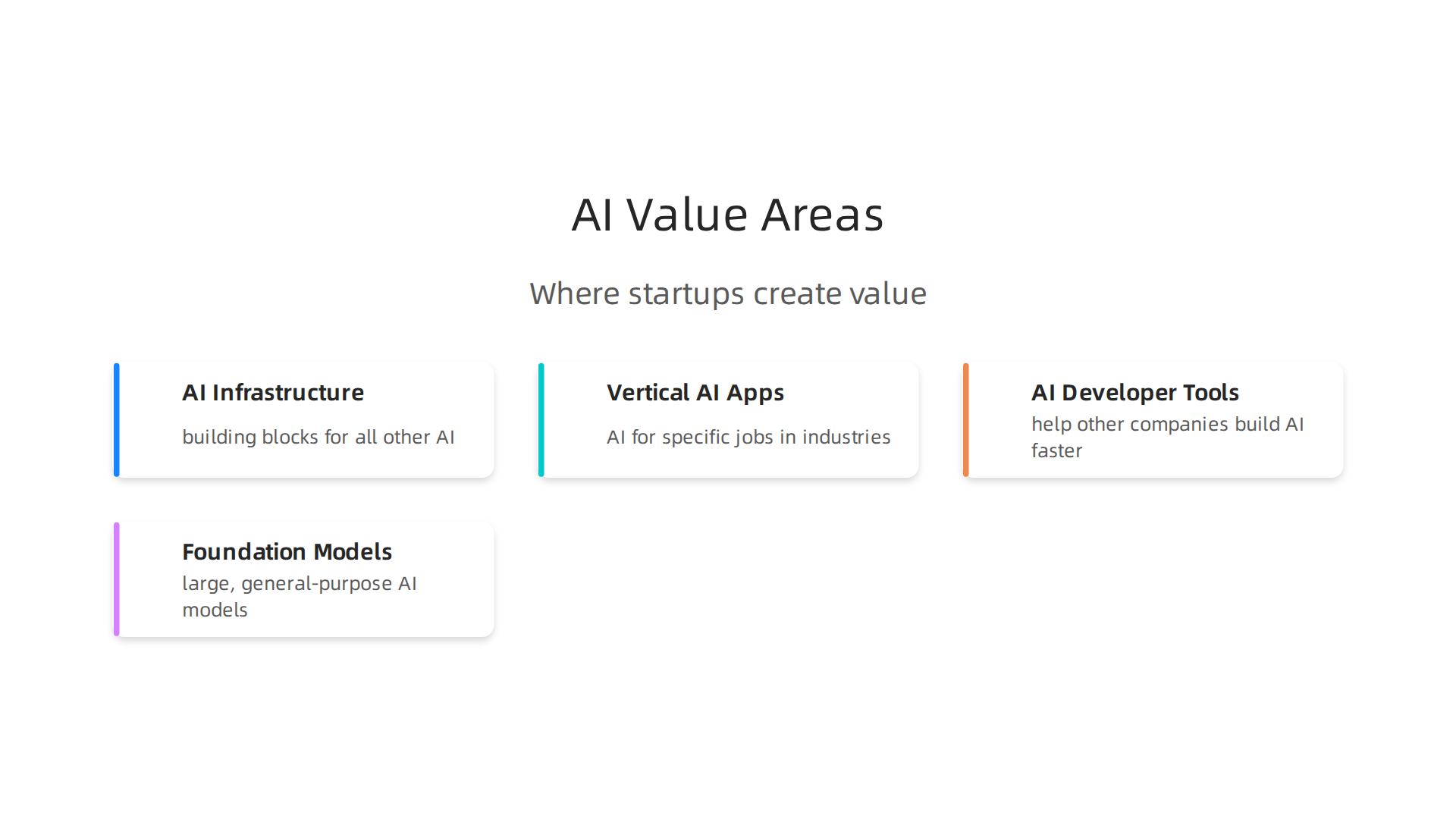
- AI Infrastructure: Think of this as the building blocks for all other AI. These startups create the powerful computer parts (hardware) and basic software tools that AI needs to run. Without good infrastructure, complex AI models can’t work well. This area is important because it supports everything else.
- Vertical AI Applications: This is where AI is used for very specific jobs in certain industries. For example, an AI startup might make a tool just for doctors to help them see things better in X-rays, or for farmers to manage their crops. These "vertical" solutions solve real problems for certain groups of people. Many
ai startupsfind success by focusing on these specialized needs, creating software tailored to specific industries, as seen in the first quarter of 2026 reports about AI in Vertical Software. - AI Developer Tools: These are tools that help other companies and developers build their own AI faster and easier. Imagine a special toolbox that has all the things you need to put together an AI project, without having to start from scratch. These tools speed up how new AI ideas come to life.
- Foundation Models: These are very large, general-purpose AI models. They are like a brain that can learn many different things and be used for many different tasks. Other
ai startupscan then take these big models and make them better for specific uses. For example, a big foundation model might understand language, and then a smaller startup might use it to create a new way for customers to talk to a bank. The number of newai startupsfocusing on these large models has surged recently, especially with the rise of generative AI European AI Competitiveness Beyond Frontier Models.
Finding Real Value Beyond the Hype
With so many ai startups out there, how do you tell if one is truly going to be successful or if it’s just a lot of noise? It’s all about looking for clear signals.
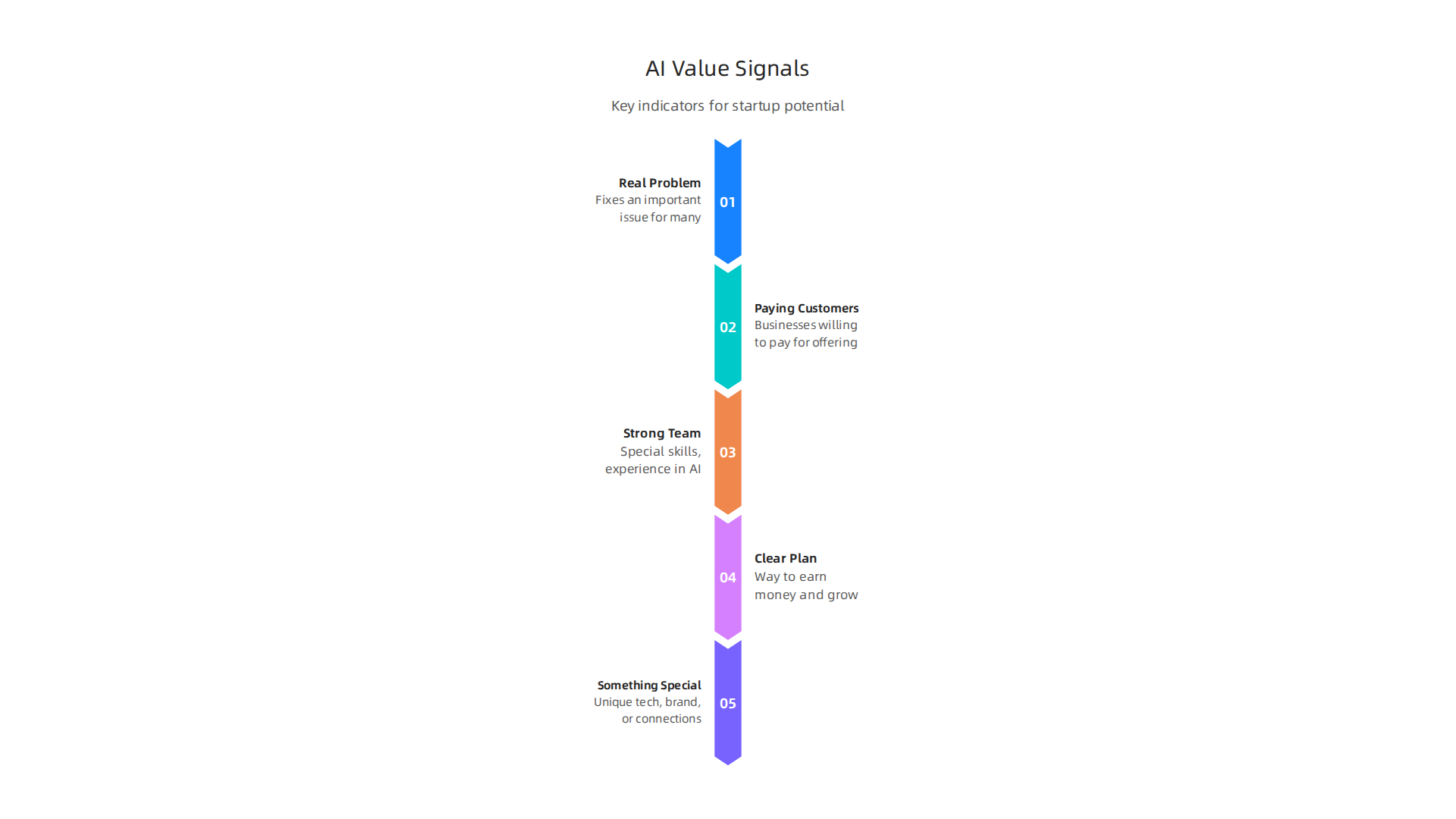
- Solving a Real Problem: The best
ai startupssolve a problem that many people or businesses have. If a company just makes a cool AI tool but it doesn’t really fix anything important, it’s probably just hype. - Customers Who Pay: Are people or businesses actually willing to pay for what the startup offers? If customers are opening their wallets, it shows the product has real value.
- Strong Team: Look at the people behind the startup. Do they have special skills and experience in AI? Do they know a lot about the problem they are trying to solve? A good team is key.
- Clear Plan to Make Money: A great idea isn’t enough. The startup needs a clear way to earn money and grow over time. This is often called a business model.
- Something Special: Does the startup have something unique that other companies can’t easily copy? This could be special technology, a unique way of doing things, or a strong connection with customers.
When you see ai startups that tick these boxes, you’re more likely to find a solid investment. Learning about how different AI tools work can also help you see which ones are truly useful. You can learn more by understanding artificial intelligence applications across various fields.
Now that you know what makes a good AI startup, the next big question is: how do you find them? For venture capital firms, incubators and accelerators, or any smart investor, finding promising ai startups is like looking for hidden treasure. You need good maps and tools to help you search.
Here are some smart ways to find the best ai startups in 2026:
Finding Channels for AI Startups
- Research Networks: Many great AI ideas start in universities and science labs. Look at new research papers and projects coming out of top schools. These places often create amazing new technologies that could become the next big
ai startups. - Academic Labs: Similar to research networks, university labs are hotbeds of new AI talent and discoveries. Often, professors and students turn their cutting-edge work into startups. Keeping an eye on these labs can give you an early look at future innovations.
- Developer Communities: AI developers hang out in online groups, forums, and attend special events called hackathons. These are places where people share new code, build projects together, and talk about new AI tools. Watching these communities can show you who is building something truly special. For example, many of the Best AI Startups to Join in 2026 often recruit directly from these vibrant developer circles.
- Corporate Partnerships: Big companies often look to work with smaller, newer
ai startupsto bring fresh ideas into their business. If you see a large company partnering with anai startup, it’s a good sign that the startup has something valuable.
Quick Ways to Check AI Startup Deals
When you have a long list of ai startups, you need a quick way to see which ones are worth a closer look. Think of these as fast checks to screen deals:
- Technical Novelty: Is their AI idea truly new and different? Or is it just a slight change of something that already exists? The more unique and hard to copy the technology, the better. This is key for
ai startupsto stand out. - Data Moat: Does the startup have a special way to get or use data that others can’t easily get? This "data moat" makes their AI smarter and harder for others to compete with. More and more, unique data access sets successful
ai startupsapart. - Founder Background: Who are the people leading the
ai startup? Do they have strong skills in AI or a deep understanding of the problem they are trying to solve? A team with the right smarts and experience is super important for success. Strong leaders are often found in companies that help other businesses master the future with AI, and knowing how to evaluate their tools is part of smart investing.
By using these strategies to find and quickly check ai startups, you can better spot those with real potential. It helps venture capital firms and others looking to invest wisely to focus their time on the most promising opportunities. To dive deeper into making smart choices about AI tools, you might find it helpful to read an AI Tools Guide Evaluate Implement and Invest Smartly in 2026.
Stay informed about the fast-moving world of AI. Get clear daily AI updates from The AI Newsletter Worth Reading.
After you’ve found promising AI startups with a quick check, it’s time for "due diligence." This is a deeper dive. Think of it like looking under the hood of a car before you buy it. For venture capital firms and incubators and accelerators, due diligence means looking closely at the AI startup to make sure it’s really as good as it seems. It helps you avoid big problems later.
Technical Due Diligence: Checking the AI’s Core
First, let’s talk about technical due diligence. This means checking the brains of the AI startup: its AI models and technology. A key question is: Is their AI model truly right for the problem it’s trying to solve? For example, if an AI startup uses AI to find certain diseases, is that AI model actually good at finding those diseases? You want to see that their AI works well and does what they say it does. A good checklist for this kind of check can help avoid problems, as explained in this AI Due Diligence Checklist 2026: Avoid AI Failures, Security Risks….
Next, you’d check for reproducibility. This asks if the AI’s results are steady and reliable. Can the AI startup show that their AI gives the same good results again and again, not just sometimes? This is very important for trust. Then, there’s data provenance. This means checking where the data used to train the AI comes from. Is it good quality? Is it collected and used in fair and legal ways? With new AI Regulations around the World – 2026 becoming stricter in 2026, understanding data rules is crucial. For more details on this deep technical dive, you can learn about Navigating Technical Due Diligence for AI Software Companies.
Commercial Due Diligence: The Business Side
After the tech check, you move to commercial due diligence. This looks at how the AI startup makes money and how well its business works. One key part is unit economics. This means figuring out how much it costs the startup to sell one product or serve one customer, and how much money they earn from it. Is this number good? Will they make enough money as they grow? Another part is customer feedback loops. Good AI startups listen to their customers. Do they have clear ways to get feedback and use it to make their products better? This shows they care about their users and can adapt.
Finally, for commercial checks, think about defensibility. What makes this AI startup special and hard for others to copy? Is it their unique technology, a strong brand name, or many happy customers that keeps others away? A strong defensibility helps protect their business over time. Understanding these points helps venture capital firms properly value AI startups. Finding the right way to value these unique companies is covered in guides like the Ultimate Guide to AI-Powered Startup Valuations.
By doing both technical and commercial due diligence, you get a full picture of an AI startup. This careful checking helps investors, including incubators and accelerators, make smart choices and find the AI startups that are truly set to succeed. If you want to understand more about how AI is changing different industries and what opportunities that creates for new companies, you can explore Artificial Intelligence Applications in 2026: From Healthcare to Finance and Beyond.
After a careful check of an AI startup’s technology and business, the next big step is figuring out how much it’s worth. This is called valuation. For venture capital firms and incubators and accelerators, knowing the right value for these special companies is very important. It helps them decide how much money to invest and what share of the company they should get. It’s like putting a price tag on a new invention that could change the world.
How to Value AI Startups
Valuing AI startups isn’t always easy because they can grow very fast and sometimes don’t make much money at first. Here are some common ways to figure out their value:
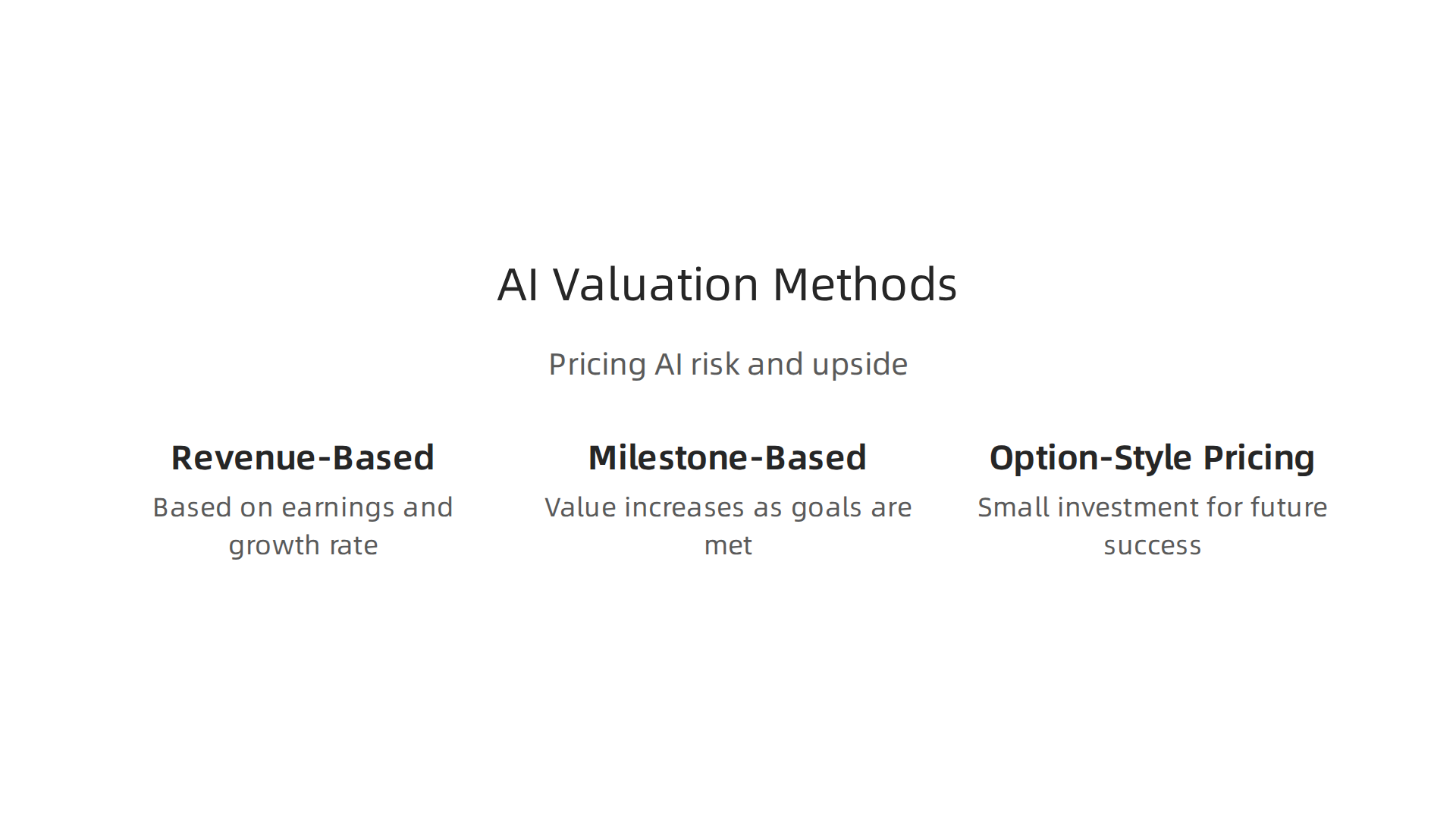
- Revenue-Based Valuation: This method is used when an AI startup is already making money. You look at how much money they earn and how fast that money is growing. Companies often get a higher value if their revenue is strong and steady. In 2026, some AI Startup Valuation Multiples show how companies compare in value based on their sales.
- Milestone-Based Valuation: For younger AI startups that might not have a lot of sales yet, investors often look at milestones. These are big goals the startup needs to reach. For example, getting 10,000 users, finishing a new AI product, or signing a big customer. The company’s value goes up as it hits these important milestones.
- Option-Style Pricing: This is for very new or risky AI startups. Think of it like buying an option for something in the future. Investors put in a small amount of money now, hoping the AI startup will become very successful later. If it does, their small investment will be worth a lot more. This method helps deal with the high risk and high reward of early-stage AI innovation. You can learn more about How to Value an AI Startup in 2026 and other methods.
No single method is perfect for all AI startups. Often, investors use a mix of these ideas to get a fair value, as explained in guides about How AI Startups Are Actually Valued.
Smart Deal Structures for AI Investment
Once you know the value, it’s time to put together the deal. The way a deal is set up can make a big difference for both the AI startup and the investor. These structures help make sure everyone is working towards the same goals.
- Tranches and Milestones: Instead of giving all the money at once, investors might give money in parts, called tranches. Each part is given when the AI startup reaches certain milestones, like those we talked about for valuation. This way, the startup has to prove it’s making progress to get more funds.
- Non-Dilutive Funding: This is money an AI startup gets without selling more of its company. It could be from grants, loans, or future earnings. This is good for founders because they get to keep more ownership of their company. Venture capital firms might also offer advice or connections, which are like non-dilutive support.
- Strategic Clauses: These are special rules in the deal that protect investors or help the startup grow. They might include things like getting a seat on the company’s board, or rules about what happens if the company gets sold. These clauses help align what the investors and the startup want.
Using these smart deal structures helps investors like venture capital firms get a good return, and it helps AI startups get the money they need to grow and build amazing technology. Knowing how to choose, use, and invest smartly in AI is key for success. For more insights on this topic, you can read our AI tools guide.
To stay on top of all these changes and opportunities in the AI world, it helps to have clear, up-to-date information. Get clear daily AI updates from The AI Newsletter Worth Reading.
5) Post-investment: How to help AI startups scale and de-risk growth
After money has been put into an AI startup, the work isn’t over. In fact, that’s often when the real work begins for venture capital firms and incubators and accelerators. They don’t just give money and wait. They also help the AI startups grow big and avoid big problems. This is called portfolio support. It’s like a coach helping a team win.

Here’s how investors help their AI startups get ready for success:
-
Building a Strong Team: One of the first things a growing AI startup needs is the right people. This means finding smart engineers, especially those who know a lot about Machine Learning (ML). These ML engineers are key to making the AI products work well. Investors often help connect startups with top talent. In 2026, finding the right people for AI roles is still a big challenge, and there are special plans for how companies can find and keep these important workers. You can find useful tips in a Your 2026 AI talent playbook.
-
Finding Product-Market Fit: This means making sure the AI product solves a real problem for real customers. Investors help AI startups talk to many users to see what they like and what needs to be better. They help the startup change and improve the product until it’s exactly what people want and need.
-
Planning How to Sell: Once the product is ready, the startup needs a good plan to sell it. This is called the "go-to-market motion." It’s about how the company will tell people about its product, reach new customers, and make sales. Investors, especially venture capital firms, share their experience and networks to help create a strong selling plan. There are even guides like The Enterprise AI Playbook that show how big companies successfully use and grow AI. For engineering teams, an AI-powered engineering at scale: the adoption playbook can help with how to use AI better.
Another important part of helping AI startups is bringing in other companies. Investors can connect their startups with bigger, established companies that might become partners or even big customers. These big companies can help the AI startup reach many more users much faster. This speeds up how quickly the AI startup grows and becomes well-known, helping to de-risk its growth journey.
After venture capital firms and incubators and accelerators help AI startups grow, there’s another side to think about: the challenges and the ways investors can get their money back. It’s not just about building something great; it’s also about understanding the possible problems and planning for the future.
Risks for AI Startups
Even the best AI startups face risks that can change their path. These include:
- Rules and Laws (Regulatory Risks): Governments around the world are making new rules for AI very quickly. For example, the European Union’s AI Act is becoming fully applicable in August 2026, setting strict guidelines for AI use. Other places like the US and Japan are also busy creating their own rules to keep up with AI changes, as seen in global policy updates for 2025 and 2026. These rules can affect how AI products are made and sold. If an AI startup doesn’t follow these new laws, it could face big fines or have to change its product, which costs time and money. Investors must pay close attention to the changing AI regulations around the World – 2026. You can also watch a video on AI Rules Are Changing: Key Regulatory Updates for 2025 & 2026 to understand more.
- Doing the Right Thing (Ethical Risks): AI can sometimes be used in ways that are not fair or might harm people, even by accident. For example, an AI tool might make unfair choices if it’s not built carefully. This could lead to bad publicity or even lawsuits. AI startups need to think hard about ethics from the very beginning.
- Technical Problems: Building AI is hard. Sometimes, the technology might not work as expected, or it might be too expensive to run. There could also be issues with keeping data safe or making sure the AI learns correctly without making big mistakes. For those looking to understand the tools better, a comprehensive AI tools guide can be very helpful.
How Investors Get Their Money Back (Exit Scenarios)
Investors like venture capital firms don’t just put money into AI startups for fun. They expect to get more money back later. This usually happens in a few ways:
- Selling to a Bigger Company (Mergers and Acquisitions or M&A): This is when a larger company buys the AI startup. It’s a common way for investors to cash out. The bigger company might want the AI startup’s technology, its customers, or its smart team.
- Going Public (IPO): An IPO stands for Initial Public Offering. This is when the AI startup starts selling its shares to the public on a stock market. This can make a lot of money for early investors, but it’s a very big step and not every startup gets there.
- Buying the Talent (Acqui-hire): Sometimes, a big company doesn’t want the whole startup or its product. Instead, they just want the talented engineers and other smart people from the AI startup. They "acqui-hire" the team, meaning they buy the company mainly for its staff.
- Joining Forces (Strategic Integration): This is similar to M&A, but sometimes the startup’s technology is just built into the bigger company’s existing products or services, rather than the whole company being absorbed. It’s a way for the AI to become a part of something larger.
Understanding these risks and exit paths helps investors make smarter choices and support AI startups better. It ensures that the journey of an AI startup has a clear end goal, providing returns for those who believed in its potential.
To stay on top of the fast-changing world of AI, including new risks and opportunities, it’s wise to keep learning. Get clear daily AI updates from The AI Newsletter Worth Reading.
Summary
This article is a practical playbook for investing in AI startups in 2026, designed to help venture capital firms, incubators, accelerators, and individual investors cut through the hype and make smarter decisions. It explains where AI value is created—from infrastructure and foundation models to vertical applications and developer tools—and shows how to spot startups that solve real problems, have paying customers, strong teams, and defensible advantages. You’ll get proven sourcing channels and fast screening checks, a clear breakdown of technical and commercial due diligence, and realistic valuation approaches for early and growth-stage companies. The guide also covers smart deal structures (tranches, non‑dilutive funding, strategic clauses), hands‑on post‑investment support to accelerate product-market fit and hiring, and the main regulatory, ethical, and technical risks to monitor. Finally, it outlines common exit routes and practical steps investors can take to increase the odds of a successful return.