
Why ‘AI tools’ matter now – scope, stakes, and what this guide delivers
In 2026, it feels like artificial intelligence, or AI, is everywhere. From helping us write emails to making complex business choices, AI tools are changing how we work and live. But what exactly are these tools, and why should you care, especially if you’re an investor, a founder starting something new, an analyst studying markets, or someone running a business?
Simply put, AI tools are computer programs that can do tasks that usually need human thinking.
They learn from data and get better over time. This can mean a simple ai assistant free that helps with customer service, or a big ai powered collaboration platform that lets teams work smarter together. Across many state agencies, AI solutions are already being used in practical ways, showing just how widespread these tools have become Technical Summary 722 / Artificial Intelligence and Its Role and Use ….
For people deeply involved in business and technology, understanding these ai tools isn’t just helpful; it’s a must. The stakes are high. Investors want to know where to put their money. Founders need to use the best AI to build their companies. Analysts have to keep up with what’s new. And business operators must use these tools to make their companies run better and faster.
The big problem for many is finding good information. There’s so much news about AI every day that it’s easy to get lost. The world of AI changes incredibly fast, and most people don’t have enough time to keep up with every new thing.
This guide is here to help you cut through all that noise. We’ll show you what ai tools are most important right now. We’ll talk about how they affect different parts of the business world and help you understand the changes happening. This way, you can make smart choices and stay ahead.

If you want to keep up with all the big changes in AI, there’s a simple way. Get clear daily AI updates from The AI Newsletter Worth Reading.
AI tools aren’t all the same. Think of them like different tools in a workshop, each made for a special job. Understanding these different kinds of AI tools helps you know which ones are right for you, whether you’re building a new company or running a big business.
Here are some main types of AI tools you’ll see in 2026:
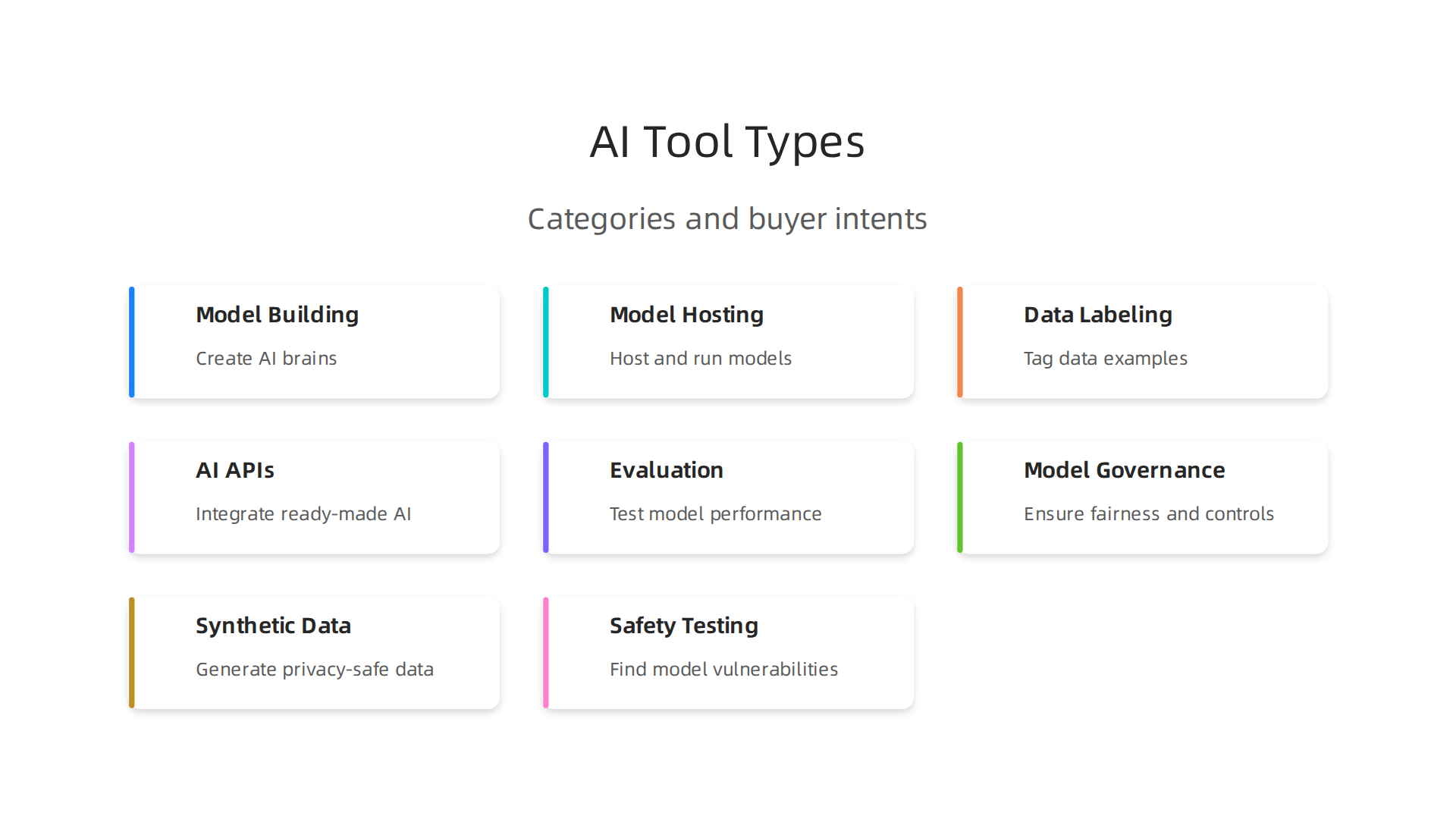
- Model-Building Tools: These are like the blueprints and construction tools for AI. They help people create the actual AI brains that can learn and do tasks. Researchers often use these to make new kinds of AI.
- Model-Hosting Tools: Once an AI brain is built, it needs a place to live and run. These tools provide the space and power for AI models to work, like a special computer server.
- Data Labeling Tools: AI learns by looking at lots of examples. Data labeling tools help prepare these examples by tagging or marking parts of the data, so the AI knows what to look for. This "teaches" the AI.
- AI APIs (Application Programming Interfaces): These are like ready-made AI parts you can plug into your own software. Instead of building a whole AI from scratch, you can use an existing
free ai apito add features like understanding speech or recognizing images to your app. This makes it much faster and easier to add AI powers. - Evaluation and Benchmarking Tools: How do you know if your AI is doing a good job? These tools help you test AI models to see how well they work and if they are fair and safe. Understanding the different kinds of generative AI tools is key to using them well Exploring Generative Artificial Intelligence: A Taxonomy and Types.
Who Buys What: Matching AI Tools to Your Needs
Different people and companies need different ai tools for their goals:
- Startups: New companies often need to move fast and keep costs low. They might look for an
ai assistant freetool to help with customer service or use afree ai apito quickly add smart features to their products. They’re usually focused on getting their idea out there. - Enterprises (Big Companies): Larger businesses need strong, reliable AI tools that can handle a lot of work and many users. They often invest in
ai powered collaboration platformsolutions to help their teams work smarter. They also need tools for managing and scaling their AI operations safely and effectively. You can learn more about how big companies handle AI at scale by reading about Hubspot AI enterprise operations guide to scaling artificial intelligence in 2026. - Researchers: People who are inventing new AI technologies use model-building and evaluation tools most. They push the boundaries of what AI can do.
- Platform Teams: These teams within larger companies are responsible for setting up and maintaining the systems that allow others to build and use AI. They care about hosting tools, making sure AI models run smoothly, and keeping everything secure.
By knowing these different types of ai tools and who uses them, you can better understand the big picture of AI and how it fits into different parts of the business world today.
Category guide: common use-cases and representative tools
The previous section talked about who uses different AI tools. Now, let’s look at what these tools actually do for them and how to pick the right ones.
Common Ways Businesses Use AI Tools
AI tools are like helpful assistants that can do many different jobs. Here are some of the main ways companies use them in 2026:
- Smarter Search: Imagine trying to find a book in a huge library. AI helps make search much better. Instead of just looking for exact words, AI can understand what you mean when you search. This helps people find information much faster within a company’s files or on the internet.
- Summarizing Information: Have you ever had to read a very long report or listen to a long meeting? AI tools can read or listen to all that information and give you the main points in just a few sentences. This saves a lot of time for both new companies and big businesses trying to keep up with lots of details.
- Computer Vision: This is when AI can "see" and understand images or videos. Businesses use it in many ways. For example, it can check products on a factory line to make sure they are perfect, watch security cameras to spot unusual things, or even help doctors by looking at X-rays. It’s like giving computers eyes and a brain to understand what they see.
- Customer Help: Many companies use an
ai assistant freetool to chat with customers online. This AI can answer common questions quickly, like "What are your store hours?" or "How do I reset my password?" This helps customers get fast answers and lets human workers help with more difficult problems. - Adding Smart Features Easily: If you’re building a new app or software, you don’t always need to build a whole AI system from scratch. Many software companies use a
free ai apito add smart features. This lets them quickly add things like understanding speech, recognizing faces, or translating languages into their apps. It makes new software smart without a lot of extra work. You can explore more about how AI helps these businesses in our guide to AI for Software Companies. - Teamwork: Big companies often use an
ai powered collaboration platformto help their teams work better together. These smart platforms can suggest tasks, organize projects, and even help people write emails or reports. It helps everyone on the team be more productive.
How to Choose the Right AI Tools
Picking the best ai tools is like choosing the right tool for a building project. You need to think about what you want to achieve. Here are some important things to consider:
- Cost: How much does the AI tool cost to use? Some tools are free to start, which is great for new companies or small projects. Other tools, especially for very big tasks, can be quite expensive. It’s important to find a balance between what you spend and what you gain. Businesses are always studying how AI adoption affects their costs and sales Firm Data on AI.
- Speed (Latency): How fast does the AI tool give you an answer or complete a task? If you need instant responses, like in a live chat or for a self-driving car, speed is super important. For tasks like writing a summary of a long report, a few extra seconds might not be a problem.
- Data Control: Who can see and use your information when you use an AI tool? This is a big deal for many businesses, especially those that handle private customer details. They need to know their data is safe and that they have full control over it.
- Customization: Can you change the AI tool to do exactly what you need it to do? Some tools are ready to use right away, but you can’t change them much. Other tools let you tweak them a lot to fit your specific needs. Researchers and big companies often need tools that can be customized a great deal for their unique projects.
Thinking about these points will help you choose the best ai tools for your needs, whether you’re a small startup trying something new or a big company managing many projects.

Thinking about these points will help you choose the best ai tools for your needs, whether you’re a small startup trying something new or a big company managing many projects. But for product teams and investors, picking the right AI isn’t just about cost or speed. It needs a deeper look.
How to Evaluate AI Tools: A Practical Rubric for Product Teams and Investors
For those who build products or decide where to invest money, choosing ai tools is a big deal.

It’s not just about what the tool can do now, but how well it will work in the future, how safe it is, and if it’s a smart business choice. Here’s a helpful guide, like a checklist, to make sure you pick the best ones.
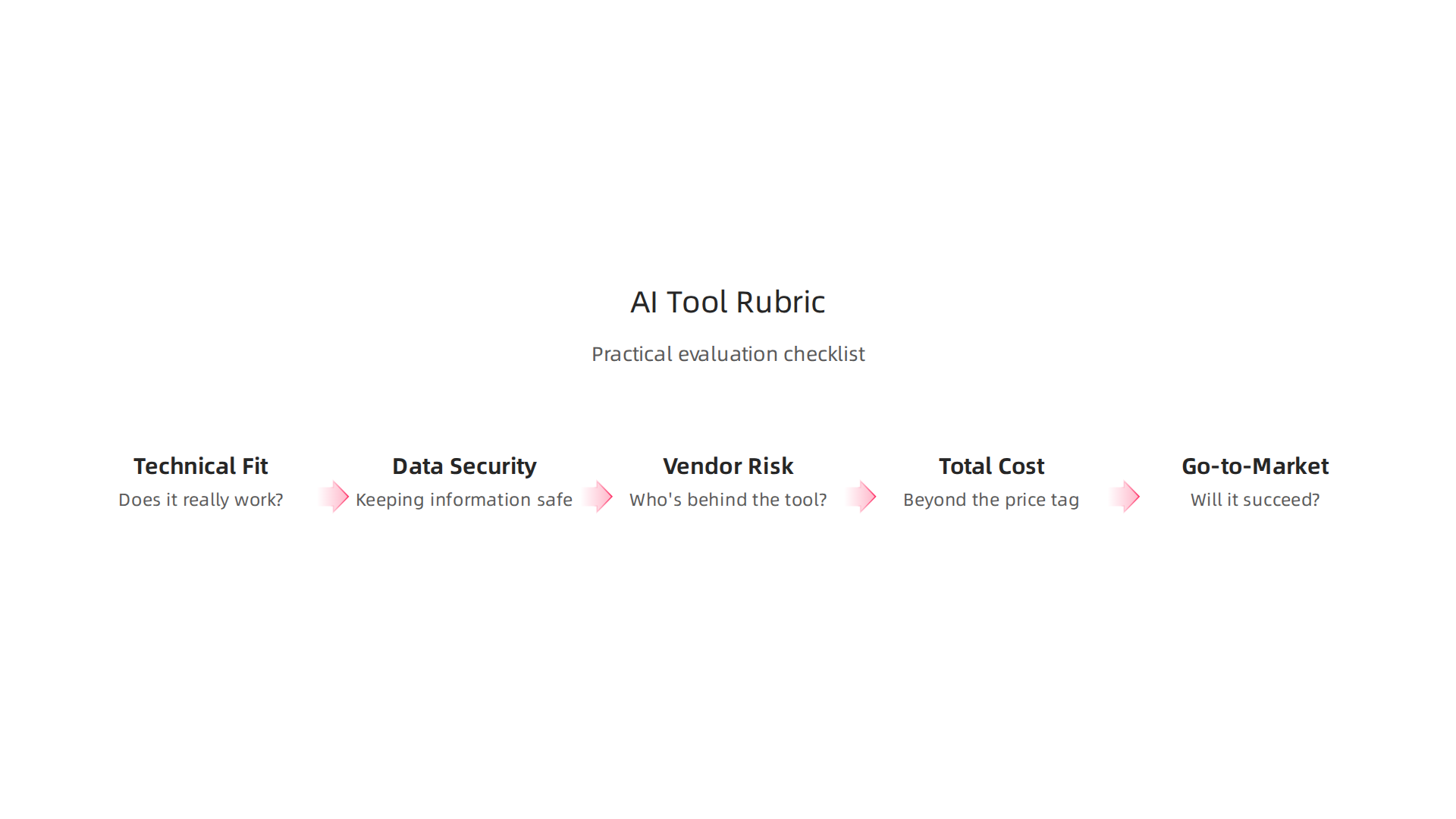
1. Technical Fit: Does it Really Work?
First, you need to know if the AI tool actually does what it claims. Think about:
- Performance: How good is the AI at its job? This means looking at benchmarks, which are like test scores. For example, AI models got much better in 2025 at things like understanding language, solving problems, and writing code, according to the Stanford HAI Technical Performance Report. You want to see strong, proven results.
- Accuracy: How often is the AI right? Especially for important tasks, being wrong can cause big problems. Some AI tools are much more accurate than others, as shown by studies that compare how well they work, like those on Automated Benchmark Evaluations of Language Models.
- Scalability: Can the AI grow with your needs? If your business gets bigger, can the tool handle more work without breaking down or becoming too slow?
- Reliability: Does it work consistently? You don’t want an AI tool that works great one day and poorly the next.
2. Data Needs and Security: Keeping Information Safe
This is super important, especially in 2026. You need to understand:
- Data Input: What kind of information does the AI need? Where does that data come from?
- Data Output: What information does the AI create, and who owns it?
- Privacy Rules: Does the AI tool follow all the rules about keeping data private? This includes laws and company policies. Many businesses are focusing on privacy, as seen in the Cisco 2026 Data and Privacy Benchmark Study.
- Security Measures: How does the company protect your data from bad actors? A strong AI Due Diligence Checklist 2026 will help you avoid security risks.
3. Vendor Risk: Who’s Behind the Tool?
When you pick an AI tool, you’re also picking the company that made it. Consider:
- Company Stability: Is the company likely to be around for a long time?
- Support: What kind of help do they offer if something goes wrong?
- Updates: Do they regularly improve their
ai tools? The AI world changes fast, so updates are key. - Compliance: Does the vendor follow responsible AI guidelines, like those from the OECD Due Diligence Guidance for Responsible AI?
- Open Source vs. Closed Source: Some companies use open-source AI, which means its code is public. This can give you more control and save costs. To learn more, check out our guide on open source AI software delivers cost savings and full control in 2026.
4. Total Cost: Beyond the Price Tag
The cost of ai tools isn’t just the monthly fee. You also need to think about:
- Setup Costs: How much does it cost to get the tool working with your existing systems?
- Training Costs: Do your employees need special training to use it?
- Maintenance: What are the ongoing costs to keep it running smoothly?
- Hidden Fees: Are there extra charges for more data, more users, or special features? Sometimes, there’s a tradeoff between how well an AI works and how much it costs to run, especially for advanced tasks.
5. Go-to-Market Signals: Will it Succeed?
For investors and product teams, it’s also about the bigger picture:
- Market Need: Is there a real demand for this specific AI solution? Is it solving a problem many people have?
- Competition: Are there other similar
ai toolsout there? How does this one stand out? - Ease of Adoption: How easy will it be for customers to start using this tool? A simple
ai assistant freetool or afree ai apimight be easier to get people to try.
Adapting Your Evaluation
How deep you go into this rubric depends on what you’re doing:
- Short Diligence (Quick Check): If you’re just doing a quick check or exploring new
ai tools, you might focus on the basics: Is it technically sound? Is the data safe? Are there any obvious red flags with the vendor? - Long-Term Product Adoption (Deep Dive): If you’re planning to use an AI tool for a main part of your business, or investing a lot of money, you need a much deeper dive. This means looking closely at every point above, doing thorough testing, and understanding the vendor’s future plans. You want to make sure it can be customized to your exact needs and will keep working well over many years.
By using this rubric, product teams and investors can make much smarter choices about which ai tools to use or invest in, helping them succeed in the fast-moving world of AI in 2026.
To keep up with all the big changes in AI, it helps to have reliable information delivered right to you. For a simple way to stay informed, consider subscribing to The AI Newsletter Worth Reading.
Using a rubric helps you pick good ai tools, but it’s also smart to look at what’s happening in the market.

For product teams and investors, market signals are like clues that show if an AI tool is truly catching on. These clues help you see past the hype and find real success.
Market Signals to Watch: Funding, Talent Movements, and Adoption Signals
When you’re trying to figure out if an AI tool or the company behind it is really making a difference, you need to look at more than just its features. You need to see how the market is reacting. Let’s explore some key signals to watch in 2026.
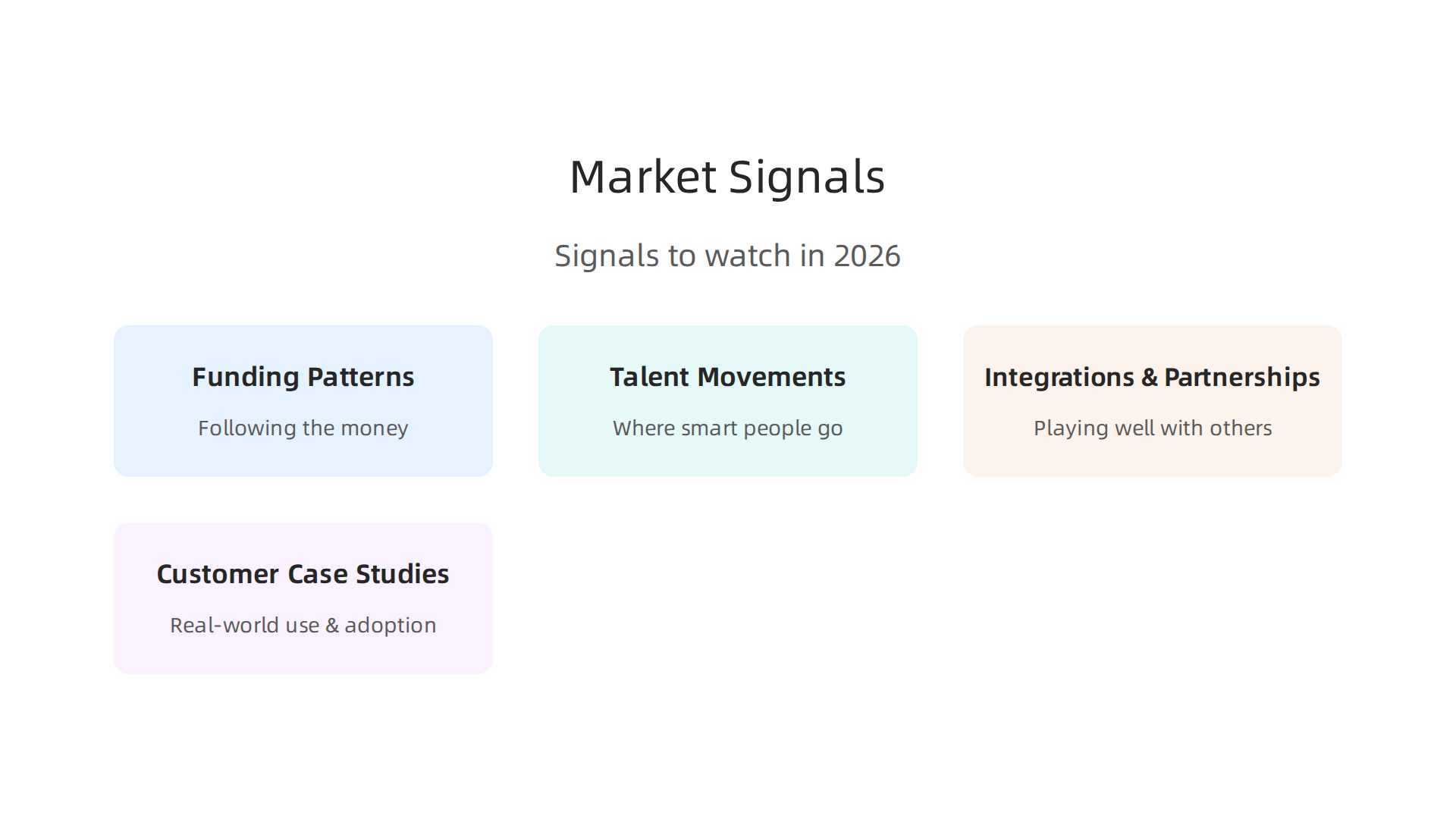
1. Funding Patterns: Following the Money
One of the clearest signs that an ai tool is gaining traction is when investors put more money into it. Big funding rounds show that smart people believe the company has a strong future. This isn’t just about how much money, but also who is investing. Well-known venture capital firms often do deep research before investing, so their involvement is a good sign. Reports from 2026 show that firms are increasingly adopting AI technologies, which often leads to more funding for successful solutions, according to a report on Firm Data on AI from The University of Chicago.
2. Talent Movements: Where the Smart People Go
Another big signal is where talented people choose to work. If an AI company is hiring lots of top engineers, data scientists, and product managers, it means they are growing and investing in their future. Also, if skilled people are leaving big, older companies to join AI startups, it often points to exciting innovation. Experts from the IMF note that the demand for new skills, especially in AI, is changing job markets, impacting hiring and pay in 2026, which is a good sign for the AI sector overall in their paper Bridging Skill Gaps for the Future: New Jobs Creation in the AI Age.
3. Integrations and Partnerships: Playing Well with Others
An ai tool that can easily connect with other popular software and services shows it’s becoming a standard part of how businesses work. Look for partnerships with big tech companies or new integrations that make an AI tool more useful. For example, an ai powered collaboration platform that works smoothly with common office software makes it much more appealing to users. This shows real market acceptance, not just a one-off sale.
4. Customer Case Studies and Adoption Rates: Real-World Use
Nothing beats real proof. When companies share how an ai tool helped them save money, be more productive, or improve their products, that’s a strong signal. Look for detailed case studies that explain the benefits. Also, look at overall adoption rates. Surveys in 2026 show big differences in how quickly companies are adopting AI, both in Europe and the US, highlighting successful solutions that are being widely used, according to the Mind the Gap: AI Adoption in Europe and the US report. High adoption numbers mean the tool is genuinely useful.
Avoiding Misleading Signals
It’s easy to get tricked by hype. Not every signal tells the whole story:
- Hype vs. Substance: A tool might get a lot of buzz online but not have many real, paying customers. Don’t confuse noise with actual progress.
- Free Tools Don’t Always Mean Adoption: Many people might try a
free ai apior anai assistant freetool, but that doesn’t mean they’ll pay for it later or use it for important work. Real adoption means people are willing to pay and rely on it. - Small Trials vs. Full Rollouts: A company might say "we have X users," but if those are all small trials that don’t lead to bigger contracts, it’s not as strong a signal.
Triangulating the Truth
To truly understand an ai tool‘s market position, you need to look at all these signals together. Don’t just pick one. If a company has strong funding, is hiring top talent, integrates with other key platforms, and has happy customers, then you likely have a winner. Combining these views gives you a much clearer picture of whether an AI solution is built for lasting success.
Understanding the broader landscape of how AI is being used can also help. To learn more about how AI is being used in different sectors, you can check out our article on Artificial intelligence applications in 2026. This holistic view helps product teams and investors make smarter choices about where to put their efforts and money.
After understanding the market signals, the real work begins. Moving an AI tool from a good idea in a test lab to something that works for real users every day takes a lot of careful planning. It’s all about building a strong foundation, which is what we call operational utilities and infrastructure.
Operational Utilities and Infrastructure: Moving from Prototype to Production
Once you’ve spotted a promising AI tool, you need to think about how it will actually run and keep running. This is where the technical details come in. It’s not enough for an AI to be smart; it also needs to be reliable, secure, and not too expensive to use. In 2026, making AI solutions work well in the real world means looking at a few key things.
Beyond the Lab: Key Operational Concerns
Think of it like building a house. You need good pipes, electricity, and a strong roof for it to last. AI tools need their own kind of "utilities" to thrive.
- Monitoring and Maintenance: AI models aren’t "set it and forget it." They need constant watching. Over time, the world changes, and the data they learned from might not be perfectly true anymore. This can make the AI less accurate. This is called "model drift." You need systems to monitor how well your AI is working and fix it when it starts to go off track. Keeping up with these changes is part of good AI governance, which helps make sure the tools perform well over time, as noted in reports about worldwide unified AI governance platforms.
- ModelOps (Model Operations): This is a fancy way of saying you need a good plan for managing your AI models from start to finish. It’s like how software gets updated. ModelOps helps teams make sure their AI models are always fresh, secure, and ready to be used. This process ensures that when you improve an
ai tool, those improvements get to the users smoothly. - Data Pipelines: AI tools are only as good as the data they get. Think of data as the fuel for your AI. A data pipeline is the system that collects, cleans, and delivers this fuel to your AI models. If the pipeline is broken or dirty, your AI won’t work right. Making sure data flows smoothly and is of high quality is super important for any AI solution.
- Cost Controls: Running advanced AI can cost a lot of money, especially for powerful models. You need to keep an eye on how much computing power and data storage your
ai toolsare using. Finding ways to be efficient and manage these costs is crucial for long-term success. For ideas on saving money, you might want to explore how Open Source AI Software Delivers Cost Savings and Full Control in 2026. Companies are always looking for ways to balance how well an AI performs with how much it costs, especially with complex models.
Build or Buy? Making the Right Choice
A big question for product teams and investors is whether to build an AI solution from scratch or buy one that’s already made.
- Integrating Third-Party AI Tools: Many times, it makes sense to use existing
ai tools. For example, anai powered collaboration platformor anai assistant freetool might fit your needs perfectly. Buying ready-made solutions can save a lot of time and money, especially if they are proven to work well. When considering outside help, the USDA’s 2025–2026 AI Strategy highlights the importance of making sure vendor AI use aligns with your own goals. - Building In-House: Sometimes, your business has very specific needs that no existing AI tool can meet. In these cases, building your own custom AI can give you a big advantage. It means more control and a solution perfectly tailored to your goals. However, this path requires more resources and expertise. To learn more about scaling such operations, read our Hubspot AI Enterprise Operations Guide to Scaling Artificial Intelligence in 2026.
- Due Diligence is Key: No matter if you build or buy, you need to do your homework. This means carefully checking any third-party AI tools or vendors. You’ll want to look at their security, privacy practices, and how well their tool fits your specific needs. There are many helpful resources, like an AI Vendor Due Diligence Checklist 2026: 50+ Questions that can help you avoid common problems like hidden costs or security risks.
Choosing the right approach ensures that your AI tools don’t just work in theory, but actually provide real value and stand the test of time in production.
Making sure AI tools work well in the real world is a big step. But as we look ahead in 2026, there are new kinds of tools coming out and new problems to think about. These are important for anyone wanting to build or invest in AI. We’re talking about making sure AI is safe, who owns what it creates, and what rules need to be followed.
Emerging frontier tools and risk vectors: safety, IP, and regulatory concerns
The world of AI is always changing. Just when we figure out how to make AI tools run smoothly, new ones pop up, and with them, new questions about safety and fairness. Product teams and investors need to keep an eye on these new areas to stay ahead.
New Tools on the Horizon
Here are some new types of AI tools that are becoming very important:
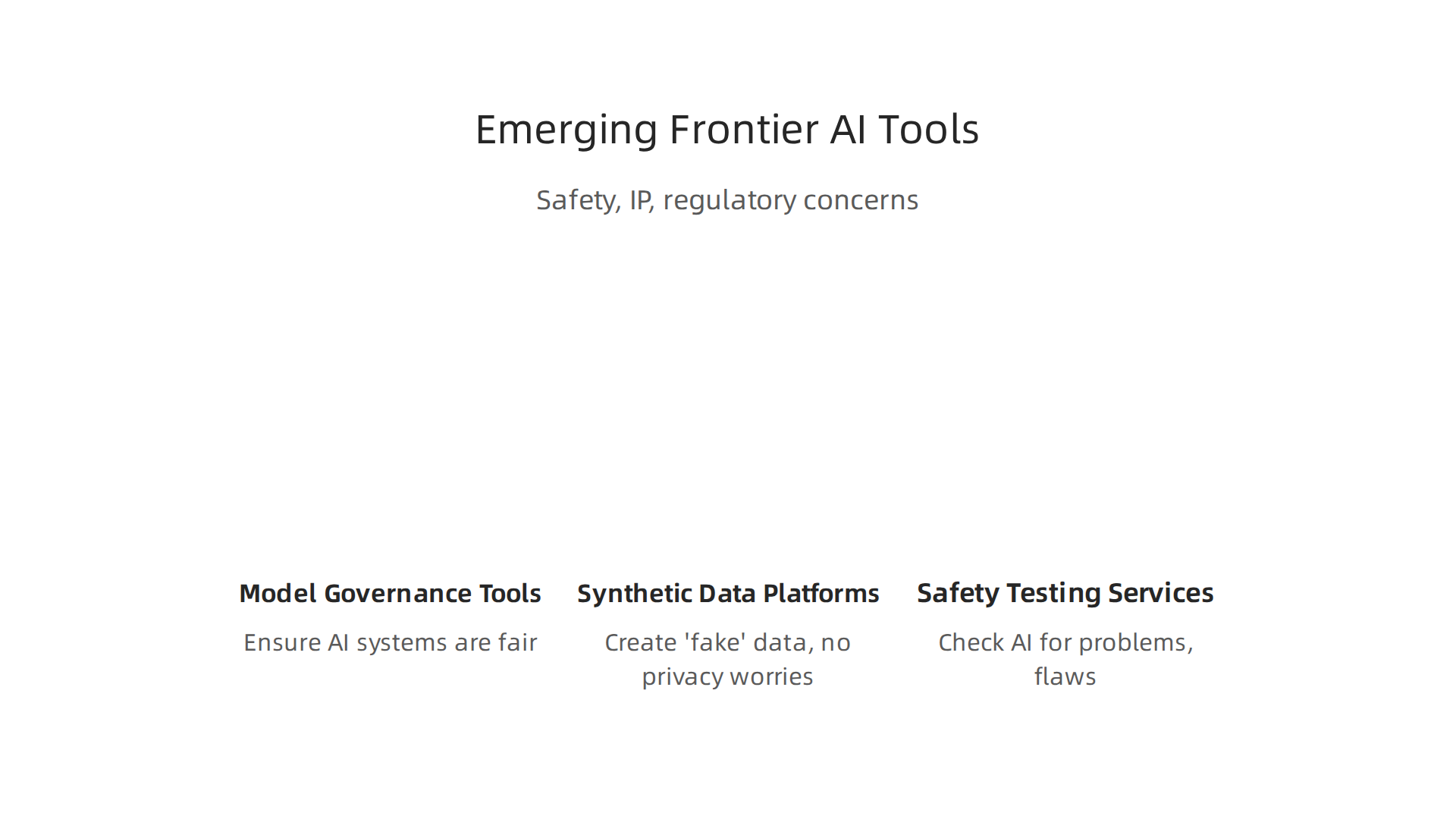
- Model Governance Tools: We talked about how AI models need to be monitored. Model governance tools take this a step further. They help make sure AI systems are fair, work as they should, and follow all the rules. Think of them as the watchdogs for your AI, making sure it behaves responsibly. This is especially key as more and more businesses adopt AI, which has been closely watched in studies about firms and AI use in 2026.
- Synthetic Data Platforms: Training AI models needs a lot of data. But sometimes, real data can be private or hard to get. Synthetic data platforms create "fake" data that looks and acts like real data but doesn’t have any private information. This lets developers train their AI models without privacy worries.
- Safety Testing Services: Just like a new car needs safety tests, new AI tools need them too. These services check AI for problems like bias, unexpected behaviors, or security flaws before they are used by many people. This helps make sure the AI is safe and reliable for everyone. It’s a critical step, similar to how colleges are setting rules for how students and teachers can use AI tools safely, as seen in an AI Collegewide Policy from Snow College.
Big Risks to Watch Out For
As AI grows, some big questions arise that everyone needs to think about.
- Regulatory Concerns: Governments around the world are starting to make rules for AI. They want to make sure AI is used safely and ethically. This means new laws about how AI collects data, how it makes decisions, and how transparent it needs to be. For example, there are already Guidelines for Transparency of GenAI Use in Research being put in place. Keeping up with these new rules is a must for any business using
ai tools. - Intellectual Property (IP) Issues: What happens when an
ai toolcreates something new, like a picture, a song, or even text? Who owns that creation? Is it the AI, the person who made the AI, or the person who told the AI what to make? These questions are still being figured out by lawyers and lawmakers. Understanding these IP challenges is crucial, especially for companies using AI to create new content or technologies. - AI Bias and Fairness: If an AI learns from data that has unfair patterns, the AI might also act unfairly. This is called AI bias. For example, if an AI is trained mostly on pictures of one group of people, it might not work as well for others. Ensuring AI is fair and unbiased is not just good practice; it’s becoming a legal and ethical requirement. Companies need to use
ai toolsresponsibly, thinking about how they might affect different groups of people. If you’re building specific AI applications, knowing about Artificial Intelligence Applications in 2026 From Healthcare to Finance and Beyond can help you understand these risks in different fields.
Staying informed about these new tools and risks is key. It helps businesses use AI wisely and avoid big problems down the road.
For more updates and analysis on the rapidly changing world of AI, there’s The AI Newsletter Worth Reading.
Summary
This guide explains what AI tools are, why they matter in 2026, and how product teams, investors, founders, and operators should approach them. It defines the main tool categories — model‑building, hosting, data labeling, APIs, and evaluation — and maps those tools to real users like startups, enterprises, researchers, and platform teams. The article outlines common business use cases (smarter search, summarization, computer vision, customer help, and embedded AI features) and gives a practical checklist for choosing tools based on cost, latency, data control, and customization. For decision makers it provides a detailed evaluation rubric covering technical fit, data security, vendor risk, total cost, and go‑to‑market signals. It also shows what market signals to watch — funding, talent moves, integrations, and real customer adoption — and explains operational needs for production: ModelOps, data pipelines, monitoring, and cost controls. Finally, it highlights emerging frontier tools and risk vectors such as model governance, synthetic data, safety testing, IP questions, bias, and evolving regulation so you can choose and run AI responsibly.