
Why AI Matters Now for Software Companies
In 2026, it feels like artificial intelligence (AI) is everywhere. Things are moving faster than ever before. AI tools are getting smarter and easier to use very quickly. This swift change means that all kinds of businesses, especially software companies, need to pay close attention. It’s no longer just a cool new thing; it’s a big part of how companies work and grow.
Many businesses are already using AI. A report from the Stanford HAI shows that by 2026, about 88% of organizations have started to use generative AI in some way, which is a big jump in just three years Artificial Intelligence Index Report | Stanford HAI.

This shows how fast AI is becoming a core part of how we do things. For software companies, this means a huge chance to make better products and find new ways to help their customers. It also means that tech companies that don’t think about AI might fall behind.
From developing new features to making their operations smoother, software companies are finding many [AI use cases]. There are so many [new AI tools] coming out all the time that it can be hard to keep up with [all AI tools] and figure out which ones are right for your business.
This article will give you clear steps and ideas to help your software company understand AI better.

We will look at how AI can change your products, how your business works, what it means for your team, and any possible risks. Our goal is to help you make smart choices about AI so your company can stay strong and grow in this exciting new time.
To keep up with the fast-moving world of AI and technology, make sure you get regular updates. Check out The AI Newsletter Worth Reading for clear daily insights.
For software companies, figuring out how to use AI means looking closely at what they sell.

It’s not just about adding a fancy new button. It’s about changing how products are made and what makes them successful. We can think about this in two main ways: adding AI to existing products or building new products completely powered by AI.
AI as a Feature vs. AI-Native Products
Many software companies start by adding AI as a feature. This means they take an existing product and make parts of it smarter. For example, a photo editing app might add an AI tool to automatically remove backgrounds. A customer service tool might use AI to suggest answers to common questions. These ai use cases make the current product better and more useful. It’s like giving your car a new, smarter engine.
On the other hand, some software companies are building "AI-native" products. These are tools or services that wouldn’t even exist without AI. Think of a tool that creates full videos from just a few words, or an AI assistant that learns and grows with your needs. These products are born from AI. This means their whole purpose and design rely on AI working well. This difference greatly affects how a company plans its future products and what comes first on its list of things to build.
Shifting Product Metrics and Success
When software companies bring AI into their products, the way they measure success also changes.
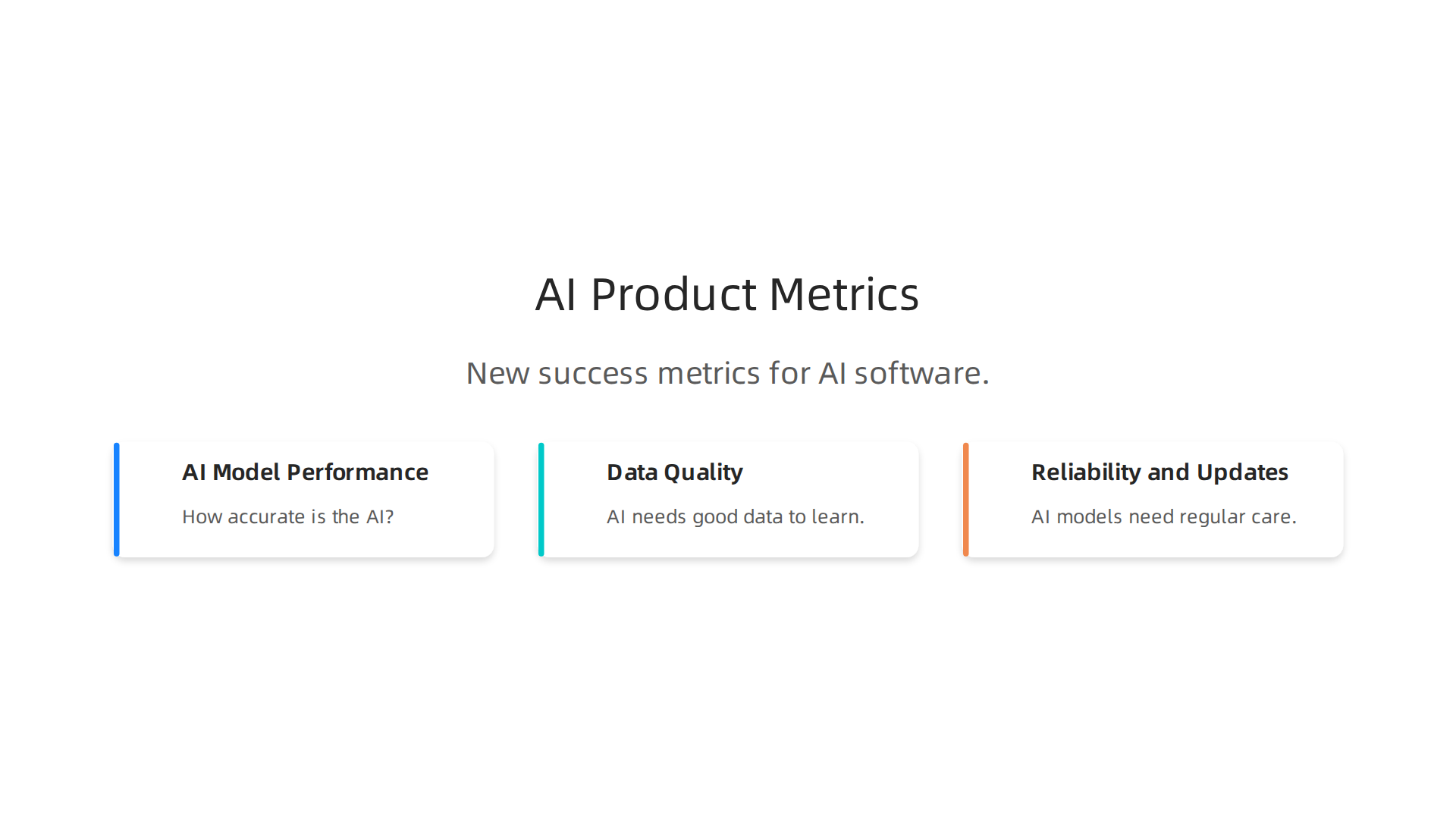
It’s no longer just about how many people use the product or how happy they are with it. Now, you also need to think about how well the AI itself performs.
- AI Model Performance: How accurate is the AI? Does it give good suggestions? Does it make mistakes often? For example, if your AI helps sort emails, you’d want it to be very good at putting the right emails in the right folders.
- Data Quality: AI needs good data to learn. If the data is bad, the AI won’t work well. So, checking and improving the data used by your AI becomes a key task.
- Reliability and Updates: AI models need regular care. They need to be monitored to make sure they are working right and sometimes need to be updated with
new AI toolsand fresh data. This ongoing work, often called MLOps, is important for keeping AI products reliable. In fact, keeping an eye on how AI systems evolve and are used is crucial for their long-term success CAPTURE: A Stakeholder-Centered Iterative MLOps Lifecycle.
Understanding these new ways to measure success helps tech companies make smart choices about their products. It also pushes them to think about how they will build and keep up all AI tools and features. Companies might also explore building these tools using different methods, such as through Open Source AI Software to manage costs and maintain control over the development process.
When software companies bring AI into their products, they also change how they make money. This means thinking about new ways to price their goods and services. The money-making plan often depends on whether AI is just a small part of a product or the main thing.
AI Features and New Ways to Charge
If a company adds AI as a new feature to an old product, it might use something called "SaaS uplift." This is like adding a premium tier or an extra cost for the smarter features. For example, a video editing app might charge more for a special AI tool that makes videos automatically. This helps software companies get more money from their current customers. It can also make people want to keep using the product for a longer time.
But for products that are fully "AI-native," the money-making plan is very different.
These tech companies often use pricing based on how much you use the AI. Think about it like this:
- Usage-Based Pricing: You pay for what you use. If an AI tool helps you write articles, you might pay per word it writes. If it creates images, you pay per image. This makes sense for
all AI toolswhere the computer’s work varies a lot. - Value-Based Pricing: Sometimes, companies charge based on the value the AI brings. If an AI tool saves your business many hours of work or prevents big mistakes, the price might reflect that saved value.
- Data Monetization: Some
new AI toolscreate special data as they work. This data can be very valuable. Companies might find ways to make money from this data, especially if it helps make other AI better.
Many software companies are exploring these new ways to earn money, as shown by the many profitable AI business ideas for 2026.
Changes in Selling and Helping Customers
The way companies sell AI products also shifts. Instead of just selling a product with fixed features, they are now selling a service that keeps getting better. The goal is often to show customers how the AI can predict things or create new content to solve their problems.
Customer success becomes super important. It’s not just about fixing bugs anymore. It’s about helping customers use the AI’s smart features to their fullest. This means teaching them how to get the most out of the AI’s predictions or its ability to generate new things. Understanding how artificial intelligence applications in 2026 are used across different fields can help shape these new customer success strategies.
In short, bringing AI into business means rethinking a lot of things. From how to get paid to how to support customers, everything needs a fresh look to match the power of these ai use cases.
Ready to Navigate the AI Landscape?
To stay updated on the rapidly evolving AI ecosystem for strategic planning and competitive intelligence, you need to read the right information. Get clear daily AI updates from The AI Newsletter Worth Reading.
Bringing AI into business also means a lot of technical work behind the scenes.

It’s not just about what the AI does, but how it’s built and kept running smoothly. For software companies, this involves special engineering and research and development (R&D).
Engineering and R&D: Building and Scaling AI Systems
When tech companies add AI to their products, they need a strong technical plan. This involves picking the right tools and setting up a clear way to handle data. Think of it like building a complex machine: you need the right parts and a good plan for putting them together.
One big part of this is called MLOps. This is a special way software companies manage their AI models. It’s like a factory line for AI, making sure that models are built, tested, and put into products in a reliable way. This helps make sure all AI tools work well once they are out there for people to use. For instance, creating trustworthy ways to manage these AI projects is a key focus for engineers today Towards Reliable and Trustworthy Pipelines for MLOps and LLMOps.
Making sure these new AI systems work well also means thinking about:
- Data Needs: AI needs a lot of good data to learn. Companies must make sure they have enough correct data and ways to keep that data organized and up-to-date. This is especially true for
new AI toolsthat rely on fresh information. - Engineering Choices: Engineers have to make tough choices. Should the AI be super fast, or super accurate? How much will it cost to run? Finding the right balance between these things is important for any AI product.
Keeping AI Running: Operational Concerns
Once an AI model is built and put into a product, the work isn’t over. Software companies have to keep an eye on it to make sure it keeps working right. This involves several ongoing tasks:
- Model Retraining: AI models can get "stale" as the world changes. They need to be updated, or "retrained," with new data regularly. This helps them stay smart and relevant.
- Data Pipelines: Data needs to flow smoothly to and from the AI. Companies set up "data pipelines" to make sure the AI always gets the information it needs and that any new data it creates is stored properly.
- Observability: This means watching the AI to see how it’s performing. Are there errors? Is it making good predictions? Teams need ways to see inside the AI’s work to fix problems quickly.
- Cost vs. Performance: Running
all AI toolscan be expensive. Companies constantly look for ways to make their AI work better without spending too much money. This balance is key fortech companiesto offerai use casesthat are both powerful and affordable.
Understanding how artificial intelligence applications in 2026 are used across various fields can give engineers ideas for how to build and maintain their own AI systems. For many software companies, building and scaling AI systems is a constant journey of learning and improvement.
For many software companies, building and scaling AI systems is a constant journey of learning and improvement. But all that hard work in engineering and research isn’t just about making cool technology. It’s about how those new AI tools help tech companies win in the market, attract more customers, and stay ahead of others. This is called "go-to-market" strategy.
Go-to-Market, Customers, and Competitive Positioning
When software companies bring AI into their products, they create new ways to stand out. This helps them attract customers and keep them happy. Think about it: if your product can do things others can’t because of its smart AI, people will want to use it. In 2026, AI capabilities are a big deal for how a company shows off its products and brings them to market.
How AI Helps Companies Stand Out
AI helps software companies offer unique features that solve real problems for their customers. This is called "differentiation." For example, a software tool might use AI to:
- Make things faster: AI can automate tasks that used to take a long time, helping users save time.
- Give better answers: AI can analyze lots of information to give users smarter suggestions or insights.
- Create new experiences: Imagine
all AI toolsthat can create content, designs, or even full applications with just a few words. This offers something totally new.
Companies that sell "vertical software," which is made for specific industries like healthcare or finance, are especially good at using AI. They can use their special knowledge and data to make AI work perfectly for those specific jobs, giving them a big edge AI in Vertical Software Q1 2026. Many of these specialized ai use cases can be quite profitable. To learn more about how AI is changing many industries, check out our guide on artificial intelligence applications in 2026 from healthcare to finance and beyond.
Attracting and Keeping Customers with AI
AI is a powerful magnet for new customers. When people see that a product is smarter, more efficient, or more personalized thanks to AI, they’re more likely to choose it. But it’s not just about getting customers in the door. AI also helps software companies keep their customers happy over time. For example:
- Personalized experiences: AI can learn what each user likes and needs, making the product feel like it was made just for them.
- Better support: AI-powered chatbots or tools can answer questions quickly, improving customer service.
- Continual improvement: As AI models learn from more data, the product gets better and better, giving customers more value the longer they use it.
The most profitable ai use cases often focus on solving a core customer problem in a new and effective way, which is key for steady growth in 2026 20 Profitable AI Business Ideas for 2026.
What Investors and Partners Look For
Investors and partners want to know if tech companies are truly gaining an advantage with AI. They look for clear signs that a company’s AI efforts are paying off. Some key signals include:
- Real-world impact: Is the AI actually making a difference for customers, leading to higher sales or happier users?
- Unique data: Does the company have special data that helps its AI be better than competitors’?
- Strong team: Does the company have smart people who know how to build, manage, and improve AI?
- Clear strategy: Does the company have a good plan for how AI will help it grow and stay competitive in the long run?
- Proof of growth: Are more people buying and using the AI-powered products? Are they using them more often? Data on AI adoption by firms in 2026 shows a clear trend towards increased usage and impact on productivity and sales Firm Data on AI.
These are important questions that help investors decide if a software company is truly leading with AI.
Want to stay on top of all the critical developments in the AI industry? Get clear daily AI updates from The AI Newsletter Worth Reading.
Putting the right AI tools into products is only half the battle. For software companies to truly succeed with AI, they need the right people in the right places.

This means thinking carefully about how AI teams are built, who is hired, and how those talented people are kept happy and engaged.
Talent, Hiring, and Organizational Design for AI Teams
Building strong AI teams is super important for any tech company using new AI tools. It’s not just about having smart technology; it’s about having smart people to make that technology work well and keep getting better.
How AI Teams Can Be Set Up
There are a few main ways software companies can organize their AI talent:
- One Big AI Team: Some companies put all their AI experts into one large team. This team works on all AI projects across the company. It can be good because everyone learns from each other, and they can set standard ways of doing things for
all AI tools. - Small Teams Everywhere: Other companies put small groups of AI experts directly inside each product team. So, if there’s a team building a new photo app, they’ll have their own AI people working only on that app’s AI features. This helps the AI fit perfectly with the product.
- A Mix of Both: Many companies find a way to do both. They might have a central group for big AI research, and then smaller AI teams embedded in product groups to build specific
ai use cases. This gives them the best of both worlds.
The best way depends on the company, but the goal is always to make sure AI experts can work closely with others to create useful products.
What Skills Are Needed for AI Teams
Finding the right people for AI roles is a big challenge for many tech companies. The demand for AI skills has grown a lot, and these jobs often come with higher salaries because of how specialized they are Tech hiring trends in 2026: the 4 big shifts shaping the tech job market. Companies need people with skills in:
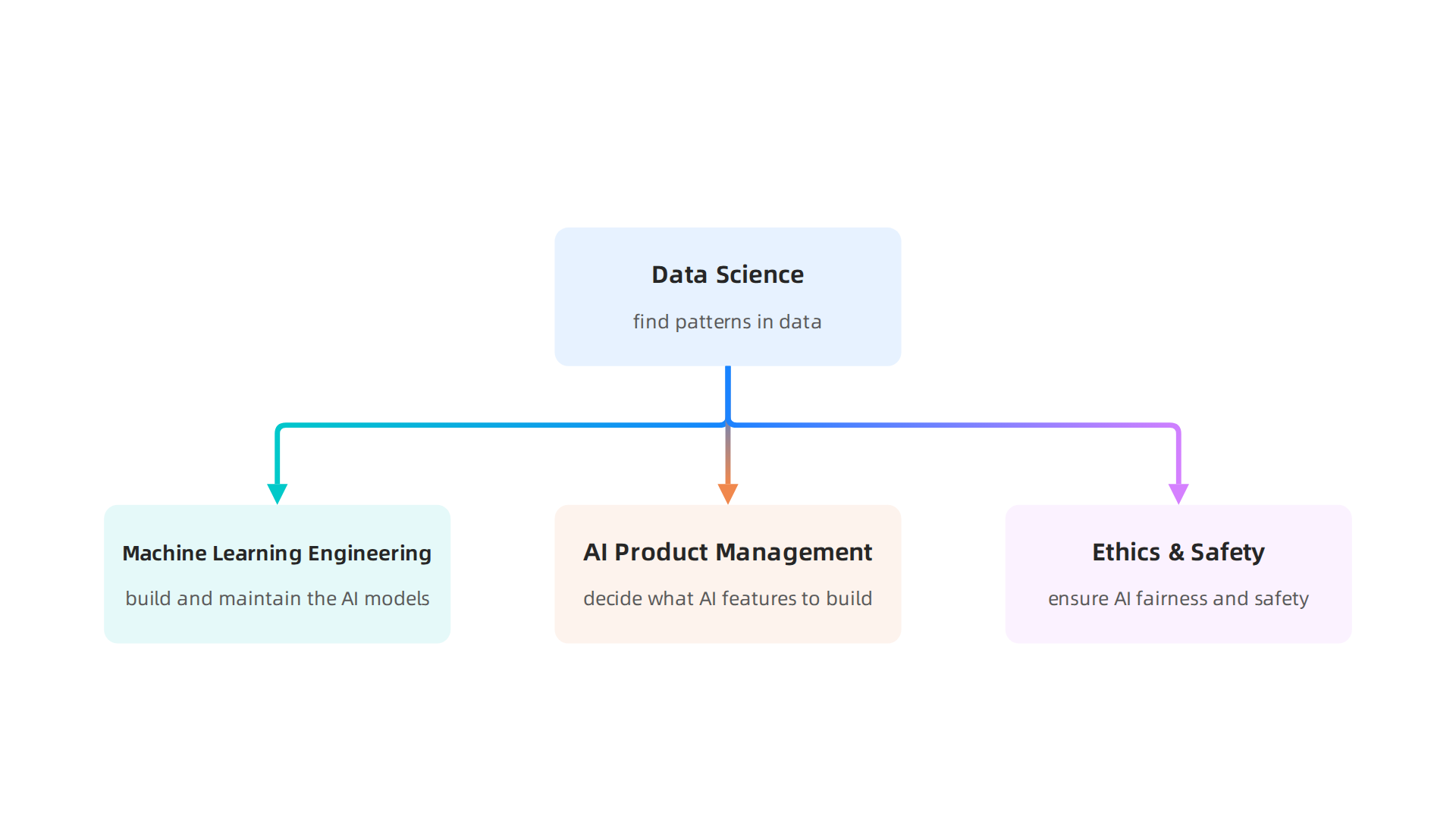
- Data Science: These experts know how to find patterns in data and help
new AI toolslearn. - Machine Learning Engineering: These folks build and maintain the AI models, making sure they run smoothly in products.
- AI Product Management: These managers help decide what AI features to build and how they will help customers.
- AI Ethics and Safety: As AI gets more powerful, people who understand how to make sure AI is fair and safe are very important.
In 2026, companies are looking for people who can not only code but also understand the bigger picture of how AI can solve real-world problems. The IT job market shows a strong need for specialized talent in AI and machine learning 2026 Tech and IT Hiring and Job Market Trends.
Keeping Good AI Talent Happy
Once software companies hire great AI talent, they want to keep them. This means making sure they have interesting work, chances to learn new things, and clear paths to grow in their careers.
- Learning and Growth: AI changes fast, so giving teams time and resources to learn new methods and technologies is key. Offering training and development helps people feel valued. You can learn more about how companies are using specialized training platforms for this in our article on AI Powered Learning Platform Reshaping Corporate Training in 2026.
- Clear Career Paths: People want to know how they can move up or take on more important roles. Having clear steps for career growth helps them see a future with the company.
- Good Projects: AI experts want to work on projects that are challenging and make a real impact. Giving them a say in what they work on can keep them motivated.
By focusing on these areas, software companies can build strong, lasting AI teams that help them stay ahead.
Building a great team is key, but for software companies to truly succeed with new AI tools, they also need to understand the rules and risks. Think of it like driving a car: you need skilled drivers, but you also need to follow traffic laws and have safety features in place. The world of AI has its own set of important rules and things to watch out for.
Risks, Governance, and Regulatory Considerations
Using AI comes with big benefits, but also some serious questions and challenges, especially for tech companies. These challenges touch on legal issues, how we keep things fair, and how we keep our new AI tools safe.
Key Risks for AI
When software companies use AI, they need to think about these main risks:
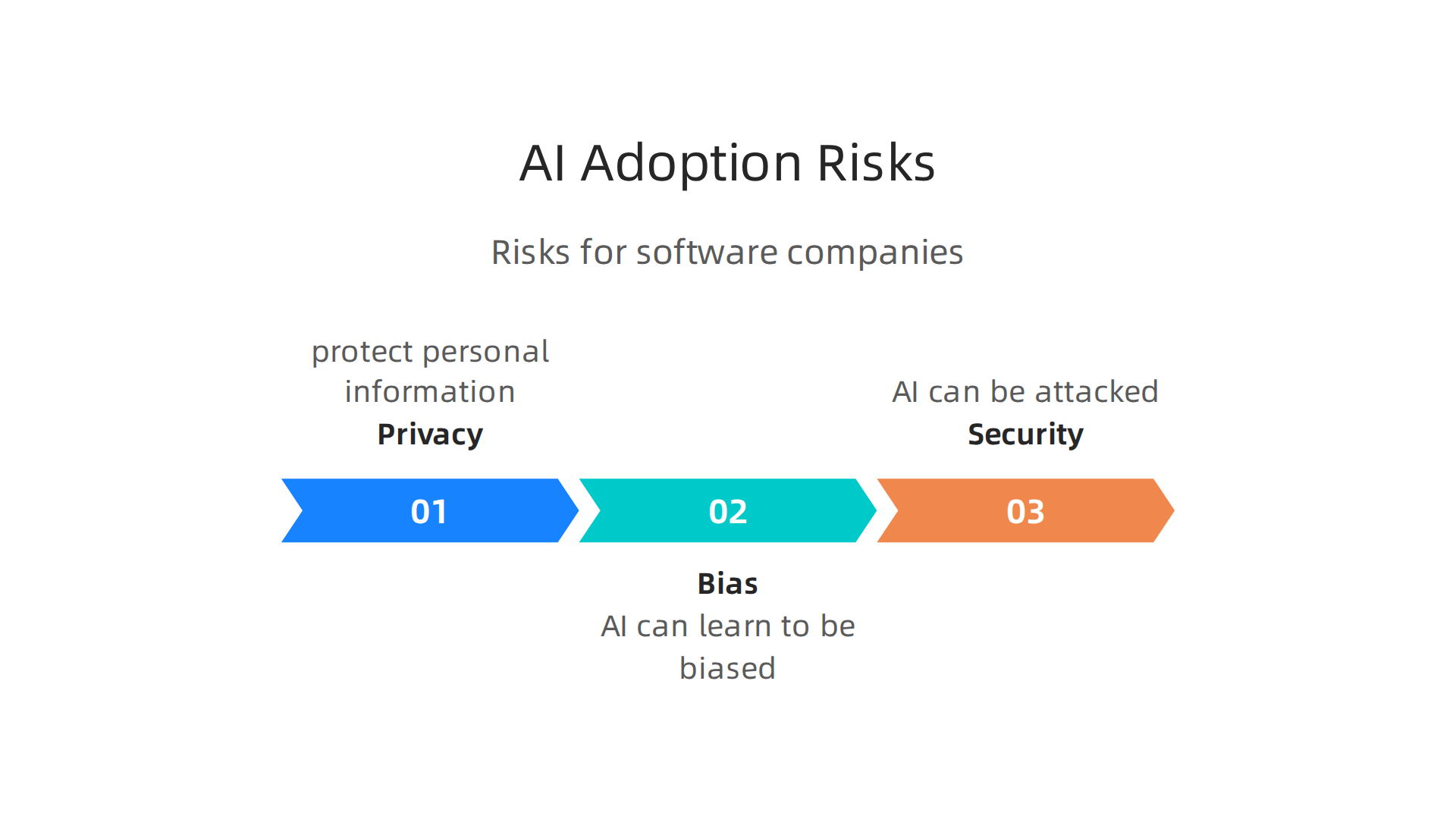
- Privacy: AI systems often need a lot of data. This data might include personal information. Companies must be very careful to protect this information and follow laws about how it’s collected, stored, and used. If they don’t, people’s privacy could be at risk.
- Bias: AI learns from the data it’s given. If that data has unfair patterns or is incomplete, the AI can learn to be biased. This means it might treat some groups of people unfairly in important areas like hiring, loans, or even healthcare. Making sure
all AI toolsare fair is a big job. - Security: Like any computer system, AI can be attacked. Bad actors might try to trick AI models, steal sensitive data, or make the AI do things it shouldn’t. Keeping
new AI toolssafe from these kinds of attacks is super important to protect both the company and its customers.
These risks are part of many different artificial intelligence applications in 2026 from healthcare to finance and beyond.
Setting Up Rules and Controls for AI
To handle these risks, software companies need good "governance" in place. This simply means having clear rules, responsibilities, and ways to check that everyone is following them. Think of it as a playbook for how to use AI safely and responsibly.
Executives should focus on:
- Clear Frameworks: Creating simple guides that explain how AI should be built, tested, and used within the company. This helps everyone know what’s expected.
- Risk Checks: Regularly looking at their
ai use casesto find potential problems. This means asking: "Could this AI be unfair?", "Is this AI system secure?", and "Are we protecting people’s privacy?". - Ethical Guidelines: Making sure that all
new AI toolsare designed and used in ways that are good for people and society. This goes beyond just following the law.
Having these kinds of controls helps companies use AI in a smart and careful way.
The Changing World of AI Laws in 2026
The government rules around AI are changing quickly in 2026. Many countries and regions, like the European Union with its important AI Act, are putting new laws in place. These laws aim to make AI safer, more transparent, and more fair.
For tech companies, this means staying updated is a must. They need to understand what new rules apply to their all AI tools and ai use cases. This can be a complex task, as different places have different laws. For instance, companies in the EU must comply with certain rules for high-risk AI systems by August 2026, as outlined in the AI Act | Shaping Europe’s digital future.
This means companies need to be ready to show how their AI systems are safe and fair. You can learn more about how to navigate these rules in an AI Regulation in 2026: The Complete Survival Guide for Businesses.
Staying on top of these fast-moving changes is crucial for any software company using AI.
Get clear daily AI updates from The AI Newsletter Worth Reading.
Summary
This article explains why AI is now essential for software companies and guides leaders through the practical choices needed to adopt it. It contrasts adding AI features to existing products with building AI-native offerings, and shows how that decision changes product metrics, pricing, and go-to-market strategy. The piece covers engineering realities—data needs, MLOps, observability, and cost tradeoffs—along with how to structure teams and attract specialized talent. It also walks through commercial implications like usage-based and value pricing and the role of data monetization. Importantly, the article highlights governance, bias, privacy, security risks, and the fast-evolving regulatory landscape companies must navigate. After reading, product, engineering, and leadership teams will have a clearer roadmap to choose AI initiatives, set success metrics, organize talent, and implement controls for safe, scalable AI deployments.