
Introduction
Have you noticed how much artificial intelligence is changing the way people learn?

It is happening fast. In 2026, the global market for AI in education is booming. One report shows it will grow from $7.52 billion to over $10.6 billion this year alone. That is a growth rate of over 40% year over year. Another study says the market could reach $136.79 billion by 2035.
These numbers are not just for schools. An ai-powered learning platform is now a key tool for professionals. It can build custom lessons, summarize long reports, and create fresh training material in seconds. It changes how teams handle ai content creation and opens up new ai startup ideas for founders.
For investors, analysts, and operators, staying informed is critical. The OECD Digital Education Outlook 2026 confirms that generative AI is becoming a core part of how we teach and train. The Stanford AI Index Report shows that consumers are spending billions on these tools every year.
Actually, the hardest part might be keeping up with all the new tools and trends. That is where we come in. This article gives you a clear, data-driven look at the ai powered learning platform landscape. We will cover the top trends, the best tools, and what this shift means for you.
If you want to explore how AI is being used in other areas too, check out our guide on artificial intelligence applications in 2026. It shows how AI is reshaping everything from healthcare to finance.
And if you want to stay ahead of the curve every single day, the Deep View Newsletter is a great next step. It helps thousands of busy professionals cut through the noise and find the most important AI news in just a few minutes.
The Evolution of AI in Corporate Learning and Development
Corporate learning did not always look like this. A few decades ago, most training meant sitting in a room with a binder or clicking through a clunky CD-ROM. It was static. Everyone got the same material, whether they already knew it or not.
Then things started to change. The big shift came during the COVID-19 pandemic. Companies had to move training online fast. That sudden push created fertile ground for smarter tools. The OECD Digital Education Outlook 2026 confirms that the pandemic was a major turning point for digital learning.
Now in 2026, we have something completely different. An ai-powered learning platform uses natural language processing and machine learning to adapt in real time. If you struggle with a concept, the platform slows down and gives you more examples. If you are breezing through, it speeds up or offers advanced material. It feels personal, like having a tutor who actually knows you.
These platforms also handle ai content creation on the fly. They can generate practice questions, summaries, and even case studies based on your company’s own data. That saves hours of manual work for L&D teams.
This evolution matters for anyone exploring ai startup ideas too. The corporate learning market is huge, and AI is making it more efficient every year. As the Stanford AI Index Report shows, generative AI tools are now worth billions to consumers and businesses alike.
If you want to see how AI is reshaping other parts of enterprise operations, check out our guide on scaling artificial intelligence in 2026. It covers practical steps for using AI across your organization.
And if you want to stay on top of the latest AI trends in learning and beyond, the Deep View Newsletter delivers the most important updates in just a few minutes each day. It is the easiest way to keep your knowledge sharp.
Key Features of Next-Generation AI Learning Platforms
So what actually makes an ai-powered learning platform so different from the old training software of the past? It comes down to three core features: personalization, adaptive paths, and real-time feedback.
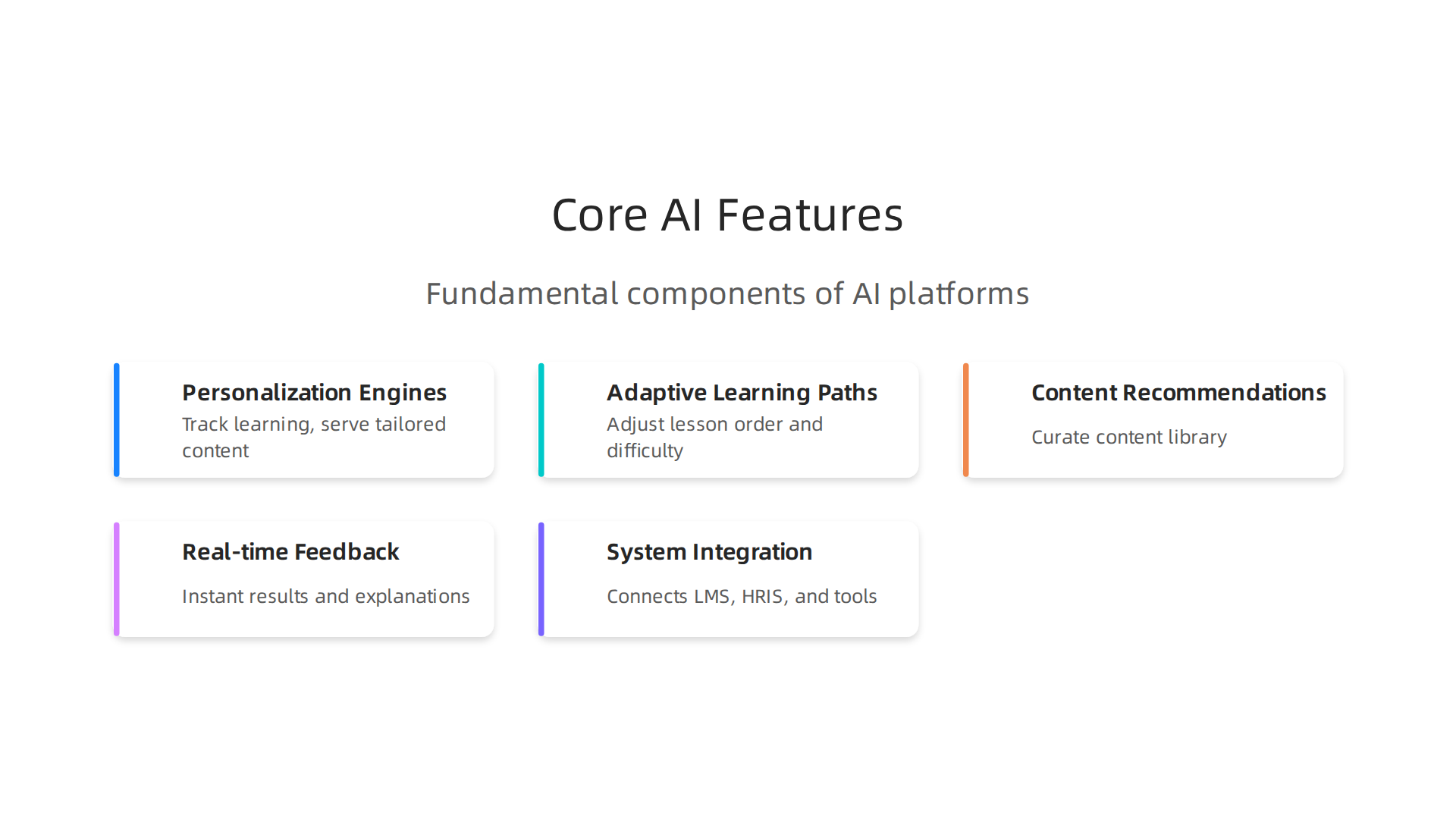
Personalization engines are the heart of these systems. They track how you learn, what you get wrong, and what you already know. Then they serve up content that fits you perfectly. According to 360Learning, modern platforms use machine learning to create personalized recommendations and adaptive assessments. This is not just a nice bonus. It is the main reason companies see higher completion rates and better skill retention.
Adaptive learning paths take personalization a step further. The platform changes the order and difficulty of lessons based on your performance. If you breeze through a module, it skips the basics and moves you ahead. If you struggle, it offers more examples and practice. As ProProfs explains, adaptive platforms adjust in real time to each learner’s needs. That closed-loop system keeps everyone working at the right level.
Content recommendation algorithms also play a big role. These use collaborative filtering (what learners like you found helpful) and content-based filtering (topics similar to what you have studied). The result is a library that feels curated just for you. Check out our guide on the best AI tools for teachers to see how similar algorithms save time in education.
Real-time feedback is another key feature. Instead of waiting for a manager or instructor to grade a quiz, you get instant results and explanations. That helps you fix mistakes right away.
Finally, integration with existing systems matters a lot. The best platforms connect with your LMS, HRIS, and other enterprise tools. According to Absorb LMS, AI-powered platforms that integrate smoothly are far more likely to be adopted across an organization.
If you want to stay ahead of trends like these, the Deep View Newsletter delivers clear daily AI updates straight to your inbox. It is the easiest way to keep your learning on track.
How AI Enables Hyper-Personalized Learning Paths
One size fits all training is a thing of the past. The problem is that every learner comes with different skills, knowledge gaps, and learning speeds. An ai-powered learning platform changes that completely.
Machine learning models dig into your behavior. They look at which modules you breeze through and where you get stuck. They track your preferences, time spent, and quiz performance. According to Cypher Learning, AI analyzes this data to personalize content delivery for each person.
Adaptive learning paths then take that analysis and make real time changes. If you understand a topic fast, the platform skips the basic stuff and moves you ahead. If you need more practice, it serves up extra examples and exercises. ProProfs explains that these platforms adjust in real time based on your progress. It is like having a personal tutor that never gets tired.
The result is way higher engagement and knowledge retention. When the content fits you perfectly, you stay focused. You are not bored by things you already know or overwhelmed by things too hard. As Coursera notes, adaptive learning algorithms create a personalized pathway tailored to your needs. A study from ACM confirms that this closed loop system boosts learning outcomes significantly.
This hyper personalization does not stop at course content. The same technology powers other fields too. For example, you can see how AI creates customized experiences in areas like artificial intelligence applications in 2026 across healthcare and finance.
If you want to stay current with how AI is reshaping training and every other industry, a daily briefing helps. The Deep View Newsletter delivers clear AI updates straight to your inbox. It is the easiest way to keep your finger on the pulse.
Building Content Ecosystems with AI-Generated and Curated Materials
Personalized paths need a huge library of content to work. You cannot expect a single handbook or a few videos to cover every possible need. That is where an ai-powered learning platform really shines.
AI creates content at a speed humans cannot match. It generates micro learning modules, quick summaries, practice assessments, and interactive elements in minutes.
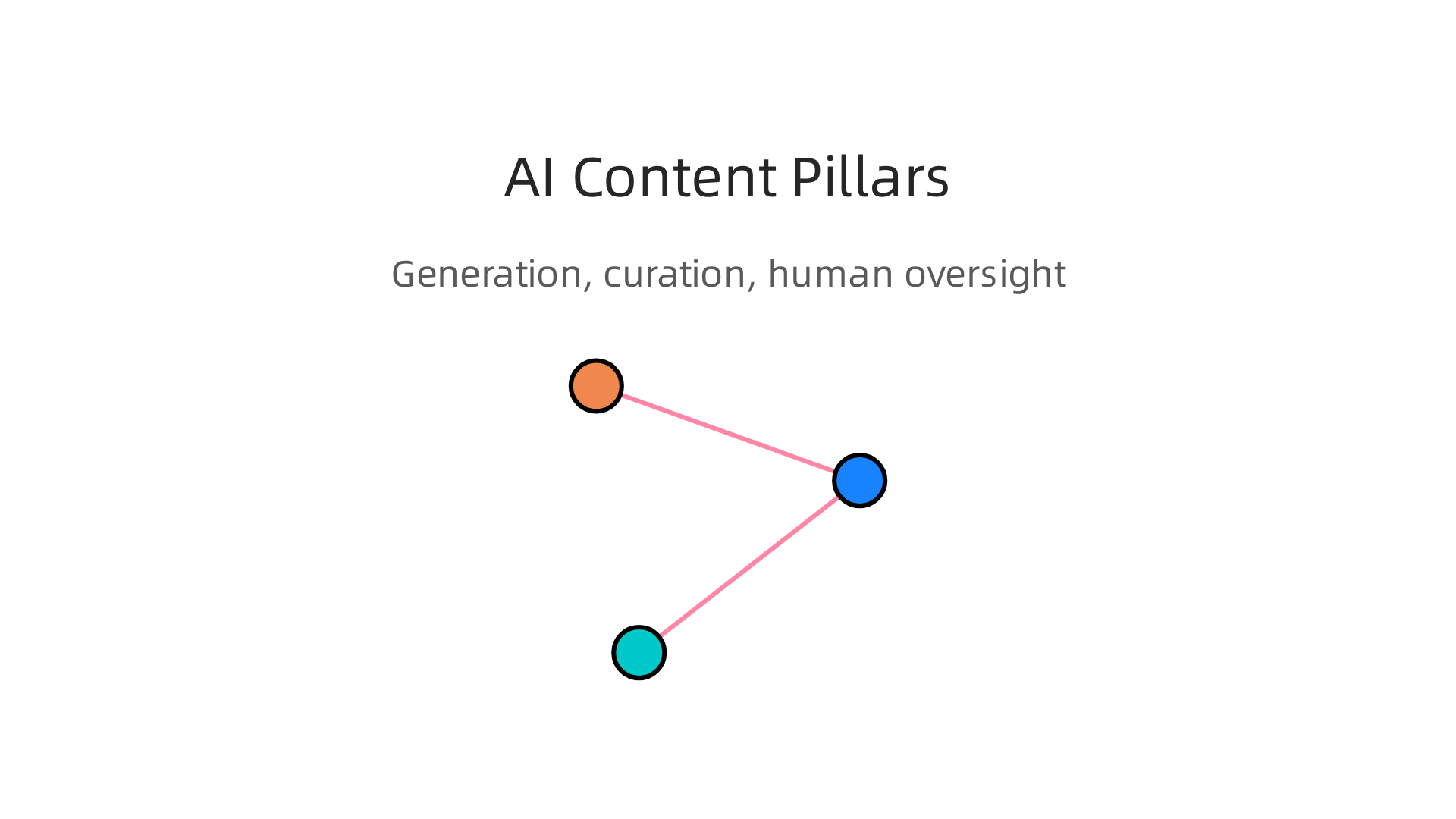
Tools like Synthesia let you produce video lessons with AI avatars, while ChatGPT drafts questions and explanations instantly. According to TutorFlow, these tools help you build training materials five to ten times faster than traditional methods.
But creating from scratch is only half the story. Smart curation engines also scan the web, internal knowledge bases, and existing course libraries to surface the most relevant materials for each topic. They pull in articles, videos, podcasts, and case studies automatically. This keeps your content library fresh without manual effort. Platforms highlighted by Disprz use analytics to identify which curated resources actually drive engagement and learning.
Here is the thing. Raw automation can flood learners with low quality stuff. That is why human oversight still matters. Subject matter experts review AI generated drafts to fix errors, add real world context, and keep the voice sharp. The best ai content creation workflows use a human in the loop model. For example, a training manager might use AI to outline a new compliance module, then polish the tone and check the facts before publishing. This balance gives you speed without sacrificing trust.
If you want to explore how AI tools handle writing and video content, check out our comparison of the best writer AI tools in 2026 and our guide on text to video AI.
Content ecosystems built this way scale naturally. As your organization grows, the platform adapts by generating new materials or curating emerging resources. The result is a living library that powers those personalized learning paths we talked about.
Wondering where the whole AI industry is heading next? The Deep View Newsletter delivers clear daily insights so you never miss a shift.
Leveraging Learning Analytics for Better Outcomes
Building a rich content ecosystem is just the first step. Without data, you do not know if your training actually works. That is where learning analytics come in. An ai-powered learning platform collects valuable information from every learner interaction. It tracks things like completion rates, quiz scores, time spent on modules, and even which parts of a video get rewatched.
This data helps you spot what is working and what is not.

According to Cloud Assess, the best learning analytics platforms in 2026 give you clear dashboards that show learner progress and content effectiveness at a glance. Instead of guessing, you can see exactly which modules need updating or where learners get stuck.
Predictive analytics take this a step further. The platform analyzes past behaviors to flag learners who might fall behind. It then recommends corrective actions like extra practice, a coaching session, or a different learning path. D2L highlights how modern AI learning platforms use these predictions to reduce dropout rates and keep everyone on track. You catch problems early before they turn into big gaps.
Dashboards turn all that raw data into visuals that make sense. Administrators can see training ROI, engagement trends, and skill gaps without digging through spreadsheets. Instructors get real time alerts when a learner struggles. This allows quick intervention and keeps the learning experience personal. For a deeper look at how AI scales decision making across an organization, read our guide on HubSpot AI enterprise operations.
The result is a continuous feedback loop. Content improves, learners get exactly what they need, and your organization gets stronger training outcomes. Analytics turn your ai powered learning platform into an intelligent system that gets better over time.
Want to stay ahead of the latest AI trends that shape learning and business? The Deep View Newsletter delivers clear daily insights so you never miss a shift. Subscribe to The Deep View Newsletter today.
Addressing Challenges: Data Privacy, Bias, and Integration
So far, an ai powered learning platform sounds like a perfect solution. But let us be honest. Putting AI into education or corporate training comes with real roadblocks.
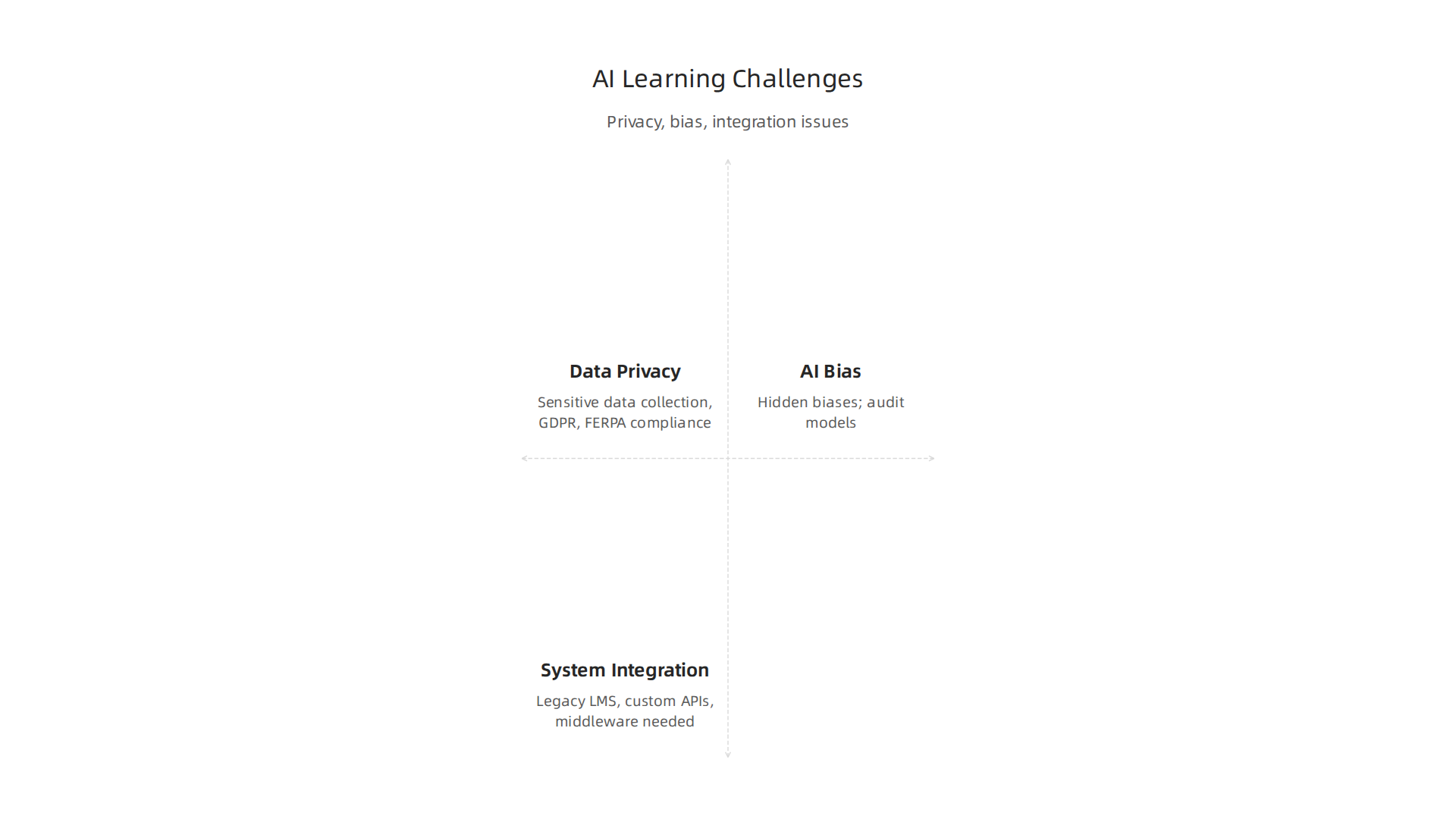
You need to know what they are so you can handle them early.
Data privacy is a big deal
AI tools collect a lot of personal information. We are talking about learner names, progress data, quiz results, and even behavioral patterns. That kind of data is sensitive. If it leaks or gets misused, trust vanishes fast. Research from RSIS International shows that privacy concerns are a major reason teachers hesitate to adopt AI. You must follow laws like GDPR and FERPA. That means encrypting data, getting clear consent, and limiting what you collect. The Frontiers study also warns that AI can both threaten and protect privacy depending on how you set it up. So plan your data governance from day one.
Bias can sneak into AI models
AI learns from data. If that data has hidden biases, the AI repeats them. For example, an ai-powered learning platform might recommend certain courses more often to one group of learners. That is not fair. According to Cleveroad, bias is a top challenge in EdTech implementations. You need to regularly audit your models and use diverse training data. Also involve human reviewers to catch unfair patterns. A good practice is to check your system against ethical AI guidelines, like those shared by 9ine.
Integration with old systems is tricky
Many schools and companies still use legacy learning management systems or custom content formats. Getting a shiny new ai powered learning platform to talk to those old systems is not always easy. Some platforms do not play well together. You may need custom APIs or middleware. The Edly article highlights that balancing AI innovation with existing infrastructure requires careful planning. If you are looking for practical tools that simplify AI adoption in education, our roundup of the best AI tools for teachers free in 2026 can help you get started.
The key takeaway? Do not ignore these challenges. Face them head on with clear policies, regular checks, and smart integration planning. And to stay on top of how AI keeps evolving in education and beyond, the Deep View Newsletter delivers clear daily insights straight to your inbox. Subscribe to The Deep View Newsletter today.
The Rise of AI Tutors and Knowledge Assistants in 2026
Think about the last time you were stuck on a topic and had no one to ask. Maybe it was late at night, or your teacher was busy with other students. That frustration is fading fast. In 2026, ai powered learning platform features like conversational AI tutors and knowledge assistants are changing how we learn, both in schools and at work.

These tools are powered by large language models (LLMs) and natural language processing. They can hold real time conversations, answer questions, and explain tough ideas in simple terms. Instead of waiting for office hours or a reply on a forum, learners get instant help. This is huge for students who learn at different speeds. A tool like an ai-powered learning platform can repeat an explanation as many times as needed without getting tired.
But it goes deeper. Knowledge assistants today connect directly with your existing content. For example, a corporate training program might have a library of manuals and video guides. An AI assistant can pull the exact section you need and summarize it. It understands the context of your question. This is what makes modern platforms so useful. According to Cleveroad’s 2026 guide on AI in EdTech, AI tutoring and analytics are driving real engagement in classrooms and corporate training.
Adoption is growing fast. Universities are rolling out AI tutors for introductory courses. Companies use them for onboarding new hires and upskilling teams. The shift is happening because these tools save time and make learning feel personal. If you are a teacher or trainer looking for practical options, check out our roundup of the best AI tools for teachers free in 2026 to see what works right now.
We are entering an era where help is always available. To keep up with how AI continues to reshape learning and work, the Deep View Newsletter brings you clear daily insights. Subscribe to The Deep View Newsletter today.
Future Trends: What’s Next for AI-Powered Learning?
So we have smart tutors and knowledge assistants helping us today. But the future of the ai-powered learning platform is even more exciting. Three big trends are coming that will change how we learn and train.
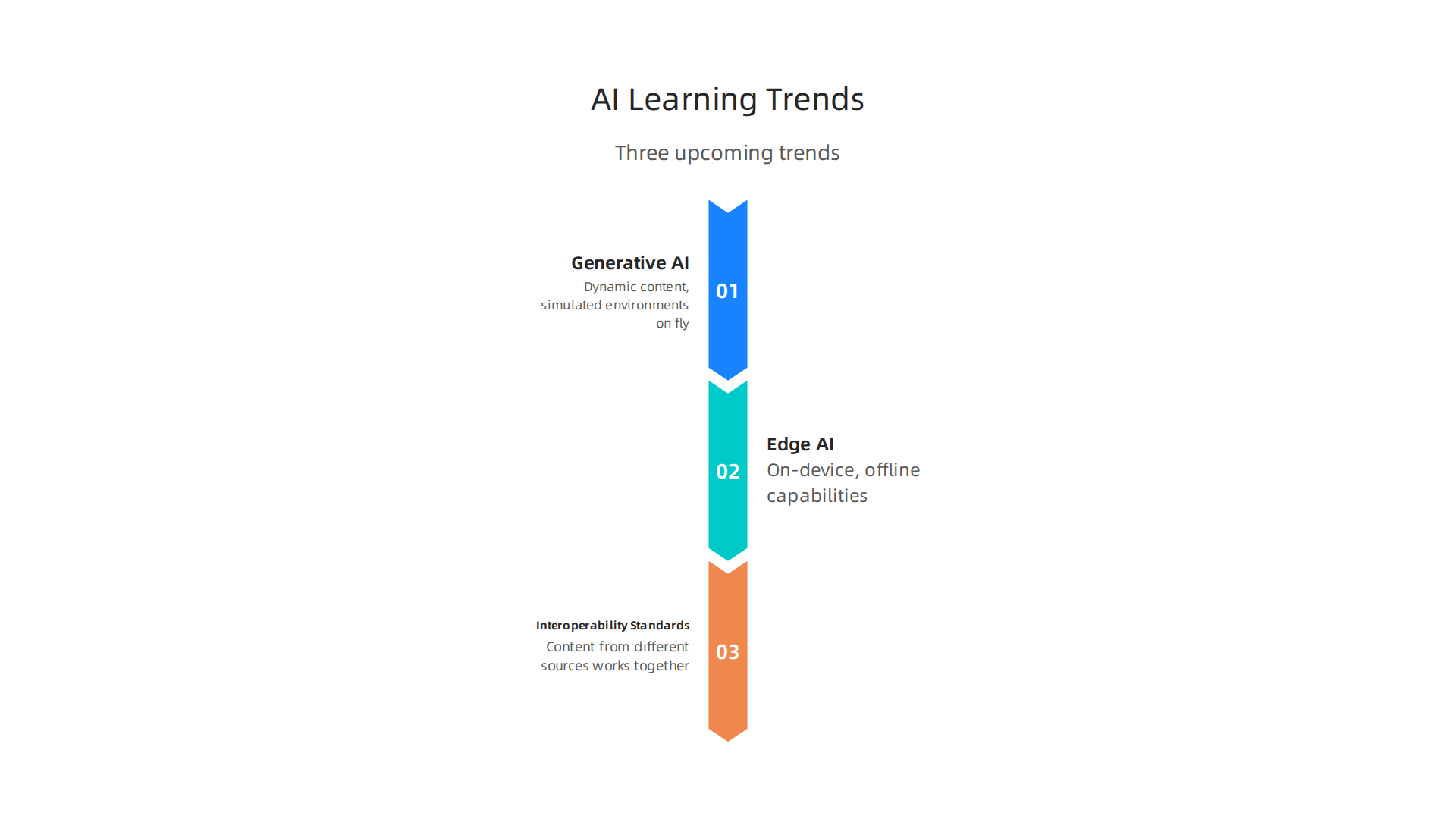
First up is generative AI for dynamic content and simulated environments. Instead of static textbooks or fixed videos, AI will create lessons, quizzes, and even virtual worlds on the fly. Imagine a medical student practicing surgery in a simulation that changes every time. Or a sales team stepping into a virtual client meeting generated instantly by AI. This is not far off. The AI 2027 Scenario Initiative explores how AI will power realistic training environments. For ai content creation, tools are already getting better at building custom materials. If you want to see how AI is changing writing and content, check out our best writer AI tools in 2026 comparison.
The second trend is edge AI and offline capabilities. Many learners around the world don’t have fast, steady internet connections. Edge AI runs directly on a device like a phone or laptop, no cloud needed. This means an ai-powered learning platform can work during a power outage, on a plane, or in a remote village. Students can download a lesson, interact with a tutor offline, and sync progress later. That opens learning to many more people.
Third, we will see interoperability standards that create richer content ecosystems. Right now, many learning tools don’t talk to each other. New standards will let content from different sources work together smoothly. Your AI assistant could pull a video from one library, a quiz from another, and a simulation from a third, all in one lesson. This will make learning more flexible and powerful.
The next few years will bring huge leaps. To stay ahead of these changes and see how AI is reshaping everything, get clear daily insights from the experts. Subscribe to The Deep View Newsletter and never miss what matters.
Summary
This article explains how AI-powered learning platforms are transforming corporate and institutional training by delivering personalized, adaptive, and data-driven learning experiences. It walks through the core capabilities—personalization engines, adaptive paths, content recommendation, real-time feedback, and integrations—and shows how AI speeds content creation and curation while scaling education across organizations. You’ll learn how platforms use analytics and predictive models to track outcomes, surface skill gaps, and flag learners who need help, plus best practices for keeping humans in the loop when reviewing AI-generated material. The piece also covers practical challenges such as data privacy, model bias, and integrating with legacy systems, and it outlines emerging trends like generative simulations, edge AI, and improved interoperability. After reading, you’ll understand the key features to evaluate, how to set up governance and oversight, and the strategic benefits AI brings to learning and development programs.