
Why careers and leadership in AI demand a new playbook
The world of Artificial Intelligence (AI) is moving incredibly fast in 2026. Things change every day, making it hard for anyone working with AI to keep up. Think about how many new tools, ideas, and companies pop up all the time. It is a big challenge for those who want to be an ai researcher or even an ai driven leader.
Right now, many companies are looking for ai people with special skills. In 2026, AI skills are being mentioned in many more job listings than ever before, showing a huge jump compared to past years, according to The Stanford AI Index Report 2026. This means there are many different jobs in AI, from making new AI tools to helping businesses use them better. But with so much happening, it can be tough to know what is truly important. This is called the "signal-to-noise" problem: there is a lot of noise (unimportant information) and not enough clear signals (helpful facts).
The fast changes in AI are also reshaping the job market itself, changing what skills employers want most from their workers.

Things like good judgment, being creative, and strong leadership are more important now, as companies that use AI are hiring faster than others, as noted in the AI reshapes global labour market into two distinct paths … report.
This guide is here to help you make sense of it all. We will show you different career paths in AI, how to become a great leader in this new world, and smart ways to hire the best AI talent. We will also help you understand the important signs in the AI market. Our goal is to make mastering AI company types easier for everyone involved, whether you are an AI researcher, a business leader, or someone just trying to keep up.
To stay on top of daily insights and critical developments, consider subscribing to The AI Newsletter Worth Reading.
What an ‘AI Researcher’ Actually Does Today
So, you might be wondering, what does an ai researcher actually do in 2026? It is a super important job that is different in many ways depending on where they work. Think of an AI researcher as someone who helps build the future of smart machines. They are the ai people who make AI smarter and more helpful.
A big part of what an AI researcher does is called "foundational research." This means they come up with new ideas and ways for AI to learn and think. They design new algorithms, which are like recipes for computers to follow. These new ideas push the limits of what AI can do, as explained in the AI Researcher Job Description: Duties, Skills & Salary 2026 guide. They also develop models, which are like small versions of an AI system, and test them out.
Beyond coming up with new ideas, an AI researcher also works on making sure these ideas actually work well.
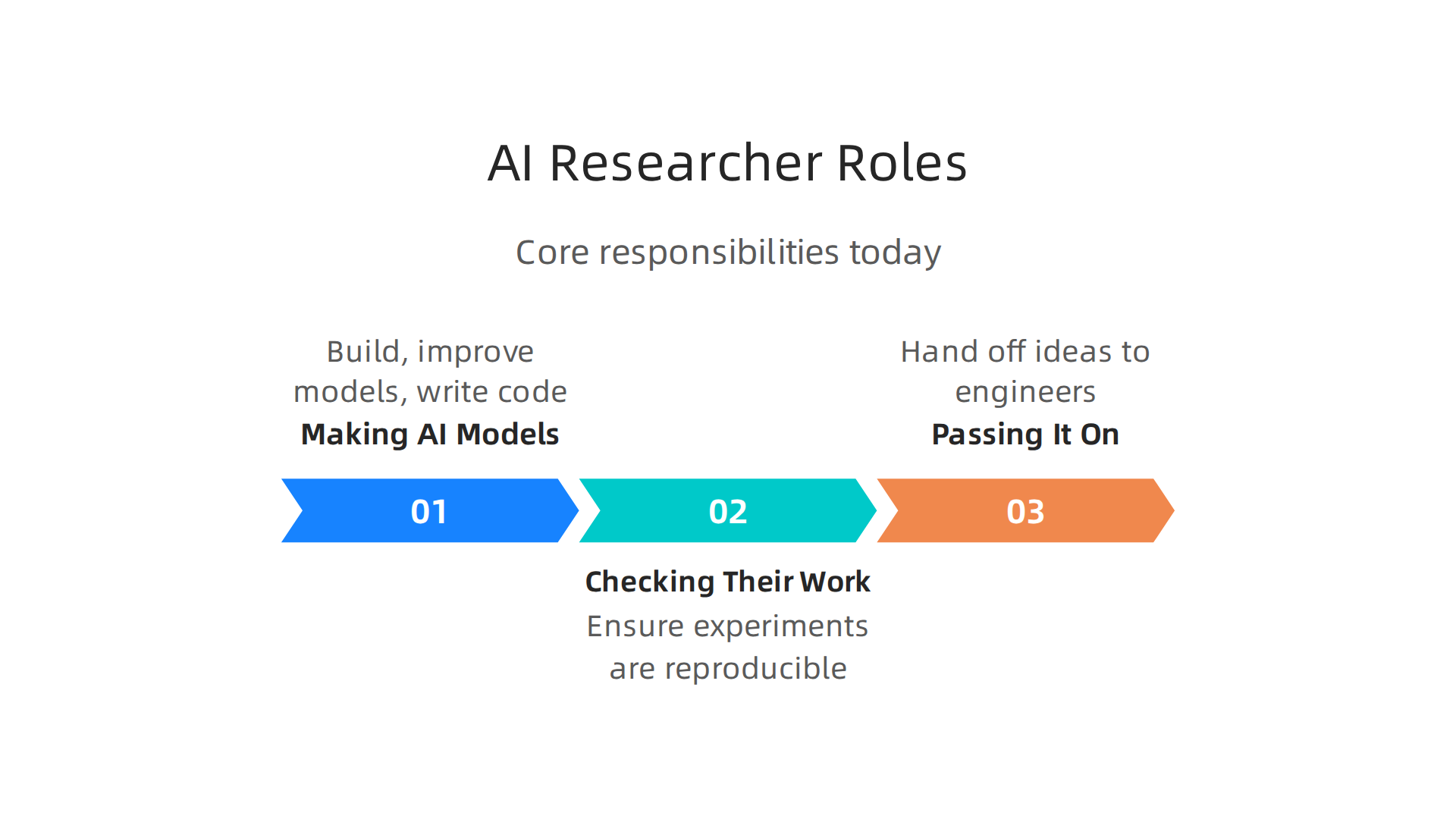
This includes:
- Making AI Models: They build and improve AI models. This often means writing code, running experiments, and seeing how well the AI performs. For example, they might work on things like deep learning or new ways for AI to understand language.
- Checking Their Work: A key part of science is making sure that others can get the same results. AI researchers work to make their experiments "reproducible," meaning others can test and confirm their findings. This builds trust in new AI technologies.
- Passing It On: Sometimes, an AI researcher creates a new tool or method. Their job might involve handing off these working ideas to other engineers who will turn them into products that people can use every day. This helps new research go from a lab idea to a real-world solution.
The exact tasks for an AI researcher can change a lot depending on their workplace. In a university, like those highlighted in Academic Artificial Intelligence from CMU Labs to Global Impact, an AI researcher might spend more time on foundational research, writing papers, and teaching. In big tech companies, they might work on both new ideas and making those ideas better for huge numbers of users. Startups often need AI researchers who can quickly turn new ideas into working products to help the business grow. Specialized research labs, like those developing materials science with AI, focus on specific areas, needing researchers with deep knowledge in those fields, according to Permanent Research Positions – NIMS.
No matter where they work, an AI researcher needs strong technical skills, a creative mind to solve hard problems, and the ability to work with others. They are truly at the front of mastering AI and shaping our future.
The journey of an AI researcher often starts with a strong focus on learning and deep study. Many people in this field begin their careers after earning a PhD. This high level of education helps them get ready to do new research.
Here is a common path for an ai researcher:
- Research Scientist: After school, a common first step is becoming an AI research scientist. In this role, you spend your time exploring new ideas, writing code to test those ideas, and sharing your findings. As an AI research scientist, you work to make AI smarter and more capable, often by creating new algorithms or improving existing ones.
- Senior Researcher: With more experience, an AI researcher can move into a senior position. A Senior AI Researcher often takes on bigger projects, guides newer team members, and helps shape the research direction for their group. They are key to developing new features and roadmaps for AI advancements.
- Leadership Roles: Beyond being a senior individual contributor, an AI researcher might choose a path that involves leading teams. This can include roles like research manager, director of AI research, or even a Vice President of Research. In these roles, they do less hands-on coding and more guiding teams, setting goals, and making sure the research matches company plans. Some even become an AI driven leader for an entire company, like a Chief Technology Officer (CTO) or a founder of a new AI startup.
Other Career Paths
Not every AI researcher stays in pure research. The skills learned are very valuable in other areas too:
- Applied Machine Learning Engineer: Some researchers move to becoming an applied machine learning engineer. This job focuses more on taking the ideas from research and making them work in real products that people use every day. If you are interested in this path, you can learn more about becoming an AI Research Engineer in 2026.
- Product Roles: Others might move into product management, where they help decide what AI products to build and how they should work, making sure they meet customer needs.
- Founding Startups: A truly exciting path for an experienced AI researcher is to start their own company. They use their deep knowledge to create new AI solutions and bring them to the market. For those dreaming of this, it’s helpful to know how to land an AI startup job in 2026, even if the goal is to create one.
No matter the exact path, staying updated on the latest trends and breakthroughs is super important for anyone working with AI.
To keep up with all the fast changes in AI, make sure you get regular updates.
The AI Newsletter Worth Reading will give you clear daily AI updates from The Deep View Newsletter.
Skills, education, and a portfolio that actually matters
While getting a good education is a strong start for an AI researcher, it is just one piece of the puzzle. Actually, what makes you truly stand out in 2026 are the practical skills you can show and a strong portfolio that proves your abilities. Companies are looking for more than just a degree; they want to see what you can actually do.
Let’s look at the important skills that make an AI researcher valuable:
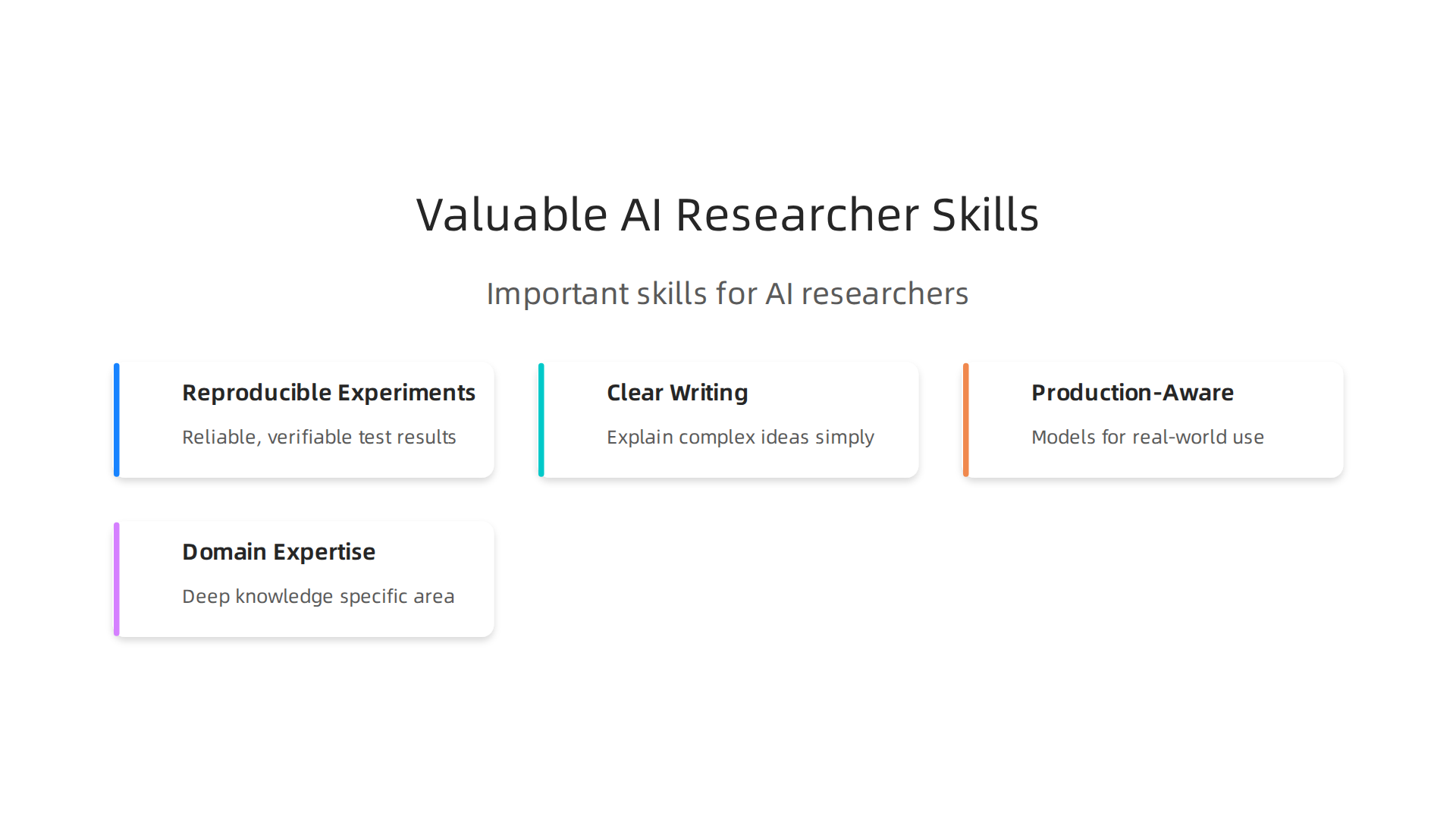
- Reproducible Experiments: This means that when you test an AI idea, someone else should be able to do the exact same test and get the same results. It shows you are careful and your work is reliable.
- Clear Writing: Being able to explain your complex AI ideas in simple words is super important. You need to write papers and reports that others can easily understand, helping to share new knowledge with other AI people.
- Production-Aware Model Development: This skill means you don’t just build AI models that work in a lab. You also think about how they will be used in the real world, in actual products or services. This means your models should be efficient and able to handle real-life challenges.
- Domain Expertise: Knowing a lot about a specific area, like healthcare or finance, helps you create AI solutions that are truly useful for that field.
These skills are highly valued. Reports from 2026 show that companies are seeking talent with a strong blend of research ability and practical application, influencing how they set pay and look for new hires Global AI Talent & Compensation Index 2026.
So, how do you show off these skills? You need a great portfolio.

Think of your portfolio as a collection of your best work. Here’s what makes a good one:
- Projects: Work on real-world problems. Even small projects can show your creativity and how you solve issues.
- Reproducible Notebooks: These are like digital lab books that show all your code, data, and steps you took for an experiment. It proves your work is sound and easy to follow.
- Accessible Papers: If you write research papers, make sure they are clear and easy for others to read, not just experts.
- Applied Demos: Create simple demos of your AI working. This could be a small app or a video that shows what your AI can do. It’s a great way to show production-aware development.
Mastering AI is a journey of continuous learning and showing what you’ve learned. If you want to dive deeper into the basics and build a strong foundation, understanding the core concepts is key. You can explore topics like Artificial Intelligence and Machine Learning Fundamentals to help build these crucial skills. Whether you aim to be an AI researcher or an AI driven leader, showing your practical skills through a solid portfolio is what truly matters in today’s fast-moving AI world.
The skills and strong portfolios we just talked about are not just nice to have; they are what truly make an AI researcher highly sought after in today’s job market. In 2026, the demand for these smart AI people is shaped by a few big things, and how companies hire and pay for them has changed a lot.
What Drives the Need for AI Researchers?
Three main things are pushing the demand for AI researchers sky-high:
- More Powerful Computers: As computers get better and faster, AI researchers can work on bigger and more complex problems. This means they need more people to build and test these advanced AI systems.
- Wider Use of AI Products: More and more companies are putting AI into their everyday products, from smart assistants to tools that help doctors. This growing use means there’s a constant need for new research to make AI even better and find new ways to use it.
- Bigger Research Budgets: Many different types of businesses, like those in healthcare, money management, and even farming, are putting more money into AI research. They want to find new AI solutions that can help them grow and solve tough problems.
Because of these factors, the job market for an AI researcher is very active. Reports from 2026 show that job postings related to AI have grown a lot, and this means higher salaries too AI / Machine Learning Engineer Talent Cluster Report, 2026.
How Companies Compete for Top AI Talent
For companies looking to hire an AI researcher, it’s a competitive game. They need to be smart about how they find, talk to, and offer jobs to people.
- Finding the Right People: Hiring managers need to look beyond just university degrees. They often seek out candidates who have shown their practical skills through projects and contributions to open-source AI. Using special reports can help understand what top talent is earning. For example, the 2026 AI Compensation Report by Orbyt gives a good idea of pay ranges.
- Smart Interviewing: Interviews for AI research roles often include showing off problem-solving skills and discussing past projects in detail. Companies want to see how candidates think and how they apply their knowledge.
- Making Good Offers: To attract the best AI talent, companies offer competitive salaries and sometimes even significant ownership in the company. In 2026, some reports suggest that for AI research scientists, the biggest perks often come from company ownership, not just base pay New Report From Pave and Nua Group: AI Research. This shows how highly valued these roles are.
Understanding these trends helps both those looking for AI jobs and the businesses eager to hire them. For those interested in the bigger picture of who is leading the AI industry, you might want to learn about The Biggest AI Companies in 2026 and the Trends Reshaping the Industry.
Staying on top of this fast-changing field is key for everyone involved in mastering AI.
Get clear daily AI updates from The AI Newsletter Worth Reading.
Leading research teams: skills for managers and directors
After understanding how to find top AI talent, the next big step is knowing how to lead these smart people effectively. Being a manager or director for an AI research team is a special kind of job. It’s about setting clear goals for science, making sure there’s a good mix of new ideas and practical needs, and helping your researchers grow.
Guiding Your AI Team
A good leader for an AI research team acts like a guide. They help shape the work by:
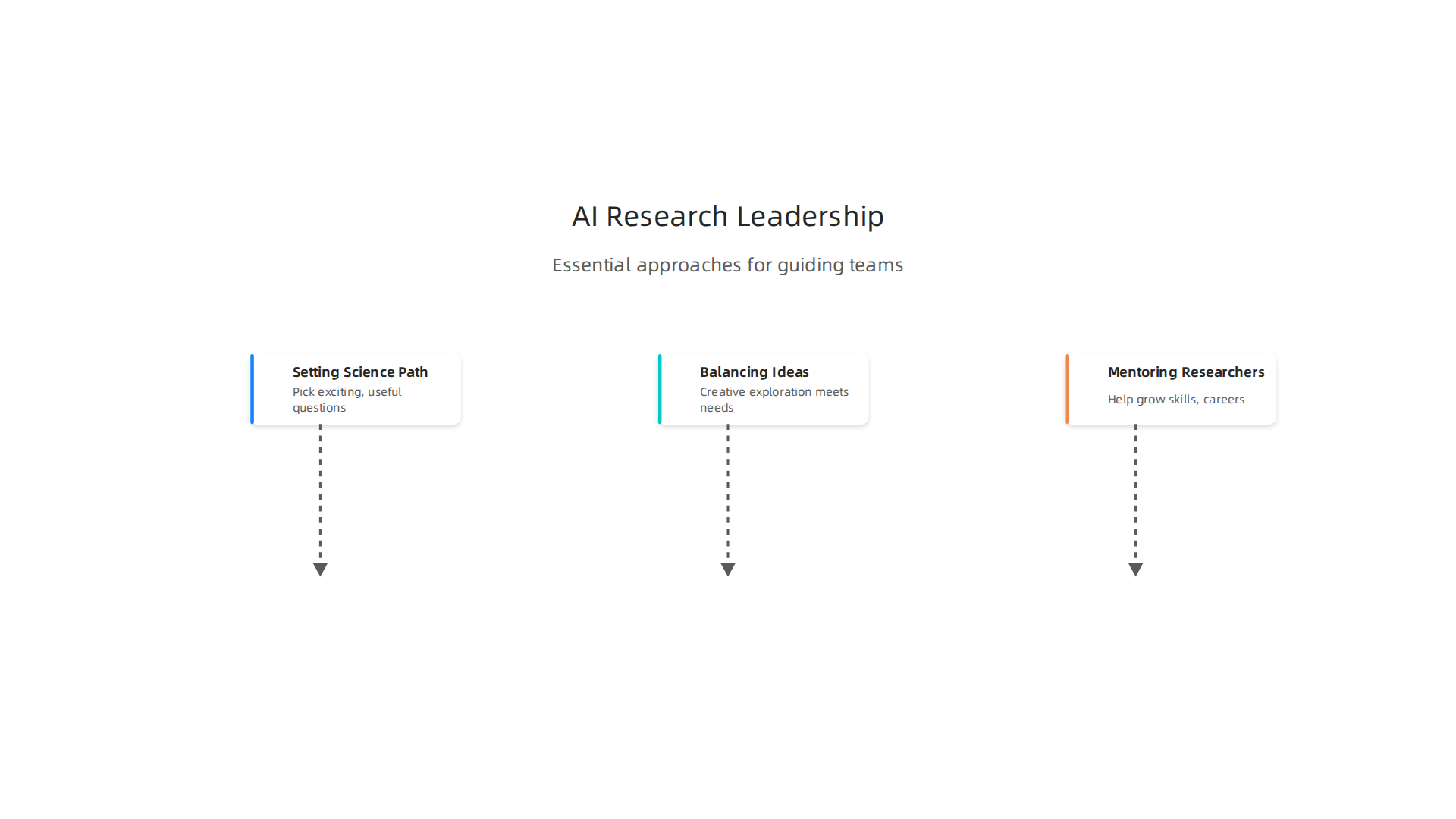
- Setting the Science Path: Leaders must help their teams pick the most exciting and useful research questions. This means knowing what’s new in AI and where the company wants to go. It is important for leaders to define roles, set goals, and clearly explain what is expected from everyone on the team Leadership and Team Management in Research Infrastructures.
- Balancing Big Ideas and Real Needs: It’s tricky to let researchers explore wild new ideas while also making sure their work helps create products the company can use. An AI driven leader needs to find that sweet spot, encouraging creativity that still leads to useful results.
- Mentoring Your Researchers: Great managers help their team members learn new skills and grow in their careers. This includes giving good advice, sharing knowledge, and making sure everyone has what they need to succeed.

This helps foster a sense of creativity and new thinking within the team.
Leaders also need to think about how their teams are set up. For example, some companies have all their AI researcher teams work together in one big group, while others spread them out into different product teams. Finding the right structure can help speed up work or make sure decisions are careful and well-thought-out, depending on what the company needs User Research Team Structure: Models, Ratios, and Roles – CleverX.
Measuring Progress Without Stopping New Ideas
One of the hardest parts of leading research is figuring out how to measure success. You can’t just count how many new things an AI researcher invents each week. It’s more about:
- Looking at the Journey: Instead of just the final result, managers should look at how the team is working together, how well they share ideas, and if they’re trying out new things. Getting useful feedback from managers is very important for researchers to improve their work and feel supported Evaluating and supporting leadership, management … – PMC.
- Being Okay with "Fails": In research, not every experiment works out. Good leaders understand this and let their teams try things that might not succeed right away. This encourages new thinking and helps the AI people not be afraid to explore.
- Connecting Research to Company Goals: While letting teams explore, it’s also important to make sure their work eventually ties back to what the company wants to achieve. This helps turn cool discoveries into real things that make a difference. For example, showing how a new AI solution makes something faster or cheaper is key for breakthroughs Startup Research Breakthroughs News | June, 2026.
Mastering AI leadership means building a team that’s excited to learn, try new things, and make a real impact. It’s about empowering your team members to innovate while still keeping an eye on the bigger picture for the business. If you are interested in growing your leadership skills in the AI world, check out this guide on AI Driven Leadership for 2026.
Mastering AI leadership opens doors to exciting new paths. After leading an AI research team, many experienced AI people wonder about their next big move. Often, this leads to two main routes: starting their own company based on their research or taking on a product leadership role within an existing company. Both paths use the skills of an AI researcher in new ways, but they come with different benefits and challenges.
Options for Your Next Big Move
If you’re an AI researcher thinking about your career, here are the main paths and what they mean:
- Becoming a Founder: This means taking your research breakthroughs and turning them into a new business. It’s a chance to build something from the ground up and have a huge impact. However, it also means a lot of hard work beyond just science, like managing money, hiring a team, and finding customers. It requires moving from the lab bench to the world of business, where mentorship and support systems are key for success From Lab Bench to Startup: How Scientists Can Make the Leap.
- Joining a Product Team as a Leader: This path means using your deep AI knowledge to guide the creation of new products or improve existing ones within a company. You get to see your research ideas come to life quickly, working with other teams like engineering and marketing. This role often involves making sure the AI solution truly helps the user and fits into the company’s overall plan. Finding the right AI startup job can be a smart move for an experienced AI researcher.
Both paths need a strong sense of leadership and a clear understanding of how AI can solve real-world problems.
Your Practical Checklist for the Transition
No matter if you aim to be a founder or a product leader, some steps are always helpful:
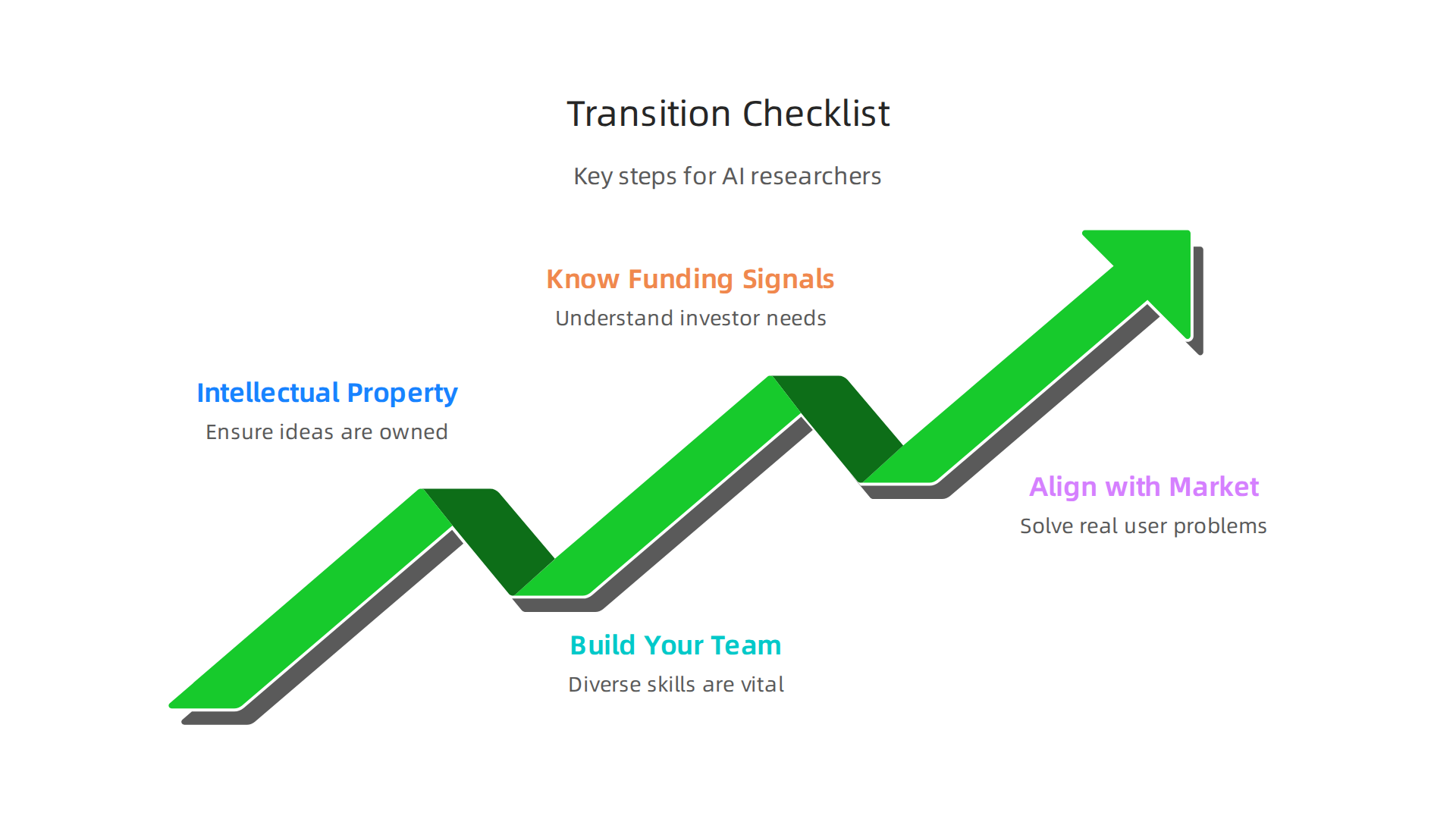
- Intellectual Property (IP) First: Before you share too much, make sure you know who owns your ideas. This is super important if you’re thinking about starting a company. Make sure your breakthrough is well-defined to stand out Startup Research Breakthroughs News | June, 2026.
- Build Your Team: You can’t do it all alone. Whether it’s co-founders for a startup or key people for a product team, having the right mix of skills is vital. This includes people who understand business, design, and coding, not just AI science.
- Know Your Funding Signals: If you’re starting a company, you’ll need money. Learning how investors think and what they look for is a must. Knowing when to quit your current job to fully commit to your startup is a big decision that should be based on careful planning When to Quit Your Job to Start a Startup: A Data-Driven Decision Framework for 2026. If you are looking to secure funding, a good guide on Master Investing in AI Startups: Your 2026 Guide can be very helpful.
- Align with the Market: What works great in a lab might not be ready for customers. It’s important to talk to potential users early and make sure your AI solution solves a real problem for them. Connecting your research to market needs from the start is very important for deep tech startups From Lab to Launch: A Researcher’s Guide to Spinning Out a Deep Tech Startup.
This journey from AI researcher to a leadership role, whether as an AI driven leader in a company or a founder, is challenging but rewarding. It calls for smart decisions and a clear vision.
Stay on top of all the latest developments in the fast-moving AI world.
The AI Newsletter Worth Reading: Get clear daily AI updates from The Deep View Newsletter.
Hiring and Retaining AI Research Talent: Advice for Execs and Investors
Keeping good AI talent is just as important as finding it. For executives and investors, understanding how to hold onto your best AI researchers is key. High employee turnover can really hurt a company’s progress and bottom line. Studies show that when too many people leave, it can negatively affect how well a company performs and how productive it is Professional Staff Turnover and Organizational Performance in….
Here’s how smart leaders hold onto their top AI people:
- Freedom to Research: AI researchers are creative. They want to explore new ideas and push the limits. Giving them the freedom to work on interesting projects, even those that might not have an immediate payout, keeps them happy and engaged. If they feel stuck, they might look for opportunities elsewhere. It’s often why universities struggle to keep their top AI talent, as industry roles offer different kinds of freedom and resources Why Universities Are Struggling to Keep AI Talent.
- Clear Publication Rules: For many AI researchers, sharing their work with the wider scientific community is a big deal. Companies should have clear and fair rules about publishing research. This allows researchers to get credit for their work and helps the company look good in the AI world, attracting more talent.
- Good Career Paths: People want to grow. Companies need to show clear steps for AI researchers to move up. This means having roles like senior researcher, principal scientist, or even paths into AI driven leadership roles. Offering training and development opportunities can also help promote employee retention Human Resources Strategies to Promote Employee Retention and….
- Fair Pay and Shares: It’s no secret that AI talent is in high demand. Offering competitive salaries, bonuses, and company shares (equity) is crucial. This helps researchers feel valued and gives them a stake in the company’s success.
What Investors Look For in AI Teams
When investors look at an AI company, they don’t just check the technology. They also look closely at the team. Here’s what they consider:
- Talent and Skills: Do the AI people have the right education and experience? Are they well-known in the AI community? Investors want to see that the team has the skills needed for mastering AI challenges. You can explore how to identify, evaluate, and track top AI companies in 2026 for more details on what makes a team strong.
- Team Stability: Investors want to know that key people aren’t likely to leave soon. A team with high turnover can be a red flag.
- Leadership and Culture: Is there strong AI Driven Leadership for 2026 Transformation and Growth? Does the company have a culture that keeps its researchers happy and productive? This includes things like how decisions are made and how teams work together.
- Research Strategy: Does the company have a clear plan for its AI research? How does it make sure its research efforts turn into real products or services?
For both executives and investors, focusing on these points helps build strong, lasting AI teams. This careful approach makes sure the company can keep innovating and stay ahead in the fast-moving world of AI.
Summary
This article explains why careers and leadership in AI require a new playbook in 2026, driven by rapid tool churn, rising demand for AI skills, and shifting employer expectations. It describes what modern AI researchers do across academia, big tech, startups, and specialized labs, and lays out common career paths from research scientist to senior researcher, manager, or founder. The guide highlights the practical skills that matter—reproducible experiments, clear writing, production-aware models, and domain expertise—and shows how to build a portfolio that proves those abilities. For leaders, it covers how to set research direction, balance exploration with product needs, measure progress without killing creativity, and mentor teams. It also explains hiring, compensation, and retention strategies that attract top AI talent, and what investors evaluate when backing AI companies. Readers will finish with concrete steps to position themselves or their organizations for success in today’s fast-moving AI market.