

Why edge AI and quantum computing matter today
It can feel overwhelming to keep up with all the new technologies coming out in 2026. For people making big decisions in business or looking for smart investments, finding clear and trusted information is key.

We all need to know what’s really important so we can make the best choices.
One of the biggest ideas changing how we use smart technology is called edge AI. Think of it this way: regular AI often needs to send information far away to a big cloud server to be processed. But edge AI brings that smart computer power much closer to where the data is actually collected. This means that devices like your smartphone, smart cameras, or even self-driving cars can make decisions very quickly, right where they are, without waiting. This way of working, often called on-device AI, is growing fast because it makes things faster and more private Empowering Edge Intelligence: A Comprehensive Survey on On-Device AI Models. It’s a big part of how technology in business is changing.
Now, imagine making this already fast edge AI even smarter and more powerful. That’s where quantum computing comes in. Quantum computing is a very new kind of computing that can solve problems too complex for even the fastest regular computers. When we think about combining edge AI with new quantum ideas, we get a peek into a future where AI models can perform amazing tasks, solving problems in ways we haven’t even dreamed of yet. This could help make AI systems much more efficient and able to learn even from small amounts of data, addressing some of the challenges in artificial intelligence.
Understanding these important shifts in technology is crucial for investors, founders, and leaders in quantum computing and information technology companies. You need simple, reliable insights to make smart product choices and investments. If you want to keep up with these major shifts, we have a great resource for you.
Get clear daily AI updates from The AI Newsletter Worth Reading.
Staying informed about these cutting-edge changes is vital. Knowing about the biggest AI companies in 2026 and the trends reshaping the industry can help you see where the future is headed.
Edge AI 101: definitions, capabilities, and what changed since 2020
Building on our talk about edge AI, let’s get a clearer picture of what it really is. Edge AI is a smart way of using artificial intelligence where the "thinking" happens right on the device collecting information, instead of sending that information far away to a big computer center. Imagine your smart camera seeing a package arrive. With edge AI, the camera itself can tell if it’s a package or just a squirrel, instead of sending the video to a distant cloud server to figure it out. This means faster decisions and more private information handling Edge AI: A systematic review on architectures, applications, and challenges..

Edge vs. Cloud: What’s the Big Difference?
The main difference between edge AI and older, cloud-based AI is where the work gets done.
- Cloud-Centric AI: This is like sending all your schoolwork to a big central library far away to be checked. All the data goes to a powerful cloud server, which then sends the answer back. This works well, but it can be slow if the library is far or the internet is bad. It also means all your data leaves your device.
- Edge AI: This is more like having a smart tutor right next to you who can check your work instantly. The processing happens on devices close to where the data is made, like your phone or a factory machine. This makes things very quick and keeps your data more private Edge and Cloud Computing: A Survey of Architectures, Challenges ….
What has really changed since 2020 is how much more powerful these small devices have become. Now, many everyday gadgets can run complex AI tasks that used to need huge data centers. This shift is big news for technology in business.
Devices That Use Edge AI
Many different kinds of devices use edge AI today in 2026. You might even have some yourself. They include:
- Mobile phones and tablets: These can use AI for face recognition, better photos, or smart assistants without always connecting to the internet.
- Internet of Things (IoT) devices: These are things like smart home sensors, wearable health trackers, or smart factory tools. They collect lots of data and use edge AI to make sense of it right where they are.
- Industrial controllers: In factories or power plants, these devices use edge AI to monitor machines, predict when they might break, and make quick safety decisions.
- Self-driving cars: These vehicles need to make split-second decisions based on what they see around them, which is a perfect job for edge AI.
Key Benefits of Edge AI
Edge AI brings many good things, making it important for investors and information technology companies to understand.
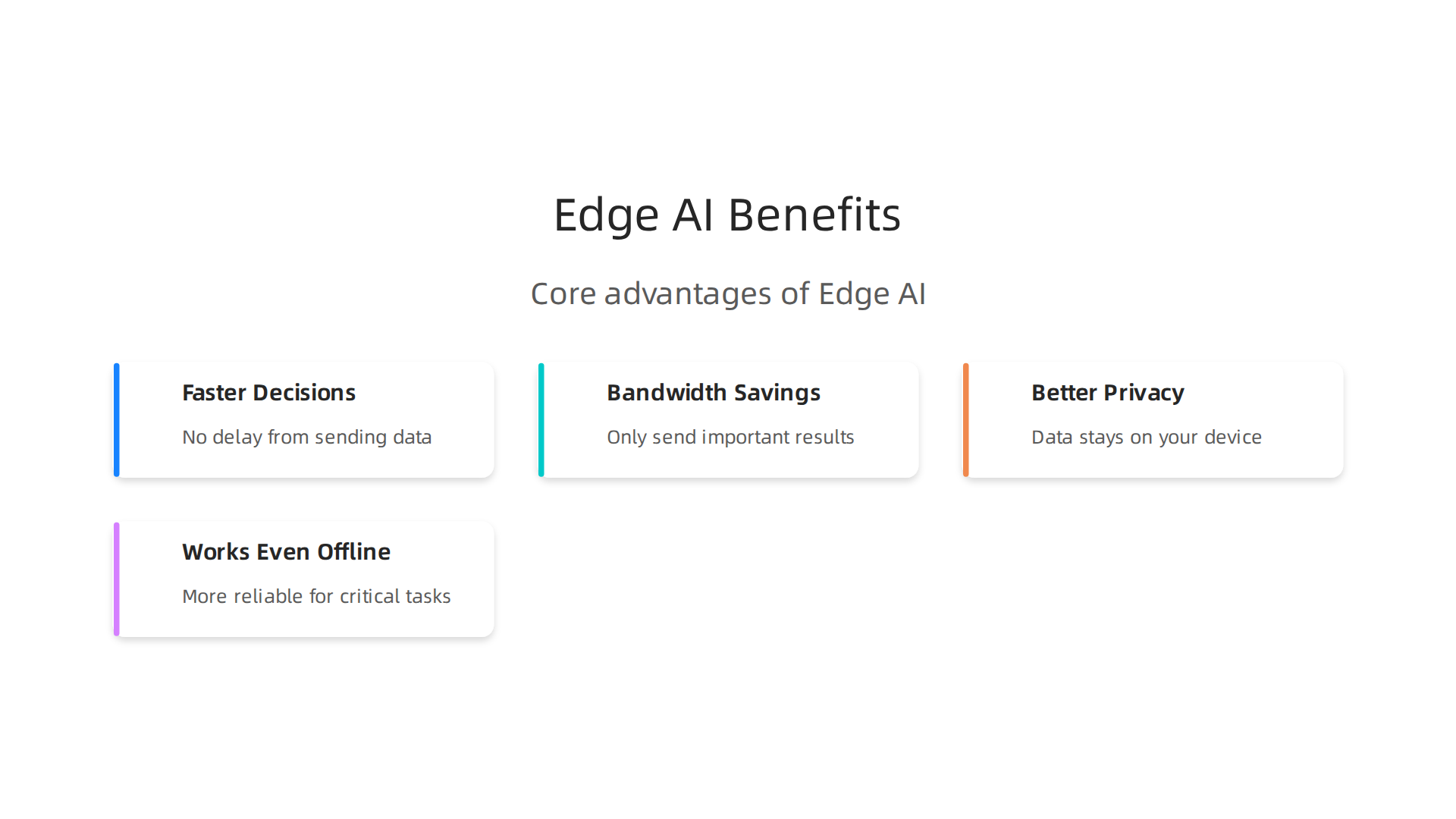
- Faster Decisions (Low Latency): Because the AI works right on the device, there’s no delay from sending data to the cloud and waiting for a response. This is super important for things that need instant action, like a self-driving car braking.
- Saving Internet Data (Bandwidth Savings): Instead of sending every bit of data to the cloud, edge AI can process it locally and only send important results. This saves a lot of internet usage and money.
- Better Privacy: When data stays on your device, it’s safer from being seen by others. This is a big plus for sensitive information, like health data from a wearable device or video from a home security camera. Edge intelligence aims at enhancing data processing and protecting the privacy and security of the data Edge Intelligence: Architectures, Challenges, and Applications – arXiv.
- Works Even Offline (Resilience): Devices with edge AI can keep working even if the internet goes down. This makes them more reliable for critical tasks.
Understanding these benefits helps us see why edge AI is changing how we use smart technology and how crucial it is for businesses to stay informed about artificial intelligence and machine learning fundamentals. This is how AI is helping solve real-world problems and creating new chances for growth.
Thinking about how AI is solving problems today, it’s also good to look at what’s coming next. One big area that could change AI even more is quantum computing. It’s a whole new way of doing calculations that’s very different from the computers we use now, and it holds a lot of promise for technology in business.
Quantum Computing and AI: Basics, Realistic Timelines, and Where They Intersect
At its core, quantum computing uses the strange rules of quantum physics to solve problems that even the most powerful regular computers struggle with. Instead of bits, which are either 0 or 1, quantum computers use "qubits." These qubits can be 0, 1, or even both at the same time. This special ability is called "superposition." When qubits are linked together in a special way called "entanglement," they can work together to explore many possible answers at once. This could lead to much faster ways to solve certain types of problems.
However, quantum computing is still quite new. One big challenge is "error rates." Qubits are very delicate and can easily lose their quantum state, leading to mistakes in calculations. Scientists are working hard on ways to correct these errors. For this reason, quantum computers aren’t ready for most everyday AI tasks yet. They need special conditions and are very complex to build and keep running. Experts note that while 2026 is seeing early progress, widespread use for general machine learning tasks is still some time away Honest summary of where quantum ML stands in 2026.
Where Quantum Methods Meet AI
Even with current limits, quantum computing can help classical and edge AI in certain ways. Think of it as a special tool for very specific, hard jobs.
- Optimization: This is one of the most promising areas. Quantum computers are good at finding the best solution out of a huge number of choices. This could help AI with things like logistics, making smarter supply chains, or creating more efficient designs. Some research in 2026 already shows quantum methods providing early wins for optimization tasks Quantum AI Computing 2026 Shows Early Wins Limited to ….
- Certain Model Training Tasks: While not for all AI models, quantum approaches might speed up specific parts of machine learning, especially for complex patterns or large datasets. This could lead to better AI research algorithms. For example, some companies are already launching platforms for quantum machine learning and optimization for businesses Superpositions Studio Launches Quantum ML and ….
- Research Algorithms: Quantum computing is a field where new algorithms are constantly being explored. AI itself is being used to help design and improve quantum algorithms, showing how these two fields can push each other forward Artificial intelligence for quantum computing. This also helps us better understand the uncertainty in artificial intelligence when applied to new computing methods.
So, while you won’t see quantum AI running on your phone’s edge AI chip tomorrow, it’s a powerful tool that could one day unlock new levels of capability for leaders in quantum computing and information technology companies. For more details on this fascinating field, you can read about Quantum AI: Understanding Its Power, Risks, and Future in 2026. The blend of quantum science and artificial intelligence is still growing, and 2026 is proving to be a breakthrough year for advancements in quantum machine learning.
While quantum computing promises big changes in the future, it’s helpful to see where money and new ideas are flowing right now in the world of AI. In 2026, we’re seeing clear market trends in funding, startup actions, and where innovation is really picking up speed. This is especially true when we look at edge AI compared to quantum-related AI projects.
Edge AI is Growing Fast
Many reports in 2026 show that edge AI is moving from being a new idea to a very real part of technology in business. Experts say the global edge AI market was around $24.9 billion in 2025 and is expected to reach $30.0 billion in 2026. It’s predicted to keep growing a lot in the coming years, potentially reaching $118.7 billion by 2033 Edge AI Market Size, Share & Forecast Report, 2026-2033. This growth is driven by how widely connected devices are being used. Big companies are looking at edge AI for many reasons, seeing a big boost in local deployments. For more insights on this quick growth, check out this 2026 Edge AI Technology Report: Trends, Signals & Strategic Insights.
Most of the money and business deals are focused on making AI work closer to where data is made, rather than in far-off cloud centers. This means AI models are running on devices like your phone, smart cameras, or factory machines. IBM noted that in 2026, edge AI will move past the hype and become a common reality for many businesses The trends that will shape AI and tech in 2026 – IBM.
Where Edge AI Innovation is Concentrating
The market for edge AI is especially active in a few key areas:
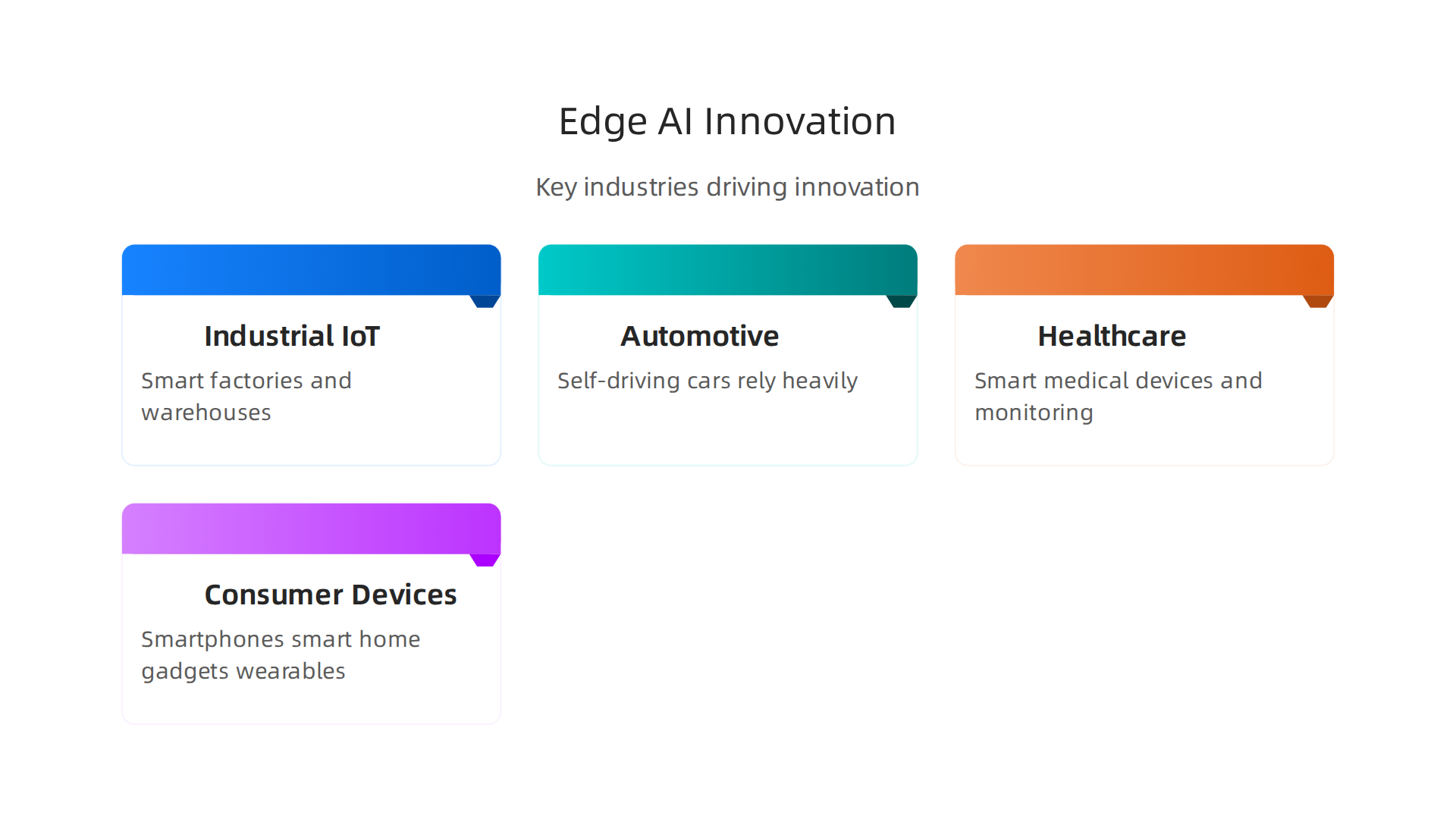
- Industrial IoT (Internet of Things): This means smart factories and warehouses. Edge AI helps machines talk to each other and make decisions right on the spot, like fixing a problem on an assembly line without delay.
- Automotive: Self-driving cars rely heavily on edge AI. It allows vehicles to process information from sensors in real time to navigate safely and react quickly to changes on the road.
- Healthcare: Smart medical devices and remote patient monitoring use edge AI to analyze data instantly, providing faster alerts or personalized care.
- Consumer Devices: Our smartphones, smart home gadgets, and wearables use edge AI for things like voice assistants, personalized recommendations, and face recognition.
Quantum’s Role in Edge AI
While general edge AI is seeing rapid adoption, there’s also a smaller, but growing, interest in "quantum-enhanced edge AI." This special area looks at bringing quantum computing’s power directly to edge AI devices. The market for quantum-enhanced edge AI accelerators is much smaller but is also growing fast. It was valued at $1.6 billion in 2025 and is projected to reach $2.11 billion in 2026 Quantum-Enhanced Edge AI Accelerator Market Report 2026. This suggests that some information technology companies and leaders in quantum computing are looking at how these two advanced fields can work together. This is a topic that could introduce some uncertainty in artificial intelligence applications as new technologies merge. If you want to dive deeper into how companies are getting funding for these projects, an AI Funding Playbook: Master 2026 Investment Strategies can be a useful resource.
The overall trend shows that big investments and innovation are focused on making AI smarter and faster right where it’s needed most, whether it’s on your phone or in a smart factory.
To stay on top of these fast-moving changes in the AI world, including funding, startups, and innovation, you’ll need reliable information.
Get clear daily AI updates from The AI Newsletter Worth Reading.
To stay on top of these fast-moving changes in the AI world, including funding, startups, and innovation, you’ll need reliable information.
Edge AI Architectures, Hardware Accelerators, and Toolchains
Making AI work right on devices, known as edge AI, is a bit different from running it in big data centers. When we talk about AI, there are two main parts: training and inference. Training is like teaching the AI model new things. This usually needs a lot of power and is done in large cloud systems. Inference is when the AI model uses what it learned to make a decision or predict something, like identifying an object in a picture or understanding a voice command. For edge AI, most of the work happens during inference, right on the device itself.
To make inference quick and energy-efficient on small devices, edge AI needs special parts. These are called hardware accelerators. They are chips designed to handle AI tasks much faster than a regular computer chip. Some common types you’ll hear about in 2026 are:
- NPUs (Neural Processing Units): These are built specifically for AI math, offering good speed and using less power. They are becoming very popular for on-device inference Edge AI Hardware & On-device Inference Silicon 2026.
- DSPs (Digital Signal Processors): These chips are good at processing signals, which is useful for audio and video tasks that AI often handles.
- GPUs (Graphics Processing Units): While known for gaming, smaller, more efficient GPUs are also used in edge AI for their ability to do many calculations at once.
- FPGAs (Field-Programmable Gate Arrays): These chips are unique because they can be reprogrammed even after they’re made. This means they can be very flexible and efficient for different AI models, especially when low delay and quick changes are important Comparing Leading GPU, FPGA, and ASIC AI Accelerators.
Beyond the hardware, special software tools, often called toolchains, are also very important. These tools help take a large AI model and make it smaller and faster so it can run well on edge AI devices. This process often includes techniques like "quantization," which reduces the size of the model without losing too much accuracy, and "pruning," which removes unnecessary parts of the model MLOps in 2026: Best Practices for Scalable ML Deployment. Tools like AMD’s Vitis AI provide a full set of programs to prepare AI models for specific edge hardware From Pixels to Predictions: Edge AI Pipeline Acceleration – AMD.
When designing edge AI solutions, there are always trade-offs.

Engineers have to balance many things:
- Model Size: Smaller models fit better on devices with limited memory.
- Latency: This is how fast the AI can make a decision. For things like self-driving cars, low latency is critical.
- Energy Consumption: Devices running on batteries need AI that uses very little power.
- On-device Security: Keeping the AI model and the data it uses safe from attacks is a big challenge when it’s not in a secure cloud.
Finding the right balance for these factors can introduce some uncertainty in artificial intelligence applications at the edge. However, by carefully choosing the right hardware, like NPUs over FPGAs for certain tasks, information technology companies are finding ways to get the best performance for their specific technology in business needs why edge AI accelerators fail without hardware-software co-design. Keeping these elements in mind helps make edge AI a reliable part of our connected world. To learn more about how AI solutions are deployed in various settings, you might find our guide on enterprise AI software in 2026 helpful.
Once you have the right hardware and software tools for edge AI, getting it to work well everywhere can still be tricky. This is especially true when you need to use many devices at once. Businesses in 2026 face several important challenges when deploying edge AI at a large scale.
A big part of making edge AI work smoothly is good device management. Imagine having hundreds or thousands of devices with AI running on them. You need to know that each device is working, has the right software, and is using the newest AI models. Keeping track of all these devices and making sure their models are updated regularly is a complex task. For example, some companies use tools like Red Hat’s Device Edge to manage these tiny computer setups, ensuring they run smoothly even on smaller hardware 5 considerations for end-to-end MLOps at the edge.
Another challenge is making sure the AI models keep working correctly after they are put into use. This means validation in the field and constant lifecycle monitoring. What if the world changes, and the AI model starts making mistakes? You need ways to watch its performance and make quick fixes. This kind of careful planning helps reduce uncertainty in artificial intelligence systems once they are out in the real world.
Security and privacy compliance are also very important for edge AI. Since edge devices are often located outside of secure data centers, they can be easier targets for attacks. Keeping the AI models safe from being stolen or changed, and making sure that any data they handle is kept private, is a big deal for information technology companies. When deploying these solutions, you must protect data and models to avoid risks.
To help with these operational risks, edge-specific observability strategies are key. This means setting up ways to see what’s happening inside each edge AI device. You want to know if a model is working slowly, using too much power, or giving incorrect answers. Good observability tools help you spot problems early so you can fix them before they become bigger issues. Red Hat, for example, shares a checklist to ensure these kinds of things are handled well for MLOps at the edge Checklist 5 considerations for end-to-end MLOps at the edge.
For businesses, getting edge AI deployments right means more than just having good technology. It requires a clear plan for managing devices, updating models, keeping them secure, and watching how they perform. This approach helps ensure that the advanced technology in business truly delivers value. To learn more about how different kinds of AI impact business, consider reading about what the AI singularity means for your business today.
After looking at how to set up and keep edge AI running, let’s talk about what edge AI can actually do right now. Edge AI is truly changing how businesses work in 2026, creating lots of new chances for different industries.
High-impact use cases and early commercial leaders to watch
Edge AI is moving past just ideas and into real-world action, especially in areas that need quick decisions. For example, self-driving cars use edge AI to understand the road in real time, making them safer. In hospitals, medical devices with edge AI can watch patients and flag problems immediately. Smart cities also use edge AI for things like managing traffic and making sure public spaces are safe. The edge AI market is a big deal, valued at about $25.78 billion in 2026, and it’s set to keep growing fast Edge AI Market Size, & Trend Analysis Report, 2026-2034. This shows how much potential this technology has for various artificial intelligence applications in 2026.
Here are some top uses where edge AI truly shines and delivers clear business value:
- Self-driving cars and drones: These need to make split-second decisions without waiting for data to travel to a faraway cloud. Edge AI makes this possible, improving safety and speed.
- Predictive maintenance: Machines in factories or power plants can use edge AI to spot small problems before they become big, expensive breakdowns. This saves money and keeps things running smoothly.
- Medical devices: Wearable health trackers and smart sensors can use edge AI to monitor vital signs and alert doctors to issues right away, even in remote areas.
- Augmented Reality (AR) and Virtual Reality (VR): Edge AI helps these systems work faster and feel more real by processing complex graphics and interactions on the device itself.
- Smart cities: From managing energy to improving public safety with smart cameras, edge AI helps cities become more efficient and responsive. In 2026, edge AI alone is valued at $47 billion, making these kinds of innovations possible Top 20 Emerging Technology Statistics To Watch In 2026.
To know if a company is truly a leader in edge AI, you need to look beyond flashy presentations. Real leaders show consistent funding and actual products that are being used today. Many businesses want to be seen as leaders in quantum computing and edge AI, but real progress is key. For example, top edge AI startups have raised significant money, with some gathering billions of dollars Top Edge AI Startups by Fundraising (2026) – New Market Pitch. These firms are not just experimenting in labs; they are building and deploying solutions that address real problems in the world. When you’re trying to figure out which companies are making a real impact, it helps to identify evaluate and track top AI companies in 2026. This careful look helps separate the truly innovative from those simply riding the wave of excitement around new technology in business.
To understand which edge AI companies are truly succeeding and where to put your money, it’s key to look at more than just big headlines. You need to check for clear signals of success and also be aware of what could go wrong.
Investment signals, risk factors, and practical ways to track companies
When thinking about investing in edge AI, smart investors and business analysts look for specific signs.

These signs help them see which companies are strong and will likely keep growing in this fast-moving area of technology in business.
Here are some important things to watch for:
- Steady Money Coming In: Companies with "recurring revenue" are often a good sign. This means they have regular customers who pay often, like a monthly service fee. This creates a stable income, which shows a strong business model.
- Turning Tests into Real Sales: Look at "pilot-to-production conversion rates." This means how many small tests (pilots) turn into big, ongoing projects (production). A high rate shows that customers truly find the edge AI solutions useful and are willing to pay for them long-term.
- Working with Others: Strong partnerships are another good sign. When edge AI companies work with other big names, it means they are trusted and can reach more customers. This helps them grow and makes their solutions more accepted in the market.
- Special Tech Advantages: Companies that have unique intellectual property (IP) or special hardware have a big edge. For instance, companies making special chips for edge AI are very important. Between August 2025 and July 2026, many chip and hardware companies working on edge AI got about $1.9 billion in funding alone, showing how important their unique tech is Edge AI Is Leaving the Demo Stage, and Funding Is ….
It’s clear that money is flowing into artificial intelligence. For example, in the first three months of 2026, global investments into new companies more than doubled, reaching $330.9 billion Venture Pulse Q1 2026 – KPMG agentic corporate services. A lot of this money goes into AI software, showing how much people believe in this area Venture Pulse Q2 2026 – KPMG agentic corporate services.
Even with all the good news, there are always risks. Here are some things to think about when looking at edge AI investments:
- Becoming Too Common: "Commoditization risk" happens when too many companies offer similar edge AI products. This can make prices drop and make it harder for a company to stand out.
- Problems Getting Parts: Edge AI often needs very specific computer parts called "specialized accelerators." If there are problems in getting these parts, it can slow down production and stop companies from growing.
- Finding the Right People: It’s hard to find and keep talented workers who know a lot about edge AI. This "talent/ops risk" means a company might struggle to build, manage, and grow its products. Also, a general "uncertainty in artificial intelligence" can come from issues like a lack of trust or understanding, which can make it harder for businesses to make good investment choices How Artificial Intelligence Is Transforming Investment Decisions.
To keep up with all these changes and make smart choices, it’s good to know how to track edge AI companies. You can look at special reports that map out new technologies and show who is getting funding. For example, the 2026 Edge AI Technology Report: Trends, Signals & Strategic Insights provides insights into emerging edge AI technologies and funding trends. This helps you get a clearer picture of the market. If you are looking to become an investor or founder, you might want to read our Master Investing in AI Startups Your 2026 Guide.
Staying informed is key in the fast-paced world of AI.
Get clear daily AI updates from The AI Newsletter Worth Reading.
Summary
This article explains why edge AI — running intelligence on the device where data is generated — is one of the most important shifts in technology for business and investment in 2026. It defines edge AI, contrasts it with cloud-centric models, and highlights device classes (phones, IoT, industrial controllers, vehicles) and the concrete benefits of on-device processing: lower latency, bandwidth savings, improved privacy, and offline resilience. The piece also outlines the hardware and software building blocks for edge deployments — NPUs, DSPs, GPUs, FPGAs, and model optimization toolchains — and the operational challenges of scaling such systems, including device management, security, and observability. It places edge AI in the market context (fast-growing valuations and active funding) and describes how quantum computing could augment edge AI in targeted areas like optimization and specialized model training, while noting realistic timelines and current limits. For investors and technology leaders, the article details signals of commercial traction and key risks to watch, and points to resources for tracking companies and funding strategies.