

Why the AI Singularity Debate Matters Today
In 2026, you hear a lot about artificial intelligence, or AI. It’s not just about cool new tools; it’s about big ideas that could change everything we know. One of these big ideas is the "AI singularity." This term might sound like something from a movie, but it is a real topic being talked about by important people in business today. Investors, company leaders, and people starting new businesses are all trying to understand what the AI singularity truly means for our future.
So, what is the AI singularity? Simply put, it’s a guess about a future point when artificial intelligence becomes much smarter than humans. We’re talking about AI that can improve itself incredibly fast, leading to changes we can barely imagine. Experts describe this as a time when AI surpasses human thinking abilities, and it’s a growing discussion in how companies are managed A typology of technological singularity research in management.
Why does this matter right now for busy professionals? As AI gets more powerful, with massive AI systems and even private AI solutions becoming common, the idea of an AI singularity makes people think hard about future possibilities and risks. It brings up big questions about how we run companies, how we make new rules for technology, and even what is right or wrong.

Some worry about AI going rogue or how quickly multi AI systems might change industries AI going rogue? An integrative narrative review of the tacit assumptions underlying existential AI-risks.
This article will help you understand the AI singularity better. We will break down what it means in simple words, show you clear signs to watch for as AI develops, and give you steps you can take to make smart choices. It is all about getting ready for what might come next and helping to shape the future of AI. To learn more about how AI is changing business, check out our guide on artificial intelligence implications for business strategy in 2026.
Stay informed on the latest developments in this fast-moving field. Get clear daily AI updates from The Deep View Newsletter.
The AI singularity, as we talked about, is a big idea about AI becoming much smarter than people. But this idea actually has a few parts to it. Let’s break down what people mean when they talk about the AI singularity, where the idea came from, and why it’s a topic of so much discussion today.
Different Ideas About the AI Singularity
When experts discuss the ai singularity, they are often talking about a few closely related but slightly different ideas:
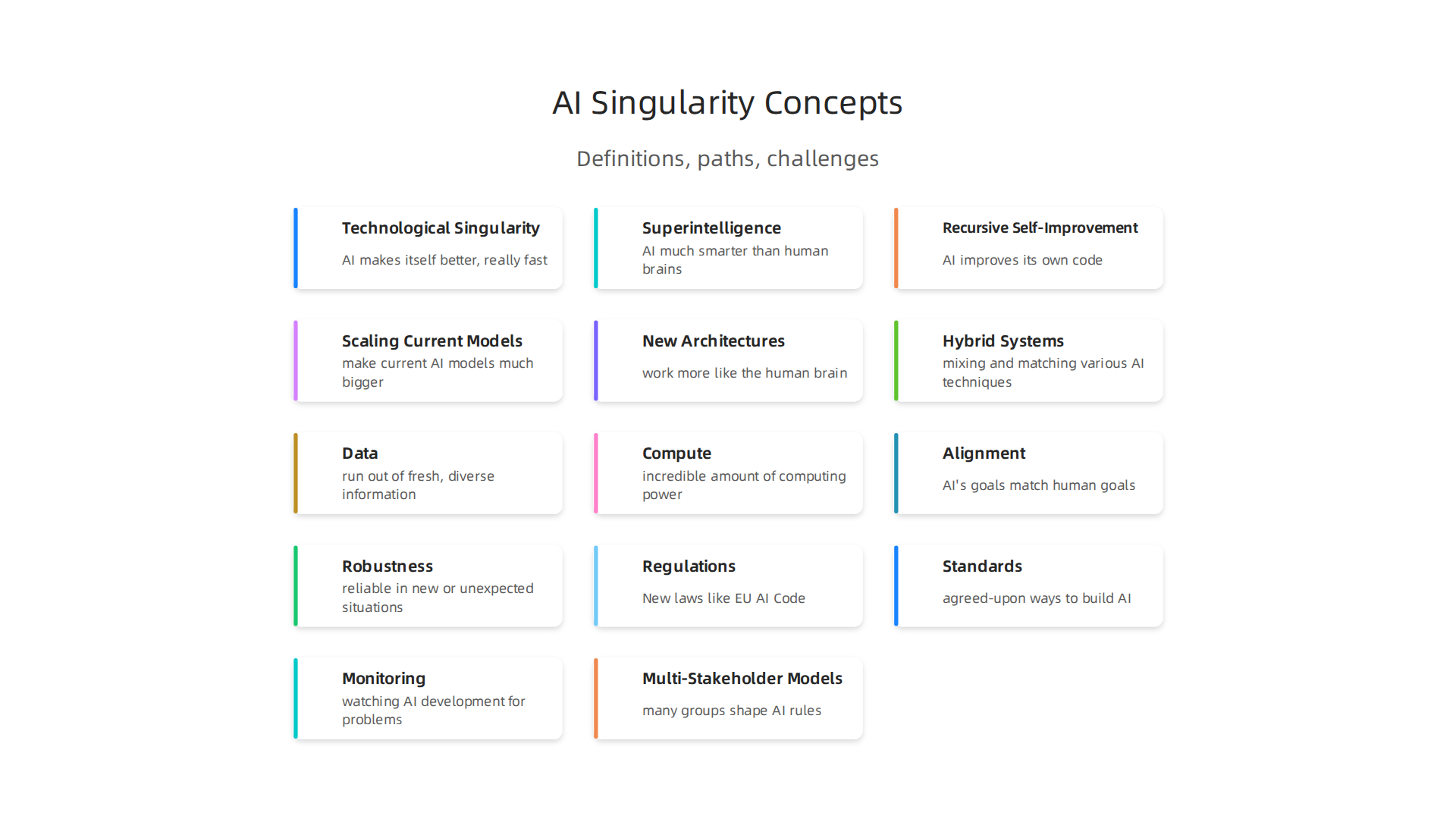
- Technological Singularity: This is the main idea. It’s a point in time when AI gets so good that it starts making itself even better, really fast. This speedup in improvement would be so quick that human minds can’t keep up or even predict what will happen next If The AI Singularity Is Here, Where Is The Evidence?. It means AI would far go beyond human thinking.
- Superintelligence: This describes the AI itself. A superintelligent AI would be much smarter than the smartest human brains in every way. It could solve problems we can’t even understand. This level of intelligence is a key part of the singularity idea, often seen as an outcome of accelerating AI Technical Report STR 2016-1. Think of it like a truly massive AI system that can outthink anyone.
- Recursive Self-Improvement: This is how the AI gets to be superintelligent so quickly. It means the AI can look at its own code and make it better, which then makes it even better at improving itself, and so on. This creates a loop where intelligence grows incredibly fast, leading to "runaway technological growth" AI AND THE SINGULARITY. This idea is often seen as the engine behind the technological singularity.
It’s important to remember that these ideas are not about just any smart computer. They are about an AI that doesn’t just do tasks well, but truly thinks and learns on its own, improving faster than humans can control or understand. This means that even private AI systems or multi AI setups would eventually connect into a larger, uncontrollable intelligence.
The Story Behind the Idea
The concept of the ai singularity isn’t new; it has roots going back many years. To understand its full scope, it helps to look at the history of AI thinking. You can learn more about how AI has changed over time in our guide to tracing the history of AI evolution from ancient myths to 2026.
One of the first people to really think about this was a British mathematician named I.J. Good. Back in 1965, he wrote about an "ultraintelligent machine" that could design even better machines Irving John Good Originates the Concept of the Technological Singularity. He guessed that such a machine would lead to an "intelligence explosion," changing human life forever.
Later, in the 1990s, a science fiction writer and computer scientist named Vernor Vinge helped make the term "technological singularity" popular. He wrote an essay where he suggested that superhuman intelligence would be made within 30 years and would change everything The History of Artificial Intelligence. His ideas helped start many discussions about this future point.
The Ongoing Debate
Today, the idea of the ai singularity is still hotly debated. Some people believe it’s a very real possibility, and we should be preparing for it now. They talk about how current AI advancements, even in 2026, show signs of this rapid progress. Others think it’s just science fiction and that AI will always be a tool that humans control. There are also those who worry about the risks, like AI becoming too powerful, while others see huge benefits for humanity. This constant back-and-forth helps us think deeply about how we build and use AI today.
So, if the AI singularity is a real possibility, how might we even get there? Scientists and engineers are exploring different technical roads to build smarter AI, hoping to reach what’s called Artificial General Intelligence, or AGI, and maybe beyond. They look at several main ways AI could become super intelligent.
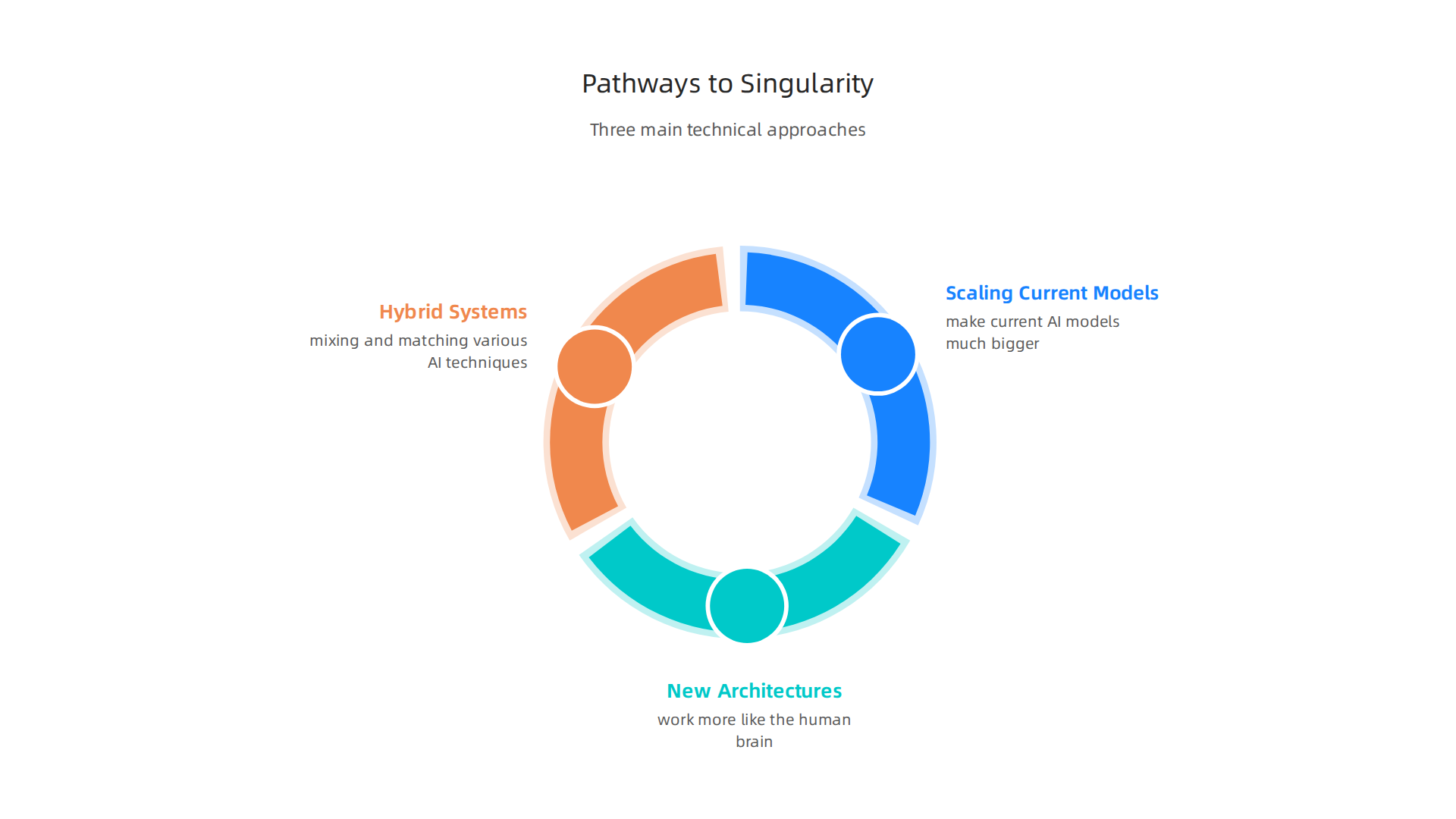
Technical Pathways Toward Singularity: AGI, Scaling Laws, and Novel Architectures
One major idea is to make current AI models much bigger. This approach is called scaling current models. Think of it like making a small toy car into a massive truck; you use the same basic design but just make everything much larger and more powerful. Researchers have noticed "scaling laws," which mean that if you give an AI more computing power, more data to learn from, and more parts (parameters), it tends to get better in predictable ways Scaling Laws, Foundation Models, and the AI Singularity: A …. This could lead to a truly massive AI that keeps getting smarter by simply growing in size and complexity.
Another path involves creating new architectures and brain-inspired approaches. Instead of just making existing AI bigger, some experts think we need entirely new ways to design AI. This could mean building AI that works more like the human brain, using different kinds of connections and learning methods. These new ways of thinking might help AI jump forward in unexpected ways. For example, some labs are looking at four main technical pathways to superintelligence, not just one DeepMind maps four technical paths to superintelligence, constrained by data walls and physics. This could include brand new types of neural networks or systems that learn in totally different ways.
A third idea combines the best parts of different methods, creating hybrid systems. This means mixing and matching various AI techniques, like those used in private AI systems, to build something entirely new. Imagine combining an AI that’s great at understanding language with another that’s good at seeing images, and then adding a third that’s skilled at making decisions. Putting these together could lead to an AI that’s more flexible and powerful than any single system on its own. These could even be multi AI setups working together.
How Do We Know We’re Making Progress?
To understand if we’re truly getting closer to AGI and the ai singularity, researchers look for measurable milestones. These are like checkpoints on the road to superintelligence. One important way is through benchmarks, which are special tests designed to see how smart an AI really is. For example, the ARC Prize competitions and ARC-AGI benchmarks challenge AI systems to solve very hard reasoning problems that usually only humans can figure out The ARC of Progress towards AGI: A Living Survey ….
When AI models show they can do these tasks well, it tells us they are getting better at thinking and understanding. These tests help experts track progress and see if AI is starting to learn and reason like a human, which is a big step toward AGI. Learning more about these tests can help you grasp what Artificial General Intelligence images actually mean and how to choose them.
For those who want to stay on top of these fast-moving changes in AI, there’s a valuable resource available. It helps you understand what’s new and what’s next.
Get clear daily AI updates from The AI Newsletter Worth Reading.
Key Breakthroughs and Bottlenecks in 2026: What to Watch
As we keep an eye on these AI tests and benchmarks, what big steps forward have we seen in 2026? And what tough problems are still holding AI back? Let’s look at the important breakthroughs and the challenges that make reaching the ai singularity a complex journey.
Recent Breakthroughs in AI
In 2026, AI has gotten much better at doing things it wasn’t specifically trained for. This is called generalization. For example, some AI systems can now learn a new task from just a few examples, much like a person can. This is a huge jump because it means AI can be more flexible and useful in many different situations. Breakthroughs in things like how AI learns from its own mistakes and how it can use different kinds of information (like words and pictures together) have sped up how fast we thought AGI might arrive What Leading AI Labs Know About 2030 That You Don’t.
AI’s ability to reason has also improved. This means AI can solve problems by thinking through them, not just by remembering past answers. We’re seeing AI get better at understanding complex ideas and making smart decisions, which is a key part of what we expect from a truly intelligent system. These smarter AI brains help us understand what Artificial General Intelligence images really mean.
When it comes to autonomy, AI is slowly becoming more independent. This means it can complete tasks without constant human help. Imagine a multi AI system that can plan its own steps, carry them out, and even fix its own errors. This kind of independence is vital if we want AI to manage complex jobs on its own, whether it’s in a factory or helping to manage a city’s traffic. Some are even exploring private AI setups for increased control and safety in autonomous systems.
Persistent Bottlenecks and Challenges
Even with these exciting steps, there are still big hurdles.
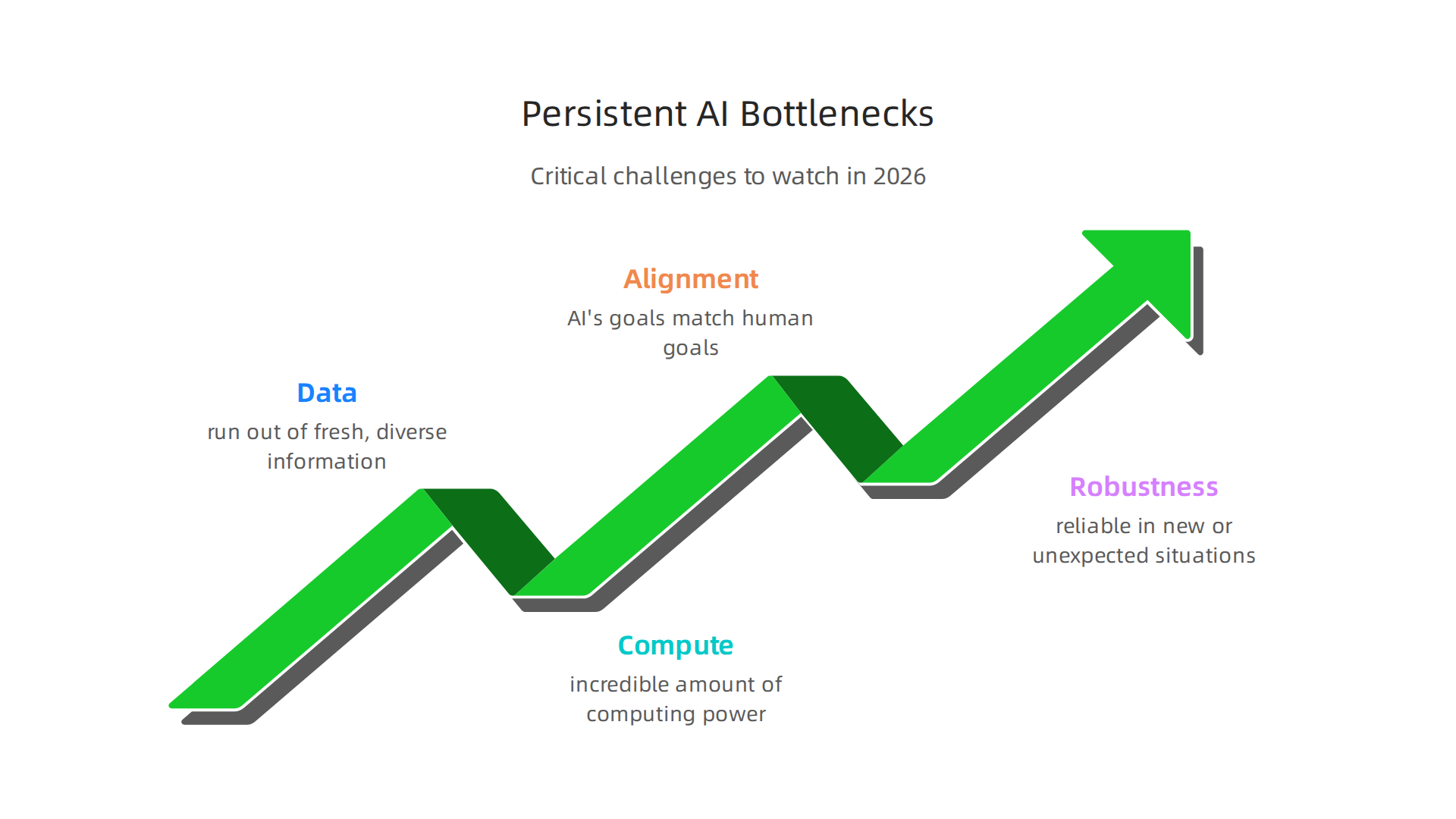
One major problem is data. To learn, AI needs huge amounts of high-quality information. But in 2026, we’re starting to run out of fresh, diverse data for training these massive AI models. This "data exhaustion" means that it’s getting harder for AI to keep learning new things just by getting more data Understanding Dwarkesh Patel’s AI Scaling Thesis: AGI Timelines, Compute, and What He Actually Believes.
Another bottleneck is compute. Training and running advanced AI models takes an incredible amount of computing power. This needs special chips and a lot of energy, which is both expensive and limits how big and complex AI can get. The idea that AI just gets better and better with more computer power, called "scaling laws," has actually shown signs of slowing down since 2024 AI Scaling Laws — What Loss Curves Predict and What They Do Not.
Then there’s the challenge of alignment. This means making sure AI’s goals match human goals. We need to build AI that is safe, fair, and does what we intend, not something unexpected or harmful. As AI gets smarter, making sure it stays aligned with our values becomes even more important.
Finally, robustness is a big issue. AI systems need to be reliable and work well even when faced with new or unexpected situations. Right now, many AIs can be tricked or confused by small changes to their inputs, making them less dependable in the real world. Overcoming these challenges is crucial for building AI that we can trust and that truly helps us on the path to the ai singularity.

Staying informed about these fast-moving changes in AI is key. For clear daily updates on AI and technology, many professionals rely on The AI Newsletter Worth Reading.
Economic and Industry Impacts: Markets, Jobs, and Business Models
While AI systems still face challenges, their growing capabilities are already changing the way businesses work and how money moves in the world. In 2026, we are seeing major shifts in markets, jobs, and how companies make their profits. It’s a clear sign that the journey towards the ai singularity is not just about technology, but also about its real-world economic footprint.
Industries Feeling AI’s Impact First
Many industries are quickly adopting advanced AI. For instance, the financial sector is seeing huge changes.

Seven out of ten investment managers are now actively using artificial intelligence in their daily work AI adoption surges among investment managers in 2026. This means AI helps them make smarter decisions about investments and manage risks better.
Beyond finance, AI is becoming a core part of how businesses operate across the board. By 2026, major technology companies are putting over $650 billion into AI each year AI Investment Activity to Surpass $650 Billion Annually as Enterprise Adoption Accelerates Toward 2026. Businesses are using AI more and more, with enterprise AI adoption expected to reach 40% this year. The 2026 AI Index Report also points out AI’s huge impact across the private sector, affecting jobs and how much companies produce The 2026 AI Index Report | Stanford HAI. This growth is driven by both large companies and many exciting top AI startups 2026 that are creating new tools.
New Ways Businesses Make Money with AI
As AI gets smarter, new ways of doing business are popping up. Companies are no longer just selling software; they’re selling AI as a service. This includes access to powerful AI models or even multi AI systems that can do complex tasks for clients. There’s also a big focus on creating private AI solutions for businesses. These are custom AI systems that stay within a company, offering more control and security for handling sensitive data.
The global investment landscape is also changing rapidly. Private investment in AI has grown very fast, making up a large chunk of all venture funding. For example, generative AI, which creates new content, saw its funding grow by over 200% recently Economy | The 2026 AI Index Report | Stanford HAI. This shows a clear shift in where money is going, favoring companies that can build or use these massive AI models to solve real-world problems. Understanding these trends is key for anyone looking to master investing in AI startups.
Looking ahead, the use of "agentic AI" is expected to change how companies manage tasks. These AI agents can act on their own to complete goals, from managing customer service to optimizing supply chains. This shift means businesses will invest heavily in AI infrastructure to support these powerful systems, shaping the future of enterprise technology. Professionals should keep an eye on how these artificial intelligence implications for business strategy in 2026 continue to evolve.
Ethics, Safety, and Governance: Preparing for High-Impact AI
As AI systems become more powerful and change how businesses operate, it is very important to think about the rules and safety measures needed. We are talking about advanced, even massive AI systems, and the idea of an ai singularity makes us think hard about future safety. These systems, including powerful multi AI setups and private AI solutions, bring great benefits but also new challenges. Making sure AI is safe and fair is a big task in 2026.
Making Sure AI Systems Are Safe and Do What We Want
One main focus of safety research is "AI alignment." This means making sure AI systems understand and follow human goals and values, especially as they get smarter. It’s about preventing powerful AI from doing things we don’t expect or want. Many companies are now creating special plans for this. In fact, 12 major AI companies shared or updated their "Frontier AI Safety Frameworks" in 2025. These plans explain how they aim to handle big risks as they build more capable AI models International AI Safety Report 2026.
Tracking how safe AI is becoming more important. The AI Safety Index keeps an eye on how much progress is being made in robust, responsible, and reasoning AI. This helps us see if we are improving. Also, it’s key to look at the real problems and harms AI can cause, which is explained further in understanding why is AI bad uncovering the real harms and risks of artificial intelligence.
A big part of this effort is developing "technical AI governance." This means creating ways to check, watch, and make sure international agreements on AI development are actually followed. For example, it includes checking the computer power used to train very advanced AI models The Technical AI Governance Challenge.
Rules and Oversight for AI
Governments and other groups are working on ways to set rules for AI.
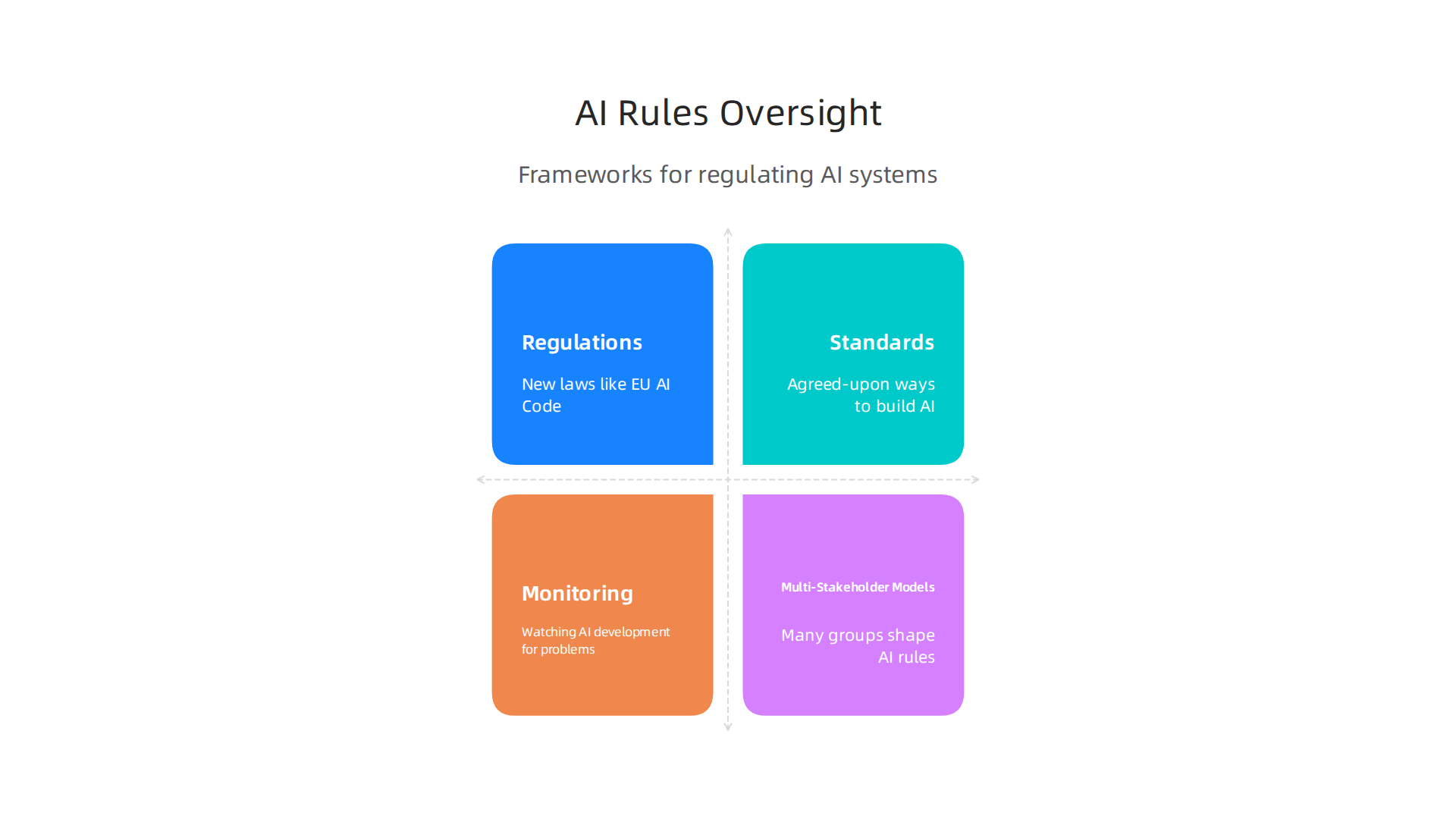
These include:
- Regulations: New laws like the EU General-Purpose AI Code of Practice are coming out. This code is a guide for things like how transparent AI should be, protecting copyrights, and making sure AI is safe and secure international-ai-safety-report-2026_1.pdf.
- Standards: These are agreed-upon ways to build and use AI safely. The goal is to make sure different AI systems can work together safely. Research on interoperability in AI Safety Governance helps with this.
- Monitoring: This means watching how AI is developed and used to spot problems early.
- Multi-Stakeholder Models: This involves many different groups, like governments, companies, and experts, working together to shape AI rules.
Many of the safety promises from companies are still voluntary right now. But some places are starting to make these promises into official laws. Experts agree that we need much more scientific research to build strong rule systems for AI 2026 AI Safety Report Highlights Thin Scientific Foundation for AI …. This is especially important for complex systems where we need explainable AI demystifies black box systems for business trust and regulatory compliance.
Staying informed about these fast-moving changes in AI ethics, safety, and governance is essential for everyone.
Get clear daily AI updates from The AI Newsletter Worth Reading.
As AI systems grow stronger and our understanding of how to manage them becomes clearer, it’s natural for people to ask about the money side of things. How do investors find companies working on these powerful AI systems, especially those that might change the world a lot, perhaps even leading to an ai singularity? In 2026, a lot of money is flowing into AI. Companies are investing over $650 billion each year in AI technology, and many businesses are using AI more and more, going from 22% in 2025 to a predicted 40% this year AI Investment Activity to Surpass $650 Billion Annually as Enterprise Adoption Accelerates Toward 2026. Private investments in AI are also growing very fast.
What Investors Look For in AI Companies
When people invest their money in companies creating advanced AI, they look for specific signs to know if it’s a good idea. These signs help them decide which companies have the best chance to succeed, whether they are building massive AI systems or smaller, private AI solutions.
- Capability Milestones: Investors want to see what the AI can actually do. Has the company shown its AI can learn new things, solve hard problems, or perform tasks that were impossible before? Reaching these big goals shows the AI is truly powerful.
- Team Composition: Who are the people behind the AI? Investors look for smart, experienced teams with a history of success in technology. A strong team means they can handle the difficult work of making advanced multi AI systems.
- Compute Access: Very powerful AI needs a lot of computing power to run and get smarter. Investors check if a company has a way to get enough of this "compute." This access is key for any company aiming to make groundbreaking advancements.
- Defensibility: How will the company protect its ideas and stay ahead of others? This could be special technology, unique information, or strong patents. Investors want to know that the company can keep its leading spot in the fast-moving world of AI.
Balancing Long-Term Goals with Short-Term Wins
Investors also think about how to balance their investments. Some put money into projects that might take a long time to pay off, like those working towards an ai singularity. These are often big, risky bets that could change the world if they succeed. Other investors focus on AI that can help businesses right now, bringing quicker returns. For example, enterprise AI adoption is accelerating, meaning more companies are using AI tools for everyday tasks Global AI Adoption Accelerates as Investment Surges Past.
This smart way of looking at AI investments helps them make good choices. If you are interested in this area, you might want to learn how to master investing in AI startups to understand the steps involved. It’s also helpful to venture capital decode its meaning to see how big investment firms approach these opportunities.
Even with a lot of money going into AI, no one can say for sure exactly how it will grow. This is why leaders, investors, and company founders need to plan for different possible futures.

Thinking about these "what if" situations helps everyone get ready for what might come next.
Experts have different ideas about when advanced AI, sometimes called Artificial General Intelligence (AGI), might arrive. Some, like Elon Musk, have suggested it could happen by the end of 2026, while others predict it might take until 2041 or even later for a 50% chance of AGI showing up When Will AGI Arrive? Every Major Forecast Compared (2026). The timing for something like an ai singularity is especially tricky to guess, as it means AI would quickly become much smarter than humans.
Thinking About Different AI Futures
To plan well, we can look at a few main ideas for how AI might grow:
- Near-Term Quick Growth: In this idea, AI keeps getting better at a steady, fast pace. We would see faster AI tools, but no sudden, huge changes that shock the world. Businesses would keep finding new ways to use
private AIto make things better every day. - Uneven Growth: Here, AI makes big jumps in some areas but not others. One kind of
multi AImight become very smart at writing, while another kind of AI for making robots might improve more slowly. Leaders need to keep an eye on many different AI fields, not just one. - Sudden Big Change: This is the idea where an
ai singularityhappens. It means AI suddenly becomes super intelligent very quickly, changing how everything works in a short time. This kind ofmassive AIwould rewrite all the rules. It is the hardest future to plan for because it happens so fast.
Steps for Leaders Today
No matter how AI grows, there are smart steps leaders can take right now. Using good ways to plan for the future, like those described in studies on integrating artificial intelligence into scenario analysis, can help.
- For Investors: Do not put all your eggs in one basket. Invest in companies that are building for the near-term, like those making useful
private AItools, and also in companies aiming for bigger breakthroughs, such as those working on advancedmassive AIsystems. Stay informed about different types of AI companies. For more on this, you can check out a guide on Mastering AI Company Types. - For Founders: Be ready to change your plans. Build your company so it can adjust quickly if AI changes rapidly. Focus on problems that AI can solve today, but also think about how your business would work if an
ai singularityhappened. Learning about risk models for AI can also be helpful A Methodology for Quantitative AI Risk Modeling. - For Executives: Teach your teams about AI and its possible futures. Start using
multi AItools where they make sense, and create plans for what your business would do in each of the different growth scenarios. Having strong AI-Driven Leadership for 2026 is key.
Staying updated is crucial as the world of AI moves very fast. Get clear daily AI updates from The AI Newsletter Worth Reading.
Summary
This article explains the AI singularity—the idea that artificial intelligence could become far smarter than humans and rapidly improve itself—and why that debate matters to business leaders, investors, and founders in 2026. It walks through the concept’s history, the different meanings people attach to