
The world of Artificial Intelligence (AI) is moving incredibly fast in 2026. Every day, new AI companies are popping up, and older ones are finding new ways to grow. These companies need a lot of money to keep inventing new things and making their products better. In fact, global funding for AI companies went up more than three times in early 2026 compared to the year before, with billions of dollars being invested Global AI Funding Increases More than 3-Fold YoY Led by Billion …. The overall AI market is also huge, reaching about $375.93 billion in 2026 and expected to grow much more by 2034 Artificial Intelligence Market | Global Report 2034.
This is where growth equity firms become super important. These firms provide money to companies that are already growing quickly but aren’t quite ready to sell their shares on the public stock market yet. They help these companies get bigger and become more valuable. It’s about giving these businesses the push they need to reach their full potential, ensuring a strong capital turnaround for everyone involved. For example, the US growth equity market itself more than doubled in value in 2025 to $234 billion Growth Equity Update | Edition 45. This shows just how much money is flowing into this space.
So, why do growth equity firms matter so much right now? They are key to helping AI companies scale up. They provide the funds and know-how that allow these businesses to keep growing, hire more people, and make better products. Without them, many promising AI companies might not reach the next level. This type of funding is different from early-stage venture capital and helps companies capture what’s called "late-stage upside," meaning they become very valuable before possibly going public.
For investors, founders, market analysts, and business leaders, understanding these firms is critical.

Investors want to find the best places to put their money to see great private equity returns. Founders need to pick the right partners to help them grow and succeed. Analysts need to know what’s really happening in the market, and executives want to stay ahead of their rivals. Everyone needs good information to make smart choices.
To help you stay on top of this fast-changing world, we offer a simple way to get daily updates. Get clear daily AI updates from The AI Newsletter Worth Reading.
The smart choices that investors, founders, and leaders need to make start with understanding the current AI market. In 2026, growth equity firms are not just providing money. They are also helping to find and grow the most promising parts of the artificial intelligence world.
Where Growth Equity Meets AI
The AI market is huge and still getting bigger. Right now, there are three main areas where growth equity firms see big chances for companies to expand:
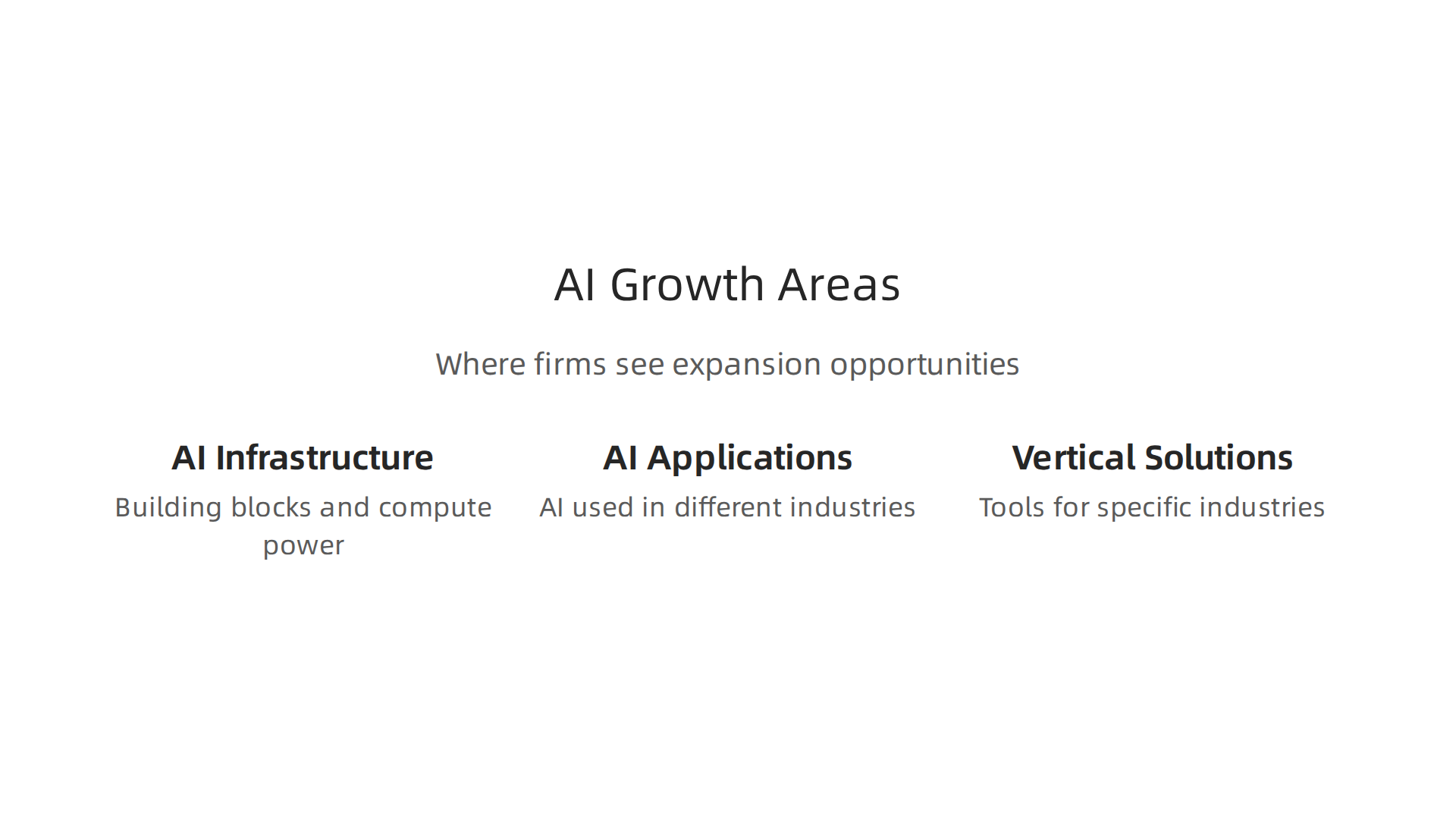
- AI Infrastructure: This is like the building blocks of AI. Think about the super powerful computers and data centers needed to run AI programs. Experts believe that building these data centers will cost around $2.9 trillion globally through 2028 because of how much demand there is for AI computing AI Market Trends 2026. This area is drawing a lot of investment.
- AI Applications: These are the many ways AI is used in different industries. This includes AI that helps with healthcare, makes factories smarter, or even powers self-driving cars. For example, growth equity deals have made up over 81% of the money raised by autonomous vehicle startups in the last year Autonomous Vehicle Startup Funding.
- Vertical Solutions: This means AI tools made for a very specific job or industry. Imagine AI designed just for managing finances or for spotting security threats. These specialized solutions help businesses solve particular problems more efficiently.
Signals for Smart Investments
For investors, knowing where to put money is key. Growth equity firms look for strong signals to pick the best opportunities.
- Focus on High-Growth Areas: Look for AI subsectors that are already showing fast growth and have a clear path to making a big impact. Global private investment in AI was $581 billion in 2025, more than double the year before, showing a huge boost in funding AI Investment By Country Statistics.
- Check Geographic Hubs: Certain places are magnets for AI talent and funding. The US leads in AI investment, but Europe is also seeing significant growth. More than two-thirds of venture capital in EU AI goes to just ten major cities EU AI Investment and Startup Landscape. These "hot spots" often have a strong ecosystem for new companies to thrive. Investors might also look at smaller, focused players like boutique private equity firms that specialize in specific regions or types of AI.
- Understand Company Type: It’s important to know the different kinds of AI companies out there. From big tech giants to small startups, each has different needs and growth potential. Learning about Mastering AI Company Types can help guide your decisions.
By paying attention to these market segments and signals, growth equity firms can make smart choices. This helps promising AI companies get the money they need to grow and succeed, creating value for everyone involved. If you are looking to understand more about finding the right firms, you can learn how to Find Top Private Equity VC Firms Focused on AI 2026.
Different kinds of money help companies at different times in their lives. Knowing the difference between them is super important for investors, founders, and leaders in the AI world.

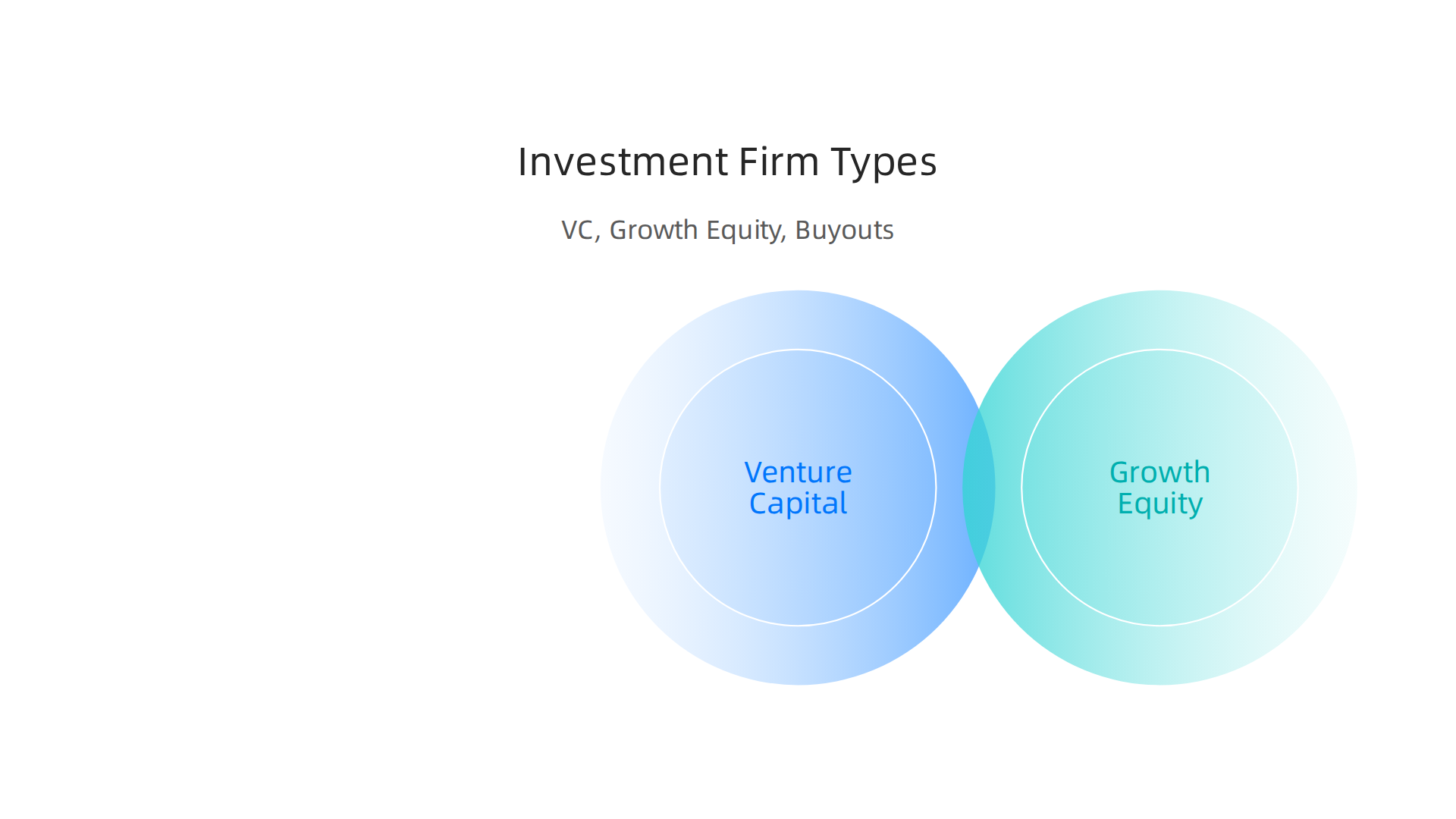
Growth equity firms sit in a unique spot compared to other big investors like venture capital (VC) funds and buyout firms.
How Growth Equity Differs from Venture Capital and Buyouts
Let’s look at how these groups are different:
-
Venture Capital (VC): Imagine a tiny seed that might grow into a huge tree. VC firms put money into brand new companies, often when they have just an idea or a very early product. These companies usually don’t have many customers yet, or much income. VC money is very risky, but if the company becomes a giant success, the returns can be huge. VC firms often take a smaller part of the company. If you want to dive deeper, you can learn to venture capital decode its meaning.
-
Growth Equity: This is for companies that are like young trees already growing strong. They have a working product, loyal customers, and good income. Growth equity firms come in to help these companies grow even faster. They might help them get into new markets, make more products, or hire more people. These firms usually buy a big part of the company, but not all of it. They focus on boosting the company’s value, which leads to good private equity returns. Their goal is a strong capital turnaround.
-
Buyout Firms (Private Equity): These firms buy whole, mature companies, like a fully grown tree. Often, these companies are already big and stable but might need some changes to run better. Buyout firms take full or most ownership, sometimes using a lot of borrowed money. They focus on making the company more efficient and profitable to sell it later. This is less about super fast growth and more about making steady, strong returns from an already established business.
What These Differences Mean for AI Companies
For AI companies, these differences matter a lot. A brand new AI startup might first seek venture capital to build its first smart product. Once that AI product is proven and starts getting users and sales, a growth equity firm would step in. They would help the AI company scale up its operations, expand its customer base, or add more advanced AI features. This involves more than just money; growth equity firms often provide expert advice and connections.
When evaluating AI companies, growth equity firms look closely at a company’s ability to keep growing fast and how they can help make that happen. They consider how easily the company can expand its AI solutions or bring them to new places. Many private equity firms are even using AI themselves to find these promising companies faster, a process called deal sourcing, which is becoming smarter in 2026 thanks to AI tools AI for Private Equity: 2026 Data, Costs and Playbook.
Understanding these different types of investors helps AI founders know who to talk to at each stage of their company’s journey. It also helps investors pick the right kind of company for their own investment goals.
To stay current on the fast-changing world of AI and investment, consider subscribing to The AI Newsletter Worth Reading.
3) Building a repeatable investment thesis for AI-focused growth equity firms
For growth equity firms looking to invest in AI companies, having a clear plan or "investment thesis" is like having a map.

It helps them find the best young AI businesses that are ready to grow big. This map tells them exactly what to look for, so they can make smart choices again and again.
Here are the main ideas these growth equity firms use to build their investment map for AI companies:
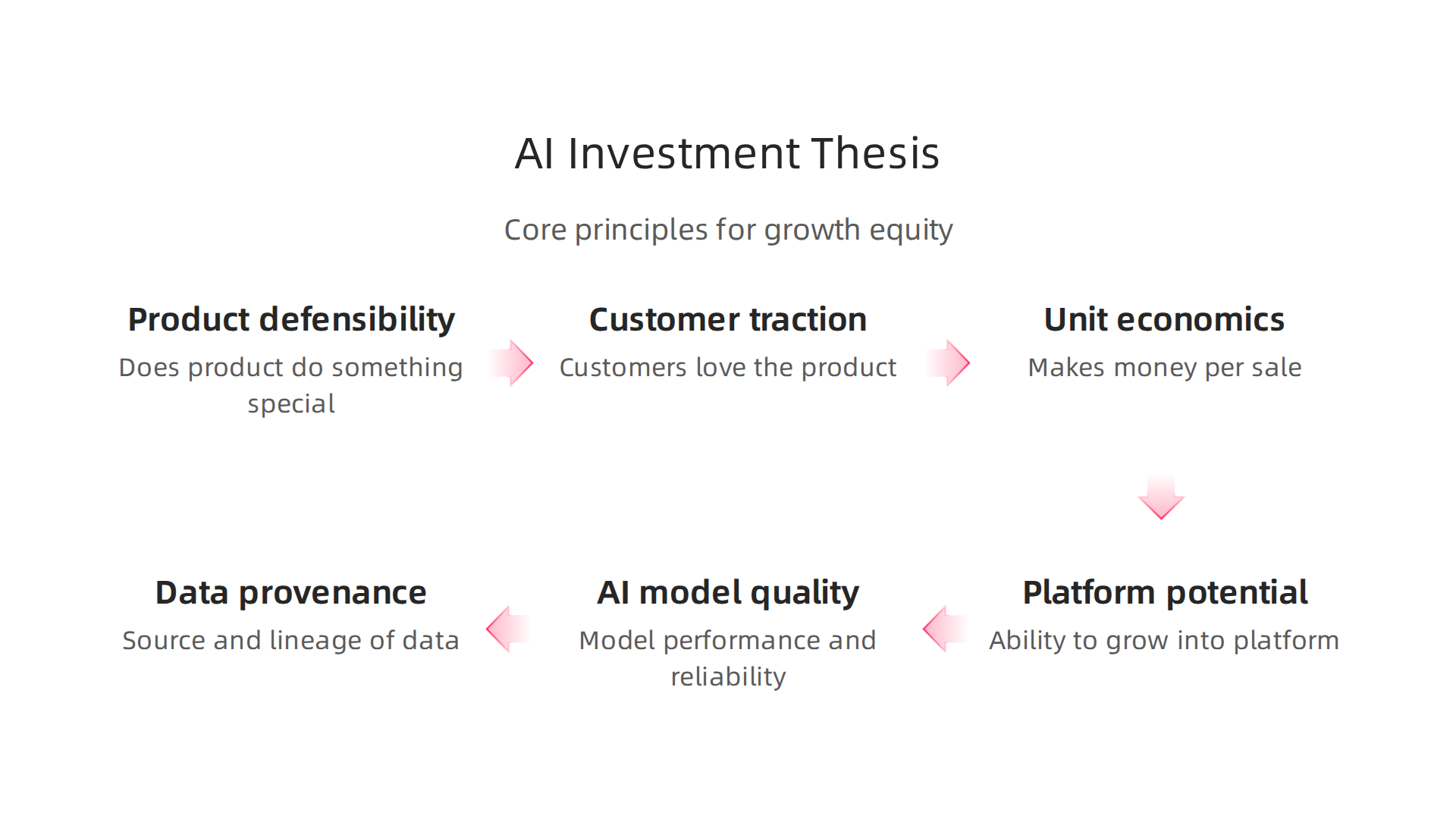
- How unique is the AI product? This is about "product defensibility." Does the AI product do something special that no one else can easily copy? This could be because it uses special data that’s hard to get, or has a unique way of learning. Companies that have something truly special are more likely to succeed.
- Are customers actually using it? This is "customer traction." Growth equity firms want to see that customers love the AI product. They look at things like how fast new customers are joining, how many customers stay, and how much money each customer spends over time. Strong customer numbers show that the product is working and has a good market.
- Does the business make money on each sale? This is called "unit economics." It means checking if the money made from one customer is more than the cost to get that customer. If an AI company can show that each sale is profitable, it means it can grow without losing money. This is important for strong
private equity returnsand a goodcapital turnaround. - Can the AI product grow into something bigger? This is "platform potential." A great AI product often has the ability to become a whole platform that offers many services, or can be used in many different ways. Firms want to know if the company can add new features or reach new customers easily, making its future growth even stronger.
What to look for to predict success in AI companies
When checking out AI companies, growth equity firms pay close attention to certain key signs. They look at important numbers, known as KPIs (Key Performance Indicators), like how much money comes in regularly from customers or how valuable a customer is over their lifetime with the company.
But it’s not just about numbers. They also look at "qualitative indicators." These are things that are harder to measure but just as important. For example, they look at how smart and experienced the AI team is. They also check the quality of the data the AI uses, making sure it’s good and fair. How well the AI product is managed and overseen, known as AI governance, is also a big deal in 2026. Performing a thorough AI Company Due Diligence Checklist: A Guide for Investors is crucial to spot these critical details.
Understanding these points helps investors find AI companies that are not just growing, but growing in a smart, sustainable way. For more insights on how these investment strategies play out in the market, check out our guide on Private Equity in AI: How Firms Invest, Build Value, and Spot Opportunities.
4) Due diligence checklist: technical, commercial, and legal red flags
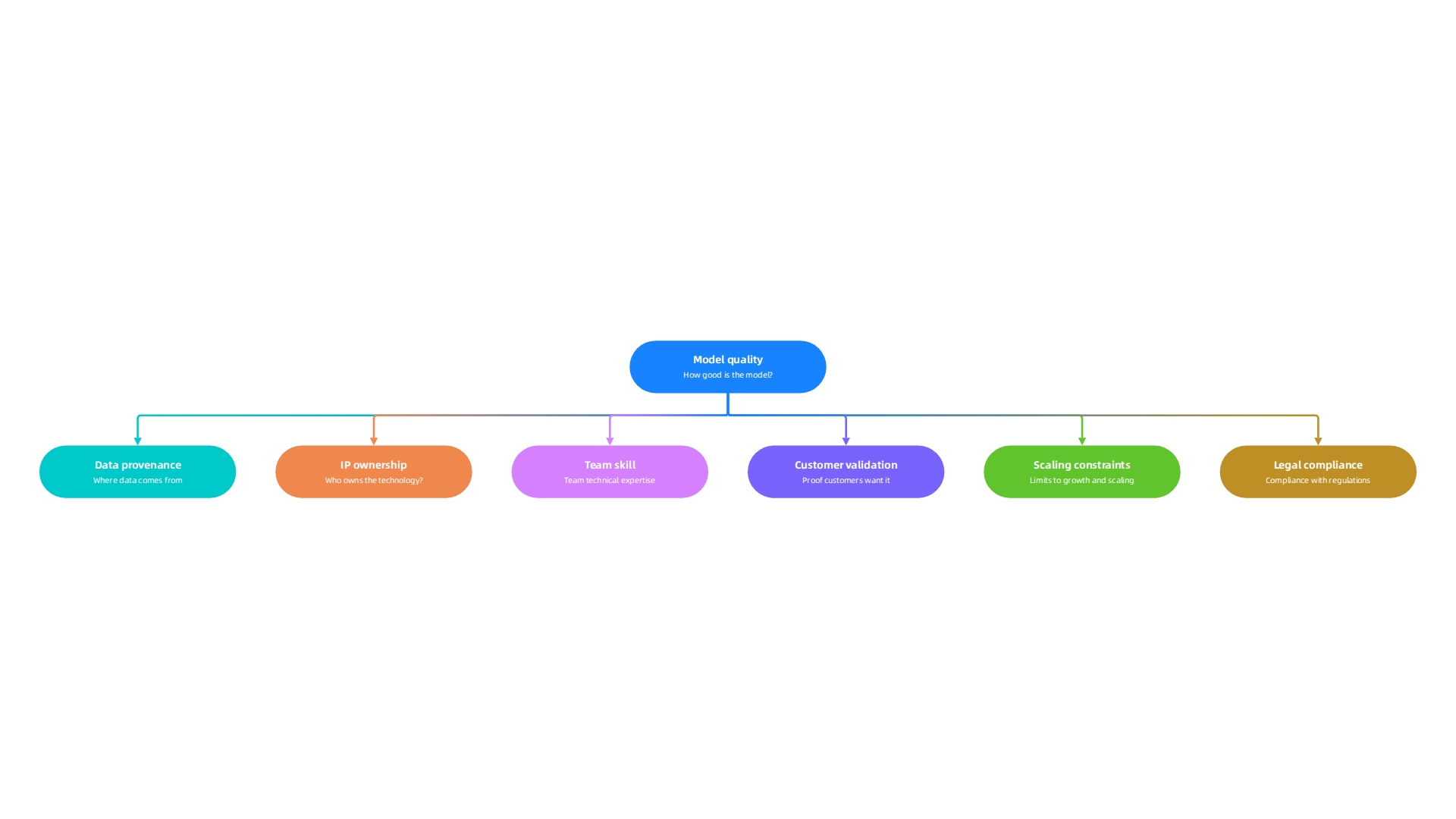
After understanding what makes an AI company special, growth equity firms do a very deep check, known as "due diligence." Think of it as looking under the hood of a car before you buy it. This helps them find any hidden problems or "red flags" that might make an investment risky, even for promising companies. This deep dive covers technical, commercial, and legal areas.
Here’s what they look for:
Technical Due Diligence
This part is all about the AI technology itself.
- How good is the AI model? Firms check if the AI works well every time. They look at "model robustness," meaning how stable and accurate the AI is, especially with new or unexpected information. They also make sure that the AI’s results can be "reproduced," which means getting the same output if you give it the same input again. Investors need to test the system beyond just a demo to see if it works reliably in the real world AI and machine learning due diligence (+ checklist download).
- Where does the data come from? The data an AI uses is super important. Investors need to know its "provenance," or where it originated. They check the quality, accuracy, and completeness of the data. They also look for any unfairness or "bias" in the data, which could cause problems later. Importantly, they check "data governance," ensuring there’s a clear person in charge of the data and rules for how it’s used and kept private AI Due Diligence Checklist 2026: 40 Questions for PE Data Rooms. This includes making sure the company follows privacy rules like GDPR.
- Who owns the tech? This covers "intellectual property" or IP. Firms check if the company truly owns its AI technology and data. They also look for any parts of the AI that use "third-party models" or "open-source licenses," which might come with certain rules or risks.
- How skilled is the team? The people behind the AI are key.
Growth equity firmsevaluate the experience and skills of the engineers, data scientists, and leaders. A strong team is a big plus for future success.
Commercial Due Diligence
This looks at how the AI product works in the market.
- Do customers really want it? This is "customer validation." Firms speak with existing customers to confirm they are happy and seeing value from the AI product. They also check how customer contracts are set up, looking at how stable and long-term these agreements are.
- Can it grow big? They look for "scaling constraints." Does anything stop the AI product from serving many more customers? This could be technical limits or how much it costs to grow. Companies that can scale easily are more likely to offer strong
private equity returnsand a goodcapital turnaround. For more on finding companies with high growth potential, you can check out our guide on how to identify, evaluate, and track top AI companies in 2026.
Legal Red Flags
This involves checking all the legal paperwork to avoid problems.
- Is it compliant with laws? This means making sure the AI company follows all important laws, especially around data privacy and how AI is used. They also look closely at the legal language in contracts related to what the AI produces.
By looking at all these things very carefully, growth equity firms can make much smarter choices about where to put their money. This careful process helps them find the best AI businesses that are set for real, lasting growth.
To stay on top of all the fast changes in AI, make sure you get regular, clear updates.
The AI Newsletter Worth Reading
Once growth equity firms have carefully checked an AI company, the next big step is deciding how to build and manage their investment. This is called portfolio construction and risk management. It’s like putting together a team for a big game and making sure you have a plan for anything that might go wrong.
How to Size Positions and Diversify
When growth equity firms decide how much money to put into each AI company, they don’t just guess. They think about "position sizing." This means figuring out the right amount for each investment to help the overall group of investments grow, while also keeping risks in check.
- Don’t put all your eggs in one basket. This old saying is very true here. Instead of investing a lot of money into just one company, growth equity firms spread their investments across many different AI companies. This is called diversification. It helps protect the overall portfolio if one company doesn’t do as well as hoped.
- Look across different AI areas. The world of AI is huge, with many different types, like AI for healthcare, AI for finance, or AI for making creative content. Smart
growth equity firmswill diversify across these various AI sub-sectors. This way, if one area slows down, other areas might still be growing strong. For example, some may focus on specific niches, likeboutique private equity firmsoften do.
Managing Concentration Risk
Even with diversification, there’s always a risk that too much money is tied up in a few similar investments. This is "concentration risk." In the fast-moving AI market, this risk can be even bigger. Growth equity firms work hard to avoid having too much of their money depend on just a few companies or a single type of AI. They aim for a healthy mix that can still deliver strong private equity returns without being overly exposed to any single problem.
Practical Risk Management Strategies
Investing in AI means dealing with unique challenges. Growth equity firms use special strategies to watch over their investments and protect them.
- Watching the AI models. A big risk is that the AI models themselves might not work as expected over time. This is "model-level risk." Firms need to constantly monitor how the AI is performing, ensuring it stays accurate and reliable as new data comes in.
- Keeping an eye on new rules. The government and other groups are always thinking about new rules for AI. These "regulatory risks" can change how AI companies can operate. Investors need to be ready for these changes and make sure the companies they invest in can adapt.
- Understanding the market. The market for AI products can change quickly. New technologies might pop up, or customers might want different things. This "market risk" means
growth equity firmsmust stay updated on trends and be flexible. For example, longer holding periods for private equity investments have become more common, with over 16,000 companies held for four years or longer globally, as noted in the Global Private Markets Report 2026 from McKinsey & Company. - Hedging strategies. Sometimes, firms use special financial tools called "hedges" to lessen the impact of potential losses. Think of it as having insurance for your investments. These strategies help protect the
capital turnaroundby reducing big swings in value. - Ongoing monitoring. Good investing isn’t a one-time thing.
Growth equity firmscontinuously check on their portfolio companies.

They use tools to measure performance and compare it to benchmarks, making sure investments are on track to meet their goals and deliver good private equity returns Private Equity Performance Analysis Software. This active management helps them spot problems early and make adjustments.
By using these careful strategies, growth equity firms aim to build strong, resilient portfolios that can thrive even in the exciting and unpredictable world of AI. For more on how these types of firms invest in the AI space, you can read our guide on private equity in AI how firms invest build value and spot opportunities.
After building a strong and diverse portfolio, the next big task for growth equity firms is to constantly find new, promising AI companies to invest in. This is called "deal sourcing." It’s about building a steady flow of high-quality opportunities and then helping those companies grow even faster once they’re part of the investment group.
Finding the Best AI Deals
Growth equity firms use several smart ways to find the best AI companies before others do. This is a very important part of getting good private equity returns.
- Strategic Partnerships: Firms often work with other big companies, research groups, or even other investment funds. These partners can point them to exciting AI startups that might otherwise be hard to find. For example, some firms create large multiyear partnerships to find opportunities related to AI and data centers, as noted in the Global Private Equity Report 2026 from McKinsey & Company.
- Proprietary Tech Scouting: This means finding companies on their own, often using special tools and techniques. Many
growth equity firmsnow use AI themselves to search through huge amounts of data, helping them spot companies that fit their investment goals much faster than before. This kind of "signal-driven sourcing" can surface many more opportunities, sometimes three to five times more, with a better fit for what they are looking for AI for Private Equity: 2026 Data, Costs and Playbook. In 2026, most dealmakers are planning to use AI for sourcing deals AI for Venture Capital: 2026 Tools, Costs and Playbook. - Founder Referrals: Sometimes, the best deals come from people they already know and trust. Founders of companies they’ve already invested in might recommend other talented founders with great AI ideas. Building good relationships is key.
This careful search helps growth equity firms ensure they are always looking at the most promising AI companies, including those that might be a good fit for boutique private equity firms looking for specific niches. For anyone looking to understand this process more deeply, learning how to connect with AI startups in 2026 using data and platforms can be very helpful.
Helping AI Companies Grow Fast
Once growth equity firms invest in an AI company, they don’t just sit back. They actively help these companies grow much faster. This is where "operational partnerships" and "playbooks" come in. They use proven strategies to make sure the company can reach its full potential.
- Go-to-Market Support: This means helping the AI company sell its products or services better. It can involve advice on how to find customers, how to price products, or how to market them effectively.
- Talent: Finding the right people for key jobs is super important.
Growth equity firmsoften have large networks and can help recruit top engineers, sales leaders, and other essential team members. - Infrastructure: They also help companies build a strong foundation. This might mean setting up better technology systems, improving operations, or making sure the company can handle quick growth without breaking down.
These actions help to accelerate the company’s growth, leading to a faster capital turnaround and stronger performance for the investment.
The world of AI is always changing. Staying updated is important for both investors and founders.
Get clear daily AI updates from The AI Newsletter Worth Reading.
After helping AI companies grow quickly, growth equity firms eventually plan how to sell their part of the company. This is called an "exit strategy." It’s a key part of getting good private equity returns for their investors. There are a few main ways these firms typically sell their investments in AI companies.
Common Ways to Exit an AI Investment
- Selling to Another Company (Trade Sale): This is when a bigger company buys the AI company. For example, a large tech company might buy a smaller AI startup to get its special technology or team. This is a very common exit path.
- Going Public (Initial Public Offering or IPO): This means the AI company sells its shares to the public on a stock market. This usually happens when an AI company has grown very large and successful. An IPO can bring in a lot of money and give the original investors a great
capital turnaround. - Selling to Another Investment Firm (Secondary Buyout): Sometimes, one
growth equity firmsells its share of an AI company to anotherprivate equity firm. This happens if the company still has a lot of room to grow, and the new firm believes it can help it grow even more. This could also involveboutique private equity firmslooking for specific niches.
How long growth equity firms hold onto an investment can vary. On average, private equity funds hold companies for about 6.6 years, which is a bit longer than in the past. Many companies are held in portfolios for four years or more globally, with over half staying that long Global Private Markets Report 2026 – McKinsey & Company. The best time to sell often depends on how well the market is doing Exit Multiples By Sector | Guru Startups Market Intelligence 2025.
How Investors Measure Success
To know if an investment is doing well, growth equity firms track specific numbers called performance benchmarks. These benchmarks help them understand how much value they are creating and when might be the best time to exit. A benchmark is like a reference point to tell if an investment’s returns are good or not Benchmark: Definition, Examples & How It Works – PipelineRoad.
Key performance metrics include:
- Internal Rate of Return (IRR): This number shows the expected yearly growth rate of the money invested. For
growth equity firms, the average yearly return is usually between 12% and 16% Private Equity Returns Statistics (2026): IRR, TVPI, and DPI …. - Multiple on Invested Capital (MOIC): This simple measure tells investors how many times their initial investment has multiplied. For example, an MOIC of 2x means they got back twice what they put in.
- Total Value to Paid-In Capital (TVPI): This metric shows the total value of the investment compared to the total amount of money that was put into it. It’s often used alongside IRR and MOIC to get a full picture of the
private equity returns.
These numbers help growth equity firms make smart choices about when to sell their AI companies to get the best possible outcome. For more insights into how these firms operate, consider learning more about private equity in AI.
Summary
This article explains why growth equity is a critical funding source for AI companies in 2026, describing how these firms accelerate scaling, add operational expertise, and drive capital turnarounds. It outlines the three high‑opportunity areas—AI infrastructure, applications, and vertical solutions—and the market signals growth investors use to find winners, such as product defensibility, customer traction, unit economics, and platform potential. The piece compares growth equity with venture capital and buyout firms, then sets out a practical investment playbook: building a repeatable thesis, running technical, commercial and legal due diligence, sizing and diversifying positions, and managing model, regulatory and market risks. It also covers modern deal sourcing methods, how firms add value post‑investment, and common exit routes plus the benchmarks investors use to measure success. Readers will come away able to evaluate AI companies more rigorously, structure smarter growth equity investments, and understand the operational and timing levers that drive returns.