
Starting a new company or looking to invest in one can be tricky. There are so many funding groups out there, and knowing which one is right for you can feel like a big puzzle. Founders often spend too much time trying to figure out which financial partner fits their needs best.

Investors, too, need to quickly understand what different groups specialize in to make smart choices.
That’s where understanding specific groups like Capflow Funding Group comes in handy. It’s really important for both founders and investors to have clear, trustworthy information about potential funding partners. Without it, making quick and good decisions about money can be tough. You might miss out on a great chance or pick the wrong partner.
Capflow Funding Group, for example, is a private company that helps businesses get the money they need. They offer things like factoring, which is when they buy your unpaid customer bills, and also help with financing for things like inventory and purchase orders. They focus on providing working capital solutions, especially for small and medium-sized businesses in the United States, as detailed on their CapFlow Funding Group LinkedIn profile.
In this article, we will explain what Capflow Funding Group typically does. We’ll also look at how they evaluate new companies seeking money and give you practical steps on how to approach them effectively. Knowing how groups like Capflow Funding Group, or others like Drexel Startup Fund, Loop Capital, Builders Capital, and Primary Venture Partners, think and operate is key. This knowledge helps founders prepare a strong approach and helps investors understand the funding landscape better. If you want to learn more about different kinds of financial groups, checking out how to master private equity firm profiles for strategic investment and partnerships can be a great next step.
Staying updated on the financial world, especially as it changes fast in 2026, is super important. It helps you make smarter moves for your business or investments.
The AI Newsletter Worth Reading
Get clear daily AI updates from The Deep View Newsletter.
To really know a funding group like Capflow Funding Group, you need to dig deeper than just a quick look. It’s like building a clear picture of them piece by piece. This helps both founders looking for money and investors making smart choices.
What is Capflow Funding Group? A practical profile checklist
When you want to understand a company like Capflow Funding Group, or even other groups such as Drexel Startup Fund, Loop Capital, Builders Capital, or Primary Venture Partners, you should start with some basic facts. This is like making a profile checklist.
Here are the key things to check first:
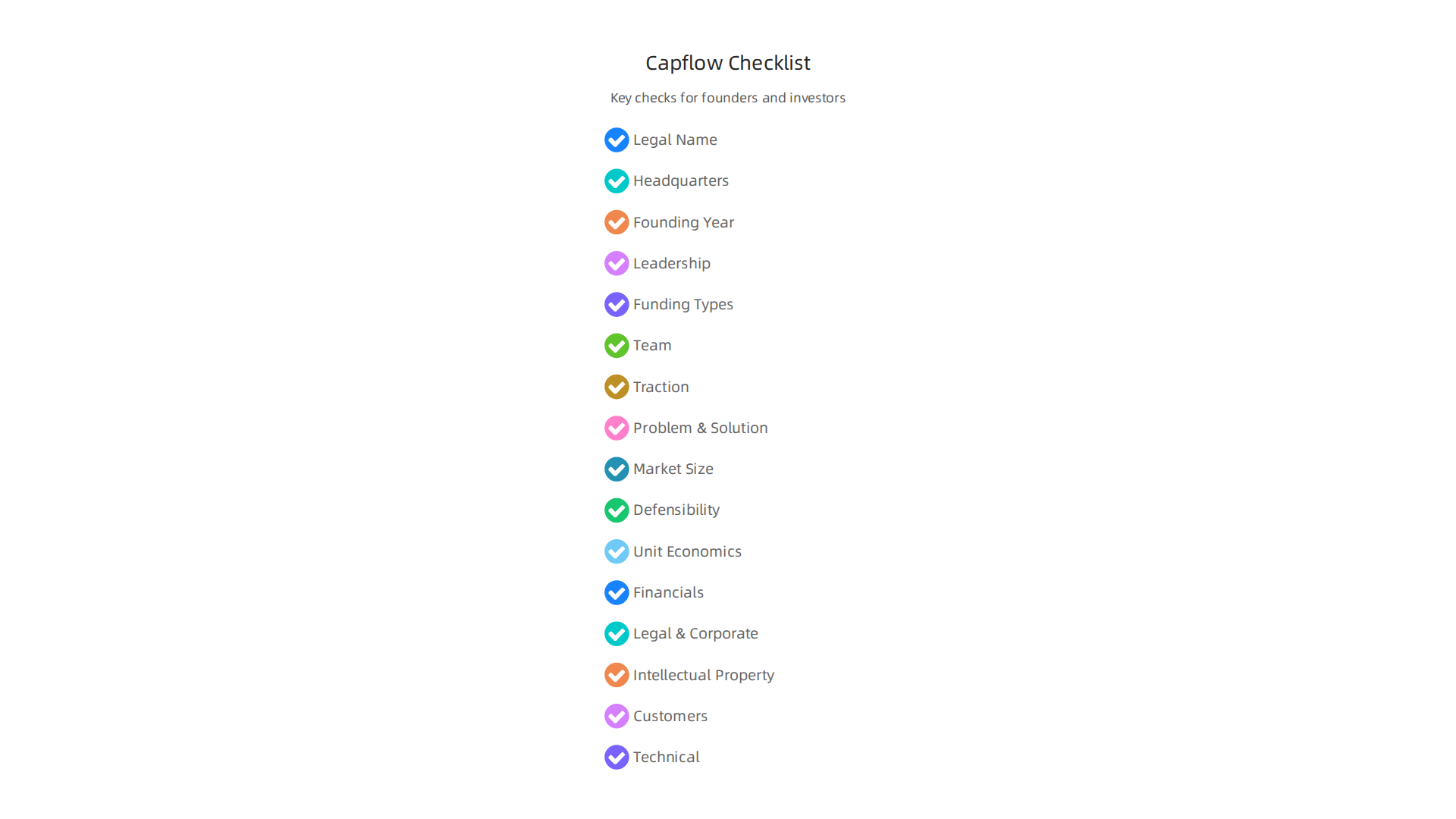
- Legal Name: You need the full, official name. For Capflow Funding Group, one legal name is CAPFLOW FUNDING GROUP MANAGERS LLC LEI. You can find this on places like financial legal entity databases or company profiles.
- Headquarters: Where is their main office? Capflow Funding Group is based in Rutherford, New Jersey, according to its Capflow Funding Group Managers LLC company profile. While they might have a registered agent address in places like Wilmington, Delaware, the operating headquarters is where most of the work happens.
- Founding Year: When did they start? Capflow Funding Group began in 2009, as noted in its CapFlow Funding Group PitchBook profile. This tells you how long they’ve been around.
- Leadership: Who is in charge? For example, Andrew Coon is listed as the President of Capflow Funding Group Managers LLC.
- What kinds of funding do they offer? As we mentioned before, Capflow Funding Group helps with factoring, inventory financing, and purchase order funding. They specialize in giving working capital to businesses. You can learn more on their official CapFlow Funding website.
You can build a reliable profile of any funding group by using public records and special industry websites. Sites like Dun & Bradstreet, PitchBook, and the Better Business Bureau offer great information. For example, you can see the CapFlow Funding Group Managers LLC BBB profile for extra details. These resources help you quickly check important details about a company.
Understanding these details helps you make smart decisions. Knowing exactly who Capflow Funding Group is and what they do is the first step to seeing if they are a good match for your business or investment goals. If you want to dive deeper into how to research such firms, learning to understand an investment firm profile can be very helpful.
Now that you know more about who funding groups like Capflow Funding Group are, the next big step is to understand how they decide which businesses to help. It’s like a special checklist they use to see if a startup is a good fit. This helps businesses get ready for funding and shows them what to focus on.
Funding groups, including Capflow Funding Group and others like Drexel Startup Fund or Primary Venture Partners, look at several key things when they consider a startup.
What Investors Look For
Here are the main things funding groups check:
- The Team: They want to see a strong team behind the business. This means people who know their stuff and can actually get things done.

Investors check for proof that the team can execute its plans, not just talk about them.
- Traction (Proof of Growth): This is super important. Traction means showing that your business is already working and growing. This could be through sales, many users, or good customer feedback. Investors want to see numbers that prove your business has momentum, like how much money you make each month or how many users stay with you over time, according to fundraising experts.
- What You Offer (Problem & Solution): Your business needs to solve a real problem for people. Investors want to see a clear problem and an even clearer solution that your product or service provides.
- Market Size: Is your idea big enough? Funding groups look at how many people or businesses might use your product. They often like to see a "bottom-up" look at your market. This means showing how you figured out the actual number of customers you can reach and how much money you could make from each one. This is different from just guessing a huge market.
- How You Stand Out (Defensibility): What makes your business special? Investors want to know what stops others from copying your idea easily. This could be unique technology, a special brand, or a strong customer base.
- Unit Economics: This sounds fancy, but it just means how much money you make from each customer versus how much it costs to get them. Investors want to see that your business can make a profit from each sale or customer over time. This shows your business model works. When you pitch to investors in 2026, they focus on vision plus these unit economics.
To prepare for investor talks, startups often create a pitch deck that covers these points clearly. A good pitch deck might have 10-12 slides and include details on the problem, solution, market size, business model, team, and your financial needs. Some companies also need to share monthly profit and loss statements and bank statements for the past few months as part of their due diligence. This helps investors really dig into the numbers.
Good Signs and Red Flags
Some things make investors very interested, while others can make them walk away.
Signals that speed things up:
- Clear Pitch: A strong pitch that gets right to the point about the problem, solution, and growth helps a lot.
- Proven Results: Showing actual numbers for sales, users, and customer loyalty makes your business look strong.
- Good Planning: Having a clear idea of your market and how your business makes money shows you’ve thought things through. This is part of being investor-ready in 2026, where even your digital presence and good document keeping are checked from the start.
Red flags that slow things down:
- Unclear Vision: If you can’t explain your business simply, investors might get confused.
- No Growth: If your business isn’t showing any traction, it’s a big concern.
- Messy Finances: Not having clear financial records is a major red flag for any funding group.
Understanding these points helps you know what investors expect. Preparing well means you’ll have a much better chance of getting the funding you need. It’s all about clearly showing your business’s potential and making it easy for groups like Capflow Funding Group to see your value. For those eager to understand more about who invests and why, learning about AI startup investors can provide further insights into different types of funding.
In today’s fast-moving world, staying on top of the latest in AI and tech is key.
Get clear daily AI updates from The AI Newsletter Worth Reading.
After understanding what investors are looking for, the next step for startups is to know the different ways funding groups like Capflow Funding Group offer money. It’s not always a simple cash handout. There are different types of deals, each with its own rules and benefits. Knowing these helps you pick the right path for your business.
Funding Products and Typical Deal Structures Used by Groups Like Capflow
Funding groups, including Capflow Funding Group, Drexel Startup Fund, Primary Venture Partners, and others like Loop Capital or Builders Capital, use several common ways to invest in startups. Each one is a bit different and fits companies at various stages of growth.
Common Investment Types
- Seed SAFEs (Simple Agreement for Future Equity): This is a popular choice for very early-stage startups, often called "seed" stage. A SAFE is a promise that you will get shares in the company later, usually when a bigger funding round happens. It’s simple because it avoids having to set an exact value for the company too early, which can be hard for new businesses.
- Convertible Notes: Like SAFEs, convertible notes are a kind of loan that turns into equity later. They usually have an interest rate and a maturity date, meaning the money has to be paid back or converted by a certain time. These are also common for early-stage companies before their value is clear.
- Equity Rounds: These are the more traditional ways of getting funding. In an equity round, investors buy a direct share of your company. This means you agree on how much your company is worth right now. You’ll hear about different "Series" of equity rounds, like Seed, Series A, Series B, and so on. As of 2026, the median seed round for startups is around $3.5 million, though it can vary quite a bit depending on the type of company, with valuations often around $24 million according to recent reports. For Series A rounds, the median size is $12 million, and for Series B, it’s $30 million. Later-stage deals, for companies further along, have seen average sizes rise to over $160 million in 2025, showing how much funding can grow over time.
- Structured Growth Financings: For larger, more established companies, funding groups might offer "structured growth financings." These are more complex deals tailored to specific needs, often combining different types of investments. They are designed to help companies that are already growing quickly to expand even more.
Check Sizes, Stage Focus, and Follow-On Reserves
When a funding group decides how much money to give a startup (the "check size"), they look at the company’s stage and needs.
- Check Sizes: For very early "pre-seed" stage companies, investors might put in $250,000 to $750,000, with the total round being between $750,000 and $1.5 million. For seed rounds, lead investors might offer larger checks. In 2026, the average venture deal size increased significantly to $20.1 million in 2025, up from $14.1 million the year before, which shows how much investment can go into startups now. For AI startups specifically, the average check size is much higher, at $26.7 million, reflecting the high interest in this field.
- Stage Focus: Many funding groups focus on specific stages. For example, some might only invest in seed-stage companies, while others prefer later-stage businesses with proven results. Companies like Capflow Funding Group often look for opportunities that align with their overall investment strategy. Understanding the different stages of funding and what each typically involves can help you target the right investors. If you want to dive deeper into the world of funding, learning about venture capital meaning, funding stages, and investor expectations can be very helpful.
- Follow-On Reserve Plans: Smart investors don’t just put money into a company once. They often set aside more money (called "follow-on reserves") to invest in later funding rounds if the company does well. This means they plan to support your business through different growth phases. Founders should ask about this, as it shows long-term commitment from an investor.
By understanding these funding products and how funding groups think about investments, you can better prepare your pitch and choose the right partners for your startup’s journey.
Now that you know how funding groups invest, the next important step is understanding "due diligence." This is like a deep check-up that investors do to make sure your startup is healthy and a good place to put their money. It’s also a chance for you, the founder, to show you’re ready and trustworthy. Groups like Capflow Funding Group, Drexel Startup Fund, Primary Venture Partners, Loop Capital, and Builders Capital all do this important work.
Due Diligence: What Investors and Founders Should Prepare
Due diligence is a careful review of all parts of your business. Investors want to see proof of what you’ve told them in your pitch. For founders, it’s about being ready with all your papers and answers to make the process smooth and quick.
Key Documents and Data Investors Will Ask For
Investors will look at many things to get a full picture of your company.
This helps them decide if it’s a good investment.
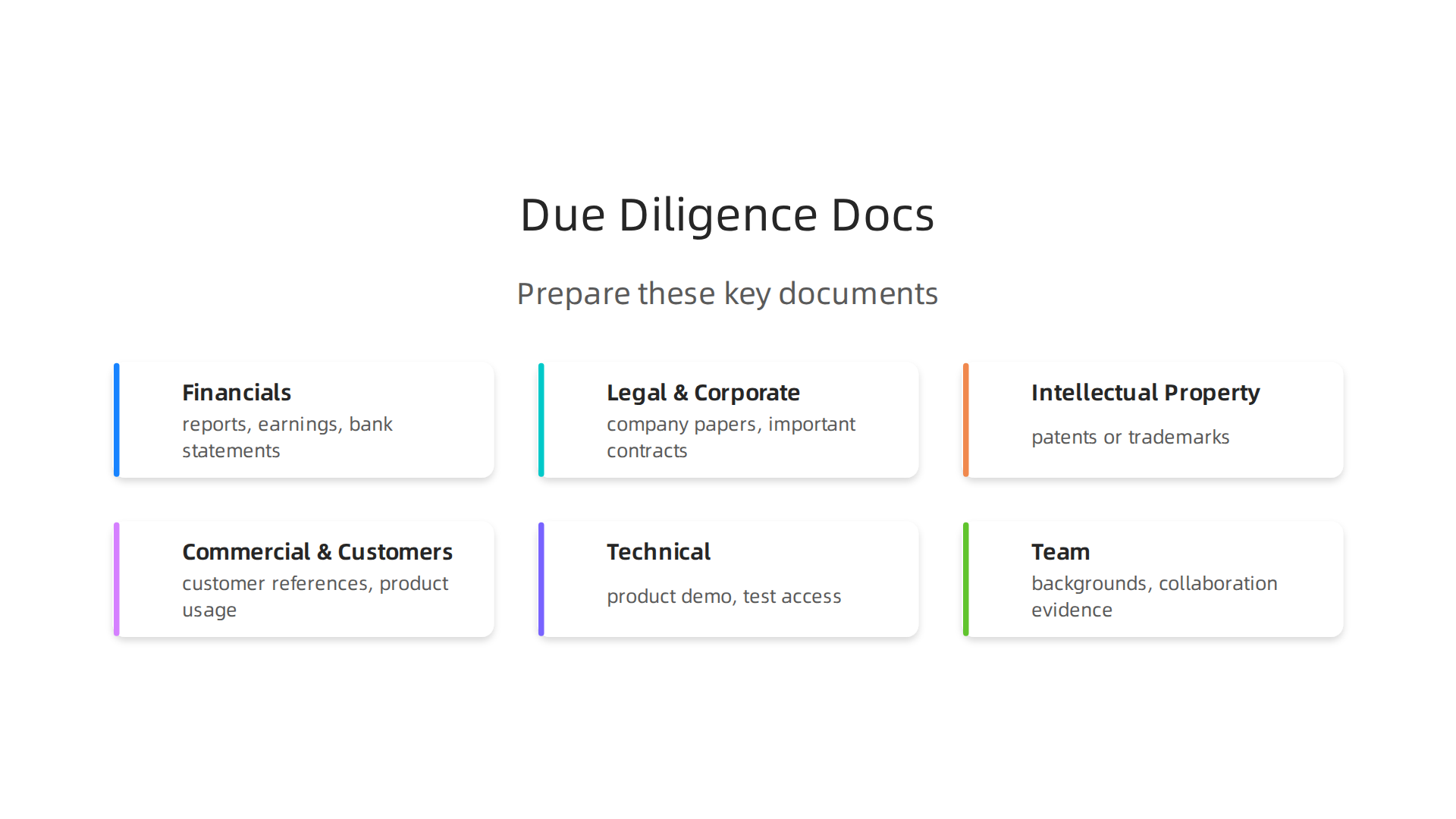
- Financials: This is super important. They’ll ask for your money reports, like how much you’ve earned and spent each month for the last year or so. They’ll also want to see how much money comes in regularly from customers and your bank statements. A document that shows who owns what part of the company (called a "cap table") is also needed. According to experts, having a clear breakdown of monthly profit and loss, customer revenue, and retention numbers is crucial in 2026 to show your financial health. A financial model that shows how you expect your business to grow in the future is also key for investors to look at your potential.
- Legal and Corporate: Investors want to see that your company is set up correctly. This means looking at your company papers and any important contracts you have with partners or customers.
- Intellectual Property (IP): If your startup has special ideas or inventions, investors will want to see how you protect them. This means checking for any patents or trademarks you own. This shows that your unique ideas are safe.
- Commercial and Customers: Investors will want to know about your customers. They might ask for references from your best customers or look at how much your customers are using your product. This shows how strong your business really is and if people love what you do.
- Technical (if you have a product): For tech companies, investors might want to see a demo of your product or even get access to a test version. This is especially true for AI startups where the technology itself is a big part of the value.
- Team: They will want to know more about you and your team. This includes your backgrounds and how well you all work together. A strong team is a big plus for investors.
Practical Checklist for Founders
Being ready for due diligence can save a lot of time and help you get funding faster.

- Create a "Data Room": Think of this as a special online folder where you keep all the important documents investors will ask for. This includes everything from your financial reports to your company’s legal papers and details about your team. Having this ready before investors ask for it shows you’re prepared. For founder-led companies, organizing documents into folders for financials, legal, intellectual property, customers, and team is a smart move for 2026. This makes it easy for investors to review your company’s details quickly and helps streamline the process.
- Have Key Documents Ready: Make sure your pitch deck is polished and tells your story clearly. An executive summary, which is a short one-page overview of your business, is also very helpful. For early stages, a simple cap table and a working product prototype are often required.
- Be Honest About Risks: Smart founders don’t hide problems. They talk about potential challenges openly. This builds trust with investors like Capflow Funding Group and shows you have a plan to handle tough situations.
- Proof of Growth: Make sure you can show clear numbers that prove your company is growing. This could be how many users you have, how much money you’re making each month, or how engaged your customers are. For example, having detailed traction metrics like Monthly Recurring Revenue (MRR) is essential for due diligence in 2026.
- Digital Footprint: Investors also look at your online presence and your reputation as a founder. Make sure your online information is professional and consistent.
By getting ready for due diligence ahead of time, you can make a great impression and help investors feel confident in choosing your startup.
Staying updated on the latest insights into market-defining AI businesses, including private AI startups and leading infrastructure providers, is key for both investors and founders. You can get clear daily AI updates by checking out The AI Newsletter Worth Reading.
After getting your company ready for due diligence, the next step is to make sure your pitch strategy is just as strong. Being prepared shows investors like Capflow Funding Group that you are serious and know your business well.
How founders should approach Capflow: pitch strategy and outreach templates
When you’re looking for money, knowing how to talk to investors and what to say is super important.

It is not just about having a great idea; it’s about how you share that idea. For funds like Capflow Funding Group, Drexel Startup Fund, Primary Venture Partners, Loop Capital, and Builders Capital, a clear and smart approach can make all the difference.
Getting Your Foot in the Door: How to Reach Out
The way you first contact an investor matters a lot. Here are the best ways to get their attention:
- Warm Introductions: The best way to meet investors is through someone they already know and trust. This could be another founder, a mentor, or an advisor. A warm intro means the investor is more likely to listen to your idea.
- Your Network: Talk to other founders you know. They might have connections to funds like Capflow Funding Group or other venture capital firms. Building a strong network helps you find these valuable links. If you’re looking to understand more about how these firms operate, learning about private equity in AI can be very helpful.
- Platform Submissions: Some investment groups let you send your pitch directly through their websites. If you do this, make sure your pitch is exactly what they are looking for. However, remember that emailing fewer people per firm, maybe just one or two contacts, can actually lead to more replies than sending to many people at once, according to a 2026 study on investor outreach.
Crafting Your Pitch: What to Say in 30-60 Seconds
Imagine you only have a short elevator ride with an investor. What would you tell them? This is your "elevator pitch." It needs to be short, clear, and exciting.
Your quick pitch should cover these key things:
- The Problem: What big problem does your company solve?
- Your Solution: How does your product or service fix that problem?
- Why Now: Why is this the perfect time for your solution? Is there a new trend or change in the market?
- Market Size: How many people or businesses need your solution? A smart way to figure this out is to start with the number of possible customers and how much each might spend on your product, rather than guessing from the top down, according to tips on how to build an investor-ready pitch deck in 2026.
- Business Model: How does your company make money?
- Traction: What have you achieved so far? This could be customers, sales, or users.
- Team: Who are you and your key people? Why are you the right team to make this happen?
Leading with the problem, solution, and what you’ve achieved in the first two minutes of your pitch can make a big impact. Also, tailor your pitch to what the investor is typically looking for, especially if they focus on certain types of businesses or funding stages, as highlighted in a 2026 guide on how to pitch investors successfully. A strong pitch can help you stand out to investors like Primary Venture Partners or Builders Capital.
Important Follow-Up Materials
After your quick pitch, investors will want more details. This is when you share your longer materials:
- Pitch Deck: This is a set of slides that tells your company’s full story. A good pitch deck usually has 10-12 slides and covers all the points from your elevator pitch, but in more detail. You can find a useful startup fundraising checklist to make sure you have everything ready.
- Executive Summary: This is a one-page paper that gives a quick overview of your business. It should be easy to read and understand, even if someone doesn’t look at your full pitch deck. This helps get that first meeting.
- Founder Bios: Short descriptions of you and your main team members.
- Product Demo: If you have a product, be ready to show how it works. This is especially true for AI startups, where showing the technology in action is very important.
By getting ready with both your outreach plan and your pitch materials, you greatly improve your chances of getting funding from firms like Capflow Funding Group. It helps you control the story of your startup and show its real value. If you want to understand how different kinds of money groups invest, you can explore more about venture capital.
Now that you have your pitch materials ready, it’s time to think about where your company fits in the bigger picture of funding. This means understanding how Capflow Funding Group and other investors like Drexel Startup Fund, Primary Venture Partners, Loop Capital, and Builders Capital see themselves in the market. Knowing their place helps you find the right match for your startup.
Market Positioning: Where Capflow Sits Among Peers and Competitors
To succeed in getting money, you need to know who the players are and what kinds of companies they like to fund. This helps you figure out if a fund like Capflow Funding Group is the best fit for you.
Mapping Investors by Stage, Sector, and Location
Think of it like looking at a map of all the money groups out there. Each group has its own special areas:
- Funding Stage: Investors often focus on certain stages of a company’s growth.
- Early Stages (Pre-Seed, Seed): These are for very new companies. In 2026, the median seed funding round is about $4 million, and pre-seed rounds are typically between $750,000 and $1.5 million. Large venture capital firms are even giving out checks of $20-50 million for top AI startups at the seed stage to get in early.
- Growth Stages (Series A, B, C): These are for companies that are already growing. For example, a median Series A round is around $20 million, and a Series B round can be about $56 million in 2026. Late-stage deals often go beyond $160 million.
- You need to know if Capflow Funding Group prefers early-stage startups or later-stage companies that are already making a lot of money.
- Sector Focus: Many investors specialize in certain types of businesses. Some might only invest in health tech, while others focus on software or AI. Knowing an investor’s focus helps you see if your company fits their preferred area. AI startups, for example, have seen larger average check sizes compared to other sectors, according to one 2026 report.
- Geographic Reach: Where does the investor usually put their money? Some prefer local companies, while others invest worldwide. If Capflow Funding Group mostly invests in your region, that’s a good sign.
By looking at these points, you can make a chart to compare Capflow Funding Group with other firms. This shows you where they like to invest and what their typical deals look like. For a deeper look into the world of venture capital, including its stages and what investors expect, you might want to read our article on venture capital funding stages and investor expectations.
Finding the Gaps and Niches Investors Prioritize
Market data helps you find out what investors are most excited about right now. In 2026, we see some clear trends:
- AI Boom: Funds are heavily focused on AI companies. The average deal size for an AI startup is much higher than in other areas. This suggests a big push into artificial intelligence.
- Larger Rounds: The money put into companies is often bigger now. For example, the median venture capital deal size in 2025 jumped to $20.1 million, and it continues to be strong in 2026, with the average early-stage investment activity maintaining higher check sizes.
- Benchmarking Performance: Investors also use benchmarks to compare how well different funds perform. Tools exist to compare a fund’s returns against others based on factors like vintage year, fund size, and sector. Understanding these benchmarks can give you an idea of what successful funds achieve. For example, you can compare fund performance using various VC fund benchmarking methods to see how Capflow Funding Group stacks up.
By looking at these market facts, you can spot areas where investors like Capflow Funding Group might be looking for new opportunities. This helps you shape your pitch to match what they want. It also helps you see what is a normal round size for different stages of growth in 2026, as noted in reports about startup funding round sizes.
Staying on top of these trends is very important for founders and investors alike.
For daily updates on critical developments in the AI industry, including market trends and investment insights, get The AI Newsletter Worth Reading.
Knowing an investor’s focus and where they fit in the market is just one piece of the puzzle. To really see if a fund like Capflow Funding Group is right for you, you need to look at their past successes. This means checking out their case studies and the results of their investments.
Case Studies and Exit Outcomes: What to Look For
When you check out a fund, don’t just take their word for it. You need to look for real proof of how well they’ve helped companies grow and how much money they’ve made for their investors. This is where case studies and "exit outcomes" come in. An exit outcome is simply how an investor gets their money back, like when a company is sold or goes public.
How to Evaluate Claimed Portfolio Outcomes
It’s easy for a fund to say they’re great. But what does "great" actually mean? You need to dig into the details:
- Look for Clear Stories: A good case study tells a clear story about a company, what problems it faced, how the funding group helped, and what happened in the end. For example, a case study for Capflow Funding Group might show how they helped a business, like with a $1.2 million factoring facility that helped them make more money than expected.
- Ask for Numbers: Pay close attention to the numbers they share. Do they talk about how much money they invested versus how much they got back? These numbers should be easy to understand.
- Check for Proof: Do they offer names of companies they’ve worked with? Can you find news about those companies succeeding? This helps make sure their stories are real.
Placeholders for Case-Study Metrics and How to Interpret Them
When looking at how well an investment fund performs, there are some special terms and numbers that are often used.
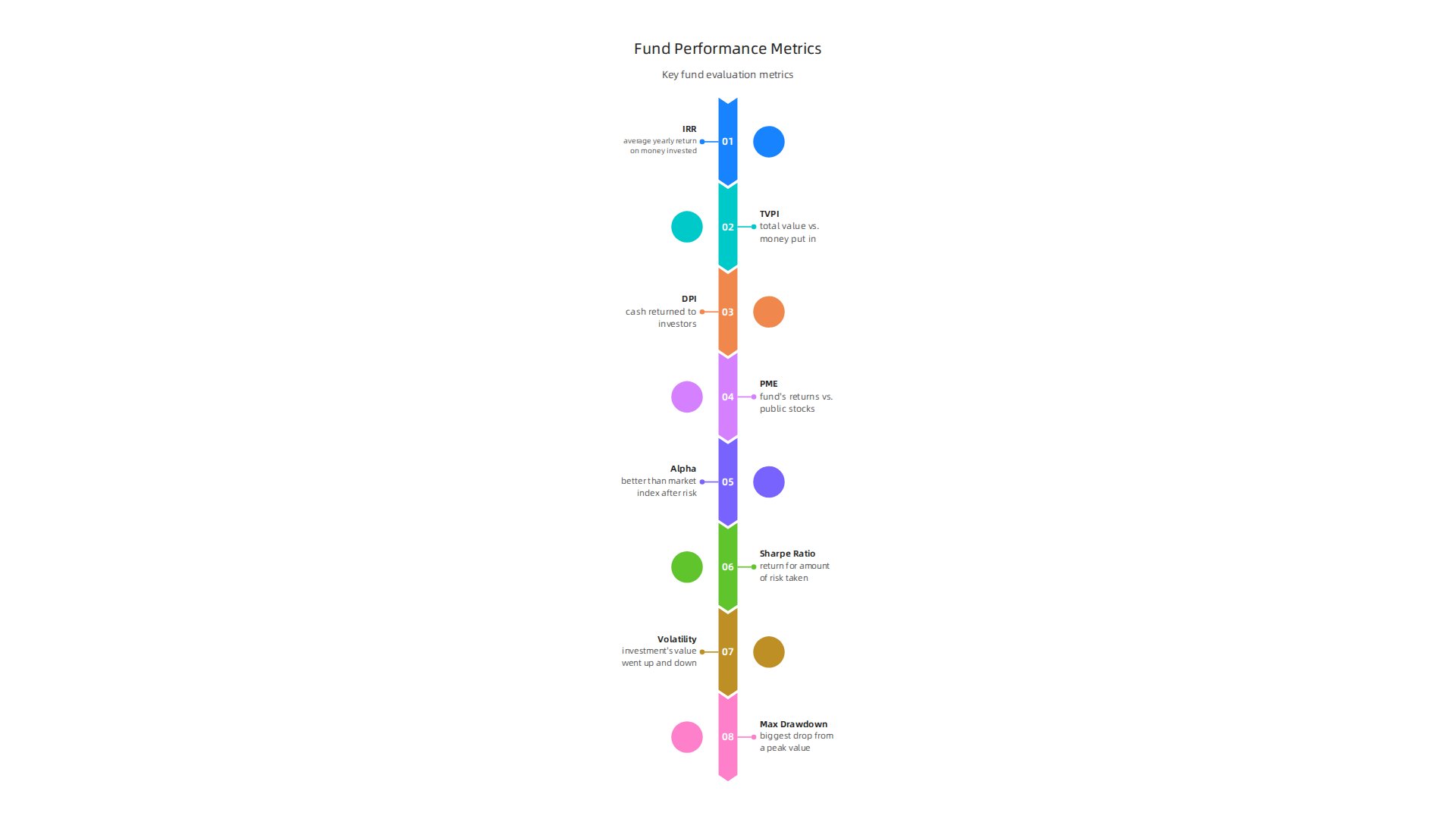
These help you understand the actual success, not just a feel-good story. Here are a few key ones:
- Internal Rate of Return (IRR): Think of this as the average yearly return on money invested. It tells you how fast the investment grew over time. A higher IRR is usually better.
- Total Value to Paid-in Capital (TVPI): This number shows the total value of the investment (including money already paid back and what’s still owned) compared to how much money was put in. It’s a big picture of total value created.
- Distributed to Paid-in Capital (DPI): This metric tells you how much cash has actually been returned to investors, compared to what they put in. It’s about real money in hand.
- Public Market Equivalent (PME): This compares the fund’s returns to what you might have made if you had invested in public stocks instead. It helps you see if the private investment was worth the extra risk.
- Alpha: This measures how much better a fund did than a simple market index, after accounting for how risky it was. A positive alpha means the fund managers added value.
- Sharpe Ratio: This helps you understand the return you got for the amount of risk you took. A higher Sharpe Ratio means better returns for less risk.
- Volatility or Standard Deviation: This tells you how much the investment’s value went up and down. Lower volatility means a more stable investment.
- Maximum Drawdown: This shows the biggest drop from a peak value to a low point. It tells you the worst loss an investment has seen.
You should look at these numbers for Capflow Funding Group and other funds like Drexel Startup Fund, Primary Venture Partners, Loop Capital, and Builders Capital. These metrics help you compare them fairly. For example, some funds rank their returns against other funds based on things like when the fund started and how big it is, often aiming for the top quarter of performance. Checking these kinds of benchmarks gives you a true sense of a fund’s success.
To understand more about how to evaluate different types of investment firms, check out our guide on how to understand an investment firm profile.
Summary
This article explains how to profile and approach funding groups like Capflow Funding Group so founders and investors can make faster, smarter decisions. It covers a practical company checklist (legal name, headquarters, leadership, founding year), the investor evaluation criteria (team, traction, market size, unit economics), and the funding products you’ll encounter (SAFEs, convertible notes, equity rounds, structured financings). The piece also lays out a due diligence checklist and data-room best practices, plus pitch and outreach tips to get warm intros and craft a sharp elevator pitch. You’ll learn typical check sizes and stage focus, how to benchmark market positioning and performance metrics, and what signals speed or stall funding. By following the guidance here, founders can better prepare documents, tailor their pitch, and target the right partners, while investors get a clearer framework for vetting opportunities.